카시아의 성 리타의 승천 The Translation of Saint Rita of Cascia
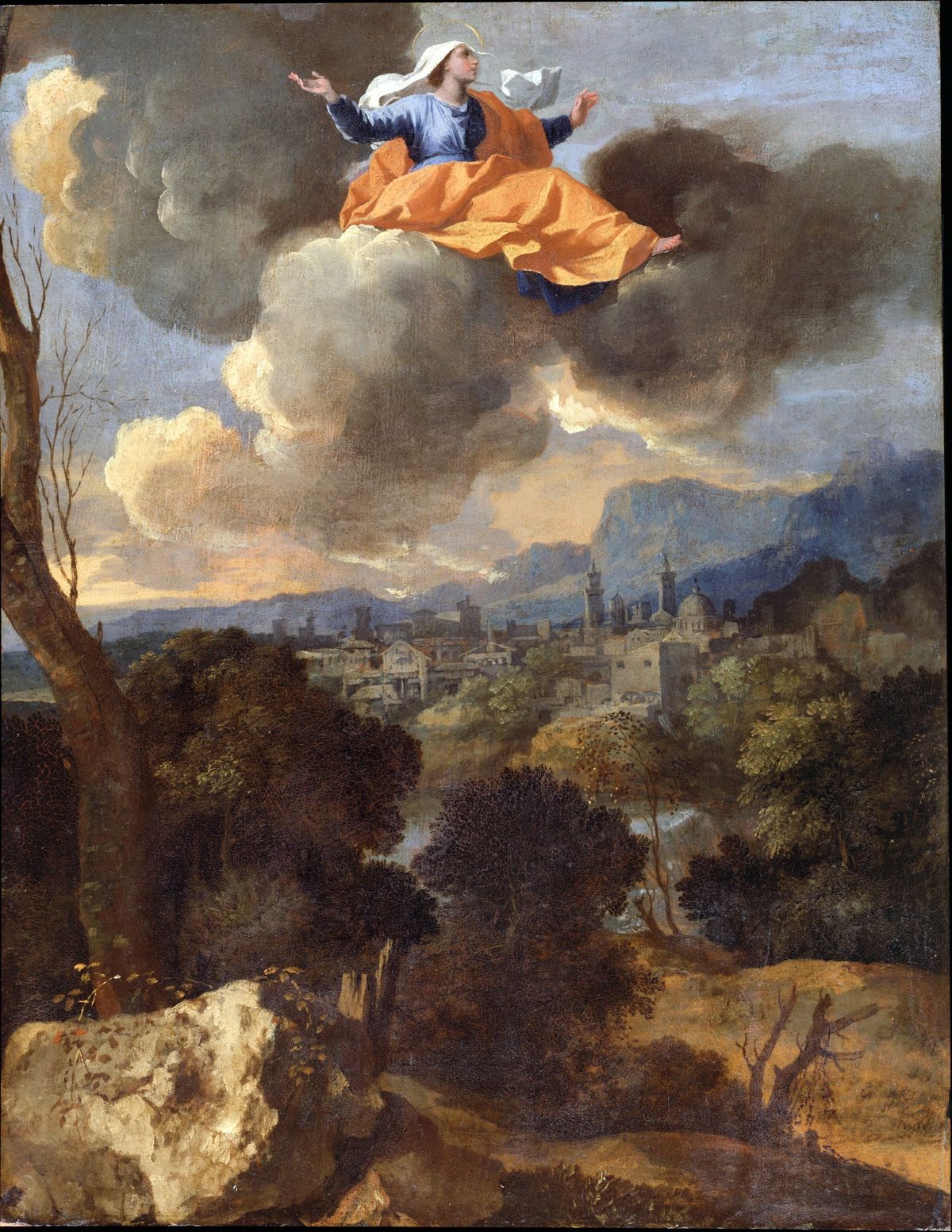
17세기 프랑스 고전주의 회화의 시조이자 서양 미술사 불멸의 거장 니콜라 푸생(Nicolas Poussin, 1594–1665)이 1630년에서 1631년경 로마에서 완성한 기념비적 종교화 유화 카시아의 성 리타의 승천(The Translation of Saint Rita of Cascia, 또는 The Miracle of Saint Rita of Cascia, 프랑스어: Le Miracle de sainte Rita de Cascia, 소장품 번호: 83.PA.268)은 48.3 cm × 37.8 cm 크기의 세로형 캔버스에 유채로 그린 대표적인 기적 성화 최고 걸작입니다.
현재 미국 캘리포니아주 로스앤젤레스의 J. 폴 게티 미술관(J. Paul Getty Museum, Los Angeles)에 소장되어 있습니다.
불가능을 가능케 한 성녀의 기적과 지상 풍경의 조화를 향한 화가의 깊은 고뇌
1630년경 로마에서 극심한 질병의 고통을 겪고 회복하던 삼십 대 중반의 푸생은, 불가능한 일의 수호성인으로 공경받던 카시아의 성녀 리타(Rita of Cascia)의 신비로운 일화를 화폭에 담으며 깊은 감명을 받았습니다.
수도원에 들어가기를 간절히 바랐으나 거절당했던 리타가 천사들과 성인들의 도움으로 닫힌 문을 넘어 공중으로 들어 올려져 카시아 수도원 안으로 기적처럼 이동했다는 전설적인 일화를 마주하며, 화가는 초자연적인 기적의 신비를 과장된 환상이 아닌 장엄한 대자연의 풍경 속에 어떻게 이성적인 균형으로 녹여낼지 치열하게 번민했습니다.
화가는 황금빛 노을이 물드는 카시아 마을의 웅장한 산악 풍경 위로 뭉게구름을 타고 하늘로 가뿐히 떠오르는 성녀 리타의 영광스러운 모습을 화폭에 담았습니다.
화면 상단에는 흰 두건을 쓰고 푸른 옷과 눈부신 황금빛 주황색 망토를 두른 성녀 리타가 두 팔을 하늘을 향해 활짝 벌린 채 천상을 경건하게 응시하고 있습니다.
그녀를 태운 짙은 먹구름과 눈부신 흰 구름은 천상의 거룩한 신비를 웅장하게 드러내며, 화면 아래쪽으로는 울창한 숲과 거대한 바위, 그리고 고대 종탑과 성벽이 늘어선 이탈리아 카시아 마을의 평화로운 전경이 펼쳐집니다.
어스름한 저녁 하늘을 가르는 성녀의 눈부신 옷자락과 지상의 고요한 숲이 만들어내는 완벽한 대비는, 지상의 고난과 장벽을 뛰어넘어 마침내 신의 품에 안기는 거룩한 믿음의 승리를 손에 잡힐 듯 생생하게 웅변합니다.
천공에 뜬 성녀의 황금빛 망토에서 펼쳐진 두 손과 평화로운 카시아 마을로, 시선의 심리적 여정
그림을 마주하는 순간 관람객의 무의식적 시선은 화면 상단 중앙 짙은 구름 사이에서 황혼의 빛을 받아 눈부신 주황빛으로 타오르는 성녀 리타의 웅장한 겉옷과 하늘을 우러러보는 성녀의 온화한 얼굴로 가장 먼저 빨려 들어갑니다.
모든 의심과 두려움을 내려놓고 신의 섭리에 몸을 맡긴 성녀의 단아한 자태와 경건한 옆모습은 보는 이에게 깊은 시각적 경이로움과 함께 닫힌 문조차 열어젖히는 거룩한 희망의 평온을 선사합니다.
이어 시선은 성녀가 하늘을 향해 활짝 펼쳐 든 양손의 우아한 손짓을 따라 이동하여, 흰 베일의 부드러운 곡선과 그녀를 든든하게 받치고 있는 웅장한 구름 떼의 입체적인 명암으로 옮겨갑니다.
지상의 중력을 벗어나 천상으로 떠오르는 기적의 무게를 확인하는 순간, 관람객은 지상과 천상이 하나로 맞닿는 신비로운 영적 체험의 한복판 속으로 온몸이 빨려 들어가게 됩니다.
마지막으로 시선은 화면 중간에 섬세하게 묘사된 카시아 마을의 고대 성벽과 종탑의 실루엣을 지나, 화면 앞쪽을 묵직하게 채우고 있는 울창한 짙푸른 숲과 왼쪽 전면의 커다란 바위 언덕에 멈춥니다.
수직으로 솟아오른 거목과 천공의 성녀가 빚어내는 완벽한 고전적 대칭을 마주하며, 관람객은 자연의 질서 속에 깃든 거룩한 섭리와 젊은 거장 푸생이 건네는 묵직한 영혼의 위로를 가슴 깊이 마주하게 됩니다.
17세기 프랑스 고전주의 기적 풍경화의 정점과 조형미, 미술계의 평가
미술계는 J. 폴 게티 미술관의 카시아의 성 리타의 승천을 푸생이 초기 로마 시절 베네치아 르네상스의 서정적인 색채와 고전주의 풍경화의 장엄한 조형 질서를 완벽하게 결합해 낸 최고봉의 기적 성화로 평가합니다.
초자연적인 성인의 기적을 혼란스러운 바로크적 과장이 아닌 엄격한 수직 구도와 차분한 대기 원근법 속에 완벽하게 조직했을 뿐만 아니라, 성녀의 짙은 주황색과 푸른색 옷감의 선명한 색채 대비, 뭉게구름의 묵직한 양감, 숲속 나뭇잎 사이로 스며드는 노을빛을 극도로 섬세한 명암법으로 완벽하게 구현했기 때문입니다.
인간의 영혼을 초월적인 구원의 평온으로 이끄는 숭고한 신앙의 순간을 품격 높은 시각 서사시로 승화시킨 푸생의 이 걸작 화폭은, 오늘날까지도 전 세계 수많은 감상자들에게 깊은 감탄과 잊을 수 없는 시각적 안식을 전해주는 불멸의 명작으로 손꼽히고 있습니다.
The Translation of Saint Rita of Cascia
Painted between 1630 and 1631 in Rome by the founder of French classicism and immortal master Nicolas Poussin (1594–1665), The Translation of Saint Rita of Cascia (also titled The Miracle of Saint Rita of Cascia, French: Le Miracle de sainte Rita de Cascia, Accession No. 83.PA.268) is a rare devotional oil on canvas measuring 48.3 cm × 37.8 cm (19.0 in × 14.9 in).
It is preserved in the distinguished permanent collection of the J. Paul Getty Museum in Los Angeles, California, United States.
The Patroness of Impossible Causes, Miraculous Levitation, and Venetian Landscape
During the early 1630s in Rome, as Nicolas Poussin recovered from serious personal illness, he meditated deeply upon the pious legend of Saint Rita of Cascia, the venerated patroness of impossible causes and desperate situations.
According to sacred hagiography, when Rita was denied entry into the Augustinian convent, she was miraculously transported through the air over the sealed walls by her patron saints to enter the cloister.
Poussin sought to translate this supernatural event not through extravagant theatricality, but by embedding the miracle within the serene, rational harmony of a majestic classical landscape bathed in the warmth of Venetian color.
The master staged Saint Rita levitating peacefully upon a buoyant bank of clouds above the panoramic Umbrian valley of Cascia at dusk.
Dressed in a blue gown with a white wimple and wrapped in an expansive saffron-orange mantle, the holy woman raises her open hands toward the heavens in pure gratitude and serene surrender.
The luminous cloud bank isolates the sacred event against the sky, while below lies the fortified hilltop town of Cascia, crowned with ancient towers, bell belfries, and rolling blue mountains.
The delicate contrast between the luminous orange drapery catching the sunset and the shadowed green foliage of the dense foreground woods visually celebrates the triumph of faith over physical barriers.
Subconscious Trajectory of the Gaze: From Saint Rita to the Fortified Town of Cascia
The observer's subconscious gaze is immediately magnetized by the upper-central register, drawn to the luminous, sunlit mass of Saint Rita’s golden-orange drapery billowing across the dark cloud.
Her upturned profile, delicate white headcloth, and outstretched hands establish an instant focal point of sovereign grace, spiritual transcendence, and humble surrender.
The visual path then follows the rounded contours of the supporting clouds downward into the atmospheric middle ground.
Taking in the architectural geometry of the fortified town of Cascia and its distant church spires glowing against the evening mountains, the viewer directly experiences the profound spiritual boundary between earthly isolation and celestial elevation.
Finally, the visual trajectory descends past the dense, shadowed canopy of the foreground woods toward the weathered rock and ancient tree trunk on the left.
Observing the harmonious equilibrium between the soaring vertical ascension, deep atmospheric perspective, and classical draftsmanship, the spectator perceives the timeless nobility of sacred faith and the profound aesthetic solace Poussin embedded within the canvas.
The Monument of Early French Classical Devotion: Critical Legacy
Art historians revere the Getty Translation of Saint Rita of Cascia as an extraordinary example of Poussin’s early synthesis of poetic landscape painting with disciplined devotional narrative.
By orchestrating delicate textural contrasts between luminous sunlit silk, billowing water-laden clouds, ancient stone masonry, and rustling forest leaves within a unified architectural framework, Poussin elevated a miraculous local legend into an exquisite aesthetic treatise on divine grace and cosmic harmony.
This intimate historical canvas endures as an inspiring testament to the master's creative fortitude, celebrating the victory of sacred perseverance and the transformative grace of living art.
본 컨텐트의 저작권은 팔렛트제주에 있습니다. 허가없는 무단전제를 금지합니다.
Copyright © Palette Jeju. All rights reserved. Unauthorized reproduction or redistribution is strictly prohibited.