카미유 룰랭의 초상화 Portrait of Camille Roulin
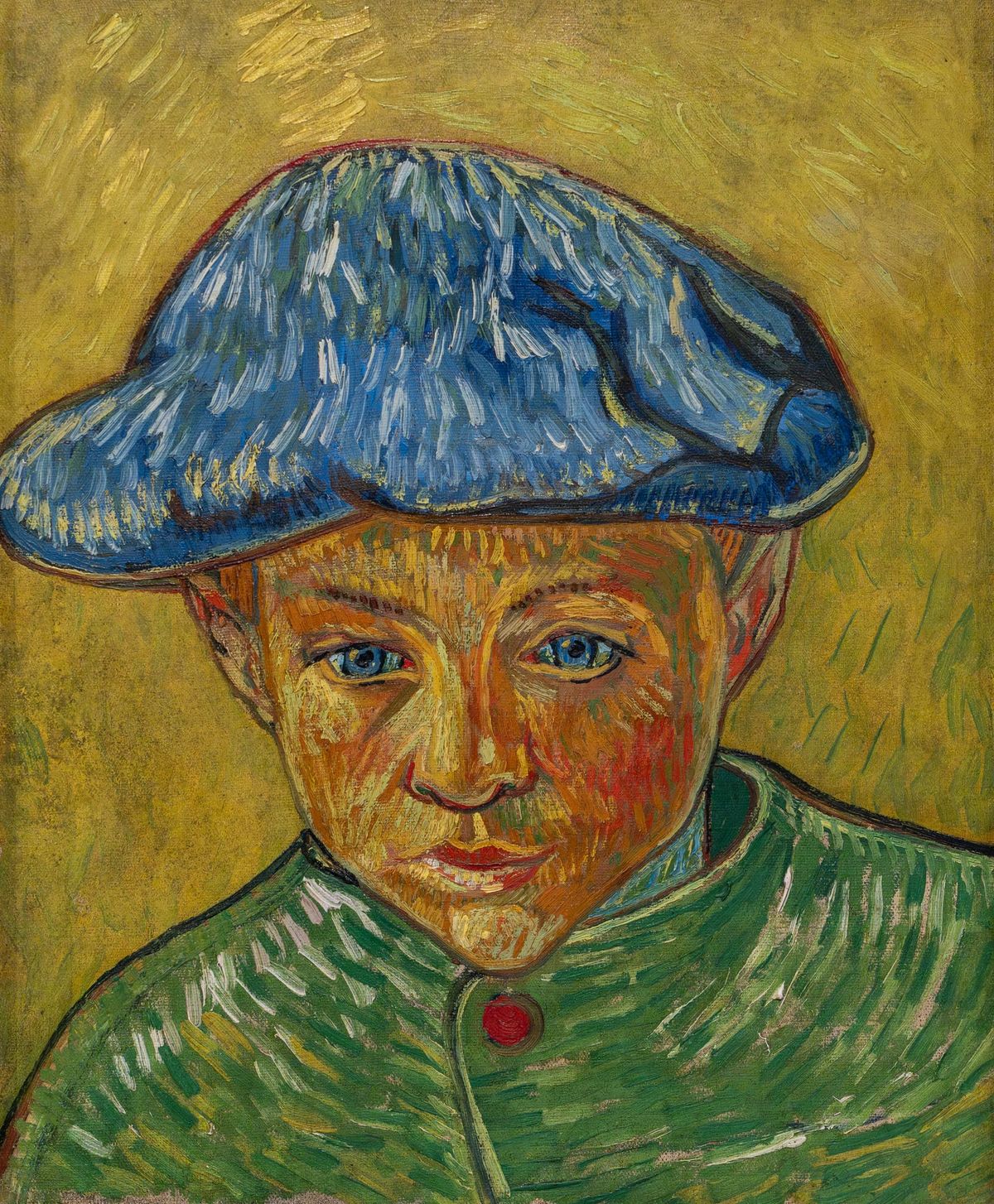
이 작품은 네덜란드의 후기 인상주의 거장 빈센트 반 고흐가 1888년 11월에서 12월 사이 프랑스 아를(Arles) 체류 시기에 제작한 유화입니다. 공식 소장품 등록번호는 F537이며, 캔버스 위에 유채로 그려진 실제 실측 규격은 43 x 32 cm입니다. 현재 이 작품은 미국 버지니아주에 위치한 버지니아 미술관(Virginia Museum of Fine Arts)에 공식적으로 소장되어 있으며, 테드 리처드슨의 기증을 통해 오늘날 전 세계 관람객들을 만나고 있습니다.
작가의 고뇌와 창작 비하인드
아를의 우체국장인 조셉 룰랭의 가족들과 깊은 우정을 나누었던 반 고흐는, 그중 열 살 난 어린 아들인 카미유 룰랭을 모델 삼아 인물의 개성과 순수한 영혼을 담아내는 초상화 작업에 몰두했습니다. 당시 그는 동생 테오에게 보낸 편지에서 우체국장 가족들이 자신에게 베풀어 준 따뜻한 호의에 깊이 감사하며, 그들의 모습을 화폭에 남기는 것이 자신에게 큰 위안이자 예술적 기쁨이었다고 소회를 밝힌 바 있습니다.
작품 전경에는 초록색 옷을 입고 목덜미 부근에 붉은 단추가 달린 상의를 착용한 채 정면을 응시하는 카미유의 상반신이 묵직하게 자리 잡고 있습니다. 중경에는 푸른빛이 감도는 독특한 모양의 모자를 깊게 눌러쓴 소년의 얼굴이 강렬하고 생생한 붓터치로 묘사되어 있으며, 맑고 깊은 푸른 눈빛이 깊이 있는 입체감을 부여합니다.
배경으로는 따스한 황금빛과 올리브색이 어우러진 단색조의 대기가 화면 전체를 부드럽게 감싸 안으며, 소년의 풋풋한 생명력을 돋보이게 하는 아늑한 실내 분위기를 자아냅니다.
무의식 속 시선 및 심리 흐름
관람객의 시선은 가장 먼저 화면 중앙에 또렷하게 빛나는 소년의 맑고 푸른 눈동자와 붉은 입술 주변의 윤곽으로 향하며, 어린아이 특유의 천진난만함과 동시에 조숙한 깊이감을 마주하게 됩니다. 이어지는 시선은 머리에 얹힌 푸른 모자의 질감과 초록색 상의에 달린 붉은 단추 등의 중경 디테일로 이동하여, 소박한 일상 속 인물이 지닌 생생한 존재감을 체감하게 됩니다.
시선이 다시 배경을 채운 부드러운 황금빛 대기로 확장될 때, 관람객은 외롭고 힘겨운 타지 생활 속에서 인간적인 온정을 나누고자 했던 화가의 따뜻하고 애틋한 내면세계에 온전히 동화됩니다. 이 일련의 시선 이동은 단순한 초상화의 감상을 넘어, 어린 소년의 눈빛을 통해 세상의 순수함과 마주하며 영혼의 위안을 얻었던 거장의 감동적인 심리적 여정을 선사합니다.
미술계의 평가 및 조형미
미술사학계와 평단은 본 작품을 고흐가 아를 시기에 이룩한 인물화의 정수 중 하나로 평가하며, 단순한 외형 묘사를 넘어 모델의 내면을 강렬한 색채와 대담한 필치로 승화시킨 수작으로 인정합니다. 캔버스 위에 두껍고 역동적으로 얹어진 임파스토 기법은 소년의 모자 결, 옷감의 질감, 그리고 배경의 붓자국을 손에 잡힐 듯 생생하게 살아나게 완성했습니다.
화면 전반을 지배하는 초록색 상의와 푸른 모자, 그리고 배경의 황금빛이 이루는 대담한 보색 대비는 시각적인 생동감과 뛰어난 조형적 완성도를 동시에 선사합니다. 인간을 향한 따뜻한 애정과 예술적 시선을 독창적인 색채 언어로 빚어낸 이 작품은, 시대를 초월해 관람객의 마음에 깊은 울림을 전하는 영원한 가치를 지닙니다.
Portrait of Camille Roulin
Executed between November and December 1888 during his stay in Arles, France, this oil painting is a vibrant and deeply affectionate portrait by the Dutch Post-Impressionist master Vincent van Gogh. Officially cataloged under inventory number F537 and measuring 43 x 32 cm on canvas, the work is housed in the permanent collection of the Virginia Museum of Fine Arts in Richmond, having entered the museum through the collection of T. Catesby Jones.
The Artist's Turmoil and Creative Background
During his time in Arles, Van Gogh formed a profound and life-saving bond with the local postman Joseph Roulin and his family, frequently painting members of the household as a gesture of deep friendship and mutual respect. In his correspondence, he often reflected on how much solace he found in the company of the Roulin family, viewing their warmth as an antidote to his intense loneliness and striving to capture the youthful innocence of the ten-year-old Camille in this striking portrait.
The foreground features the young boy clad in a green tunic fastened with a distinct red button at the collar, anchoring his upper body within the compressed pictorial space. In the middle ground, Camille's expressive face is framed by a striking blue cap, with his luminous blue eyes, rosy cheeks, and firm lips rendered through energetic, directional brushstrokes that give him a powerful psychological presence.
The background consists of a warm, luminous field of golden-yellow and olive tones that radiates outward, enveloping the young sitter in an aura of vibrant energy and tender affection.
Psychological Flow and the Unconscious Gaze
The viewer's gaze is initially drawn to the piercing, wide-set blue eyes of the young boy at the center of the composition, establishing an immediate and intimate psychological connection. The eye then migrates downward along the textured strokes of his blue cap and across the green jacket, taking in the tactile details of his clothing and the striking accent of the red button.
As the gaze expands outward into the glowing golden background, the observer is enveloped in a warm, protective atmosphere that mirrors the artist's profound gratitude and emotional attachment to the Roulin family. This deliberate visual progression moves the viewer from an engaging encounter with a child's gaze into an expansive, meditative appreciation of human warmth and connection.
Critical Acclaim and Formal Analysis
Art historians and critics widely celebrate this painting as a masterwork of Van Gogh's Arles portraiture, recognizing it as a brilliant triumph of conveying character and emotional resonance through non-naturalistic color. The vigorous application of paint through a heavy impasto technique imparts a tangible, sculptural reality to the textured cap, the fabric of the tunic, and the surrounding atmosphere.
The sophisticated orchestration of vibrant greens and blues against a radiant golden-yellow ground generates a dynamic chromatic harmony charged with joyful vitality. Transmuting a simple neighbor's child into an immortal emblem of youthful spirit and human companionship, this masterpiece endures as an essential testament to Van Gogh's visionary genius.
본 컨텐트의 저작권은 팔렛트제주에 있습니다. 허가없는 무단전제를 금지합니다.
Copyright © Palette Jeju. All rights reserved. Unauthorized reproduction or redistribution is strictly prohibited.