죽은 말을 뜯어먹는 들개들 Chiens dévorant un cheval mort
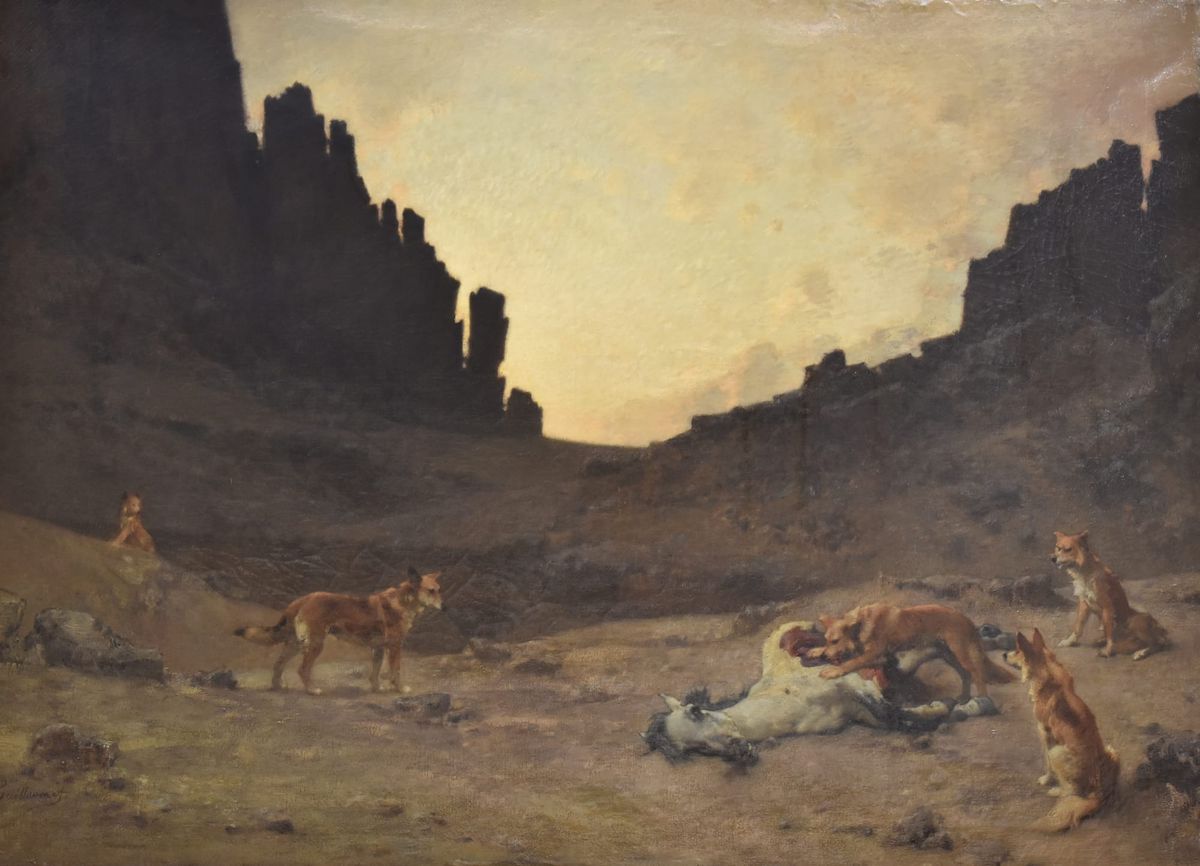
19세기 프랑스 오리엔탈리즘 리얼리즘 풍경화의 독보적인 거장 귀스타브 기요메(Gustave Guillaumet, 1840–1887)가 1883년경 완성한 대작 유화 죽은 말을 뜯어먹는 들개들(Dogs Devouring a Dead Horse, 프랑스어: Chiens dévorant un cheval mort dans les gorges d'El Kantara)은 125.0 cm × 170.0 cm 크기의 웅장한 캔버스에 유채로 그린 대표적인 북아프리카 야생 비극 리얼리즘 최고 걸작입니다. 현재 프랑스 낭트의 낭트 미술관(Musée d'Arts de Nantes)에 소장되어 있습니다.
엘 칸타라 협곡의 야생과 타협 없는 자연주의를 향한 화가의 고뇌
1880년대에 이르러 알제리의 사막과 협곡을 수없이 오가며 북아프리카의 진실한 영혼을 기록해 온 기요메는, 당시 파리 부르주아들이 선호하던 달콤하고 안락한 오리엔탈리즘 환상에 강한 회의감을 느끼고 있었습니다. 그는 사하라 사막의 관문이라 불리는 험준한 엘 칸타라(El Kantara) 협곡을 지나던 중, 뜨거운 태양 아래 쓰러져 죽은 백마 한 마리와 그 시체를 뜯어먹기 위해 몰려든 굶주린 사막 들개(자칼) 떼를 직접 목격하고 깊은 충격과 함께 실존적인 전율을 느꼈습니다.
화가는 자연의 냉혹한 생존 법칙과 거친 야생의 현실을 결코 감추거나 미화하지 않기로 결심했습니다. 칠흑 같은 암벽이 양옆으로 칼날처럼 솟아오른 메마른 협곡 한복판에서, 한때 거친 사막을 질주했을 흰 말은 차갑게 굳어 누워 있고 붉은 털의 들개들은 찢겨진 살점을 탐욕스럽게 물어뜯고 있습니다. 주변에 웅크려 차례를 기다리거나 경계의 눈빛을 번뜩이는 들개들의 팽팽한 신경전과, 협곡 너머로 희미하게 저물어가는 먼지 낀 저녁 하늘의 창백한 빛은, 약육강식이라는 거대한 자연의 섭리 앞에서 유한한 생명이 마주해야 하는 처절한 비장미를 숨 막힐 듯 생생하게 웅변합니다.
쓰러진 백마의 창백한 시신에서 살점을 뜯는 들개와 험준한 협곡 암벽으로, 시선의 심리적 여정
그림을 마주하는 순간 관람객의 무의식적 시선은 화면 오른쪽 아래 메마른 흙바닥 위에서 창백한 은빛으로 빛나는 죽은 백마의 굳어버린 머리와 앙상한 몸통으로 가장 먼저 빨려 들어갑니다. 생명을 잃고 축 늘어진 말의 목선과 허공을 향해 굳어버린 갈기 머리는 보는 이에게 깊은 시각적 충격과 함께 죽음의 차가운 정적을 선사합니다.
이어 시선은 말의 붉게 찢겨진 몸통을 뜯어먹고 있는 사막 들개의 날카로운 이빨과 팽팽하게 곤두선 다리 근육을 지나, 주변을 둘러싸고 있는 다른 들개들의 번뜩이는 눈빛으로 이동합니다. 흙먼지 이는 바닥에 엉덩이를 붙이고 앉아 먹잇감을 주시하는 들개들과 왼쪽 언덕에서 망을 보듯 서 있는 개들의 살벌한 경계 태세를 확인하는 순간, 관람객은 한순간의 자비도 허락하지 않는 야생의 치열한 생존 현장 한복판 속으로 온몸이 빨려 들어가게 됩니다.
마지막으로 시선은 화면 좌우를 거대한 성벽처럼 둘러싸고 있는 엘 칸타라 협곡의 검붉은 기암괴석과, 협곡 틈새로 부드럽게 번져 나가는 황혼의 뿌연 하늘빛에 멈춥니다. 서늘한 그늘이 내려앉은 거대한 바위산 아래에서 펼쳐지는 적나라한 생명의 순환을 마주하며, 관람객은 문명의 껍데기를 벗어던진 순수한 대자연의 엄숙한 진실과 기요메가 건네는 묵직한 조형적 감동을 가슴 깊이 마주하게 됩니다.
19세기 프랑스 오리엔탈리즘 자연주의의 정점과 조형미, 미술계의 평가
미술계는 죽은 말을 뜯어먹는 들개들을 기요메가 만년에 도달한 타협 없는 다큐멘터리적 리얼리즘과 숭고한 비극성을 완벽하게 응축해 낸 대표적인 명작으로 평가합니다.
단순한 동물화를 넘어 사막이라는 가혹한 환경 속에서 펼쳐지는 삶과 죽음의 대서사시를, 어두운 암벽의 입체감과 동물의 뼈대, 흙먼지 이는 대기의 촉각적 질감을 극도로 섬세한 명암법으로 완벽하게 구현했기 때문입니다. 이국적인 낭만주의의 환상을 산산조각 내며 대자연의 날것 그대로의 진실을 장엄한 시각 언어로 승화시킨 기요메의 이 걸작 화폭은, 오늘날까지도 전 세계 수많은 감상자들에게 깊은 전율과 잊을 수 없는 시각적 충격을 전해주는 불멸의 명작으로 손꼽히고 있습니다.
Dogs Devouring a Dead Horse
Painted around 1883 by the preeminent nineteenth-century French Orientalist realist master Gustave Guillaumet (1840–1887), Dogs Devouring a Dead Horse (French: Chiens dévorant un cheval mort dans les gorges d'El Kantara) is a monumental oil on canvas measuring 125.0 cm × 170.0 cm (49.2 in × 66.9 in), preserved in the distinguished permanent collection of the Musée d'Arts de Nantes in Nantes, France.
The Savage Gorges of El Kantara and Uncompromising Naturalism
By the 1880s, having dedicated over two decades to recording the unvarnished realities of North Africa, Gustave Guillaumet felt a profound distaste for the sanitized, decorative Orientalist fantasies manufactured for bourgeois Parisian salons. While traveling through the formidable mountain pass of the El Kantara gorges, celebrated as the gateway to the Sahara, Guillaumet encountered a raw spectacle of wild nature: the sun-bleached carcass of an abandoned horse being scavenged by a pack of wild desert dogs and jackals beneath towering rock ramparts.
Refusing to soften or romanticize the scene, Guillaumet confronted the merciless cycle of survival. The pale carcass of the fallen mount lies upon the stony earth in the right foreground, while a feral dog violently tears into its flesh. Other members of the pack wait at a cautious distance, their tense bodies and watchful glances capturing the precarious balance of territorial predator hierarchy. Framed against the sheer, shadowed cliffs that rise like dark battlements against a hazy twilight sky, Guillaumet rendered this primal event with documentary gravity, elevating an encounter with mortality into an austere monument to the indifference of nature.
Subconscious Trajectory of the Gaze: From Fallen Steed to the Watchful Pack
The observer's subconscious gaze is immediately magnetized by the lower-right register, drawn to the pale, chalky form of the deceased white horse stretched across the stony ground. The limp neck, inverted head, and motionless flank establish an instant focal point of physical vulnerability, mortal finality, and dramatic tragedy.
The visual path then follows the violent kinetic energy of the dog tearing at the horse's carcass, moving outward to the surrounding pack scattered across the rocky terrain. Taking in the seated hounds observing from the right, the vigilant sentry standing on the left, and the subtle glint of feral eyes catching the fading light, the viewer directly experiences the raw, unsentimental tension of wilderness survival.
Finally, the visual trajectory ascends the jagged, shadowed cliffs of the El Kantara gorges towering on both flanks, resting in the dusty, atmospheric glow of the desert sunset filtering through the mountain pass. Observing the harmonious equilibrium between monumental tonal modeling, tactile geological realism, and existential drama, the spectator perceives the timeless austerity of the Saharan ecosystem and the profound aesthetic solace Guillaumet embedded within the canvas.
The Monument of French Uncompromising Realism: Critical Legacy
Art historians revere Dogs Devouring a Dead Horse as a supreme pinnacle of Guillaumet’s late career, illustrating his fearless transcendence of romantic tropes in favor of visceral, uncompromising naturalism.
By orchestrating delicate tonal contrasts between sun-bleached hide, jagged stone precipices, coarse animal fur, and the suffocating atmospheric dust of the gorge within a unified compositional scheme, Guillaumet elevated an unvarnished scene of scavenging into a profound meditation on mortality and survival. This magnificent historical canvas endures as an inspiring testament to the master's creative fortitude, celebrating the unyielding power of truth and the transformative grace of living art.
본 컨텐트의 저작권은 팔렛트제주에 있습니다. 허가없는 무단전제를 금지합니다.
Copyright © Palette Jeju. All rights reserved. Unauthorized reproduction or redistribution is strictly prohibited.