좁은 바위틈 속에서 솟아나는 태고의 생명수, 바위 협곡의 샘 Spring in a Ravine
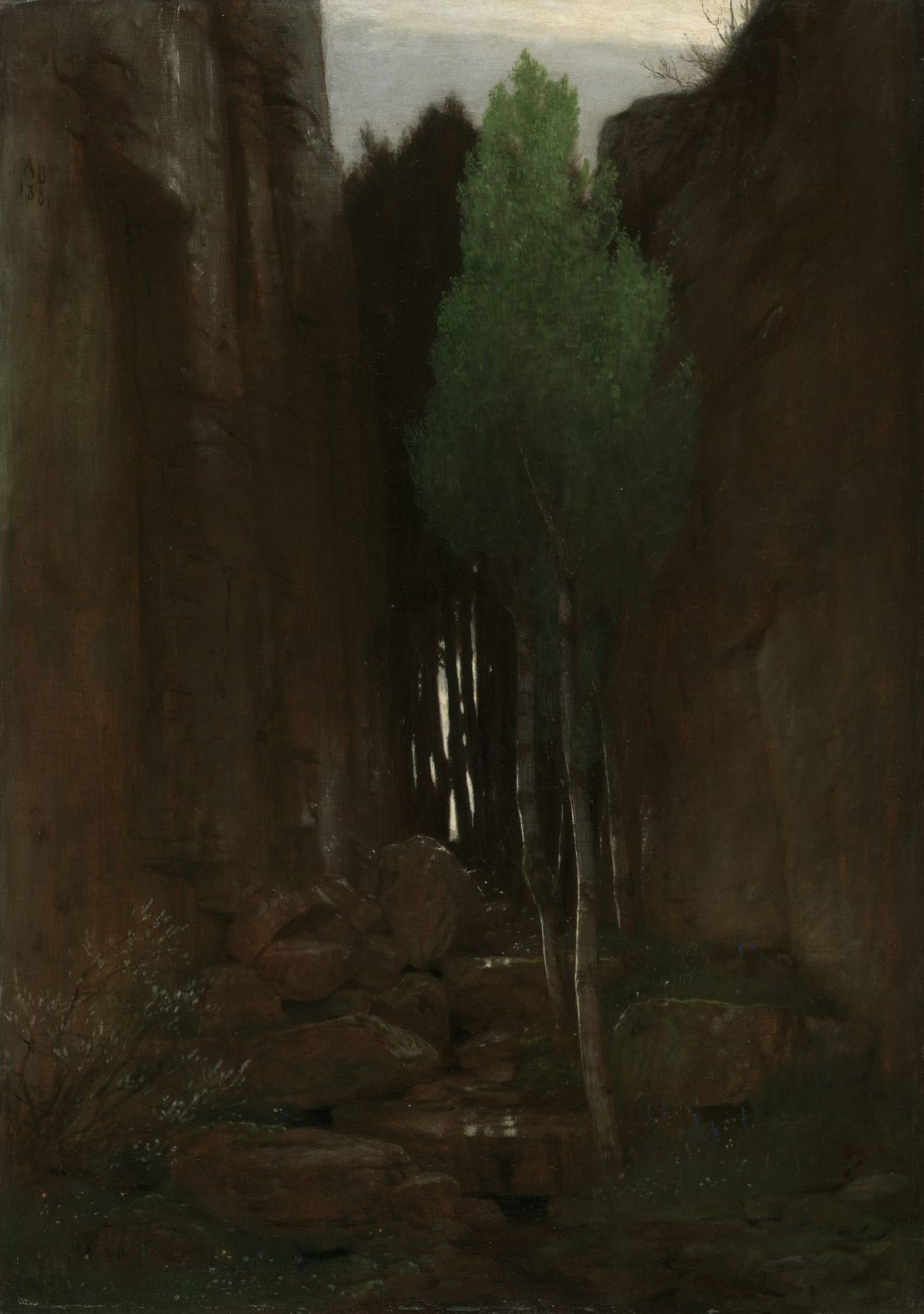
스위스 출신의 상징주의 거장 아놀드 뵈클린(Arnold Böcklin, 1827–1901)이 1881년에 스위스 취리히에서 완성한 유화 바위 협곡의 샘(Spring in a Ravine, 독일어: Quell in einer Felsschlucht)은 84.5 cm × 59.4 cm 크기의 캔버스에 유채로 그린 대표적인 상징주의 풍경화입니다. 현재 스위스 바젤 미술관(Kunstmuseum Basel)에 소장되어 있습니다.
죽음의 섬 직후에 피어난 고요한 생명의 고백
1880년 뵈클린은 미술사상 가장 어둡고 신비로운 명작으로 꼽히는 죽음의 섬 첫 번째 버전을 완성하며 유럽 화단에 거대한 충격을 안겼습니다. 죽음과 영원한 안식이라는 무거운 주제에 온 영혼을 쏟아부었던 화가는, 그 직후인 1881년에 마치 죽음의 그늘을 씻어내듯 바위 협곡 틈새에서 솟아오르는 맑은 샘물을 화폭에 담기 시작했습니다.
뵈클린은 자연을 단순한 풍경이 아니라 신비로운 생명력이 살아 숨 쉬는 하나의 거대한 유기체로 보았습니다. 하늘을 가로막을 듯 거대하게 솟아오른 깎아지른 절벽과 깊은 어둠 속에서, 외롭게 자라난 한 그루의 푸른 나무는 척박한 돌바닥을 뚫고 솟아나는 투명한 샘물을 머금고 있습니다. 평생 14명의 자녀 중 8명을 먼저 떠나보내는 지독한 참척의 고통을 겪었던 뵈클린에게, 차갑고 거친 암벽 사이로 조용히 흘러나오는 이 작은 샘물은 죽음의 침묵 속에서도 결코 끊어지지 않는 영원한 생명의 끈이자 화가 자신의 상처 입은 영혼을 치유하는 성스러운 위로였습니다.
어두운 암벽 사이로 빛나는 한 줄기 초록빛, 시선의 심리적 여정
그림을 마주하는 순간 관람객의 무의식적 시선은 거대한 어둠의 협곡 한가운데서 홀로 선명한 초록빛 잎을 뽐내고 있는 한 그루의 자작나무로 가장 먼저 빨려 들어갑니다. 주변을 둘러싼 거칠고 어두운 갈색 암벽과 대비되는 맑고 싱그러운 나뭇잎의 색채는 보는 이에게 강렬한 시각적 구원과 생명력을 선사합니다.
이어 시선은 나무의 가느다란 줄기를 따라 아래로 내려와, 이끼 낀 젖은 바위틈 사이로 은은하게 고여 있는 맑은 샘물과 하얀 반사광에 머뭅니다. 깊은 어둠 속에서도 끊이지 않고 솟아오르는 투명한 물줄기를 확인하는 순간, 관람객은 태고의 원시 자연이 품은 깊은 정적과 차분한 평온함을 경험합니다.
마지막으로 시선은 화면 양옆을 웅장하게 짓누르는 거대한 절벽의 어두운 벽면을 타고 올라가, 저 멀리 좁은 틈 사이로 아스라이 비치는 희미한 하늘빛에 멈춥니다. 숨 막힐 듯 닫혀 있는 거대한 바위 요새 속에서도 결국 생명의 빛과 맑은 샘물이 피어나는 광경을 마주하며, 관람객은 고난과 침묵 속에서도 묵묵히 이어지는 생명의 경이로움을 가슴 깊이 체감하게 됩니다.
신비주의 자연관과 독일 상징주의 풍경화의 정수, 미술계의 평가
미술계는 바위 협곡의 샘을 눈에 보이는 겉모습만을 묘사하던 19세기 사실주의 풍경화의 한계를 뛰어넘어 자연의 신비로운 정령과 내면적 영성을 시각화한 상징주의 풍경화의 수작으로 평가합니다.
극도로 절제된 색채와 빛의 연출을 통해 풍경 자체를 하나의 깊은 철학적 명상의 공간으로 탈바꿈시켰기 때문입니다. 죽음의 공포를 노래하던 화가가 삶의 가장 깊은 근원인 샘물에 바친 이 고요하고 숭고한 헌사는 오늘날까지도 뵈클린 특유의 독창적인 자연관을 증명하는 소중한 걸작으로 칭송받고 있습니다.
The Sacred Wellspring in the Primordial Abyss, Spring in a Ravine
Painted in 1881 in Zurich by the visionary Swiss Symbolist master Arnold Böcklin (1827–1901), Spring in a Ravine (German: Quell in einer Felsschlucht) is an oil on canvas measuring 84.5 cm × 59.4 cm (33.3 in × 23.4 in), preserved in the permanent collection of the Kunstmuseum Basel in Switzerland.
The Resurgence of Life Following the Shadow of the Isle of the Dead
In 1880, Arnold Böcklin completed the initial version of Isle of the Dead, a monumental meditation on mortality that established his international renown. Having confronted the absolute stillness of the underworld, the artist immediately turned his gaze in 1881 toward the subterranean origins of vitality, focusing on the mysterious emergence of fresh water within a desolate gorge.
Böcklin perceived pristine nature not as inanimate matter, but as an enchanted sanctuary imbued with hidden spirits and spiritual forces. Framed by towering, vertical rock faces that obscure the open sky, a lone, slender birch tree rises with luminous green foliage nourished by a hidden mountain spring trickling across the ancient stones. For Böcklin, who lived through the devastating loss of eight of his fourteen children to childhood illnesses, this solitary spring flowing within a stone fissure became a deeply personal emblem of spiritual resilience—a testament that life inexorably returns even within the darkest chasms of grief.
Subconscious Trajectory of the Gaze: Luminous Foliage to the Hidden Spring
The observer's subconscious gaze is instantly drawn to the radiant green canopy of the solitary tree standing in sharp relief against the somber verticality of the chasm. The crisp emerald tones provide an immediate visual and psychological sanctuary amidst the oppressive weight of the surrounding stone.
The visual path then follows the slender, pale trunk downward into the shadowed recesses of the ravine floor, where ambient light glints softly against the wet boulders and pools of clear spring water. Discovering the quiet trickle of water nourishing the subterranean flora, the viewer experiences a transition from claustrophobic solemnity to deep, meditative stillness.
Finally, the trajectory ascends the sheer, monolithic cliff walls flanking the composition, catching the narrow sliver of pale sky visible at the upper threshold. Observing how the ancient stone walls cradle the fragile spring and its living guardian, the spectator grasps Böcklin’s profound philosophical synthesis: nature’s most resilient life forces emerge from the deepest and most silent sanctuaries of the earth.
The Mystical Landscape: Critical Legacy
Art historians recognize Spring in a Ravine as an exquisite example of Böcklin’s atmospheric nature Symbolism, rejecting superficial topography in favor of psychological resonance.
By balancing monumental verticality with delicate tonal modulations of moss, moisture, and rock, Böcklin transformed an intimate geological feature into a sublime meditation on endurance and renewal. This quiet masterpiece endures as a vital emotional companion to the artist's darker mythologies, celebrating the unconquerable vitality of the natural world.
본 컨텐트의 저작권은 팔렛트제주에 있습니다. 허가없는 무단전제를 금지합니다.
Copyright © Palette Jeju. All rights reserved. Unauthorized reproduction or redistribution is strictly prohibited.