진열대의 과일 Fruit Displayed on a Stand
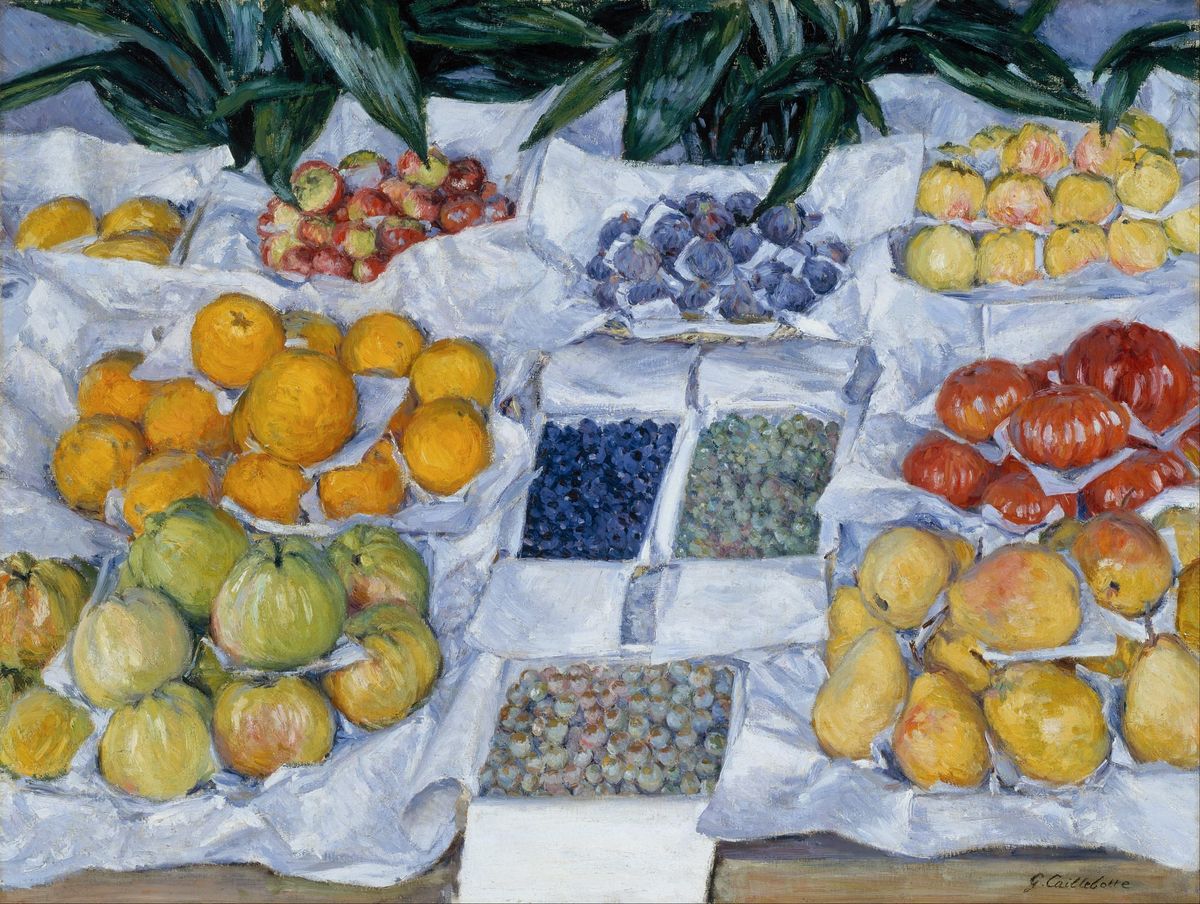
하얀 종이 위로 선명하게 빛나는 다채로운 과일들이 화면을 가득 채우며 시각적인 풍요로움을 선사하는 이 작품은, 귀스타브 카유보트가 1881년에서 1882년 사이에 완성한 명작입니다. 세로 76.5cm, 가로 100.6cm의 실제 캔버스 크기를 지닌 이 유화는, 당시 화려하게 발전하던 파리 시장의 생생한 일상과 풍성한 소비문화를 사진기 렌즈를 들이댄 듯 파격적인 클로즈업 구도로 담아내고 있습니다.
그림을 마주한 감상자의 시선은 가장 먼저 화면의 바깥쪽 가장자리를 둥글게 감싸고 있는 크고 밝은 과일들, 즉 탐스러운 오렌지와 붉은 토마토, 노란 서양배 등으로 향하게 됩니다. 강렬한 빛을 머금고 화려한 색채를 뽐내는 이 외곽의 큼직한 과일들은 우리가 일상에서 쉽게 매혹되고 좇아가는 근대 자본주의의 물질적 풍요로움이자, 화려하게 포장된 통제 가능한 의식의 세계를 상징합니다.
하지만 이내 우리의 눈길은 화면을 덮고 있는 하얀 포장지의 주름을 타고 중앙부로 미끄러져, 빽빽하게 담긴 짙고 어두운 블루베리와 작고 조밀한 열매들이 있는 중심부로 빠르게 빨려 들어갑니다. 외곽의 화려함에 비해 촘촘하고 어둡게 가라앉은 이 중앙의 밀집된 공간은, 감상자로 하여금 겉치레의 풍요로움에서 벗어나 자신의 가장 깊고 무거운 내면의 심연, 즉 반복되고 건조한 현대인의 무의식 속으로 조용히 침잠하게 이끕니다.
그리고 마침내 시선은 이 모든 과일을 받치고 있는 눈부시게 하얀 종이와 거친 진열대의 모서리에 머물게 됩니다. 주변의 시장 상인이나 도시의 맥락을 완전히 잘라내고 오직 진열대만을 평면적으로 부각한 이 숨 막히는 구도는, 화려한 군중 속에서도 철저히 고립된 채 대상을 관망할 수밖에 없는 현대 도시인의 짙은 소외감과 심리적 거리감을 극대화하는 탁월한 장치로 작용합니다.
이토록 독창적이고 현대적인 정물화가 탄생한 비하인드 스토리에는 근대적인 삶의 방식을 예리하게 포착한 카유보트만의 대담한 예술적 실험이 깃들어 있습니다. 이 작품은 원래 그의 오랜 친구이자 공증인이었던 알베르 쿠르티에의 다이닝 룸을 장식하기 위해 그려졌습니다.
카유보트는 전통적인 정물화처럼 테이블 위에 과일을 우아하게 흩어놓는 방식을 거부하고, 새롭게 등장한 파리 대형 시장의 상업적인 진열 방식을 있는 그대로 캔버스에 옮겨왔습니다. 이는 예술의 주제를 고상한 관념에서 벗어나 가장 현실적이고 소비적인 근대 도시의 민낯으로 끌어내린 과감한 시도였습니다.
오늘날 미술사학자들은 이 작품을 인상주의 정물화의 한계를 넘어 현대 시각 예술의 문을 활짝 연 위대한 걸작으로 칭송합니다. 대상을 정면에서 바짝 내려다보는 파격적인 조감도와 형태의 반복이 만들어내는 과감한 패턴은, 훗날 등장할 현대 추상 미술이나 팝아트의 진열장 풍경을 완벽하게 예고하고 있습니다.
이 그림은 카유보트가 단순히 동료들의 든든한 후원자를 넘어, 19세기 그 누구보다 시대를 앞서간 독창적인 시각을 지닌 진정한 천재 화가였음을 전 세계에 다시 한번 확고히 증명하고 있습니다.
Presenting a visual abundance as colorful fruits shining vividly on white paper completely fill the frame, this artwork is a masterpiece completed by Gustave Caillebotte between 1881 and 1882. With actual canvas dimensions of 76.5 by 100.6 centimeters, this oil painting captures the vibrant daily life and opulent consumer culture of the flourishing Parisian markets through an unconventional, close-up composition, as if viewed directly through a camera lens.
Upon facing the painting, the viewer's gaze is first drawn to the large, bright fruits wrapping around the outer edges of the canvas—the luscious oranges, red tomatoes, and yellow pears. Exuding intense light and boasting spectacular colors, these large, peripheral fruits symbolize the material affluence of modern capitalism that we are easily mesmerized by and pursue in our daily lives, representing the glamorously packaged, controllable world of consciousness.
However, our eyes soon glide along the folds of the white wrapping paper covering the display, quickly sucked into the center where dense, dark blueberries and small, tightly packed berries are situated. Compared to the peripheral glamour, this densely concentrated and darkly sunken central space leads the observer to pull away from superficial abundance and quietly sink into the profound, heavy abyss of their own inner mind—the repetitive and dry unconsciousness of the modern individual.
Finally, the gaze rests on the blindingly white paper supporting all these fruits and the rough edges of the wooden stand. This breathtaking composition, which completely crops out the surrounding market vendors or urban context and flattens only the display stand, acts as an exceptional device that maximizes the dense sense of alienation and psychological distance of modern urbanites, who are forced to strictly observe subjects in isolation even amidst a glamorous crowd.
The behind-the-scenes story of how such a highly original and modern still life was born is imbued with Caillebotte's bold artistic experimentation, sharply capturing the modern way of life. This piece was originally painted to decorate the dining room of his longtime friend and notary, Albert Courtier.
Caillebotte rejected the traditional still-life approach of elegantly scattering fruits on a table, and instead brought the commercial display methods of the newly emerging grand Parisian markets directly onto the canvas exactly as they were. This was a daring attempt to drag the subject of art away from noble concepts and down to the most realistic, consumerist bare face of the modern city.
Today, art historians highly praise this artwork as a magnificent masterpiece that pushed past the limitations of Impressionist still life and threw open the doors to modern visual art. The unconventional bird's-eye view, looking closely down at the subject from the front, and the bold patterns created by the repetition of forms perfectly foreshadow the showcase landscapes of modern abstract art and Pop Art that would emerge later.
This painting firmly proves to the world once again that Caillebotte was not merely a generous patron of his peers, but a true genius painter who possessed an original vision further ahead of his time than anyone else in the 19th century.
ⓒ 본 리뷰의 저작권은 "팔렛트제주"에 있으며, 무단 전재 및 재배포를 엄격히 금합니다. / Copyright 2026 by Palette Jeju. All rights reserved. Unauthorized reproduction or distribution is strictly prohibited.