지중해의 바람을 바라보며 결의를 다진 서른다섯 청년의 침묵, 자화상 Self-Portrait
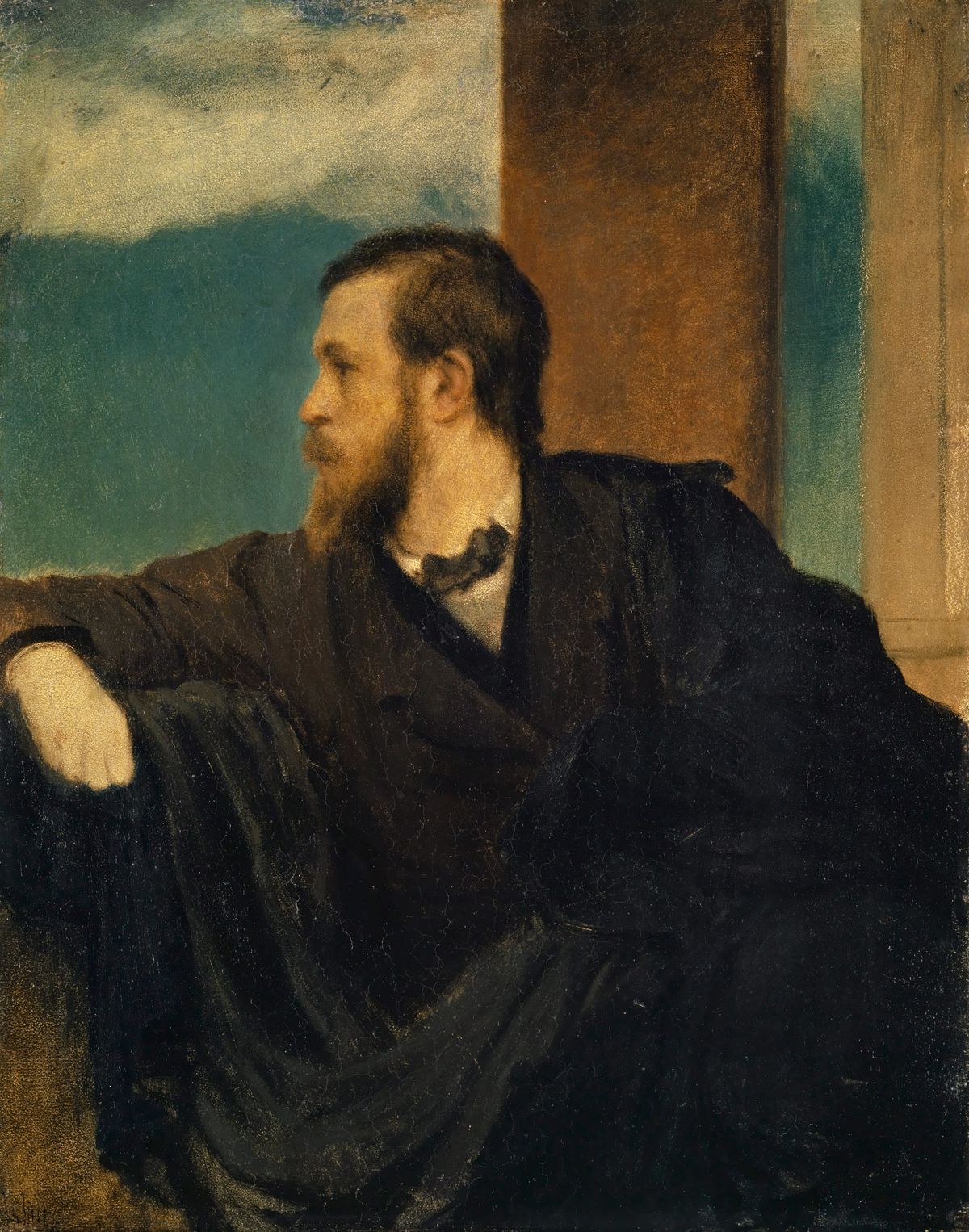
스위스 출신의 상징주의 거장 아놀드 뵈클린(Arnold Böcklin, 1827–1901)이 1862년 이탈리아 로마에서 완성한 유화 자화상(Self-Portrait, 독일어: Selbstbildnis)은 81.0 cm × 64.5 cm 크기의 캔버스에 유채로 그린 대표작입니다. 현재 스위스 바젤 미술관(Kunstmuseum Basel)에 소장되어 있습니다.
바이마르 교수직 사임과 로마로의 탈출이 빚어낸 고뇌
1862년 서른다섯 살의 뵈클린은 인생의 중대한 갈림길에 서 있었습니다. 당시 독일 바이마르 미술학교의 교수로 임용되어 안정적인 생활과 사회적 지위를 얻었으나, 엄격하고 답답한 아카데미의 규율과 보수적인 학풍은 그의 자유로운 예술혼을 끊임없이 옭아맸습니다. 안락한 교수직에 안주하다가는 자신만의 진정한 예술을 펼칠 수 없다고 판단한 뵈클린은, 극심한 가난과 불확실한 미래가 기다리고 있음에도 불구하고 교수직을 과감히 사임하고 다시 이탈리아 로마로 떠났습니다.
이 그림은 그가 바이마르를 떠나 로마에 다시 정착하며 자신의 예술적 신념을 새롭게 다지던 격동의 순간을 담고 있습니다. 뵈클린은 관람객을 정면으로 바라보지 않고, 창밖의 푸른 하늘과 먼 지평선을 향해 깊은 생각에 잠긴 옆모습을 취하고 있습니다. 어두운 르네상스풍 학자 예복을 걸치고 고대 로마의 석조 기둥에 몸을 기댄 채 팔을 얹은 그의 자세는, 세상의 인정이나 세속적인 성공에 흔들리지 않고 고전의 영원한 아름다움과 상징주의의 길을 묵묵히 개척하겠다는 굳은 다짐을 보여줍니다.
빛나는 뺨과 턱수염에서 먼 지평선으로, 시선의 심리적 여정
그림을 마주하는 순간 관람객의 무의식적 시선은 어둠 속에서 은은한 햇살을 받아 환하게 빛나는 화가의 이마와 콧날, 그리고 결연하게 다문 입술을 감싸는 갈색 턱수염으로 가장 먼저 빨려 들어갑니다. 어두운 배경과 뚜렷한 대비를 이루는 뚜렷한 옆모습의 윤곽은 보는 이에게 깊은 사색의 고요함을 전달합니다.
이어 시선은 화면 왼쪽 위에 펼쳐진 청록빛 하늘과 흰 구름, 그리고 그곳을 묵묵히 응시하는 화가의 깊고 투명한 눈동자로 이동합니다. 눈앞의 현실이 아닌 먼 예술적 이상향을 바라보는 그의 그윽한 시선을 마주하는 순간, 관람객은 안락한 현실을 박차고 나온 한 청년 예술가의 고독한 내면과 마주하게 됩니다.
마지막으로 시선은 화면 아래쪽으로 내려와 난간 위에 편안하게 얹어놓은 화가의 손과 짙은 검은색 옷자락의 무거운 주름, 그리고 오른쪽에 든든하게 버티고 선 고대 석조 기둥에 멈춥니다. 고대 문명의 굳건한 역사와 자신의 예술을 일치시키려는 청년 뵈클린의 단단한 자의식을 확인하면서, 관람객은 시련 속에서도 결코 꺾이지 않았던 거장의 위대한 출발점을 깊이 있게 공감하게 됩니다.
낭만적 자의식과 고전주의의 융합, 미술계의 평가
미술계는 1862년의 자화상을 르네상스 인문주의 초상화의 기품과 19세기 독일 낭만주의 화가의 치열한 내면성을 가장 우아하게 결합한 수작으로 평가합니다.
단순히 화가의 외모를 기록하는 데 그치지 않고, 안락함을 거부하고 자유로운 창작의 길을 선택한 예술가의 정신적 독립 선언을 공간과 빛의 조화로 완벽하게 구축했기 때문입니다. 청년 시절의 굳은 결의와 고뇌를 담아낸 이 품격 있는 자화상은 훗날 유럽을 뒤흔든 불멸의 명작들을 탄생시킨 뵈클린 예술의 든든한 초석으로 손꼽힙니다.
The Sovereign Silence of the Seeking Spirit, Self-Portrait
Painted in 1862 in Rome by the visionary Swiss Symbolist master Arnold Böcklin (1827–1901), Self-Portrait (German: Selbstbildnis) is an oil on canvas measuring 81.0 cm × 64.5 cm (31.9 in × 25.4 in), preserved in the permanent collection of the Kunstmuseum Basel in Switzerland.
The Resignation from Weimar and the Rebirth of Independence
In 1862, at the age of thirty-five, Arnold Böcklin made a decisive choice that altered the trajectory of his career. Having attained prestigious institutional security as a professor at the Grand-Ducal Saxon Art School in Weimar, he found the rigid academic environment stifling to his imaginative vision. Consciously choosing economic precarity over artistic stagnation, Böcklin resigned his post and returned to Rome to immerse himself in classical antiquity and mythological symbolism.
This self-portrait records this critical moment of artistic rebirth. Rather than engaging the spectator directly, Böcklin presents himself in contemplative profile, gazing out beyond the pictorial plane toward the distant horizon. Dressed in a dark Renaissance-style tunic and leaning against a classical Roman stone column, his calm posture signals complete detachment from bourgeois academic approval, affirming his lifelong commitment to the timeless poetic truth of classical form and atmospheric nature.
Subconscious Trajectory of the Gaze: From Illuminated Profile to the Azure Horizon
The observer's subconscious gaze is immediately arrested by the illuminated contour of the artist's profile, catching the radiant sunlight sweeping across his brow, nose, and neatly trimmed beard. The sculptural clarity of his features against the shadowy interior creates an immediate aura of quiet dignity.
The trajectory of sight then tracks the directional line of his vision toward the upper-left quadrant, where wispy cumulus clouds drift across an azure sky. Sensing the introspective calm in his averted eyes, the viewer perceives the contemplative depth of a creator envisioning unpainted mythologies and charting his own solitary path.
Finally, the visual movement descends past the dark, folded fabric of his cloak to the relaxed hand resting upon the parapet, framed by the monolithic verticality of the stone pillar on the right. Recognizing how the artist aligns his physical presence with the enduring architectural strength of ancient Rome, the spectator experiences the foundational resolve that underpins Böcklin's entire aesthetic legacy.
Romantic Interiority and Classical Form: Critical Legacy
Art historians recognize this 1862 canvas as a refined synthesis of Renaissance portrait conventions and 19th-century Romantic interiority.
By privileging intellectual independence over self-aggrandizement, Böcklin elevated the artist's self-portrait into a profound declaration of creative autonomy. This noble representation stands as a pivotal milestone in the artist's development, bridging his early academic training with the visionary Symbolist masterworks that would soon captivate the European imagination.
본 컨텐트의 저작권은 팔렛트제주에 있습니다. 허가없는 무단전제를 금지합니다.
Copyright © Palette Jeju. All rights reserved. Unauthorized reproduction or redistribution is strictly prohibited.