지중해 햇살 아래 피어난 소박한 사랑과 자연의 축복, 목가 Idyll
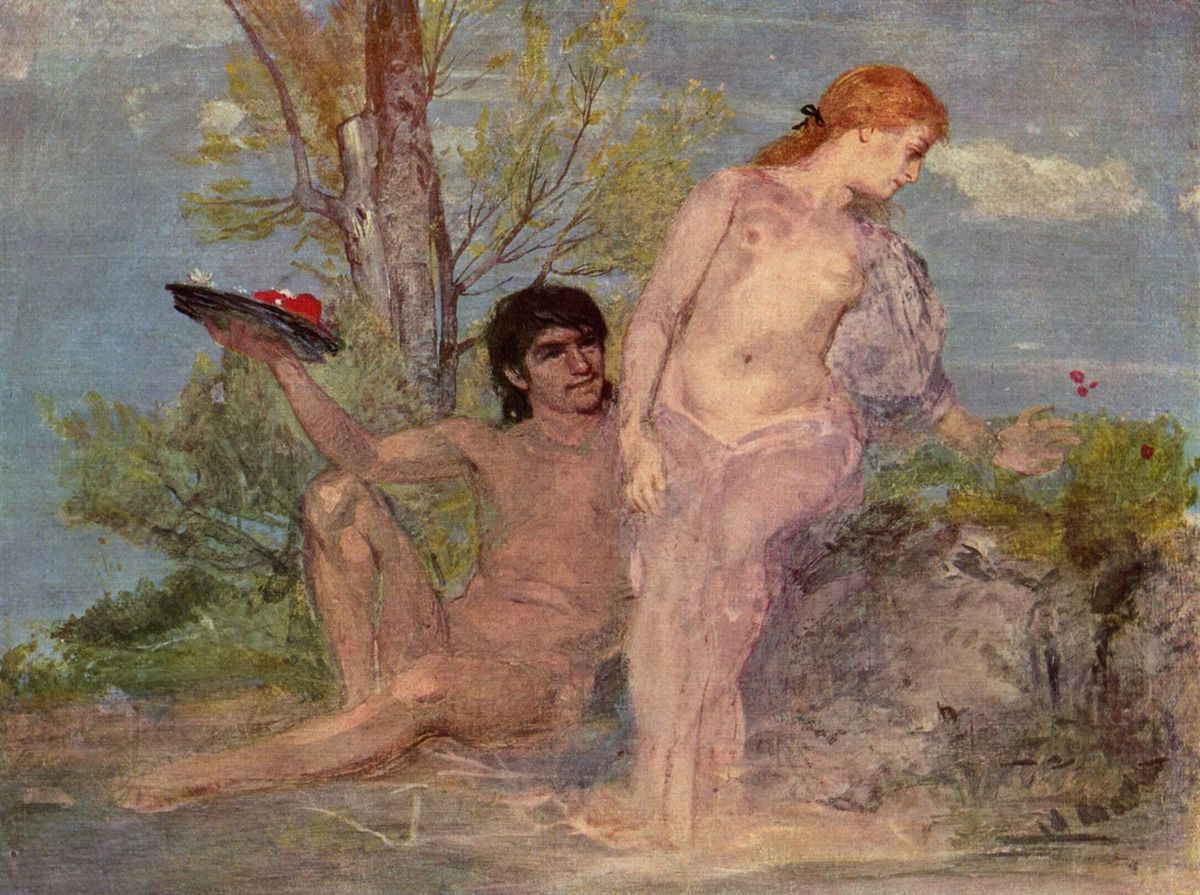
스위스 출신의 상징주의 거장 아놀드 뵈클린(Arnold Böcklin, 1827–1901)이 1866년에 스위스 바젤에서 완성한 유화 목가(Idyll, 독일어: Idyll, 또는 Idylle)는 58.0 cm × 76.5 cm 크기의 캔버스에 유채로 그린 대표적인 낭만주의 초기 명작입니다. 현재 스위스 취리히의 쿤스트하우스 취리히(Kunsthaus Zürich)에 소장되어 있습니다.
바이마르 아카데미 사임 후 로마의 햇살을 그리워하며 건져 올린 순수한 시정
1860년대 중반 뵈클린은 독일 바이마르 미술학교의 안정적인 교수직을 박차고 나온 뒤, 고향 바젤과 이탈리아를 오가며 진정한 예술적 자유를 찾기 위해 치열하게 분투하고 있었습니다. 당시 북유럽 미술계는 화려하고 엄숙한 역사화나 엄격한 도덕적 교훈을 담은 종교화만을 정통 예술로 인정하고 있었습니다. 그러나 뵈클린은 이러한 딱딱한 형식주의에 깊은 답답함을 느꼈고, 고대 로마 시인들의 시 속에 등장하는 티 없이 맑은 목가적 이상향을 캔버스 위에 구현하고자 했습니다.
화면 속 맑은 하늘과 은은한 햇살 아래, 붉은 머리를 땋아 내린 님프는 바위 위에 조용히 서서 물가로 손을 뻗고 있습니다. 그녀의 발치에 편안하게 누운 청년은 신선한 꽃과 과일을 담은 쟁반을 한 손으로 높이 받쳐 들며 다정한 눈빛으로 여인을 바라봅니다. 뵈클린은 권위적인 미술계의 요구에 맞추어 영웅의 위대한 업적을 그리는 대신, 따스한 바람과 풀잎의 향기, 그리고 연인 사이에 흐르는 소박하고 진실한 교감을 포착했습니다. 제도권 미술 교육의 틀을 깨고 자신만의 낭만적 이상향을 세우고자 했던 청년 거장의 자유로운 예술혼이 이 따뜻하고 서정적인 화폭 속에 고스란히 배어 있습니다.
바위 위의 붉은 머리 님프에서 꽃쟁반을 든 청년의 미소로, 시선의 심리적 여정
그림을 마주하는 순간 관람객의 무의식적 시선은 화면 오른쪽에서 은은한 햇살을 받아 부드럽게 빛나는 붉은 머리 님프의 우아한 나체와 그녀가 걸친 연보랏빛 옷자락으로 가장 먼저 이끌립니다. 맑은 공기 속에서 고개를 돌려 풀숲을 바라보는 여인의 차분한 옆모습은 보는 이에게 깊은 순수함과 평온한 서정성을 선사합니다.
이어 시선은 여인의 손짓을 따라 풀잎 사이로 흩날리는 붉은 꽃잎들을 지나, 화면 왼쪽 나무 그늘 아래 편안하게 기대앉은 검은 머리 청년의 따뜻한 미소로 이동합니다. 꽃과 열매를 정성스럽게 받쳐 든 쟁반을 높이 치켜들고 연인을 향해 사랑 가득한 눈빛을 보내는 청년의 모습을 확인하는 순간, 관람객은 고요한 숲속에서 피어나는 다정한 교감의 순간에 빠져들게 됩니다.
마지막으로 시선은 두 연인의 등 뒤로 맑고 푸르게 펼쳐진 하늘과 부드러운 붓 터치로 표현된 은빛 나뭇잎들의 흔들림에 멈춥니다. 인위적인 장식이나 긴장감 없이 자연의 품 안에서 순수한 기쁨을 나누는 두 사람을 바라보며, 관람객은 복잡한 세속의 고민을 잊게 해주는 목가적 낙원의 따스한 온기를 가슴 깊이 체감하게 됩니다.
초기 낭만주의 목가화의 수작이자 신화적 전환점, 미술계의 평가
미술계는 목가를 뵈클린이 딱딱한 아카데미식 고전주의의 한계를 벗어나 자연과 신화의 서정적 결합을 성공적으로 이루어낸 중요한 과도기적 명작으로 평가합니다.
빛과 색채를 자유롭게 다루는 파스텔톤의 부드러운 붓 터치와 인물들의 자연스러운 동세를 통해, 고대 신화의 세계를 박제된 옛이야기가 아닌 살아 숨 쉬는 감성의 공간으로 재창조했기 때문입니다. 현실의 척박한 비평 속에서도 자연과 인간이 이루는 가장 순수한 조화를 노래했던 뵈클린의 이 온화한 화폭은 훗날 그가 완성하게 될 독창적인 상징주의 신화화의 찬란한 모태가 되었습니다.
The Pure Serenity of the Pastoral Light, Idyll
Painted in 1866 in Basel by the preeminent Swiss Symbolist master Arnold Böcklin (1827–1901), Idyll (German: Idyll, also titled Idylle) is an early oil on canvas measuring 58.0 cm × 76.5 cm (22.8 in × 30.1 in), preserved in the permanent collection of the Kunsthaus Zürich in Zurich, Switzerland.
Post-Weimar Independence, Mediterranean Longing, and the Classical Pastoral
In the mid-1860s, Arnold Böcklin spent his days moving between Basel and Italy, having decisively resigned his comfortable professorship at the Grand-Ducal Saxon Art School in Weimar to preserve his artistic freedom. The contemporary Northern European art establishment remained bound to rigid academic history painting and moralizing didacticism. Suffocated by institutional dogmas, Böcklin sought refuge in the pastoral poetry of classical antiquity, determined to capture an uncorrupted realm of natural harmony and lyrical affection.
Under a clear, sunlit sky, a red-haired nymph stands poised beside a mossy rock, trailing delicate violet drapery as she reaches toward the meadow. Lounging on the grass beside her, a dark-haired youth raises a platter laden with fresh blossoms and fruit, offering his pastoral tribute with a gaze of tender devotion. Rejecting grandiose historical pageantry, Böcklin concentrated on the subtle interplay of warm light, rustling foliage, and the gentle intimacy shared between two souls. This peaceful composition stands as a radiant testament to the young master's determination to establish his own romantic Arcadia away from academic constraint.
Subconscious Trajectory of the Gaze: From Luminous Nymph to the Devoted Youth
The observer's subconscious gaze is instantly drawn toward the right, captivated by the soft, sunlit contours of the red-haired nymph and the translucent lilac drapery gathered about her waist. Her delicate profile gazing toward the flowering bank creates an immediate atmosphere of tranquil innocence and lyrical grace.
The visual path then follows her outstretched hand past the drifting red petals to the seated youth resting beneath the slender tree on the left. Taking in his relaxed posture, his focused gaze upon his companion, and the dark tray of offerings held aloft with steady poise, the viewer is drawn into the quiet warmth of a shared romantic reverie.
Finally, the trajectory sweeps across the pale cerulean sky and the freely brushed silver foliage of the background canopy. Observing how the lovers are nestled harmoniously within the gentle rhythms of the earth, the spectator perceives the timeless simplicity of pastoral joy and the restorative peace of an untouched natural sanctuary.
The Milestone of Romantic Poetics: Critical Legacy
Art historians recognize Idyll as a crucial milestone in Böcklin’s early development, bridging traditional classical pastoral themes with modern Symbolist lyricism.
By employing fluid, atmospheric brushwork and prioritizing psychological warmth over rigid neoclassical contours, Böcklin revitalized antiquity as an intimate realm of living emotion. This tender canvas endures as an essential early achievement, prefiguring the visionary mythological landscapes that would later define the master's international legacy.
본 컨텐트의 저작권은 팔렛트제주에 있습니다. 허가없는 무단전제를 금지합니다.
Copyright © Palette Jeju. All rights reserved. Unauthorized reproduction or redistribution is strictly prohibited.