정육점 여인 - The Pork Butcher
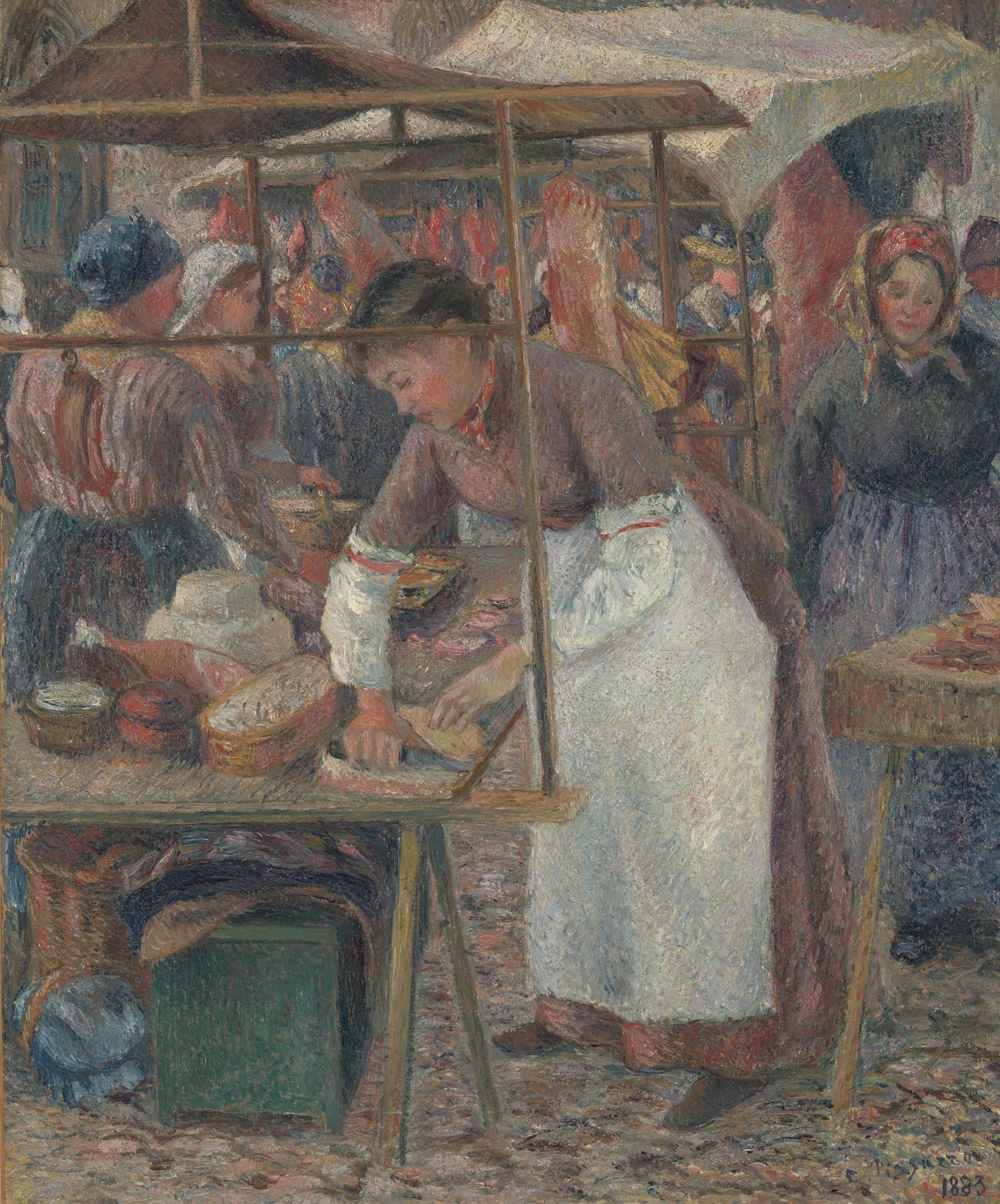
프랑스 인상주의 화파의 인자한 아버지이자 인간과 노동의 따뜻한 조화를 화폭에 담아낸 카미유 피사로(Camille Pissarro)가 1883년에 완성한 '정육점 여인(La Charcutière / The Pork Butcher)'은 캔버스에 유채(Oil on canvas)로 제작된 기념비적인 인물 장르화 걸작입니다. 가로 54.3cm, 세로 65.1cm 크기의 이 작품은 활기찬 시골 장터의 하루를 생생하게 포착해 냈으며, 현재 영국 런던의 테이트(Tate)에 영구 소장되어 있습니다.
이 그림에는 피사로의 따뜻한 가족사와 절친한 동료 에드가 드가와의 특별한 예술적 교감이 담긴 흥미진진한 비하인드 스토리가 깃들어 있습니다. 당시 피사로는 퐁투아즈 인근 오니(Osny)에 거주하며 매주 열리는 전통 시장의 생생한 풍경에 깊이 매료되어 있었습니다. 화폭 속에서 하얀 앞치마를 두르고 능숙한 손길로 고기를 다듬고 있는 젊은 여인의 모델은 다름 아닌 피사로의 조카이자 가족의 궂은일을 도맡아 돕던 넬리(Nélie Jacommel)였습니다.
피사로는 퐁투아즈 시장에서 직접 스케치한 복잡한 장터 풍경을 바탕으로 아틀리에에서 넬리를 모델로 세워 이 작품을 정교하게 완성했습니다. 당시 피사로의 시장 연작을 본 드가는 "소박한 서민들의 일상을 이토록 고귀하고 완벽한 조형미로 담아낸 화가는 피사로뿐"이라며 극찬을 아끼지 않았습니다. 피사로는 건조하고 짧은 붓질을 씨실과 날실처럼 엮어내는 '크로스 해칭(Cross-hatching)' 기법을 사용하여, 햇빛을 반사하는 흰 앞치마와 천막의 질감, 고기 가판대의 다채로운 색채를 눈부시게 직조해 냈습니다. 훗날 미술사학자들과 평단은 이 작품을 두고 프랑스 사실주의의 진정성과 인상주의의 빛채가 만나 서민 여성의 정직한 노동을 눈부신 현대적 시정(詩情)으로 끌어올린 걸작으로 높이 평가하고 있습니다.
작품을 마주할 때 우리의 시선은 화면 중앙에서 허리를 살짝 굽히고 나무 도마 위의 고기를 조심스럽게 다듬고 있는 여인의 야무진 손끝과 온화한 옆얼굴에 가장 먼저 가닿습니다. 여인의 붉은 목스카프와 눈부시게 빛나는 하얀 앞치마의 풍성한 드레이프를 확인한 시선은, 나무 가판대 위에 정갈하게 진열된 고기와 소시지, 둥근 그릇들의 아기자기한 질감을 타고 좌측 하단으로 자연스럽게 흘러내립니다.
이어 가판대 아래 놓인 바구니와 초록빛 나무 상자를 스치며, 여인의 뒤편에서 손님을 맞이하고 거래를 나누는 시장 상인들의 분주하고 정겨운 움직임으로 시선이 이동합니다. 마지막으로 장터 위를 덮고 있는 차일 천막의 거친 천 질감과 그 사이로 부서져 내리는 햇살의 산란을 지나, 화면 우측에서 따뜻한 눈빛으로 이쪽을 바라보는 또 다른 여인의 미소 속으로 시선이 부드럽게 확산되며 장터 전체의 활기찬 온기를 온몸으로 체감하게 됩니다.
이러한 시각적 흐름은 관람자의 무의식 속에 깊은 정서적 활력과 따스한 안도감을 불러일으킵니다. 화면을 가득 채운 온화한 흙빛과 따뜻한 붉은색, 청결한 흰색의 조화는 일상의 번잡한 스트레스와 굳어진 감각을 편안하게 이완시켜 줍니다. 성실하게 자신의 삶을 일구어가는 사람들의 진솔한 표정과 북적이는 장터의 따뜻한 생명력은, 바라보는 이의 무의식 깊은 곳에 잃어버렸던 인간적인 유대감과 함께 마음을 든든하게 채워주는 깊은 위로를 선물합니다.
The Pork Butcher - La Charcutière
Painted in 1883 by Camille Pissarro, the revered patriarch and compassionate conscience of French Impressionism, The Pork Butcher (La Charcutière) is an oil on canvas masterwork measuring 65.1 by 54.3 cm. Capturing the vibrant, rhythmic pulse of a rural marketplace, this magnificent genre composition is permanently housed in the esteemed collection of the Tate in London.
Behind this captivating canvas lies an intimate family narrative intertwined with deep artistic admiration between Pissarro and Edgar Degas. In the early 1880s, while living near Pontoise in Osny, Pissarro became intensely drawn to the democratic vitality of traditional open-air market days. The central figure of the young butcher woman carefully preparing cuts behind her wooden stall was modeled by Pissarro's affectionate niece, Nélie Jacommel, who lived with the family and frequently assisted with household duties.
Synthesizing dynamic preliminary sketches drawn directly at the crowded Pontoise market with focused studio posing by Nélie, Pissarro achieved a monumental structural balance. When Degas saw Pissarro's market compositions, he expressed boundless admiration for his friend's ability to elevate humble working-class life into supreme modern art. Utilizing dry, crisscrossing touches of broken color that resemble a woven tapestry, Pissarro brilliantly captured the crisp luminosity of the butcher's white apron and the rustic textures of meat and canvas awnings. Today, art historians revere this work as a triumphant milestone where the unvarnished dignity of agrarian Realism harmoniously merges with the optical brilliance of Impressionism.
Upon viewing the canvas, the spectator's gaze instinctively alights on the central figure of the young woman, observing her graceful posture and attentive hands as she handles the cuts upon her wooden table. From the crisp white surface of her protective apron and the warm red accents around her neck, our attention glides across the charming array of baskets, terrines, and charcuterie resting on the stall.
The gaze then descends past the rustic wooden crates and wicker hampers before moving into the bustling crowd of vendor women chatting and working beneath the market tents in the background. Finally, our attention sweeps past the canvas awnings overhead to meet the gentle, smiling gaze of the peasant woman standing on the right, taking in the generous warmth and social camaraderie of the country bazaar.
This visual journey awakens a profound sense of psychological security and joyous grounding within the subconscious. The comforting harmony between warm terracotta hues, earthy ochres, and radiant whites naturally dissolves mental fatigue, welcoming the mind into a sanctuary of human vitality. Observing the honest devotion of working people thriving within a caring community restores the spirit with timeless serenity, optimism, and deep emotional comfort.
본 리뷰에서 작품을 제외한 컨텐츠의 저작권은 팔렛트제주에 있습니다.
"퍼블릭도메인 고전명화"를 제외한 모든 창작 콘텐츠는 저작권법 제4조 및 제10조에 의거하여 보호됩니다. 무단 도용시 저작권법 제136조(벌칙)에 의거, 당사의 사전 서면 승인 없는 저작권 침해 행위를 금지합니다.