정원사(젊은 농부의 초상) - The Gardener (Portrait of a Young Peasant)
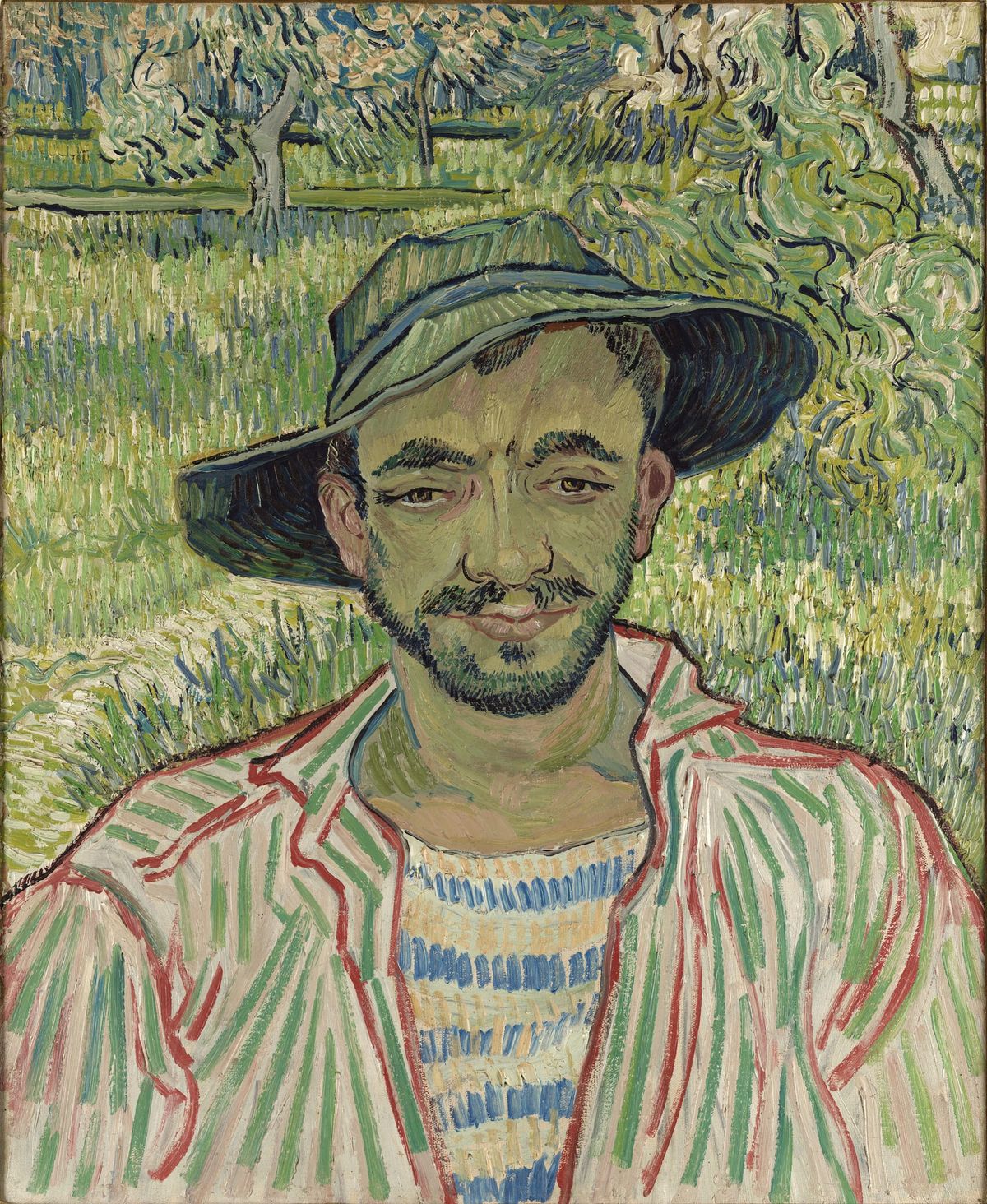
네덜란드의 후기 인상주의 거장 빈센트 반 고흐가 1889년 9월 생레미 드 프로방스의 생폴 드 모졸 수도원 정신병원에 머물던 시기에 제작한 유화 작품으로, 캔버스에 유채 기법으로 완성되었으며 크기는 세로 61cm, 가로 50cm입니다. 현재 이탈리아 로마의 국립현대미술관(Galleria Nazionale d'Arte Moderna e Contemporanea)에 영구 소장되어 있습니다. 인물의 얼굴과 의복, 그리고 배경의 정원을 가득 메운 율동적인 선묘와 섬세한 녹색 및 붉은색의 교차 터치, 캔버스 표면에 도톰하게 쌓아 올린 임파스토 기법은 반 고흐 후기 초상화 예술의 절정을 여실히 드러냅니다.
이 작품은 반 고흐가 생폴 정신병원의 정원이나 인근에서 일하던 젊은 정원사(혹은 농부)를 모델로 삼아 그린 초상화입니다. 당시 고흐는 극심한 정신적 발작과 고립감 속에서 회복기를 보내고 있었으나, 흙을 만지고 식물을 돌보는 순박한 노동자의 생명력 넘치는 모습에서 깊은 예술적 영감과 삶의 위안을 얻었습니다. 동생 테오에게 보낸 편지에서도 그는 정원사의 온화하면서도 다부진 인상을 화폭에 담는 과정에서 큰 평온을 느꼈음을 전했습니다. 미술사학계와 평단에서는 모델의 외형적 특징을 넘어 인물과 자연이 하나의 호흡으로 어우러지는 유기적 일체감을 구현한 걸작으로 평가하며, 고흐가 평생에 걸쳐 품었던 민중과 대지에 대한 숭고한 경외심이 투영된 대표작으로 꼽습니다.
작품을 마주하는 관람자의 무의식적인 시선은 온화하면서도 깊은 총기를 품은 젊은 정원사의 눈빛과 부드러운 미소에 가장 먼저 머뭅니다. 선량함과 평정심이 묻어나는 인물의 표정은 현대인의 굳어 있던 긴장과 마음속 불안을 차분하게 이완시켜 줍니다. 이어 시선은 챙 넓은 모자의 유려한 곡선을 따라 내려와, 녹색과 붉은 줄무늬가 리드미컬하게 교차하는 옷감의 독특한 텍스처로 자연스럽게 이동합니다.
마지막으로 시선은 인물의 등 뒤로 싱그럽게 피어난 정원의 연둣빛 풀잎과 나무들의 활기찬 붓터치로 확장되며, 자연의 충만한 생명력을 온몸으로 느끼게 됩니다. 인물의 온화한 중심에서 출발해 배경의 푸른 자연으로 퍼져나가는 이 시각적 여정은 관람자의 뇌파를 안정시키고 깊은 정서적 정화와 심리적 안도감을 선사합니다. 대지를 가꾸는 정원사의 맑은 기운은 보는 이의 무의식 속에 쌓인 피로를 씻어내고, 삶을 긍정하게 만드는 따스한 위로와 내면의 회복 탄력성을 불어넣어 줍니다.
The Gardener (Portrait of a Young Peasant) - The Gardener (Portrait of a Young Peasant)
Painted in September 1889 during his stay at the Saint-Paul-de-Mausole asylum in Saint-Rémy-de-Provence, France, this masterwork by Dutch Post-Impressionist Vincent van Gogh is an oil on canvas measuring 61 by 50 centimeters. It is currently preserved in the prestigious permanent collection of the Galleria Nazionale d'Arte Moderna e Contemporanea in Rome, Italy. Defined by calligraphic brushstrokes, rhythmic stripes of green and red, and a sculpted impasto texture, the canvas exemplifies the pinnacle of Van Gogh's late expressive portraiture, seamlessly merging human psychology with natural rhythm.
The portrait depicts a young gardener or agricultural worker whom Van Gogh encountered within the asylum grounds or its immediate rural surroundings. During this intense period of mental convalescence and solitude, Van Gogh found profound therapeutic grounding in observing those who worked directly with the earth. In letters to his brother Theo, he conveyed his deep fascination with the unpretentious dignity and quiet resilience of this young laborer. Modern art historians and critics celebrate the composition for its harmonious chromatic balance and organic unity, wherein the sitter's figure and the lush garden background become a single, vibrant tapestry of life, demonstrating Van Gogh's lifelong reverence for the sacred simplicity of rural labor.
Upon engaging with the canvas, the viewer's subconscious gaze is immediately captivated by the clear, gentle eyes and subtle smile of the young gardener. This calm and open countenance disarms internal stress, inviting an immediate sense of emotional stillness and genuine human connection. The eye then follows the sweeping curve of the sun hat down to the lively, rhythmic red and green stripes of his tunic, appreciating the tactile energy of the brushwork.
Finally, the visual journey sweeps outward into the verdant, sun-dappled foliage of the background garden, where light and greenery pulse with vitality. Moving from the intimate warmth of the portrait to the expansive freshness of the natural world, this organic rhythm fosters a profound sense of psychological grounding, emotional catharsis, and serene balance. The quiet vitality of the gardener provides the observer with an uplifting sanctuary of peace, restoring mental clarity and inspiring gentle optimism.
본 리뷰에서 작품을 제외한 컨텐츠의 저작권은 팔렛트제주에 있습니다.
"퍼블릭도메인 고전명화"를 제외한 모든 창작 콘텐츠는 저작권법 제4조 및 제10조에 의거하여 보호됩니다. 무단 도용시 저작권법 제136조(벌칙)에 의거, 당사의 사전 서면 승인 없는 저작권 침해 행위를 금지합니다.