젊은 여인의 머리 습작 (Head of a Young Woman / Study for the Angel in 'Virgin of the Rocks')
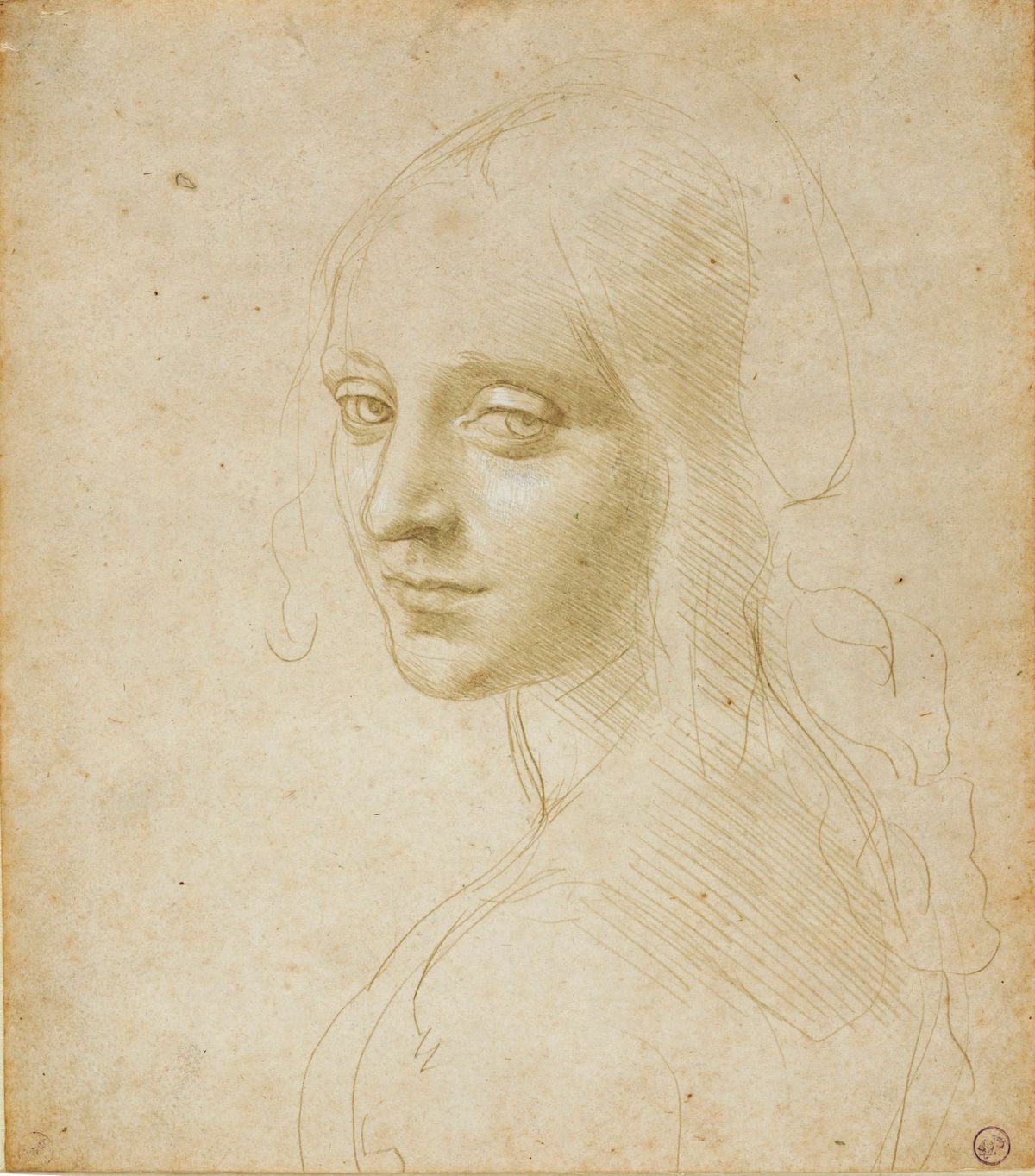
천상적 신비로움과 이상적인 여성미의 정수를 은침 필선으로 담아낸 르네상스 소묘 예술의 금자탑, <젊은 여인의 머리 습작 (Head of a Young Woman / Study for the Angel in 'Virgin of the Rocks')>입니다. 이 화작은 천재 거장 레오나르도 다 빈치(Leonardo da Vinci, 1452–1519)가 1483–1485년경 완성한 은침 소묘 명작으로, 실제 규격은 세로 18.2cm, 가로 15.9cm 크기이며 현재 이탈리아 토리노 왕립도서관(Biblioteca Reale, Turin)에 소장되어 있습니다. 준비된 종이 위에 은침(Silverpoint)과 백색 하이라이트 물감을 사용해 고개를 살짝 돌려 감상자를 응시하는 여인의 입체적이고 은은한 모습을 정교하게 포착해 낸 소묘 수작입니다.
이 스케치는 레오나르도의 대표 유화작인 루브르 박물관 소장 <암굴의 성모> 속 대천사 우리엘(Uriel)의 얼굴을 제작하기 위해 그려진 준비 드로잉입니다. 3/4 측면으로 틀어진 고개 각도와 살짝 내려다보면서도 관람객을 정면으로 끌어당기는 듯한 신비로운 눈빛은 정적인 구도 속에서 오묘한 심리적 긴장감을 자아냅니다. 은침 특유의 세밀하고 촘촘한 사선 해칭 기법은 뺨과 목선 위에 부드러운 음영을 만들어내며, 이는 훗날 다 빈치가 유화에서 완성하게 되는 스푸마토 명암법의 소묘적 시초를 명확히 보여줍니다.
이 작은 종이 화폭에는 르네상스 미술사학자들 사이에서 극찬받아 온 역사적 평가가 깊게 새겨져 있습니다. 19세기 저명한 예술 비평가 존 러스킨(John Ruskin)은 이 드로잉을 두고 "세계에서 가장 아름다운 드로잉"이라 칭송했으며, 수많은 학자들 역시 레오나르도가 남긴 인체 스케치 중 가장 완성도가 높고 기품이 넘치는 걸작으로 손꼽습니다. 빛과 그림자의 미세한 경계를 금속 침으로 하나하나 직조해 낸 이 도면은 르네상스 인문주의가 지향했던 이상적 천사의 형상이자 인간적 아름다움의 조화로운 결정체로 높이 평가받습니다.
이 그림을 들여다보는 감상자의 심리는 오묘한 시선 교감을 따라 부드러운 순환 동선을 그리게 됩니다. 가장 먼저 또렷하면서도 몽환적인 감정을 담고 있는 여인의 오른쪽 눈동자와 살짝 미소를 머금은 입술선에 시선이 끌려들어 갑니다. 이어 뺨의 정교한 명암 해칭을 지나 아래로 흘러내리는 목선과 어깨 윤곽선으로 시선이 자연스럽게 내려앉은 뒤, 우측 뒤편으로 흘러내리는 머리타래의 유연한 곡선을 타고 올라갑니다. 마지막으로 차분한 이마 표면을 거쳐 다시 여인의 오묘하고 깊은 시선 속으로 동선이 회귀합니다. 이러한 포근한 시각적 순환은 마음속 피로감을 가라앉혀 주며 고요한 명상적 안식을 선사합니다.
This masterpiece, titled Head of a Young Woman (widely celebrated as Study for the Angel in 'Virgin of the Rocks'), was created around 1483–1485 by the High Renaissance genius Leonardo da Vinci (1452–1519). Measuring 18.2 cm in height by 15.9 cm in width, this delicate silverpoint drawing heightened with white on pale buff prepared paper is permanently preserved in the Royal Library (Biblioteca Reale) in Turin, Italy. Depicting the ethereal head of a young woman turned in a three-quarter view, the sheet stands as one of the most sublime achievements in the history of draftsmanship.
The study served as the direct preparatory model for the angel Uriel in the Louvre version of Leonardo's Virgin of the Rocks. Leonardo rendered the subtle contours of her cheek, jawline, and neck through exquisite, parallel silverpoint hatching, capturing a transcendent softness that prefigures his painted sfumato technique. Her penetrating yet distant gaze engages the viewer directly, balancing divine poise with intense psychological presence.
Glowing historical evaluations surround this celebrated sheet. Renowned 19th-century art critic John Ruskin famously declared it to be "the most beautiful drawing in the world." Modern art historians universally revere the sheet as a supreme triumph of Renaissance metalpoint technique, praising Leonardo's ability to translate the luminous warmth of human skin and spiritual grace onto paper using the most unforgiving of mediums.
Engaging with this captivating drawing leads the viewer through a quiet, soothing visual path. The eye is initially caught by her expressive, luminous eyes and the gentle set of her lips. The view glides smoothly down the shaded curve of her neck toward the sweeping shoulder outline, then ascends along the soft, undulating waves of her hair on the right. Tracing the smooth expanse of her forehead, the gaze naturally returns to her enigmatic eyes, completing a tranquil visual circle that releases cognitive stress and induces a sense of serene wonder.
본 리뷰에서 작품을 제외한 컨텐츠의 저작권은 팔렛트제주에 있습니다.
"퍼블릭도메인 고전명화"를 제외한 모든 창작 콘텐츠는 저작권법 제4조 및 제10조에 의거하여 보호됩니다. 무단 도용시 저작권법 제136조(벌칙)에 의거, 당사의 사전 서면 승인 없는 저작권 침해 행위를 금지합니다.