젠빌리에의 평원 노란 들판 The Plain of Gennevilliers Yellow Fields
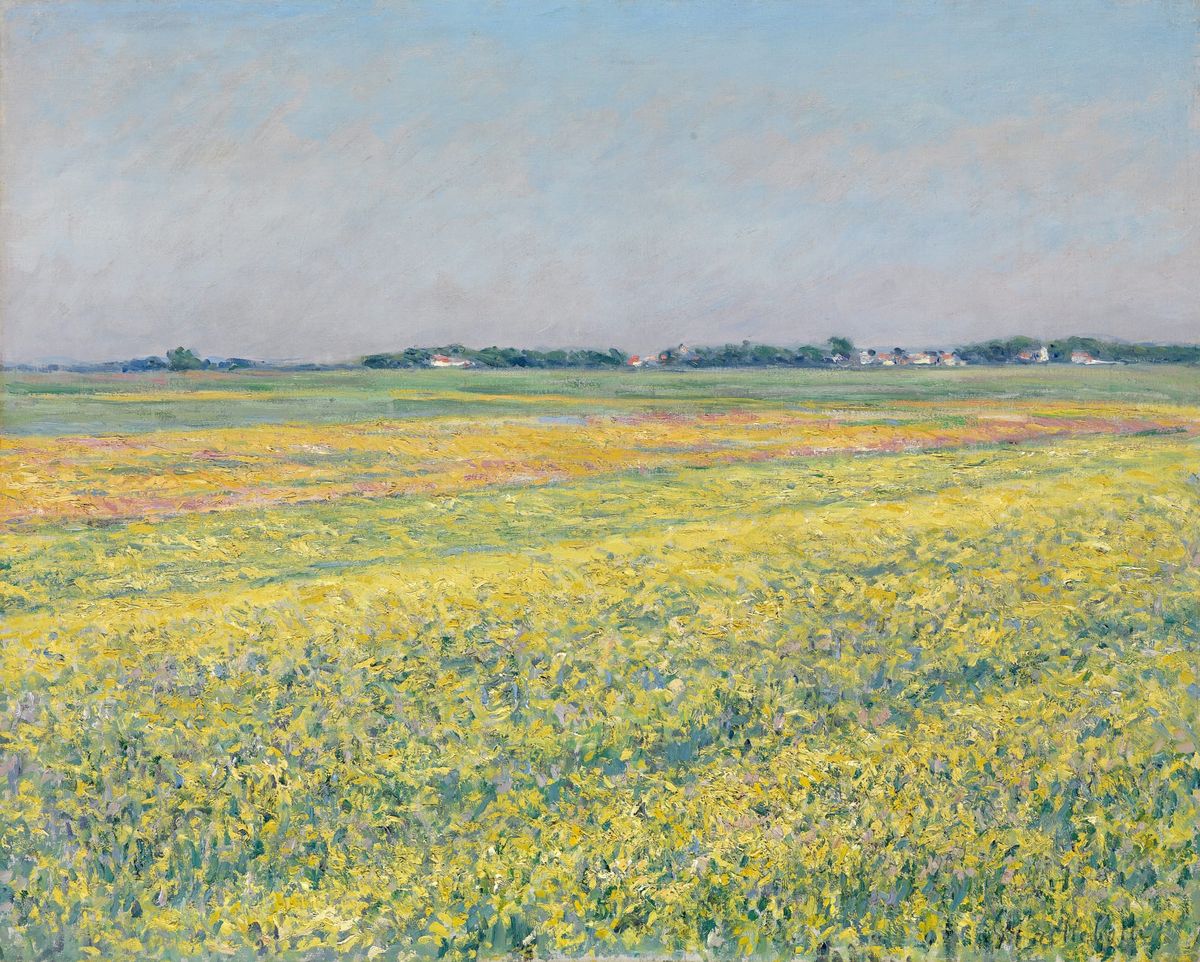
프랑스 인상주의의 위대한 관찰자 귀스타브 카유보트가 1884년에 캔버스에 유채로 완성한 이 눈부신 풍경화는 세로 65.9cm, 가로 81.7cm의 크기로 현재 호주 멜버른의 빅토리아 국립미술관 등에 소장된 판본들로 널리 알려져 있습니다. 화면을 가득 채운 황금빛 들꽃의 파도는 당시 파리 외곽의 고요하고 비옥한 농촌 풍경을 인상주의 특유의 찬란한 빛으로 생생하게 담아내고 있습니다.
이 그림을 처음 마주하는 감상자의 시선은 가장 먼저 화면 앞쪽, 캔버스의 하단부를 가득 채우고 있는 눈부신 노란색 꽃무리로 강렬하게 이끌립니다. 마치 물감을 튜브에서 직접 짜낸 듯 거칠고 두터운 임파스토 기법으로 칠해진 전경의 질감은 꽃들의 생명력과 현장감을 피부로 느껴지게 할 만큼 시각적 중심을 단단히 잡아줍니다.
전경의 생생한 질감을 만끽한 우리의 눈길은 이내 수평으로 넓게 펼쳐진 중경의 평원으로 자연스럽게 뻗어나갑니다. 노란색, 연두색, 그리고 희미한 분홍빛이 부드럽게 섞이며 교차하는 평원의 색채 띠를 따라가다 보면, 팍팍한 일상의 긴장이 풀리고 무한한 공간이 주는 짙은 심리적 시원함과 해방감을 경험하게 됩니다.
그리고 마침내 시선은 저 멀리 아스라한 지평선에 자리 잡은 짙은 숲과 젠빌리에 마을의 작은 지붕들, 그리고 그 위로 아늑하게 펼쳐진 푸르고 흐릿한 하늘에 안착합니다. 손에 잡힐 듯 생생한 근경에서 시작해 아득한 원경의 평화로운 마을로 부드럽게 스며드는 이 완벽한 시선의 확장은 감상자에게 대자연 한가운데 홀로 서 있는 듯한 절대적인 평온을 선사합니다.
이 광활한 들판이 있는 젠빌리에는 파리에서 멀지 않은 곳으로, 카유보트가 1880년대에 영지를 구입하고 머물렀던 쁘띠 젠빌리에(Petit Gennevilliers)와 맞닿아 있습니다. 동료 인상파 화가들이 휴양지의 바다나 화려한 도시의 여가 생활에 집중할 때, 카유보트는 자신이 직접 흙을 만지고 호흡하는 이 소박한 농촌의 풍요로움을 화폭에 정직하게 기록했습니다. 자연의 장엄함 속에 깃든 생명력을 그는 그 누구보다 깊은 애정으로 관찰했습니다.
오늘날 미술사학자들은 이 작품을 카유보트 풍경화의 절정 중 하나로 평가합니다. 빛에 따라 시시각각 변하는 색채를 포착하는 인상주의의 정수를 완벽히 구현하면서도, 대상을 단순히 흐릿하게 뭉개는 대신 형태와 질감을 견고하게 살아 숨 쉬게 만든 카유보트만의 독창성이 빛을 발하기 때문입니다. 현대화되어가는 도시의 이면에서 여전히 묵묵히 생명력을 뿜어내는 대자연을 향한 그의 따뜻하고 웅장한 시선은 후대의 예술가들에게도 벅찬 감동을 전해줍니다.
Completed in oil on canvas in 1884 by Gustave Caillebotte, the great observer of French Impressionism, this dazzling landscape measures 65.9 by 81.7 centimeters and is widely known through versions housed in institutions like the National Gallery of Victoria in Melbourne, Australia. The wave of golden wildflowers filling the canvas vividly captures the quiet, fertile rural landscape on the outskirts of Paris at the time, bathed in the radiant light characteristic of Impressionism.
Upon first encountering this painting, the viewer's gaze is immediately and powerfully drawn to the very front of the canvas, where a dazzling cluster of yellow flowers dominates the lower section. The rough texture of the foreground, applied with a thick impasto technique as if the paint were squeezed directly from the tube, firmly anchors the visual center, making the vitality and presence of the flowers almost tangible.
After relishing the vivid texture of the immediate foreground, our eyes naturally extend across the broad, horizontally stretched plains of the middle ground. As we follow the intersecting bands of color where yellows, light greens, and faint pinks softly blend, the tension of rigid daily life melts away, and we experience the profound psychological coolness and liberation provided by boundless space.
Finally, the gaze rests on the distant horizon, settling on the dark woods, the small roofs of the town of Gennevilliers, and the cozy, hazy blue sky stretching above them. This flawless visual expansion—starting from a tactile, immediate foreground and gently dissolving into a peaceful, distant village—grants the viewer an absolute sense of tranquility, as if standing alone right in the middle of mother nature.
Gennevilliers, where this vast field lies, is situated not far from Paris and borders Petit Gennevilliers, an estate Caillebotte purchased and resided in during the 1880s. While his Impressionist peers often focused on coastal resorts or the glamorous leisure activities of the city, Caillebotte honestly recorded the earthy scents and the rustic abundance of this rural area where he personally touched the soil and breathed the air. He observed the vitality imbued in the majesty of nature with deeper affection than anyone else.
Today, art historians evaluate this piece as one of the absolute pinnacles of Caillebotte's landscape painting. It perfectly embodies the essence of Impressionism, capturing colors that shift from moment to moment depending on the light, while simultaneously showcasing Caillebotte's unique originality by keeping forms and textures solidly alive rather than merely blurring them. His warm, magnificent gaze toward the great outdoors, quietly radiating vitality behind the facade of an increasingly modernized city, continues to profoundly move generations of artists who followed.
ⓒ 본 리뷰의 저작권은 "팔렛트제주"에 있으며, 무단 전재 및 재배포를 엄격히 금합니다. / Copyright 2026 by Palette Jeju. All rights reserved. Unauthorized reproduction or distribution is strictly prohibited.