장미와 덤불 - Roses and Undergrowth
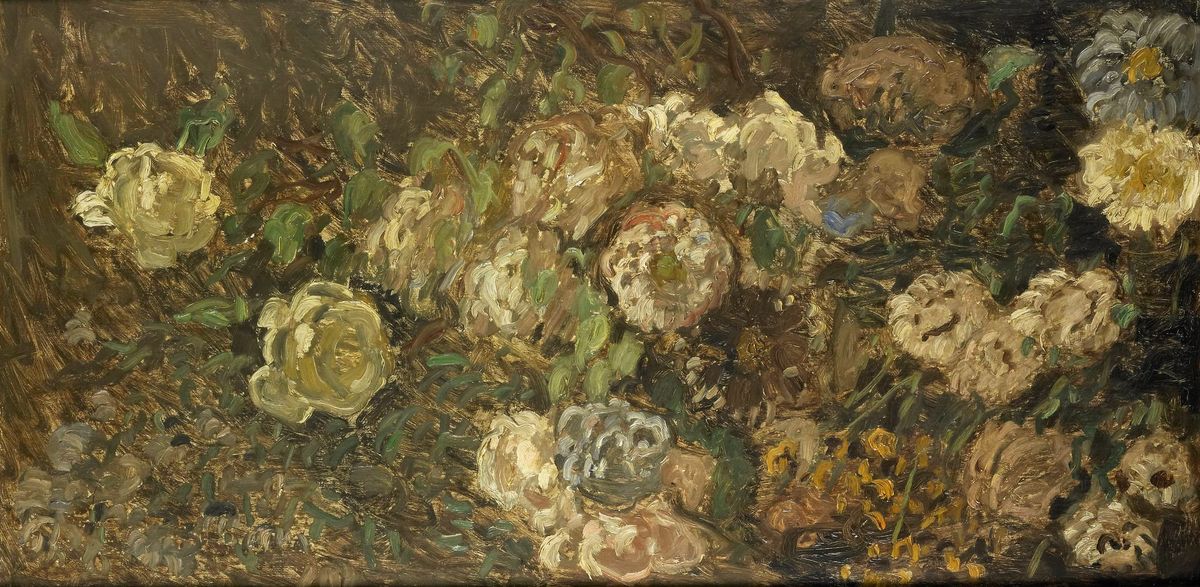
빈센트 반 고흐(Vincent van Gogh)가 파리 체류 시기인 1887년 여름에 완성한 대표적인 유화 풍경 및 정물화(Flowers and Undergrowth / White Roses and Beetles)입니다. 현재 네덜란드 오테를로의 크뢸러 뮐러 미술관(Kröller-Müller Museum) 또는 반 고흐 미술관에 소장되어 있으며, 캔버스 위에 유채로 제작된 이 작품의 실제 사이즈는 약 32.0 × 64.0 cm(가로로 긴 파노라마 규격)입니다. 숲속 그늘진 덤불 아래 피어난 소박한 들장미와 야생화의 군락을 어둡고 묵직한 흙빛 배경 속에서 빛나는 점묘파적 터치와 두터운 임파스토(Impasto) 기법으로 포착해냈습니다.
고흐는 물감을 두껍게 얹어 장미 꽃잎의 둥글고 촉촉한 질감, 나뭇가지와 덤불의 거친 결, 그리고 대지 위에 흩뿌려진 작은 야생화들의 다채로운 형태를 조각하듯 입체적으로 묘사했습니다. 배경을 지배하는 깊은 암갈색과 짙은 올리브그린 톤은 꽃송이들의 은은한 크림빛 흰색, 연노란색과 절묘한 명암 대비를 이루며, 숲 밑바닥의 고요한 그늘 속으로 스며드는 미세한 자연광을 촉각적으로 전달합니다. 대상에 극도로 밀착한 파노라마 시점은 관람객을 숲속 풀숲 한가운데로 직접 데려다 놓은 듯한 생생한 현장감을 부여합니다.
1887년 파리 시절, 고흐는 신인상주의와 인상주의의 색채 이론을 흡수하는 동시에 자연의 미세한 구석을 관찰하는 '언더그로스(Undergrowth)' 연작에 몰두했습니다. 드넓은 풍경 대신 덤불과 잡초, 흙바닥에 피어난 들꽃에 시선을 고정했던 고흐에게 이 소박한 숲 밑바닥은 화려한 세상의 눈길이 닿지 않는 곳에서도 묵묵히 생명을 이어가는 자연의 끈질긴 생명력이자 순수한 영혼의 은신처였습니다. 그는 거친 흙과 마른 잎사귀 사이에서 찬연히 피어난 꽃들을 화폭에 담으며 깊은 정서적 치유와 위안을 얻었습니다.
화면 전체를 가로지르는 리드미컬하고 거친 붓자국과 어두운 배경 속에서 은은하게 빛을 발하는 꽃송이들은 자연의 경이로운 조화를 증명합니다. 미술사에서는 고흐가 17세기 네덜란드 숲 풍경화 전통의 묵직한 사실주의와 파리 아방가르드의 근대적 조형 실험을 결합하여, 미시적 자연에 깃든 숭고함을 표현주의적 감성으로 승화시킨 파리 시기의 독창적인 수작으로 평가하고 있습니다.
관람객의 무의식적인 시선은 화면 좌측 하단에서 크림빛과 연노란빛의 두터운 붓 터치로 탐스럽게 피어난 흰 장미 꽃송이의 둥근 꽃잎 굴곡에서 자연스럽게 출발합니다. 어두운 흙빛 속에서 은은한 등불처럼 맑게 빛나는 꽃잎의 생생한 마티에르에 시선이 머무는 순간, 보는 이는 찰나의 침묵과 함께 깊은 숲속 덤불의 서늘하고 촉촉한 흙내음 속으로 단숨에 몰입하게 됩니다.
이어 시선은 화면 중앙으로 굽이치며 이어진 장미 덤불의 짙푸른 잎사귀들과 나뭇가지들의 유기적인 선묘를 따라 이동하여, 중앙과 우측에 소담하게 무리 지어 피어난 백장미들과 작은 들꽃들의 다채로운 원형 군락에 도달합니다. 척박한 덤불 속에서도 묵묵히 꽃을 피워낸 식물들의 강인한 생명력을 마주하며, 대자연이 품은 소박한 쉼과 따스한 온기를 깊이 체감하게 됩니다.
이후 시선은 화면 우측 상단에서 푸른빛을 띠며 별처럼 피어난 야생 국화의 섬세한 꽃잎들을 지나, 캔버스 전반을 묵직하고 고요하게 감싸고 있는 깊은 암갈색 숲 바닥의 붓자국들을 훑은 뒤, 다시금 전경의 싱그러운 꽃송이들로 부드럽게 내려앉습니다.
어두운 대지와 은은한 꽃빛이 빚어내는 장엄한 명암의 순환을 따라 순환한 시선이 편안히 안착할 때, 관람객의 내면에는 복잡한 일상의 번뇌와 피로가 정돈되고, 숲속 깊은 그늘이 건네는 고요한 위로와 함께 흔들리지 않는 심리적 안도감이 가득 차오르게 됩니다.
Roses and Undergrowth
Painted by Vincent van Gogh in the summer of 1887 during his pivotal Paris period, this intimate botanical study is preserved in prestigious European collections, including the Kröller-Müller Museum and Van Gogh Museum holdings. Executed in oil on canvas, the actual size of the work is approximately 32.0 × 64.0 cm. Capturing wild white roses and blooming flora nestled amidst the shadowed forest floor through a wide panoramic format, the composition unites dense impasto, earthy chiaroscuro, and textured pointillist touches into a quiet ode to the resilient vitality of nature.
Van Gogh applied unmixed paint directly to the horizontal canvas, sculpting the thick, layered petals of the roses, the fibrous forest mulch, and the delicate crowns of companion wildflowers. The deep umber, charcoal, and olive tones dominating the earthy ground establish a profound tonal contrast against the creamy whites, pale yellows, and subtle lavender tints of the blossoms. The intimate, ground-level vantage point draws the observer directly into the secluded micro-landscape, translating the cool humidity of the forest undergrowth into a tactile visual reality.
During 1887 in Paris, alongside his sunlit landscapes along the Seine, Van Gogh developed a profound fascination with intimate close-up views of the forest floor, a theme known as sous-bois or undergrowth. To him, the humble blossoms thriving quietly in the shadows of towering trees represented an enduring metaphor for resilience, emotional sanctuary, and unadorned beauty surviving away from the public gaze. Immersing himself in these secluded patches of earth allowed him to synthesize his Dutch affinity for earthy realism with modern Parisian brushwork and luminous color accents.
The dynamic weave of horizontal and diagonal strokes across the surface gives the tangled brambles a pulsating, organic rhythm. Art historians celebrate this composition as a significant achievement within his Parisian sous-bois series, illustrating his ability to transform the humble floor of nature into a richly textured, emotionally profound sanctuary.
A viewer's subconscious gaze is intuitively anchored first by the fully open, creamy yellow rose blossom resting on the lower left, sculpted with dense ridges of opaque oil paint. Lingering upon this luminous bloom glowing like a soft lamp against the dark soil, the observer is drawn into an immediate atmosphere of woodland quietude, damp freshness, and contemplative stillness.
The gaze is then carried across the central expanse along the arching stems and green foliage, traveling through the tangled carpet of wild blossoms to arrive at the soft clusters of white roses resting in the right middle ground. Absorbing the textural density and modest grace of these shadowed blooms, the viewer experiences a reassuring sense of natural shelter, endurance, and quiet peace.
The eye continues toward the pale blue and gold star-like wildflowers in the upper right corner, taking in the full atmospheric depth of the dark thicket before descending smoothly along the textured earth back to the radiant foreground roses.
Completing this visual and psychological circulation, the observer feels a profound release of modern tension. The secluded harmony and enduring life of the forest undergrowth leave the viewer restored with a lasting sense of emotional grounding, clarity, and enduring psychological peace.
본 리뷰에서 작품을 제외한 컨텐츠의 저작권은 팔렛트제주에 있습니다.
"퍼블릭도메인 고전명화"를 제외한 모든 창작 콘텐츠는 저작권법 제4조 및 제10조에 의거하여 보호됩니다. 무단 도용시 저작권법 제136조(벌칙)에 의거, 당사의 사전 서면 승인 없는 저작권 침해 행위를 금지합니다.