잔다르크 Jehane la Pucelle
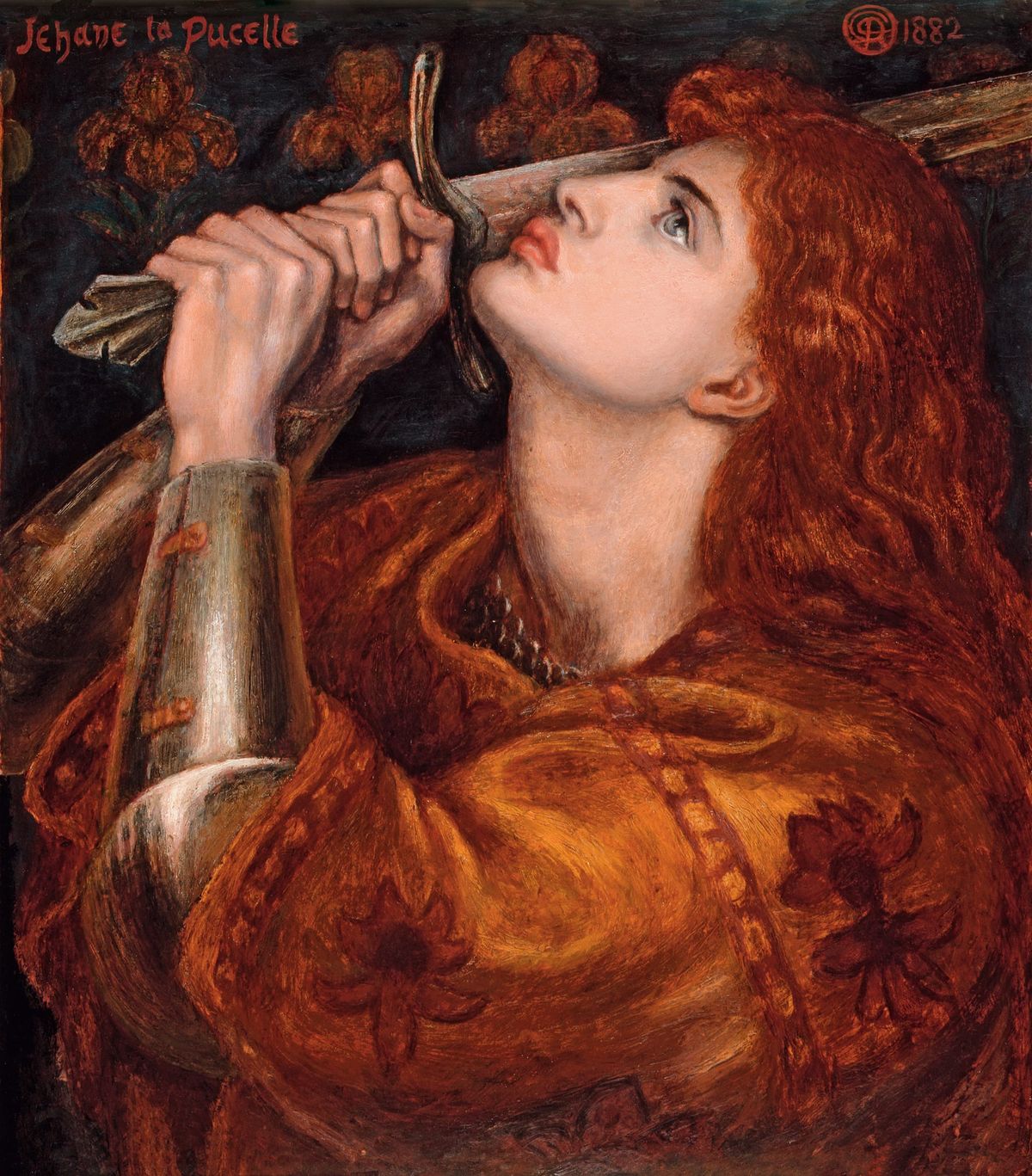
19세기 영국 라파엘로 전파의 거장 단테 가브리엘 로세티(Dante Gabriel Rossetti, 1828–1882)가 1882년에 완성한 기념비적 유화 잔다르크(Jehane la Pucelle, 공식 소장품 등록번호: 685)는 52.7 cm × 45.7 cm 크기의 세로형 패널에 유채로 그린 대표적인 말년 최고 걸작입니다.
의뢰자 L. R. 밸피(L. R. Valpy)의 소장을 거쳐 1883년 크리스티 경매와 F. S. 엘리스(F. S. Ellis)의 손을 거쳤으며, 1939년 익명의 기증으로 편입되어 현재 영국 케임브리지의 세계적인 피츠윌리엄 미술관(The Fitzwilliam Museum, Cambridge)에 영구 소장되어 보존되어 오고 있습니다.
말년의 창작 투혼과 구원의 칼날에 입맞추는 잔다르크의 비장한 고뇌
1882년 생애 마지막 시기를 보내던 단테 가브리엘 로세티는, 프랑스의 민족 영웅이자 신앙의 상징인 잔다르크의 고결한 희생과 순교적 정신을 화폭에 담고자 깊은 몰두에 빠졌습니다.
화가는 전쟁의 잔혹함이나 승리의 환희 대신, 갑옷을 입은 채 두 손으로 검의 손잡이를 모아 들어 올리고 칼날에 경건한 입맞춤을 건네는 순간을 어떻게 강렬한 붉은 톤과 묵직한 질감 속에 녹여낼지 치열하게 번민했습니다.
피츠윌리엄 미술관 및 로세티 아카이브의 공식 학술 기록에 따르면, 이 작품은 화가가 세상을 떠나기 불과 며칠 전까지 마지막까지 붙잡고 수정했던 유언과도 같은 마스터피스이며, 화면 상단의 프랑스어 고대 표기인 잔느 라 퓌셀(Jehane la Pucelle) 문구와 붉은색 의복에 수놓아진 아이리스 꽃무늬는 신성한 소명과 순결한 희생을 상징하는 도상학적 핵심 장치로 분석됩니다.
화가는 어두운 실내와 붉은색 직물이 감도는 배경 속에서, 운명의 거대한 부름 앞에 선 잔다르크의 숭고한 순간을 화폭에 담았습니다.
화면 중앙에는 풍성한 붉은 갈색 머리칼을 늘어뜨린 잔다르크가 고개를 위로 젖힌 채 촉망하는 눈빛으로 검의 칼날을 바라보고 있으며, 그녀의 갸름한 턱선과 붉은 입술이 비장한 아름다움을 자아냅니다.
몸에는 번쩍이는 철제 어깨갑옷을 착용하고, 그 아래로 붉은색 직물의 화려한 의복을 입은 채 두 손으로 칼자루를 정성스럽게 쥐고 있습니다.
화면 상단 배경에 가득 찬 붉은 아이리스 꽃무늬와 화면 오른쪽 상단의 작가 모노그램 및 '1882' 제작 연도는, 말년의 화가가 뿜어낸 마지막 예술적 열정과 영적 완성도를 손에 잡힐 듯 생생하게 웅변합니다.
검의 칼날을 향한 잔다르크의 눈빛에서 철제 갑옷과 상단 배경의 아이리스 꽃무늬로, 시선의 심리적 여정
그림을 마주하는 순간 관람객의 무의식적 시선은 화면 중앙에서 결연한 의지를 품고 고개를 들어 올린 채 빛나는 칼날을 향해 시선을 던지는 잔다르크의 맑고 깊은 눈매와 붉은 입술의 부드러운 굴곡으로 가장 먼저 빨려 들어갑니다.
세속의 두려움을 넘어 하늘의 계시를 따르는 인물의 숭고한 표정은 보는 이에게 강렬한 시각적 몰입감과 함께 숙연한 경외감을 선사합니다.
이어 시선은 그녀의 두 손을 단단히 지탱하는 철제 어깨갑옷의 차가운 금속 질감과 빛의 반사를 지나, 의복에 수놓아진 정교한 패턴으로 자연스럽게 이동합니다.
역사의 소용돌이 속에서 신비로운 기도를 올리는 비장한 온기를 체감하는 순간, 관람객은 거장의 마지막 작업실 속 깊은 사유의 시간 속으로 온몸이 빨려 들어가게 됩니다.
마지막으로 시선은 화면 오른쪽 상단에 선명하게 새겨진 작가의 모노그램과 1882년 제작 연도, 그리고 배경을 가득 채운 붉은 아이리스 꽃무늬와 프랑스어 레터링을 거쳐, 화면 전체를 묵직하게 감싸 안는 짙은 대기감으로 멈춥니다.
전면 인물의 매혹적인 영적 집중과 후면 장식적 문구의 조화를 마주하며, 관람객은 삶의 끝자락에서 예술혼을 불태운 거장 로세티의 진심 어린 마지막 시선을 가슴 깊이 마주하게 됩니다.
19세기 후반 상징주의 회화의 정점과 조형미, 미술계의 평가
미술계와 피츠윌리엄 미술관 공식 도록은 잔다르크를 로세티가 생애 마지막 순간까지 붙잡고 완성해 낸 가장 극적이고 영적인 감동을 주는 대표적인 최고봉 마스터피스로 평가합니다.
단순한 역사적 인물화를 넘어 라파엘로 전파의 정교한 세밀함과 상징주의적 종교성을 가장 완벽한 유화 기법으로 융합해 낸 회화사적 기념비이기 때문입니다.
인간의 영원한 신념과 죽음을 초월한 정신적 승리를 가장 격조 높은 시각 언어로 승화시킨 로세티의 이 소중한 화폭은, 오늘날까지도 전 세계 수많은 감상자들에게 깊은 울림과 잊을 수 없는 시각적 전율을 전해주는 불멸의 명작으로 손꼽히고 있습니다.
Jehane la Pucelle
Painted in 1882 by the master of the Pre-Raphaelite Brotherhood Dante Gabriel Rossetti (1828–1882), Jehane la Pucelle (Accession No. 685) is a monumental oil painting on panel measuring 52.7 cm × 45.7 cm (20.7 in × 17.9 in), representing the final, poignant masterwork of his career.
Preserved through esteemed provenance including L. R. Valpy, Christie's, and F. S. Ellis, it entered the Fitzwilliam Museum in Cambridge, United Kingdom, in 1939 through an anonymous donation.
Final Artistic Devotion and the Solemn Vow of Joan of Arc
During 1882, facing the final months of his life, Dante Gabriel Rossetti turned his creative focus toward the legendary French heroine Joan of Arc, seeking to immortalize her spiritual purity, militant faith, and tragic martyrdom on panel.
Moving away from conventional battle narratives, the master meditated deeply on how to portray the warrior saint clad in armor, lifting her hands to press a solemn kiss upon the hilt and blade of her sword, harmonizing rich crimson tones with profound devotional symbolism.
According to curatorial records from the Fitzwilliam Museum and the Rossetti Archive, this painting holds the distinct honor of being the very last work upon which Rossetti worked, completed just days before his death in April 1882. The inscribed Old French title Jehane la Pucelle in the upper-left corner and the stylized iris motifs adorning her garments serve as powerful iconographic emblems of divine election and immaculate sacrifice.
Rossetti staged the intimate devotional composition against a dark, richly textured background.
In the center, Joan of Arc is depicted in profile with her luxuriant auburn hair cascading over her shoulders, tilting her head upward with luminous eyes fixed upon her sword.
She is dressed in a vibrant crimson garment beneath polished steel pauldrons and gauntlets, her hands reverently holding the weapon.
The upper background features stylized floral patterns and the artist's clear monogram alongside the inscribed date "1882" in the upper-right corner, celebrating the unyielding creative spirit of the master's final days.
Subconscious Trajectory of the Gaze: From the Upward Gaze to the Steel Armour and Inscribed Motifs
The observer's subconscious gaze is immediately magnetized by the central register, drawn to Joan of Arc's luminous profile, her upturned chin, and her intense, spiritual gaze directed toward the sword blade.
Her profound emotional intensity and tragic grace establish an instant focal point of psychological depth, sacred drama, and heroic resolve.
The visual path then shifts downward along her clasped hands and the gleaming metallic contours of her steel armor.
Taking in the tactile qualities of the rich fabrics and polished metal, the viewer directly experiences the intimate, meditative atmosphere of Rossetti's final studio environment.
Finally, the visual trajectory moves toward the upper-right monogram and date, before sweeping across the dark, harmonious background and the inscribed French title.
Observing the harmonious equilibrium between narrative symbolism, expressive brushwork, and precise Pre-Raphaelite draftsmanship, the spectator perceives the timeless poetry of martyrdom and the profound aesthetic brilliance Rossetti embedded within the final panel.
The Monument of Late Pre-Raphaelite Painting: Critical Legacy
Art historians revere the Fitzwilliam Museum's Jehane la Pucelle as a supreme testament to Rossetti’s genius, illustrating his consummate ability to unite historical allegory with breathtaking painterly mastery on wood panel.
By orchestrating delicate textural contrasts between gleaming steel armor, rich crimson textiles, warm flesh tones, and shifting atmospheric shadows within a unified compact space, Rossetti transformed a medieval legend into an exquisite aesthetic treatise on faith, sacrifice, and artistic immortality.
This magnificent historical panel endures as a powerful concluding chapter to the master's career, celebrating the quiet poetry of spiritual devotion and the transformative grace of living art.
본 컨텐트의 저작권은 팔렛트제주에 있습니다. 허가없는 무단전제를 금지합니다.
Copyright © Palette Jeju. All rights reserved. Unauthorized reproduction or redistribution is strictly prohibited.