잘린 머리를 쥐고 질주하는 기사의 광기, 오릴로의 머리를 들고 달아나는 아스톨포 Astolf Rides Away with the Head of Orrilo
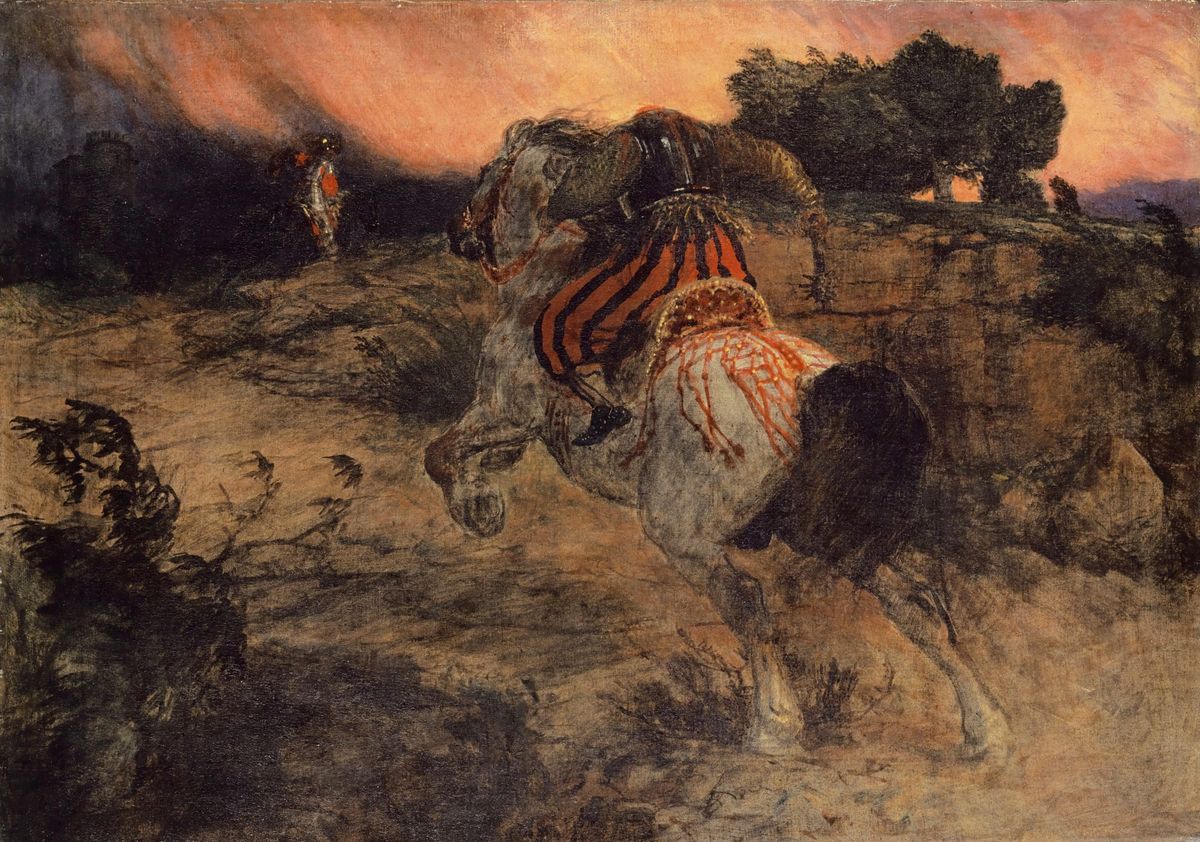
스위스 출신의 상징주의 거장 아놀드 뵈클린(Arnold Böcklin, 1827–1901)이 1877년에 완성한 유화 오릴로의 머리를 들고 달아나는 아스톨포(Astolf Rides Away with the Head of Orrilo, 독일어: Astolf reitet mit dem Haupte Orills davon)는 54.0 cm × 76.5 cm 크기의 캔버스에 템페라와 유채로 그린 명작입니다. 현재 스위스 바젤 미술관(Kunstmuseum Basel)에 소장되어 있습니다.
르네상스 기사 서사시 속 불사신 괴물과의 기괴한 사투
이 그림은 16세기 이탈리아 르네상스 시인 루도비코 아리오스토의 유명한 서사시 광란의 오를란도에 등장하는 한 장면을 바탕으로 탄생했습니다. 이야기 속에 나오는 악당 오릴로는 몸이 잘려도 다시 자라나 붙는 마법을 부리는 끔찍한 괴물이었습니다. 기사 아스톨포는 치열한 결투 끝에 오릴로의 목을 베어버렸지만, 머리가 없는 오릴로의 몸뚱이는 칼을 쥐고 자신의 머리를 되찾기 위해 무섭게 뒤쫓아왔습니다. 오릴로의 머리카락 속에 마법의 힘을 내는 단 한 가닥의 붉은 털이 있다는 사실을 알아챈 아스톨포는, 오릴로의 머리가 몸에 다시 붙지 못하도록 머리채를 움켜쥐고 말을 타고 전속력으로 달아나야만 했습니다.
뵈클린은 화려한 영웅의 승리가 아니라, 괴기스럽고 아슬아슬한 도주의 순간을 화폭에 포착했습니다. 저 멀리 어둠 속에서 머리가 잘린 채 피를 흘리며 쫓아오는 오릴로의 몸뚱이와, 머리채를 거꾸로 쥐고 벼랑 끝으로 말을 몰아치는 아스톨포의 뒷모습은 기괴하면서도 팽팽한 긴장감을 자아냅니다. 평생 가난과 자식들의 잇따른 죽음, 그리고 뮌헨 화단의 혹평 속에서 쫓기듯 이탈리아로 떠돌아다녀야 했던 뵈클린에게 끝없이 자신을 옥죄어오는 운명으로부터 벗어나고자 했던 내면의 공포와 탈출의 열망이 고스란히 투영된 작품이기도 합니다.
붉게 물든 노을에서 잘려 나간 머리채로, 시선의 심리적 여정
그림을 마주하는 순간 관람객의 무의식적 시선은 불타오르듯 붉게 물든 저녁 노을과 화면 한가운데서 거칠게 흙먼지를 일으키며 앞발을 치켜든 백마의 역동적인 뒷모습으로 가장 먼저 이끌립니다. 질주하는 말의 거친 근육과 붉고 검은 줄무늬 바지를 입은 기사의 다급한 몸짓은 보는 이에게 손에 땀을 쥐게 하는 속도감을 안겨줍니다.
이어 시선은 기사의 뻗은 오른손 끝에 매달려 있는 털투성이 머리통으로 이동합니다. 핏빛으로 물든 말안장 덮개와 함께 머리채를 낚아채 허공에 대롱대롱 매달고 달리는 섬뜩한 형상을 확인하는 순간 관람객은 기괴하고 충격적인 시각적 전율을 경험합니다.
마지막으로 시선은 기사가 달려가는 길 뒤편, 어두운 언덕 저 멀리서 불길한 빛을 받으며 머리 없이 쫓아오는 괴물의 실루엣으로 이동합니다. 언제 따라잡힐지 모르는 추격의 공포와 거친 바람에 흔들리는 나무들을 마주하면서, 관람객은 악몽 같은 운명에서 벗어나기 위해 질주하는 한 인간의 처절한 긴박감을 뼈저리게 실감하게 됩니다.
낭만적 서사와 그로테스크 미학의 절정, 미술계의 평가
미술계는 이 작품을 고전 문학의 일화를 사실적으로 재현하는 것에 머물지 않고, 특유의 어둡고 기괴한 상상력을 결합해 상징주의 회화의 새로운 지평을 연 수작으로 평가합니다.
타오르는 듯한 붉은 하늘과 거친 대지의 질감, 그리고 추격전의 생생한 긴장감을 통해 인간 내면에 도사린 무의식적 불안과 공포를 탁월하게 시각화했기 때문입니다. 현실을 넘어 환상과 악몽의 세계를 거침없이 탐구한 뵈클린의 독창적인 회화 언어는 훗날 유럽 상징주의와 초현실주의 미술의 발전에 커다란 영감을 불어넣었습니다.
The Desperate Flight with the Severed Relic, Astolf Rides Away with the Head of Orrilo
Painted in 1877 by the visionary Swiss Symbolist master Arnold Böcklin (1827–1901), Astolf Rides Away with the Head of Orrilo (German: Astolf reitet mit dem Haupte Orills davon) is a tempera and oil on canvas measuring 54.0 cm × 76.5 cm (21.3 in × 30.1 in), preserved in the permanent collection of the Kunstmuseum Basel in Switzerland.
Chivalric Romance, Immortality Sorcery, and the Horror of the Pursuit
This dramatic composition draws its narrative core from Ludovico Ariosto's famed 16th-century Italian epic, Orlando Furioso. The antagonist, the robber-giant Orrilo, was an enchanted sorcerer whose severed limbs possessed the supernatural power to magically graft back onto his torso. After decapitating the monster, the paladin Astolfo realizes that to permanently destroy Orrilo, he must shave the single enchanted fatal hair concealed within the severed head. To prevent the headless trunk from reclaiming its head, Astolfo grabs the severed relic by the hair and gallops away at breakneck speed.
Böcklin eschews static heroic triumph in favor of visceral, frantic escape. In the shadowy middle distance, the headless body of Orrilo continues its relentless chase on foot, brandishing weapons. For Böcklin, who lived through chronic poverty, critical rejection in Munich, and the tragic bereavement of multiple children, this harrowing chase visualizes a deeply personal psychological landscape—an enduring struggle to outrun the relentless specter of tragedy and relentless adversity.
Subconscious Trajectory of the Gaze: Fiery Skies to the Severed Trophy
The observer's subconscious gaze is immediately seized by the tempestuous, blood-orange twilight sky and the powerful musculature of the rearing gray horse charging into the foreground. The vivid crimson-and-black stripes of Astolfo's breeches and the dynamic diagonal of the galloping steed create an immediate sensation of frantic velocity.
The trajectory of sight then plunges to Astolfo’s outstretched right hand, clutching the dark, hairy head of Orrilo dangling upside down over the horse's flank. Observing the macabre relic juxtaposed against the ornate, blood-spattered saddlecloth, the viewer confronts a sudden shock of chivalric grotesque.
Finally, the visual path retreats across the dusty terrain toward the distant precipice, identifying the terrifying silhouette of the decapitated Orrilo stumbling forward through the gloom. Contemplating the wind-swept trees and the suffocating atmosphere of pursuit, the spectator experiences the existential terror of a desperate flight from impending nightmare.
The Pinnacle of Romantic Myth and Grotesque Symbolism: Critical Legacy
Art historians recognize this work as a brilliant synthesis of Renaissance literary romance and dark Symbolist psychology.
By replacing academic decorum with turbulent brushwork, eerie tonal contrasts, and visceral narrative tension, Böcklin anticipated the subconscious dreamscapes of early 20th-century fantasy and Surrealism. This gripping masterpiece stands as a powerful testament to the artist's ability to transform mythological narrative into an enduring meditation on danger, adrenaline, and human vulnerability.
본 컨텐트의 저작권은 팔렛트제주에 있습니다. 허가없는 무단전제를 금지합니다.
Copyright © Palette Jeju. All rights reserved. Unauthorized reproduction or redistribution is strictly prohibited.