자화상 소묘 Self-Portrait
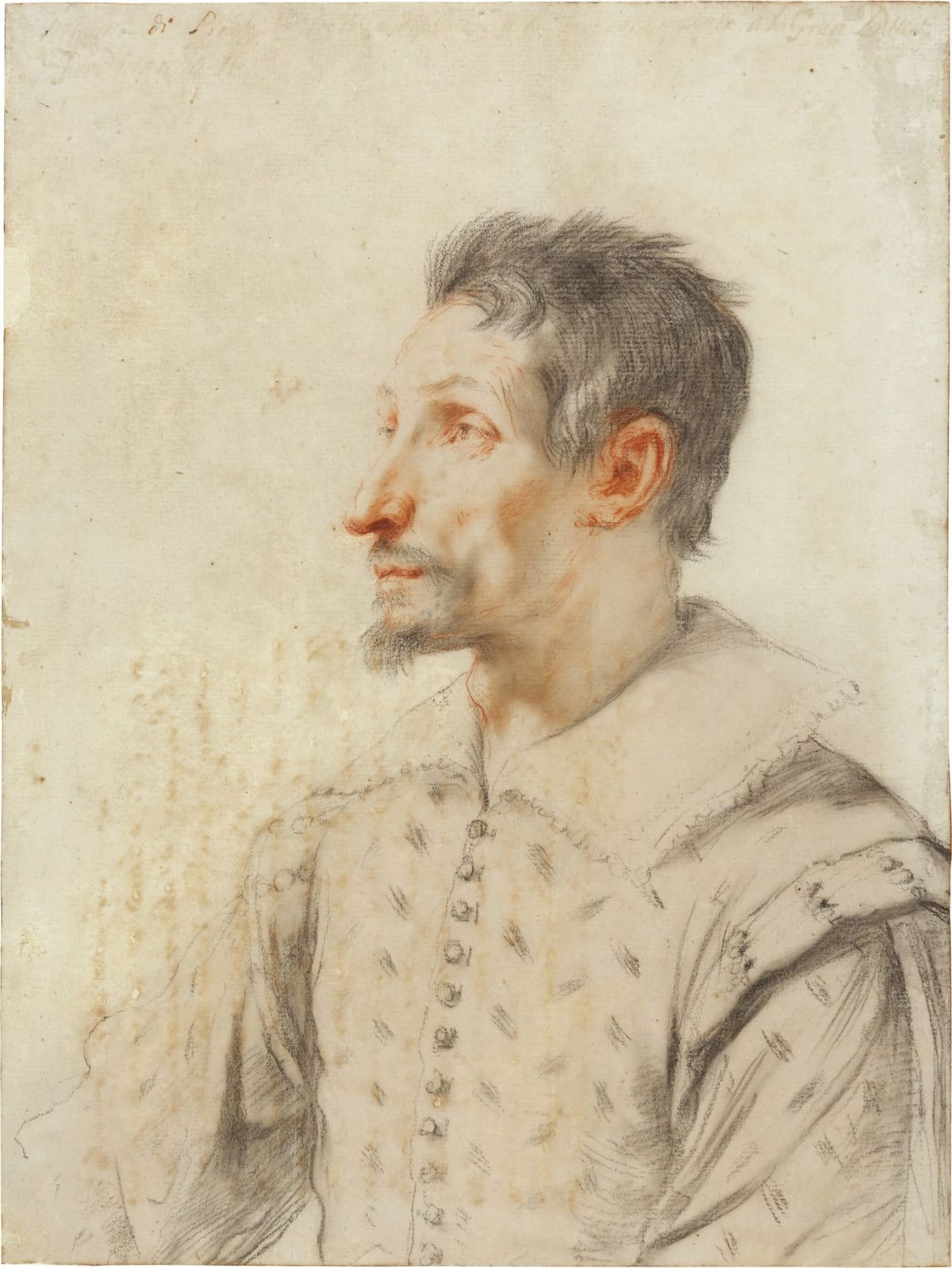
17세기 이탈리아 바로크 회화의 거장 조반니 프란체스코 바르비에리, 널리 귀에르치노(Guercino, 1591–1666)로 불리는 화가가 1630년대에 완성한 종이 위의 붉은색 및 검은색 분필 드로잉 자화상(Self-Portrait, 이탈리아어: Autoritratto)은 24.5 cm × 18.5 cm 크기의 종이에 유려한 선묘로 그린 대표적인 그래픽 예술 최고 걸작입니다. 현재 영국 런던의 영국 왕립 컬렉션 윈저 성 왕립 도서관(Royal Collection Trust, Windsor Castle) 또는 피렌체 우피치 미술관 소묘 판화실 등에 소장되어 있습니다.
사시라는 평생의 콤플렉스와 거울 속 자신을 마주한 화가의 인간적 고뇌
귀에르치노라는 이름은 본명 조반니 프란체스코 바르비에리 대신 평생 그를 따라다닌 별명이었습니다. 이탈리아어로 사시(Squinter) 또는 눈이 삐뚤어진 사람을 뜻하는 이 별명은, 그가 갓난아기 시절 갑작스러운 큰 소리에 심하게 놀라 오른쪽 눈의 근육이 비틀어지며 영구적인 사시가 된 데서 비롯되었습니다. 화가에게 시각은 세상을 관찰하고 빛을 포착하는 가장 절대적인 도구였기에, 한쪽 눈의 초점이 맞지 않는 신체적 결함은 젊은 시절부터 그에게 극심한 열등감과 심리적 상처를 안겨주었습니다.
하지만 귀에르치노는 자신의 약점 뒤에 숨지 않았습니다. 화가는 1630년대 원숙기에 접어들어 거울 앞에 당당히 서서, 붉은 분필(산기니아)과 검은 목탄을 쥐고 자신의 실제 얼굴을 한 치의 미화나 거짓 없이 정면으로 마주했습니다. 거울을 비스듬히 응시하는 자신의 날카로운 콧날, 약간 비뚤어진 눈매와 깊게 패인 미간의 주름, 그리고 턱수염을 있는 그대로 종이 위에 담아냈습니다. 상처를 숨기기보다 정직하게 마주하며 스스로를 증명해 낸 이 자화상 드로잉은, 결함을 뛰어넘어 유럽 최고의 거장으로 우뚝 선 예술가의 단단한 자존심과 치열했던 내면의 투쟁을 감동적으로 증명합니다.
화가는 옷깃의 단추와 어깨를 감싼 겉옷의 주름을 거칠면서도 유려한 선으로 빠르게 잡아내며 거장의 놀라운 드로잉 실력을 유감없이 발휘했습니다. 붉은 분필의 따뜻한 온기가 코끝과 뺨, 귓바퀴에 은은하게 감돌며 메마른 종이 위에 살아 숨 쉬는 한 인간의 생생한 숨결을 불어넣었습니다. 숱한 좌절과 편견을 이겨내고 오직 붓과 펜의 힘으로 시대를 지배했던 거장의 진솔한 영혼이 이 소박한 종이 조각 위에 영원히 아로새겨져 있습니다.
지적인 이마와 날카로운 콧날에서 정직한 눈빛과 옷깃의 선묘로, 시선의 심리적 여정
작품을 마주하는 순간 관람객의 무의식적 시선은 화면 상단 종이의 밝은 여백을 뚫고 솟아오른 화가의 넓은 이마와 솟아오른 짧은 머리칼로 가장 먼저 빨려 들어갑니다. 깊은 생각에 잠겨 지혜를 길어 올리는 노련한 거장의 단단한 골격과 미간의 잔주름은 보는 이에게 깊은 시각적 신뢰감과 함께 예술가의 지적인 카리스마를 선사합니다.
이어 시선은 붉은 분필로 섬세하게 음영이 들어간 높은 콧날을 지나, 살짝 비뚤어져 먼 곳을 응시하는 화가의 개성 넘치는 눈매와 굳게 다문 입술로 이동합니다. 자신의 신체적 약점을 숨기지 않고 담담하게 드러낸 성찰적인 눈빛을 확인하는 순간, 관람객은 겉모습의 화려함을 넘어 인간 내면의 진실과 마주하는 거장의 숭고한 용기 속으로 온몸이 빨려 들어가게 됩니다.
마지막으로 시선은 턱 끝에 단정하게 자란 염소수염을 지나, 목을 감싸고 있는 둥근 깃 장식과 어깨로 흘러내리는 겉옷의 경쾌한 붓질 같은 해칭 선들에 멈춥니다. 종이의 소박한 여백과 붉은빛 흑연의 따스한 조화를 마주하며, 관람객은 삶의 시련을 예술로 승화시킨 위대한 인간의 품격과 귀에르치노가 건네는 묵직한 영혼의 울림을 가슴 깊이 마주하게 됩니다.
17세기 볼로냐 소묘 예술의 정점과 조형적 완성도, 미술계의 평가
미술계는 이 자화상 소묘를 귀에르치노가 남긴 수천 점의 드로잉 중에서도 가장 뛰어난 자전적 진실성과 그래픽적 완성도를 성취한 대표작으로 평가합니다.
단 몇 번의 붉은 분필과 검은 선묘의 터치만으로 인체의 해부학적 구조와 피부의 부드러운 양감을 완벽하게 구현했을 뿐만 아니라, 화가의 심리적 내면과 예술적 자부심을 가장 꾸밈없는 필선으로 포착했기 때문입니다. 자신의 결함마저 위대한 예술의 원천으로 승화시킨 귀에르치노의 이 기념비적인 드로잉은, 오늘날까지도 전 세계 수많은 감상자들에게 깊은 감동과 잊을 수 없는 시각적 전율을 전해주는 불멸의 명작으로 손꼽히고 있습니다.
Self-Portrait
Drawn in the 1630s by the preeminent Italian Baroque master Giovanni Francesco Barbieri, universally celebrated as Guercino (1591–1666), this Self-Portrait (Italian: Autoritratto) is a red and black chalk drawing on paper measuring 24.5 cm × 18.5 cm (9.6 in × 7.3 in), preserved in the distinguished permanent collection of the Royal Collection Trust at Windsor Castle, United Kingdom.
The Lifelong Stigma of the Squinter and the Artist's Unflinching Mirror
The name Guercino, meaning the Squinter in Italian, was a lifelong moniker given to Giovanni Francesco Barbieri after a traumatic childhood fright left him with permanent strabismus in his right eye. For a painter whose entire creative existence depended upon binocular vision, perspective, and optical observation, this physical defect was an enduring source of personal vulnerability and potential mockery throughout his early career.
Rather than concealing his condition behind idealized conventions, the mature master stood before his studio mirror in the 1630s and recorded his own features with unsparing psychological truth. Employing a masterful blend of red chalk (sanguine) and black carbon, Guercino captured the sharp ridge of his nose, the weathered furrows of his brow, his tufted beard, and the misaligned gaze of his eyes. By directly recording the physical reality of his strabismus without apology, Guercino transformed a lifelong stigma into a noble statement of artistic self-determination and sovereign creative triumph.
With swift, calligraphic hatchings, Guercino rendered the buttoned doublet and the ruffled collar framing his neck. The warm sanguine chalk imparts a lifelike vitality to his cheekbones, earlobes, and lips, establishing an immediate human presence upon the delicate paper support. This intimate self-portrait stands as an enduring visual testament to the master's resilience, technical mastery, and uncompromising integrity.
Subconscious Trajectory of the Gaze: From Thoughtful Brow to the Expressive Line
The observer's subconscious gaze is immediately magnetized by the upper register, drawn to the luminous, weathered forehead and spiky cropped hair of the master emerging from the pale paper ground. The deep anatomical modeling of the brow and temple establishes an instant focal point of intellectual authority, professional discipline, and concentrated introspection.
The visual path then follows the firm, sanguine-shaded ridge of the nose downward to the eyes, observing the unaligned gaze fixed calmly upon the unseen mirror. Taking in the parted lips framed by a trimmed moustache and goatee, the viewer directly experiences the profound emotional honesty of an artist confronting his own identity with unflinching dignity.
Finally, the visual trajectory sweeps past his jawline to the gathered lace collar and the rhythmic, diagonal hatchings defining the shoulders and sleeves of his doublet. Observing the harmonious equilibrium between delicate red chalk modeling, dynamic linear rhythm, and psychological truth, the spectator perceives the timeless nobility of the creative spirit and the profound aesthetic solace Guercino embedded within this intimate study.
The Monument of Bolognese Draftsmanship: Critical Legacy
Art historians revere this Self-Portrait as a supreme pinnacle of Guercino’s graphic oeuvre, illustrating his unmatched mastery of the Bolognese chalk tradition championed by the Carracci Academy.
By orchestrating delicate textural contrasts between smooth paper, warm sanguine shading, and decisive charcoal strokes, Guercino elevated a private studio drawing into a profound psychological testament. This rare and intimate sheet endures as an inspiring testament to the master's creative fortitude, celebrating the victory of human character and the transformative grace of living art.
본 컨텐트의 저작권은 팔렛트제주에 있습니다. 허가없는 무단전제를 금지합니다.
Copyright © Palette Jeju. All rights reserved. Unauthorized reproduction or redistribution is strictly prohibited.