자화상 Self Portrait
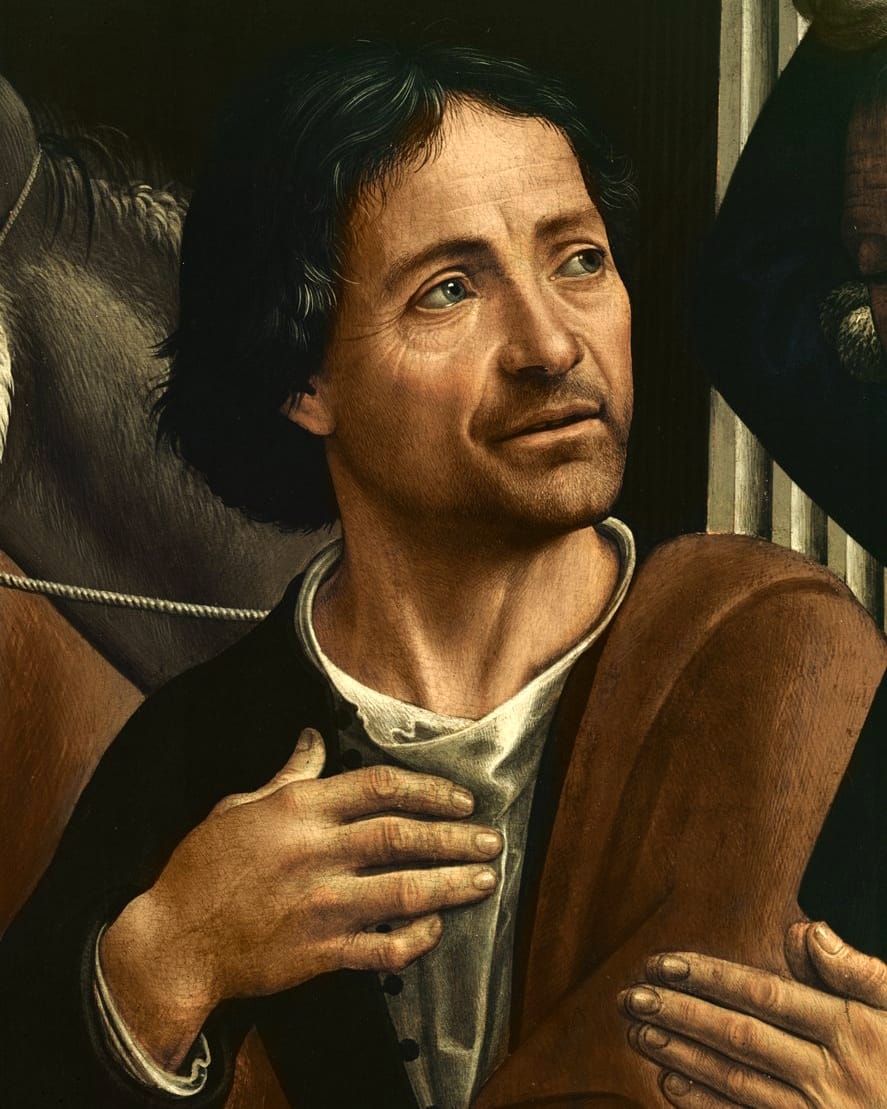
15세기 이탈리아 르네상스의 거장 도메니코 기를란다요가 1485년부터 1490년 사이에 완성한 기념비적 프레스코 벽화 작품 자화상은 이탈리아 피렌체 산타 마리아 노벨라 성당 토르나부오니 예배당에 제작된 프레스코화의 세부 화면이며, 원본 전체 벽화의 일부로서 전 세계 미술사 속에 보존되어 오고 있습니다.
오늘날 우리가 감상하는 이미지는 성모 생애를 주제로 한 거대한 벽화 속에서 작가 자신이 직접 군상 속에 포함되어 관람객을 응시하는 모습을 포착한 부분 상세 컷입니다.
작가의 고뇌/비하인드
1480년대 후반 이탈리아 피렌체에서 활동하던 도메니코 기를란다요는 산타 마리아 노벨라 성당의 대규모 벽화 프로젝트를 총괄하며 성경 속 엄숙한 역사적 장면 속에 당대 피렌체의 실제 인물과 자기 자신을 자연스럽게 녹여내는 혁신적인 시도를 감행했습니다.
화가는 단순히 종교적 서사를 전달하는 수동적 기록자에 머무르지 않고, 자신의 실제 얼굴과 깊은 눈빛을 화면 속에 투영하여 르네상스 예술가로서의 자부심과 지적 위상을 공고히 하고자 치열하게 번민했습니다.
산타 마리아 노벨라 성당의 공식 학술 기록 및 도록에 따르면 이 작품은 검은색 옷과 흰색 셔츠를 갖춰 입은 작가의 자태, 가슴에 손을 얹은 채 깊은 사색에 잠긴 동작, 그리고 관람객을 정면으로 응시하는 시선의 도상학적 구성을 통해 예술가의 사회적 지위 상승과 인간적 실존을 증명하는 핵심 장치로 분석됩니다.
화가는 성당 내부의 엄숙한 벽면을 배경으로, 역사의 현장에 살아 숨 쉬는 창작자의 거룩한 순간을 화폭에 담았습니다.
화면 전면 중앙에는 어두운 색상의 상의를 입고 헝클어진 머리칼과 자연스러운 수염 자국을 지닌 도메니코 기를란다요가 가슴 위에 손을 포개어 얹은 채 진지한 표정으로 어딘가를 응시하는 모습이 묵직하게 자리하고 있으며, 그의 섬세한 손마디와 주름진 피부 톤이 깊은 인상을 자아냅니다.
몸에는 흰색 속옷과 짙은 외투를 걸치고 엄숙한 태도로 서 있는 인물의 동작이 정교하게 묘사되어 있습니다.
이어 화면 배경 우측으로 보이는 건축적 기둥과 인물들의 실루엣은 화가가 추구했던 15세기 르네상스의 공간적 입체감을 생생하게 웅변합니다.
무의식 속 시선 및 심리 흐름
그림을 마주하는 순간 관람객의 무의식적 시선은 화면 중앙에서 살아 숨 쉬듯 생생한 눈빛으로 정면을 바라보는 작가의 예리한 동공과 뺨의 섬세한 프레스코 질감으로 가장 먼저 빨려 들어갑니다.
수세기를 뛰어넘어 현대의 관람객과 눈을 맞추는 듯한 인물의 표정은 보는 이에게 강렬한 시각적 몰입감과 함께 마음 깊은 곳에서 우러나는 묘한 경외감의 감정을 선사합니다.
이어서 시선은 그의 가슴 위에 부드럽게 얹힌 손길의 정교한 해부학적 묘사와 옷소울의 텍스처로 자연스럽게 이동합니다.
신성한 종교화 속에서 인간의 실존을 발견하는 순간의 공기를 체감하는 순간 관람객은 15세기 플로렌스의 찬란한 성소 속으로 온몸이 빨려 들어가게 됩니다.
마지막으로 시선은 작가의 묵직한 어깨 실루엣을 거쳐 화면 우측의 건축적 구조물과 배경의 깊이 있는 대기감으로 멈춥니다.
전면 인물의 매혹적인 심리적 깊이와 후면 공간의 조화를 마주하며 관람객은 자신의 초상을 예술 속에 영원히 각인시킨 거장 기를란다요의 압도적인 조형 의지를 가슴 깊이 마주하게 됩니다.
미술계의 평가 및 조형미
미술계와 산타 마리아 노벨라 성당 공식 도록은 이 작품을 기를란다요가 화가로서 이뤄낸 가장 독창적이고 자기 반영적인 초상화의 정수이자 15세기 플로렌스 회화의 사실주의적 인물 묘사력이 집약된 최고봉 마스터피스로 평가합니다.
단순한 종교적 군상의 일부를 넘어 15세기 후반 이탈리아 회화가 지닌 극도의 사실주의적 해부학 표현, 작가의 주체적 자의식, 그리고 벽화 기법의 한계를 뛰어넘는 질감 표현을 가장 완벽한 프레스코 기법으로 융합해 냈기 때문입니다.
인간의 영원한 자의식과 창작의 열정을 가장 격조 높은 시각 예술로 승화시킨 이 소중한 화폭은 오늘날까지도 전 세계 수많은 감상자들에게 깊은 감탄과 잊을 수 없는 시각적 전율을 전해주는 불멸의 명작으로 손꼽히고 있습니다.
Self Portrait
Painted between 1485 and 1490 by the early Renaissance master Domenico Ghirlandaio (1448–1494), Self Portrait is a monumental detail executed in fresco within the Tornabuoni Chapel of the Basilica of Santa Maria Novella in Florence.
Preserved in its original architectural setting, the specific detail presented here captures the artist himself embedded within the grand narrative cycle of the chapel frescoes.
Historic Context & Arcadian/Genre Depth
During the late 1480s in Florence, Domenico Ghirlandaio drew profound inspiration from the massive decorative campaigns entrusted to him, seeking to embed his own likeness and contemporary Florentine citizens directly into sacred biblical narratives.
Moving beyond traditional anonymity, the master meditated deeply on how to assert the rising social and intellectual status of the Renaissance artist by inserting his personal portrait with striking psychological realism.
According to official art historical records, this exquisite detail incorporates rich symbolic elements such as the artist's direct gaze toward the viewer, his dark garments, and the gesture of placing his hand upon his chest, serving as powerful iconographic emblems of artistic self-awareness, humanism, and professional identity.
Ghirlandaio staged the composition against the architectural framework of the monumental chapel walls.
In the foreground, the artist is depicted in half-length view wearing a dark tunic over a white shirt, his weathered features and expressive hands rendered with remarkable psychological depth.
He gazes outward with a contemplative, direct expression.
In the background, the architectural elements and surrounding figures complete a solemn visual allegory of artistic legacy and historical presence.
Subconscious Trajectory of the Gaze
The observer's subconscious gaze is immediately magnetized by the central register, drawn to the artist's expressive visage, his piercing eyes, and the precise modeling of his hand resting on his chest.
Their profound psychological resonance and striking realism establish an instant focal point of raw human presence, dramatic narrative weight, and intimate connection.
The visual path then shifts outward along the fine textures of his simple garments and the natural fall of his hair.
Taking in the tactile qualities of the fine fresco paint, subtle shading, and soft flesh tones, the viewer directly experiences the solemn, meditative atmosphere of Quattrocento Florence.
Finally, the visual trajectory moves toward his sturdy shoulder contours, before absorbing the expansive architectural background framing the wall.
Observing the harmonious equilibrium between individual self-awareness, figural emotion, and precise Renaissance draftsmanship, the spectator perceives the timeless poetry of artistic identity and the profound aesthetic brilliance Ghirlandaio embedded within the plaster.
Critical Legacy
Art historians revere the Santa Maria Novella fresco detail of Self Portrait as a supreme milestone in Ghirlandaio’s oeuvre, illustrating his consummate ability to unite personal identity with breathtaking fresco mastery on wall.
By orchestrating delicate textural contrasts between organic skin tones, simple garments, and shifting tonal density within a unified format, Ghirlandaio transformed a religious narrative into an exquisite aesthetic treatise on humanism, memory, and artistic agency.
This magnificent historical detail endures as an inspiring testament to the master's creative fortitude, celebrating the quiet poetry of human existence and the transformative grace of living art.
본 컨텐트의 저작권은 팔렛트제주에 있습니다. 허가없는 무단전제를 금지합니다.
Copyright © Palette Jeju. All rights reserved. Unauthorized reproduction or redistribution is strictly prohibited.