자화상 Self-Portrait
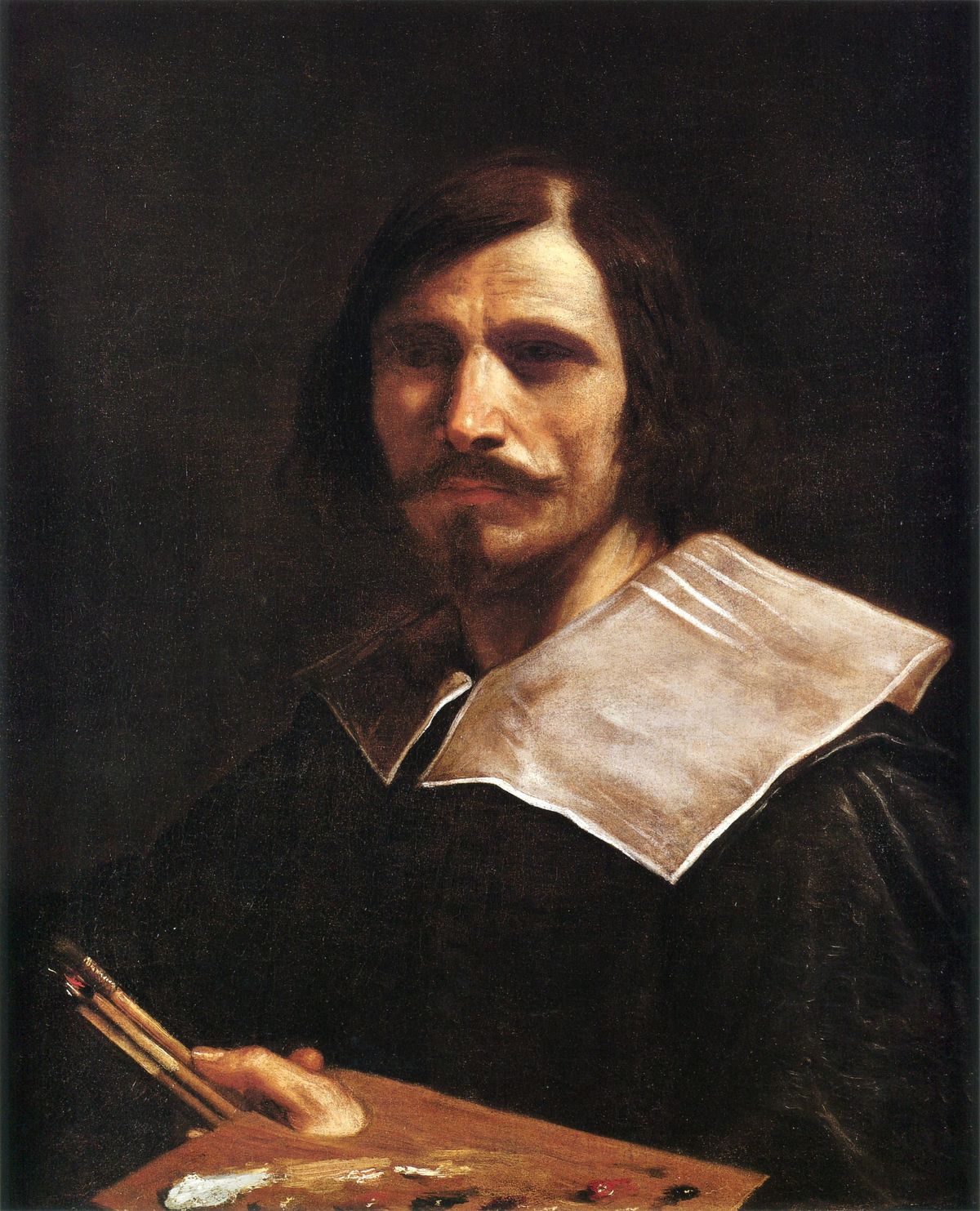
17세기 이탈리아 바로크 회화의 거장 조반니 프란체스코 바르비에리, 널리 귀에르치노(Guercino, 1591–1666)로 불리는 화가가 1635년경 원숙기에 완성한 유화 자화상(Self-Portrait, 이탈리아어: Autoritratto)은 62.0 cm × 51.0 cm 크기의 캔버스에 유채로 그린 대표적인 예술가 자화상 걸작입니다. 현재 미국 워싱턴 D.C.의 국립미술관(National Gallery of Art, Washington, D.C.) 또는 유럽 주요 미술관에 소장되어 있습니다.
거울 속 사시의 눈빛과 팔레트 위의 물감이 일으킨 화실의 소동
1630년대 중반 이탈리아 볼로냐와 첸토에서 최고의 명성을 떨치던 귀에르치노는 어려서 겪은 사고로 생긴 심한 사시라는 신체적 약점을 평생 안고 살았습니다. 그의 별명인 귀에르치노 역시 사팔뜨기라는 뜻의 이탈리아어에서 유래한 것이었습니다. 당시 화가는 귀족들의 주문 초상화 속 거짓된 미화에서 벗어나, 자신의 결점과 치열한 삶의 흔적을 숨김없이 캔버스에 정직하게 기록하고자 깊은 고뇌에 빠졌습니다. 화가는 거울을 화실 이젤 곁에 비스듬히 세워두고, 검은 옷에 흰 칼라를 두른 채 팔레트와 붓을 쥐고 홀로 섰습니다.
이 자화상을 그리던 날, 화실에서는 뭉클하면서도 웃음이 절로 나오는 소동이 벌어졌습니다. 귀에르치노가 거울 속 자신의 비대칭적인 눈빛과 주름진 이마를 뚫어지게 응시하며 집중하던 중, 손에 쥔 팔레트 구멍에서 엄지손가락을 빼려다 그만 팔레트 위에 짜놓은 흰색과 붉은색 유채 물감을 흰 칼라 끝에 묻히고 말았습니다. 화실에 들어오던 제자가 깜짝 놀라 수건을 들고 달려오자, 귀에르치노는 호탕하게 웃으며 제자를 말렸습니다.
화가는 자신의 눈이 삐뚤어져 세상의 빛과 어둠을 남들보다 훨씬 깊고 극적으로 보게 된 것처럼, 옷에 묻은 물감 자국 역시 화가로서 치열하게 살아온 영광스러운 훈장이라며 붓질을 이어갔습니다. 귀에르치노는 짙은 갈색 머리칼 사이로 드러난 이마의 깊은 고뇌, 어두운 배경 속에서 날카롭게 번뜩이는 눈빛, 그리고 팔레트 위에 도톰하게 얹힌 흰색과 빨간색 물감의 끈적한 질감까지 거침없는 붓 터치로 화폭에 담아냈습니다. 신체적 약점을 위대한 예술적 개성으로 승화시킨 거장의 굳은 자부심과 불꽃 같은 창작열이 이 어두운 화폭 속에서 영롱하게 빛나고 있습니다.
거울을 꿰뚫는 날카로운 눈빛에서 흰 칼라와 팔레트 위의 유채 물감으로, 시선의 심리적 여정
그림을 마주하는 순간 관람객의 무의식적 시선은 화면 상단 칠흑 같은 어둠 속에서 한 줄기 강렬한 빛을 받아 선명하게 드러난 귀에르치노의 이마와 깊은 눈매로 가장 먼저 빨려 들어갑니다. 미간을 살짝 찌푸린 채 거울 너머의 자신과 관람객을 동시에 꿰뚫어 보는 듯한 화가의 묵직하고 당당한 눈빛은 보는 이에게 깊은 시각적 압도감과 함께 화가의 치열한 내면을 선사합니다.
이어 시선은 콧수염과 턱수염 아래로 떨어지는 순백의 넓은 직사각형 칼라의 환한 반사광으로 이동합니다. 짙은 검은색 겉옷 위에서 눈부시게 대비되는 하얀 칼라의 반듯한 면과 어깨선을 확인하는 순간, 관람객은 화려한 장식 없이 오직 빛과 어둠만으로 빚어낸 거장의 절제된 품격을 온몸으로 체감하게 됩니다.
마지막으로 시선은 화면 왼쪽 아래에서 단단하게 팔레트를 움켜쥐고 있는 화가의 굳센 엄지손가락과 긴 붓자루들을 지나, 나무 팔레트 위에 두텁게 짜여 있는 하얀색과 붉은색 유채 물감의 생생한 질감에 멈춥니다. 어두운 화실의 침묵을 뚫고 솟아오르는 창조의 열정과 한 예술가의 타협 없는 진실성을 마주하며, 관람객은 고난을 예술로 이겨낸 인간의 숭고한 존엄성과 귀에르치노가 건네는 묵직한 영혼의 위로를 가슴 깊이 마주하게 됩니다.
17세기 이탈리아 바로크 자화상의 정점과 조형적 완성도, 미술계의 평가
미술계는 자화상을 귀에르치노가 자신의 신체적 특징과 내면의 예술적 자긍심을 가장 정직하고 대담한 명암법으로 구현해 낸 최고의 초상화 걸작으로 평가합니다.
카라바조식 테네브리즘의 묵직한 어둠 속에서 인물의 골격과 피부의 요철, 머리카락의 결을 완벽한 입체감으로 조각해 냈을 뿐만 아니라, 팔레트와 붓이라는 회화의 도구를 통해 화가로서의 정체성을 숭고하게 웅변했기 때문입니다. 거짓된 꾸밈을 배제하고 자신의 불완전함마저 위대한 예술혼으로 승화시킨 귀에르치노의 이 기념비적인 화폭은, 오늘날까지도 전 세계 수많은 감상자들에게 깊은 전율과 잊을 수 없는 시각적 감동을 전해주는 불멸의 명작으로 손꼽히고 있습니다.
Self-Portrait
Painted around 1635 in Cento by the preeminent Italian Baroque master Giovanni Francesco Barbieri, universally celebrated as Guercino (1591–1666), Self-Portrait (Italian: Autoritratto) is an oil on canvas measuring 62.0 cm × 51.0 cm (24.4 in × 20.1 in), preserved in the distinguished permanent collection of the National Gallery of Art in Washington, D.C., United States.
The Strabismic Mirror Gaze and the Wet Palette Commotion in the Studio
During the mid-1630s, at the zenith of his acclaim across Cento and Bologna, Guercino retained the physical defect that had defined him since childhood: a pronounced strabismus resulting from a traumatic accident, from which his moniker Guercino (meaning the squinter in Italian) originated. Disillusioned with the flattering conventions of high-society commissions, the master sought to confront his mirror image with unvarnished candor, recording his rugged features and the quiet nobility of his craft upon the canvas. Clad in a sober black doublet with a wide white collar, the painter arranged his easel, mirror, palette, and brushes in solitude.
A memorable and humorous incident occurred during the preparatory sitting. As Guercino leaned toward the looking glass to examine the asymmetric focus of his gaze and the furrowed strength of his brow, his thumb shifted through the palette hole, accidentally brushing freshly dabbed impasto across the pristine edge of his collar. A studio apprentice rushed forward with a cloth in distress, but Guercino waved him away with a hearty laugh.
The master declared that just as his crossed eyes allowed him to perceive the world's dramatic chiaroscuro with singular intensity, fresh paint stains on a craftsman's linen were the honorable marks of true labor. Guercino worked with fiery precision, capturing the dramatic furrow of his brow, the penetrating gaze emerging from deep shadow, and the viscous textures of lead white and vermilion piled upon the wooden palette. Transforming physical imperfection into profound artistic identity, Guercino imbued this self-portrait with unyielding creative dignity.
Subconscious Trajectory of the Gaze: From Piercing Countenance to the Raised Palette
The observer's subconscious gaze is immediately magnetized by the upper register, drawn to the deeply shadowed, intensely expressive countenance of the painter illuminated by a focused directional light against the dark background. His furrowed brow, dark cascading curls, and penetrating, slightly asymmetric gaze establish an instant atmosphere of intellectual concentration and unvarnished psychological truth.
The visual path then descends to the crisp geometric plane of the broad white collar framing his neck, creating a striking tonal rupture against the enveloping black doublet. Taking in the clean lines of the linen and the powerful structure of his shoulders, the viewer directly experiences the disciplined austerity of the master’s studio and the sober majesty of seventeenth-century Bolognese portraiture.
Finally, the visual trajectory sweeps toward the lower-left foreground, resting upon the painter's thumb firmly hooking the wooden palette, the slender wooden handles of his fine brushes, and the thick strokes of white and red pigment applied directly to the timber surface. Observing the profound harmony between dramatic tenebrism, tactile material realism, and the unpretentious dignity of the creator, the spectator perceives the timeless nobility of high art and the enduring spiritual solace Guercino embedded within the canvas.
The Monument of Baroque Self-Representation: Critical Legacy
Art historians revere Self-Portrait as a consummate masterpiece of Guercino’s mature career, demonstrating his masterful synthesis of Caravaggesque tenebrism with the classical naturalism of the Bolognese school.
By rendering intense contrasts of light and shadow, differentiating between porous skin, crisp linen, coarse wood, and glistening oil paint within a unified chiaroscuro scheme, Guercino transformed a personal study into a timeless visual manifesto on the integrity of the artist. This magnificent canvas stands as an inspiring testament to the master's enduring humanism, celebrating the sacred power of artistic honesty and the transformative grace of living art.
본 컨텐트의 저작권은 팔렛트제주에 있습니다. 허가없는 무단전제를 금지합니다.
Copyright © Palette Jeju. All rights reserved. Unauthorized reproduction or redistribution is strictly prohibited.