자화상 - Self-Portrait
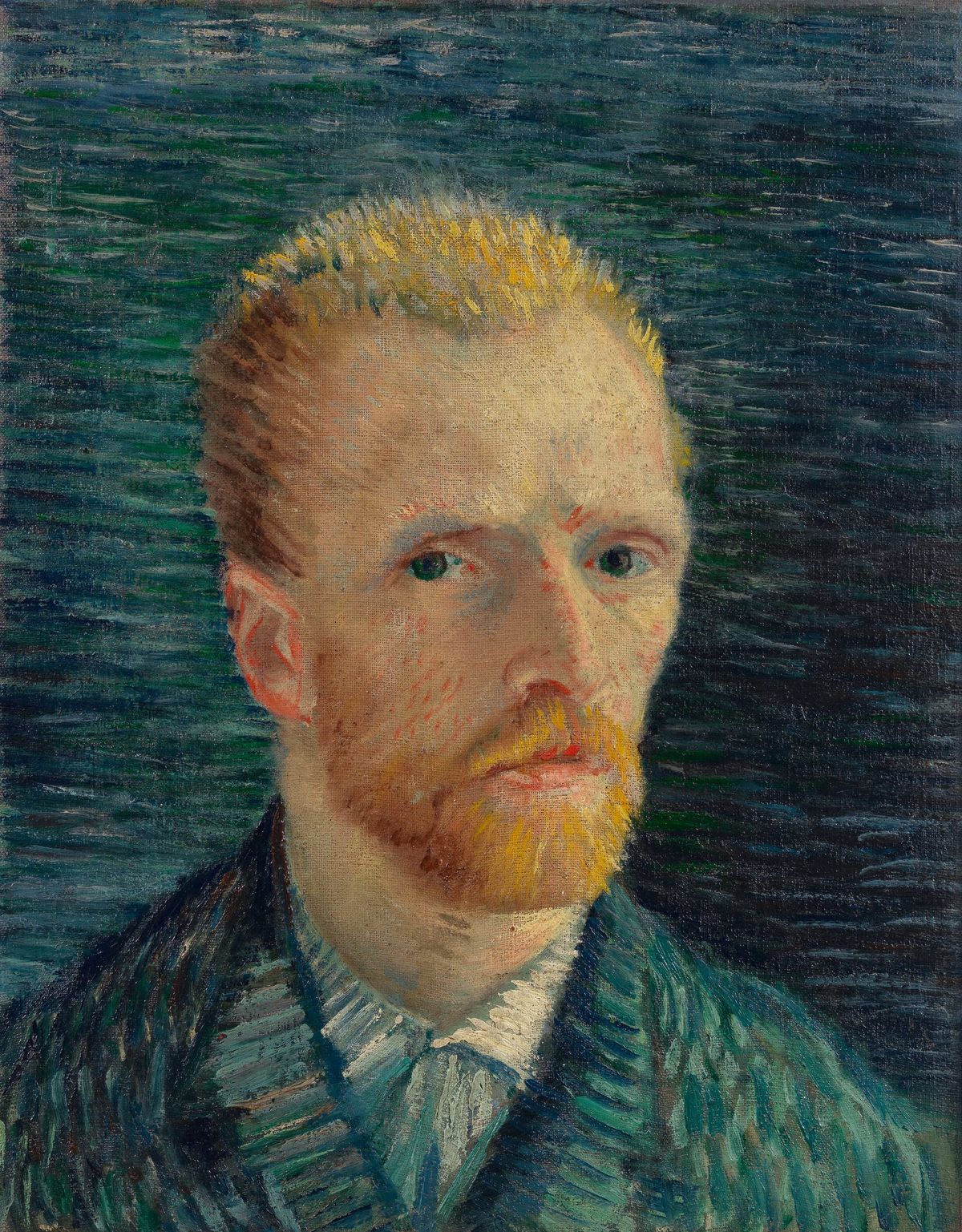
빈센트 반 고흐(Vincent van Gogh, 1853–1890)가 1887년 봄 프랑스 파리 체류 시절 완성한 '자화상(Self-Portrait)'은 판지 위에 유채(Oil on cardboard)로 제작된 인물화입니다. 작품의 실제 규격은 세로 42.0cm, 가로 33.7cm이며, 현재 네덜란드 암스테르담의 반 고흐 미술관(Van Gogh Museum)에 영구 소장되어 있습니다.
고흐는 이 작품에서 신인상주의의 점묘법과 분할주의 기법을 자신만의 격렬하고 유기적인 선묘 터치로 독창적으로 변용했습니다. 화면 배경을 가득 채운 짙은 암청색과 청록색의 수평 붓질들은 인물의 머리 주변에서 마치 성스러운 후광처럼 빛을 발하며, 인물의 얼굴에 닿는 붉은 오렌지빛 수염, 밝은 금빛 머리카락, 그리고 뺨의 분홍빛 터치들과 극적인 보색 대비를 이룹니다. 특히 맑고 투명하게 빛나는 청록색 눈동자와 이마의 단단한 골격은 짧고 리드미컬하게 끊어 치는 붓 터치로 조각되어, 내면의 타오르는 지적 열망과 예술적 각성을 생생하게 뿜어냅니다.
이 그림에는 파리에 입성해 인상주의의 세례를 받으며 자신의 예술관을 송두리째 뒤바꾸던 고흐의 치열한 실험과 가슴 뭉클한 비하인드 스토리가 담겨 있습니다. 1886년 봄, 네덜란드의 어둠을 벗어나 빛의 도시 파리에 도착한 고흐는 클로드 모네, 카미유 피사로, 조르주 쇠라 등 전위 화가들의 눈부신 색채에 엄청난 시각적 충격을 받았습니다. 하지만 당시 고흐는 지독하게 가난하여 고가의 캔버스는커녕 모델을 고용할 돈조차 없었습니다.
고흐는 몽마르트르 화방에서 버려지다시피 한 값싼 두꺼운 종이 판지(Cardboard)를 구해와 그 위에 그림을 그리기 시작했습니다. 모델료가 들지 않는 거울 속 자신이야말로 가장 훌륭하고 끈기 있는 연구 대상이었습니다. 당시 동생 테오의 좁은 아파트 한구석에서 며칠씩 거울을 노려보며 붓질을 이어가던 고흐는, 파리 시절에만 무려 27점이 넘는 자화상을 폭발적으로 쏟아냈습니다.
고흐는 동생 테오에게 보낸 편지에서 "사람의 얼굴을 그리는 것은 영혼의 심연을 들여다보는 일이다. 나는 내 얼굴을 통해 새로운 색채의 진동과 빛의 조화를 시험하고 있다. 사진처럼 똑같이 닮게 그리는 것이 아니라, 내면에서 요동치는 열정과 생명력을 색채의 언어로 번역해 내는 것이 진정한 화가의 길이다"라고 고백했습니다. 당시 몽마르트르의 동료 화가들은 붉은 머리를 짧게 자르고 눈을 번뜩이며 색채 실험에 몰두하던 고흐를 보며 '색채에 미친 네덜란드 사내'라 불렀지만, 고흐는 캔버스 위에서 이전의 칙칙했던 어둠을 완전히 털어내고 현대 미술의 선구자로 눈부시게 거듭나고 있었습니다.
후대의 미술사학자들과 평단은 이 1887년 봄 자화상을 반 고흐가 어두운 네덜란드 리얼리즘 화풍과 완벽히 결별하고 독자적인 색채의 마술사로 도약한 결정적 전환점으로 평가합니다. 점과 선을 감정의 파동으로 환원시킨 그의 혁신적인 붓놀림은 훗날 아를과 생레미에서 만개할 불멸의 걸작들의 토대가 되었으며, 20세기 야수파와 표현주의 화가들에게 감정을 표현하는 수단으로서 색채의 절대적 해방을 선언한 선구적 기념비로 추앙받고 있습니다.
관람자의 시선은 가장 먼저 화면 상단에서 관람자를 정면으로 응시하는 고흐의 맑고 서늘한 청록빛 눈동자와 지적인 이마의 골격에 사로잡힙니다. 이어 화면을 밝히는 강렬한 붉은 오렌지빛 수염과 다문 입술의 단단한 긴장감을 훑은 뒤, 청록빛과 남색 줄무늬가 리드미컬하게 교차하는 옷깃의 터치로 이동합니다. 마지막으로 인물의 두상을 에워싸듯 수평으로 촘촘히 진동하는 짙푸른 배경의 물결을 따라 화면 전체로 유려하게 순환하게 됩니다.
심리적으로 관람자는 짙은 어둠의 배경을 뚫고 찬란하게 솟아오르는 인물의 황금빛 광채 속에서 깊은 정서적 정화와 지적인 각성을 경험하게 됩니다. 스스로의 한계를 극복하고 새로운 예술적 도약을 이루어내던 화가의 결연한 눈빛은 보는 이의 내면에 자리한 두려움과 무기력함을 부드럽게 씻어내며, 어떤 혼란 속에서도 자신의 본질을 잃지 않는 단단한 자아의 확신과 삶을 향한 창조적 열정의 에너지를 풍성하게 채워줍니다.
Self-Portrait
Painted by Vincent van Gogh (1853–1890) in Paris during the spring of 1887, Self-Portrait is an iconic oil on cardboard masterpiece measuring 42.0 cm in height and 33.7 cm in width. This historic work is permanently preserved in the renowned collection of the Van Gogh Museum in Amsterdam, Netherlands.
Van Gogh constructed the canvas through an original adaptation of Neo-Impressionist divisionism and pointillism, transforming structured dots into energetic, directional brushstrokes. The deep slate-blue and teal background is woven with rhythmic horizontal touches that create a luminous aura around the head, establishing a striking complementary resonance against the fiery orange-red beard, golden hair, and delicate pink hues across the facial plane. His piercing, translucent green eyes and structured forehead are carved with crystalline precision, visually radiating an intense intellectual and creative awakening.
The portrait holds an intimate narrative of artistic reinvention and relentless perseverance. Arriving in Paris in the spring of 1886, Van Gogh was utterly transformed by the radiant palettes of the Impressionist and Post-Impressionist avant-garde, including Monet, Pissarro, and Seurat. Yet, impoverished and unable to afford professional models or traditional linen canvases, he purchased inexpensive sheets of cardboard and used his own reflection as his primary laboratory for chromatic experimentation.
Working tirelessly inside the cramped Montmartre apartment he shared with Theo, Van Gogh produced over twenty self-portraits during his Parisian residency. These sessions served as a rigorous training ground to master the interplay of complementary colors and expressive mark-making.
Writing to his brother, Van Gogh reflected that capturing the human likeness was a sacred exploration of the spirit: "I am trying to find a color harmony that expresses the passions of the human soul rather than photographic realism." Fellow Parisian artists often regarded the intense, red-haired Dutchman with fascination, observing how he systematically stripped away the dark umbers of his Dutch roots to reconstruct his identity entirely through vibrant, living light.
Modern art historians celebrate this 1887 Paris self-portrait as a monumental turning point in Van Gogh’s career. By liberating brushwork and color from purely descriptive functions, he laid the stylistic and emotional groundwork for the legendary masterpieces of Arles and Saint-Rémy, offering vital inspiration to early twentieth-century Fauvism and German Expressionism.
A viewer’s gaze is instantaneously magnetized by the cool, penetrating clarity of Van Gogh's green eyes gazing forward with quiet resolve. The eye then explores the chiselled architecture of the nose and the textured, flame-like vitality of his orange beard, before descending along the rhythmic blue and turquoise stripes of his jacket. Finally, the gaze expands into the dense, vibrating currents of the nocturnal blue backdrop, circulating continuously through the harmonious composition.
Psychologically, the contrast between the tranquil, deep blue ground and the luminous warmth of the face induces an immediate sensation of grounded focus, fortitude, and inner clarity. Confronting the artist's unwavering creative determination dispels modern anxiety and mental exhaustion, enveloping the observer in an enduring atmosphere of self-assurance, spiritual resilience, and transformative peace.
본 리뷰에서 작품을 제외한 컨텐츠의 저작권은 팔렛트제주에 있습니다.
"퍼블릭도메인 고전명화"를 제외한 모든 창작 콘텐츠는 저작권법 제4조 및 제10조에 의거하여 보호됩니다. 무단 도용시 저작권법 제136조(벌칙)에 의거, 당사의 사전 서면 승인 없는 저작권 침해 행위를 금지합니다.