자화상 - Self-Portrait
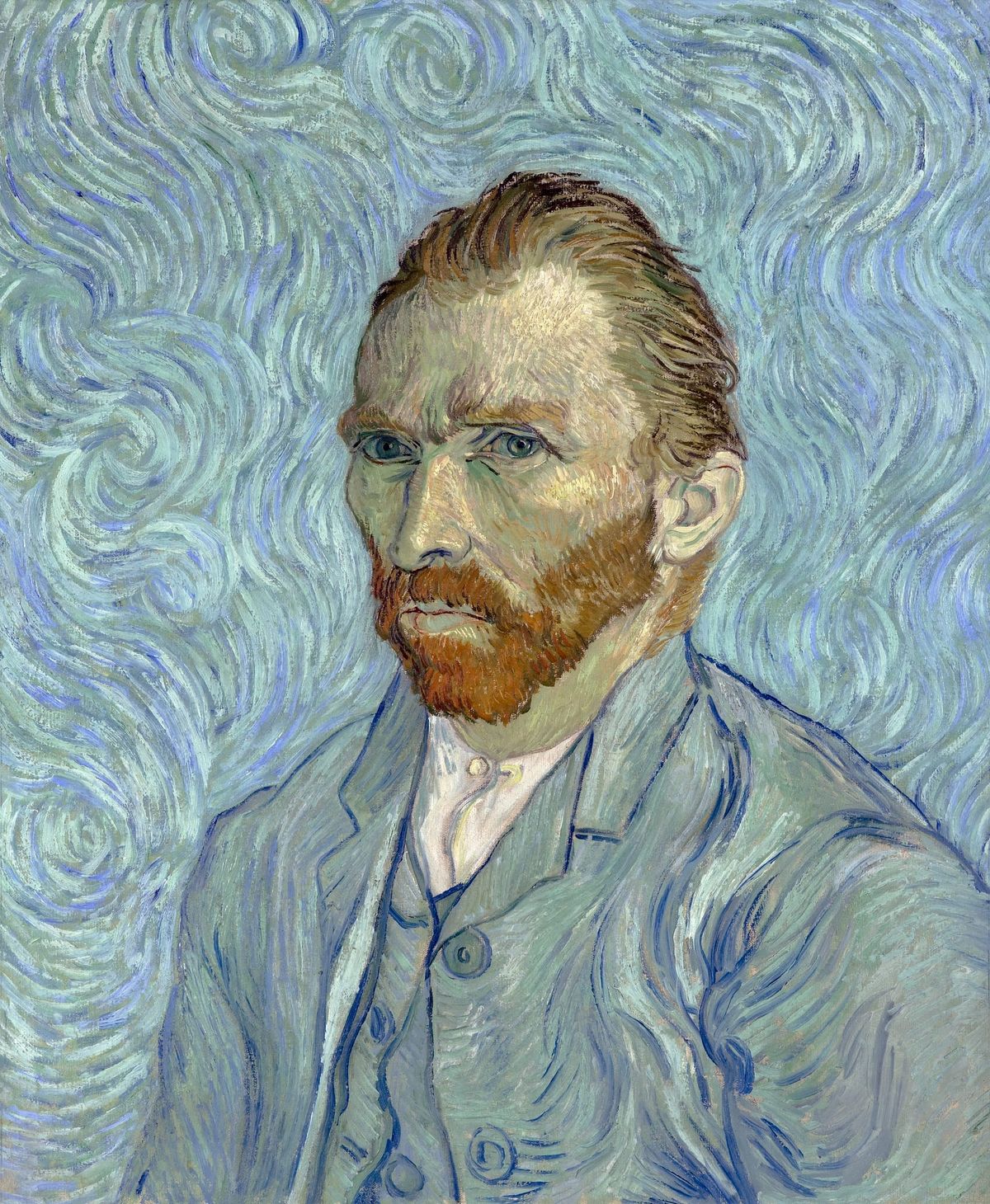
빈센트 반 고흐(Vincent van Gogh, 1853–1890)가 1889년 9월 초 프랑스 남부 생레미 드 프로방스(Saint-Rémy-de-Provence)의 생폴 드 모졸 수도원 정신병원에서 완성한 '자화상(Self-Portrait)'은 캔버스에 유채(Oil on canvas)로 제작된 인물화입니다. 작품의 실제 규격은 세로 65.0cm, 가로 54.0cm이며, 현재 프랑스 파리의 오르세 미술관(Musée d'Orsay)에 영구 소장되어 있습니다.
고흐는 이 작품에서 화면 전체를 소용돌이치는 아라베스크풍 곡선 리듬과 물감을 빚어 올리듯 두텁게 바르는 특유의 임파스토(Impasto) 기법으로 채웠습니다. 캔버스 배경과 재킷을 물들인 청록색과 옥빛, 연보랏빛의 차가운 색채 파동은 인물의 붉은 오렌지빛 수염 및 머리카락과 강렬한 보색 대비를 이루며 시각적 긴장감을 극대화합니다. 뺨과 이마, 그리고 관람자를 관통하듯 쏘아보는 맑고 서늘한 눈매는 짧고 단단하게 끊어 치는 붓 터치로 조각되어, 내면의 소용돌이를 통제하려는 화가의 초인적인 집중력을 웅변합니다.
이 그림에는 지독한 정신적 발작의 늪을 건너온 반 고흐가 자신의 회복과 온전한 자아를 증명하기 위해 거울과 사투를 벌였던 가슴 저린 인간적 에피소드가 깃들어 있습니다. 1889년 7월 말, 고흐는 병원 야외에서 그림을 그리다 치명적인 신경 쇠약 발작을 일으키며 쓰러졌고, 자신이 쓰던 유화 물감을 입에 털어 넣으려는 극단적인 상태에 이르러 한 달 넘게 독방에 감금되었습니다. 붓과 캔버스를 모두 빼앗긴 채 어둠 속에 갇혀 있던 그는 8월 말 기적적으로 정신을 차리자마자 의사 테오필 페롱(Théophile Peyron)에게 매달려 화구를 돌려받았습니다.
작업실로 돌아온 고흐는 자신이 완전히 미치지 않았으며 여전히 위대한 화가로 살아있음을 스스로에게 입증해야 한다는 강박적인 열망에 사로잡혔습니다. 그는 거울 앞에 앉아 쇠약해진 자신의 얼굴을 노려보며 붓을 들었습니다. 당시 고흐는 동생 테오에게 보낸 편지에서 "사람들은 스스로를 아는 것이 어렵다고들 하지만, 나 자신을 화폭에 그리는 것 역시 결코 쉬운 일이 아니다. 나는 발작을 겪은 직후 몹시 야위고 창백해진 내 얼굴을 그렸다. 이것은 내 영혼의 건강을 되찾기 위한 처절한 시도이자 가장 진실한 고백이다"라고 적었습니다.
그는 병원 규율에 굴복하지 않고 단정하게 정장을 차려입은 채, 귀를 자르고 발작을 겪은 '광인'이 아닌 엄숙하고 존엄한 '예술가'로서의 모습을 화폭에 새겨 넣었습니다. 병원 간호사들과 수도사들은 며칠 동안 식사도 거른 채 거울 속 자신과 눈을 맞추며 신들린 듯 물감을 짓이기던 붉은 머리의 고흐를 두려움과 경외가 뒤섞인 눈빛으로 바라보았지만, 고흐는 요동치는 붓끝으로 자신의 혼란을 잠재우며 찬란한 예술적 승리를 일궈냈습니다.
후대의 미술사학자들과 평단은 이 오르세 미술관 소장본 자화상을 서양 미술사상 가장 위대한 심리적 자화상이자 반 고흐 회화 예술의 절대적 정점으로 평가합니다. 격렬하게 요동치는 배경의 파동 속에서도 미동 없이 굳건하게 자리를 지키는 인물의 얼굴은, 광기와 파멸의 위협 앞에서도 예술이라는 구원의 끈을 결코 놓지 않았던 한 인간의 불멸의 의지를 증명하는 걸작으로 영원히 칭송받고 있습니다.
관람자의 시선은 가장 먼저 화면 정중앙에서 관람자의 영혼을 꿰뚫어 보듯 서늘하게 빛나는 고흐의 맑고 푸른 눈빛에 단숨에 사로잡힙니다. 이어 굳게 다문 입술과 강렬한 붉은 오렌지빛 수염의 거친 결을 훑은 뒤, 인물의 어깨와 재킷을 타고 흐르는 유려한 청록빛 윤곽선으로 이동합니다. 마지막으로 배경 전체를 휘감으며 소용돌이치는 은청색과 옥빛 물결의 역동적인 리듬을 따라 화면 전체로 유려하게 순환하게 됩니다.
심리적으로 관람자는 배경을 뒤흔드는 불안정한 파동 속에서도 완벽한 평정을 유지하는 인물의 단단한 눈빛에서 깊은 전율과 함께 형언할 수 없는 내적 카타르시스를 경험하게 됩니다. 스스로의 상처와 고통을 정면으로 응시하며 극복해 낸 화가의 숭고한 용기는 보는 이의 내면에 잠재된 불안과 혼란을 부드럽게 정화해 주며, 삶의 어떠한 거센 풍파 속에서도 자신을 지켜낼 수 있는 단단한 회복 탄력성과 깊은 평온의 에너지를 풍성하게 채워줍니다.
Self-Portrait
Painted by Vincent van Gogh (1853–1890) in early September 1889 at the Saint-Paul de Mausole asylum in Saint-Rémy-de-Provence, Self-Portrait is an iconic oil on canvas masterpiece measuring 65.0 cm in height and 54.0 cm in width. This legendary painting is permanently preserved in the prestigious collection of the Musée d'Orsay in Paris, France.
Van Gogh constructed the portrait through a dynamic synthesis of undulating, flame-like arabesques and heavy, sculptural impasto. The cool, hypnotic currents of turquoise, pale seafoam green, and muted lilac sweeping across the jacket and background establish an electric complementary contrast against the fiery orange-red tones of his hair and beard. The bone structure of his face and his piercing, translucent eyes are sculpted with disciplined, crystalline brushwork that visibly channels the artist's immense willpower to master his psychological turmoil.
The canvas holds an intimate history of profound resilience and emotional triumph. In late July 1889, Van Gogh suffered a catastrophic psychological breakdown while painting outdoors, prompting asylum authorities to confiscate his paints and confine him to a solitary room for over a month. When he finally regained his faculties in late August, he immediately demanded the return of his brushes to prove that his artistic vision remained completely intact.
Sitting before his small mirror in the asylum studio, Van Gogh confronted his hollowed, post-crisis features with unvarnished honesty. Writing to his brother Theo, he reflected: "They say—and I am willing to believe it—that it is difficult to know oneself, but it is not easy to paint oneself either. I started this canvas the day I got up, thin and pale as a ghost... but it is a continuation of my effort to recover."
Rather than portraying himself as a broken asylum patient, Van Gogh deliberately dressed in a tailored suit and waistcoat, asserting his enduring identity as a dignified, professional master. The attendants and asylum staff watched in silence as the artist worked with fierce, uninterrupted focus, transforming the turbulent tremors of his nervous system into a harmonized visual symphony of creative fortitude.
Modern art historians and scholars celebrate this Orsay masterpiece as the absolute apex of psychological portraiture in Western art. By setting an immovable, razor-sharp human presence within a vibrating vortex of cosmic lines, Van Gogh achieved a supreme visual metaphor for human consciousness prevailing over chaotic darkness, inspiring twentieth-century Expressionism and modern existential thought.
A viewer’s gaze is instantaneously magnetized by the cool, penetrating clarity of Van Gogh's intense blue eyes at the center of the composition. The eyes then traverse the chiselled contours of his cheekbones and the textured, fiery mass of his beard, before descending along the fluid turquoise ridges of his jacket. Finally, the gaze expands into the hypnotic, swirling waves of the celestial backdrop, circulating continuously through the rhythmic masterpiece.
Psychologically, the juxtaposition of background turbulence with the centered stillness of the gaze induces an immediate sensation of grounding, fortitude, and profound emotional catharsis. Confronting this raw victory of human willpower dispels modern anxiety and mental exhaustion, enveloping the observer in an enduring atmosphere of spiritual resilience, quiet courage, and transformative peace.
본 리뷰에서 작품을 제외한 컨텐츠의 저작권은 팔렛트제주에 있습니다.
"퍼블릭도메인 고전명화"를 제외한 모든 창작 콘텐츠는 저작권법 제4조 및 제10조에 의거하여 보호됩니다. 무단 도용시 저작권법 제136조(벌칙)에 의거, 당사의 사전 서면 승인 없는 저작권 침해 행위를 금지합니다.