쟁기를 든 농부가 있는 울타리 쳐진 들판 Enclosed Field with Ploughman
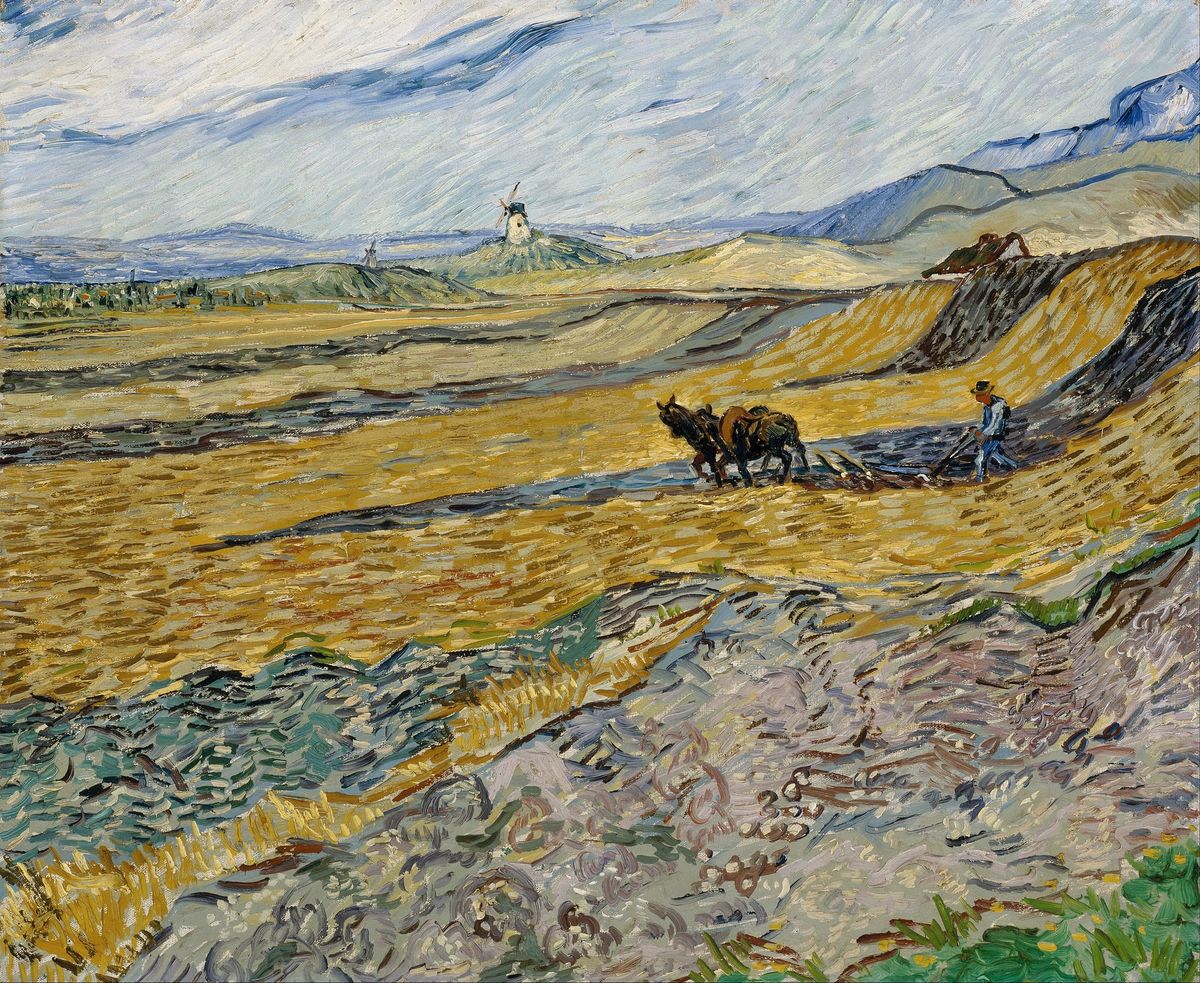
빈센트 반 고흐(Vincent van Gogh, 1853–1890)는 1889년 프로방스의 생레미 요양원에 체류하던 시기에 병원 창밖으로 바라보낸 울타리 친 들판과 경작지의 풍경을 화폭에 담아내며 자연의 끈질긴 생명력을 탐구했습니다.
이 작품은 그가 생레미에 체류하던 1889년 10월 말에서 11월 초 사이에 제작된 유채화로, 야콥 바르트 드 라 파이유의 전작 도록 기준 공식 등록번호는 F706이며 실제 작품의 실측 규격은 54.0 × 65.0 cm입니다.
현재 미국 매사추세츠주에 위치한 보스턴 미술관에서 소장하고 있습니다.
작가의 고뇌와 비하인드
생레미 시기에 고흐는 극심한 정신적 고통 속에서도 대지를 갈아엎으며 씨를 뿌리는 농부의 모습을 통해 삶의 의지를 다잡고자 했습니다.
화면 전면에는 거친 흙빛과 회백색의 돌무더기가 두터운 임파스토 기법으로 묵직하게 쌓여 있어 대지의 단단한 질감을 강렬하게 전달합니다.
중경에는 푸른 복식을 입은 농부가 두 마리의 말과 함께 쟁기를 끌며 밭을 갈고 있는 모습이 펼쳐져 있으며, 황금빛과 갈빛이 섞인 밭고랑이 대각선으로 깊이감 있게 이어집니다.
원경의 지평선 위에는 언덕 위에 세워진 풍차와 멀리 아스라이 펼쳐진 보랏빛 산 능선, 그리고 역동적인 붓질로 채워진 하늘이 어우러져 프로방스의 광활한 대기감을 완성합니다.
무의식 속 시선 및 심리 흐름
관람객의 시선은 가장 먼저 화면 하단에 묵직하게 깔린 거친 흙과 돌무더기의 단단한 질감에 닿으며 대지의 묵은 무게감을 느끼게 됩니다.
이어지는 시선은 대각선 밭고랑을 따라 중앙에서 묵묵히 쟁기를 끌며 일하는 농부와 말들의 역동적인 노동 현장으로 자연스럽게 이동합니다.
마지막으로 멀리 언덕 위의 풍차와 바람이 치는 듯한 하늘의 원경으로 시선이 넓게 퍼져나가며, 척박한 현실 속에서도 묵묵히 삶의 터전을 일구는 인간의 굳센 의지와 깊은 평온을 동시에 체감하게 됩니다.
미술계의 평가와 조형미
미술사학계에서는 이 작품을 두고 고흐가 후기 인상주의의 소용돌이치는 붓질과 대담한 색채를 통해 자연과 인간 노동의 결합을 가장 감동적으로 승화시킨 수작으로 평가합니다.
황금빛 대지와 차가운 청회색 하늘, 그리고 밭을 가는 농부의 조화는 화면 전체에 깊은 리듬감과 시각적 생명력을 부여합니다.
눈에 보이는 풍경의 재현을 넘어, 화가의 흔들리는 내면을 대지의 거대한 호흡으로 치유하고자 했던 영원한 예술적 명작입니다.
Enclosed Field with Ploughman
Vincent van Gogh captured the rugged vitality of the landscape surrounding the asylum in Saint-Rémy during his stay in Provence in 1889, focusing on the expressive power of the cultivated earth.
Created in late October to early November 1889, this oil on canvas is cataloged as F706 in J.B. de la Faille's catalogue raisonné and measures 54.0 × 65.0 cm.
The painting is currently housed in the Museum of Fine Arts, Boston, United States.
Amidst the severe psychological trials of his confinement, Van Gogh found profound emotional stability and purpose by observing the daily labor of local farmers working the fields beneath his window.
The foreground is dominated by heavy, textured clumps of earth and stony soil rendered in thick impasto brushstrokes that convey the tangible mass of the ground.
In the middle ground, a peasant dressed in blue guides a team of horses pulling a plow across the soil, following diagonal furrows of rich golden-brown and ochre tones.
In the distant background, a windmill stands atop a rolling hill beneath distant purple mountains and a dynamic sky filled with swirling brushstrokes, capturing the sweeping atmosphere of the region.
The viewer's gaze is initially drawn toward the heavy, textured soil in the lower foreground, establishing a grounded sense of physical weight and reality.
The perspective then follows the sweeping diagonal furrows inward toward the laborer and horses at work in the middle ground.
Finally, the eye ascends toward the distant windmill and the turbulent sky at the upper register, allowing the observer to experience a profound psychological transition from earthly struggle to an expansive sense of resilience.
Art historians regard this canvas as a masterwork of Van Gogh's Saint-Rémy period, where rhythmic, swirling brushwork and vibrant color contrasts elevate agricultural labor into a deeply spiritual statement.
The striking interplay between warm golden fields, earthy tones, and cool atmospheric blues generates a powerful visual harmony and emotional resonance.
It stands as an enduring artistic monument that immortalizes the unyielding spirit of humanity through the eternal cycle of the land.
본 컨텐트의 저작권은 팔렛트제주에 있습니다. 허가없는 무단전제를 금지합니다.
Copyright © Palette Jeju. All rights reserved. Unauthorized reproduction or redistribution is strictly prohibited.