쟁기질하는 아랍 농부 Paysan arabe à la charrue
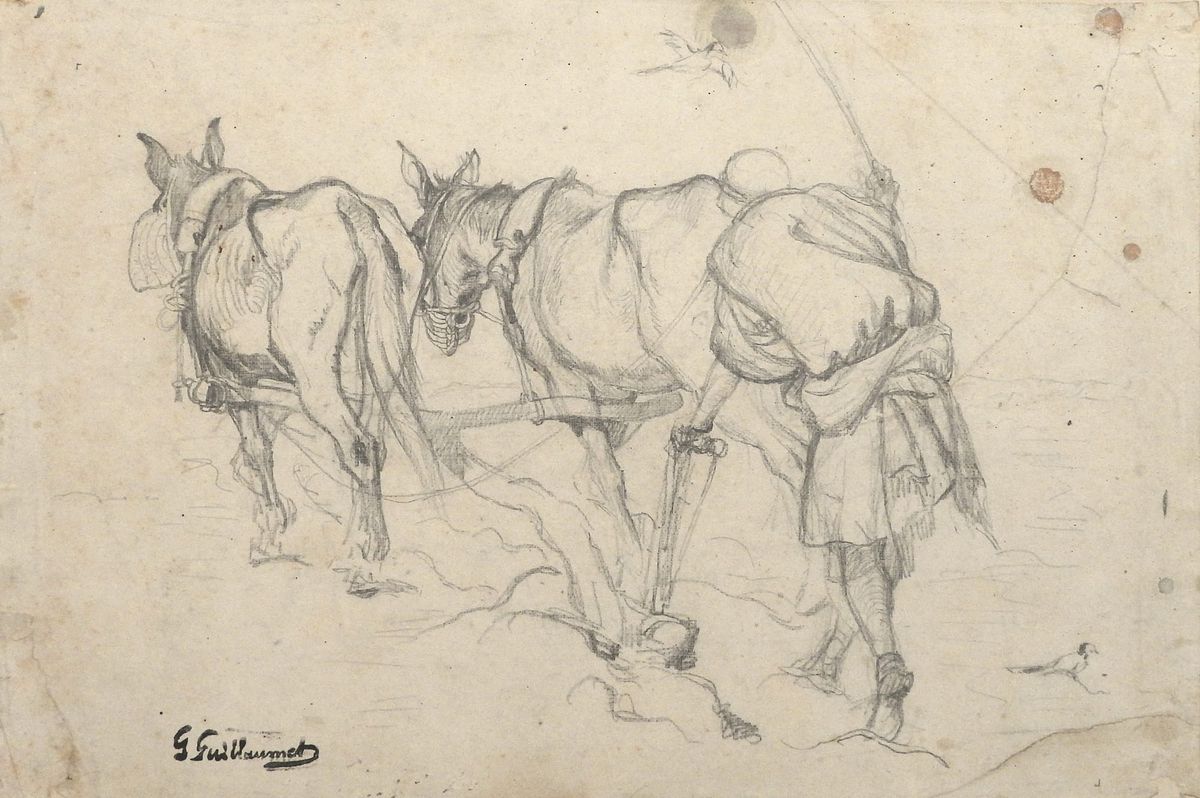
19세기 프랑스 오리엔탈리즘 리얼리즘의 독보적인 거장 귀스타브 기요메(Gustave Guillaumet, 1840–1887)가 알제리 현지 농촌에서 직접 사생하여 완성한 종이 위의 흑연 소묘 쟁기질하는 아랍 농부(Arab Peasant with a Plow, 프랑스어: Paysan arabe à la charrue)는 19.4 cm × 28.4 cm 크기의 종이에 섬세하고 역동적인 연필 선으로 그린 대표적인 농촌 풍속 사생 걸작입니다. 현재 프랑스의 저명한 미술관 및 유수 개인 컬렉션에 소장되어 있습니다.
사하라 척박한 토양과 고대 농경의 생명력을 향한 화가의 깊은 고뇌
1860년대부터 알제리의 구석구석을 누비며 북아프리카의 진솔한 삶을 기록하던 기요메는, 당시 파리 화단에서 유행하던 화려한 궁정 오리엔탈리즘의 거짓된 장식성을 단호히 거부했습니다. 그는 메마르고 거친 흙먼지 속에서 가축과 하나가 되어 대지를 일구는 알제리 현지 농민들의 정직한 노동이야말로 인류의 가장 원초적이고 숭고한 아름다움이라고 확신했습니다. 기요메는 섭씨 40도를 넘나드는 타는 듯한 태양 아래에서 농부의 발걸음을 나란히 따라 걸으며, 흑연 연필 한 자루로 고대 성경 시대부터 변함없이 이어져 내려온 전통 쟁기질의 거룩한 노동을 화폭에 담고자 치열하게 고뇌했습니다.
화가는 두 마리의 당나귀 혹은 노새가 끄는 투박한 나무 쟁기를 쥐고 묵묵히 밭을 가는 농부의 뒷모습을 정교한 필선으로 포착했습니다. 농부는 오른손으로 쟁기 손잡이를 묵직하게 내리누르고, 왼손에는 가느다란 채찍 막대를 높이 치켜든 채 온몸의 무게를 실어 굳은 땅을 갈아엎고 있습니다. 농부의 펄럭이는 겉옷 주름과 두 마리 가축의 탄탄한 등판 근육, 흙더미 속에서 먹이를 찾는 작은 새들의 평화로운 날갯짓은, 자연과 인간이 교감하는 대지의 생명력을 꾸밈없이 서정적으로 웅변합니다. 왼쪽 아래에 단정하게 서명된 기요메의 친필 사인은, 현장의 살아 있는 진실을 마주한 예술가의 깊은 경외심과 정직한 예술혼을 감동적으로 증명합니다.
묵직하게 기운 농부의 등판에서 쟁기 끄는 가축들과 대지의 작은 새들로, 시선의 심리적 여정
그림을 마주하는 순간 관람객의 무의식적 시선은 화면 오른쪽 밝은 여백 속에서 짙은 흑연의 해칭 선으로 힘차게 묘사된 아랍 농부의 굽은 등판과 어깨로 가장 먼저 빨려 들어갑니다. 두터운 겉옷을 걸치고 대지를 향해 몸을 깊이 숙인 채 쟁기를 누르는 농부의 우직한 뒷모습은 보는 이에게 깊은 시각적 숭고함과 함께 땀 흘리는 노동의 거룩한 무게감을 선사합니다.
이어 시선은 농부의 단단한 손이 쥐고 있는 원목 쟁기의 칼날을 따라 화면 왼쪽으로 이동하여, 묵묵히 쟁기를 끌며 나아가는 두 마리 노새의 탄탄한 허리와 꼬리털로 옮겨갑니다. 주인의 채찍 신호에 맞춰 발을 맞추며 메마른 흙을 딛고 서 있는 가축들의 팽팽한 다리 근육과 귀의 움직임을 확인하는 순간, 관람객은 건조한 바람과 흙냄새가 진동하는 알제리 평원의 생생한 농경 현장 한복판 속으로 온몸이 빨려 들어가게 됩니다.
마지막으로 시선은 화면 상공과 농부의 발치 흙더미 위에서 평화롭게 모이를 쪼며 날아다니는 작은 새들의 가벼운 윤곽선을 지나, 화면 왼쪽 아래에 단정하게 새겨진 화가의 친필 서명에 멈춥니다. 흑연 연필의 담백한 농담과 종이의 따뜻한 여백이 만들어내는 서정적인 공간감을 마주하며, 관람객은 대지와 더불어 살아가는 인간의 순수한 존엄성과 기요메가 건네는 묵직한 영혼의 감동을 가슴 깊이 마주하게 됩니다.
19세기 프랑스 사실주의 사생 소묘의 정점과 조형미, 미술계의 평가
미술계는 쟁기질하는 아랍 농부를 기요메가 현장에서 완성한 흑연 드로잉 중에서도 가장 뛰어난 인체 및 동물 해부학적 관찰력과 기념비적 사실주의를 성취한 대표작으로 평가합니다.
단 몇 번의 빠른 연필 터치와 정교한 명암 해칭만으로 척박한 토양의 거친 질감과 쟁기를 끄는 역동적인 운동 에너지를 완벽하게 구현했을 뿐만 아니라, 식민지 농민의 일상을 단순한 풍속을 넘어선 고결한 인간 찬가로 승화시켰기 때문입니다. 현장의 진실을 꿰뚫어 보는 따뜻한 시선과 대지를 향한 깊은 애정을 담아 완성해 낸 기요메의 이 소박한 드로잉은, 오늘날까지도 전 세계 수많은 감상자들에게 깊은 울림과 잊을 수 없는 시각적 감동을 전해주는 불멸의 명작으로 손꼽히고 있습니다.
Arab Peasant with a Plow
Drawn on site in Algeria by the preeminent nineteenth-century French Orientalist realist master Gustave Guillaumet (1840–1887), Arab Peasant with a Plow (French: Paysan arabe à la charrue) is an intimate graphite drawing on paper measuring 19.4 cm × 28.4 cm (7.6 in × 11.2 in), preserved in a distinguished private collection in France.
The Arid Soil of Algeria, Timeless Agriculture, and the Sacredness of Honest Labor
Throughout his extensive travels across North Africa beginning in the early 1860s, Gustave Guillaumet consciously rejected the theatrical, idealized clichés that defined standard Parisian Orientalism. He believed that the supreme dignity of the region lay not in opulent palaces, but in the enduring resilience of the agrarian laborers who cultivated the sun-scorched earth. Venturing directly into the rural fields of Algeria under the blistering North African sun, Guercino's successor in honest draftsmanship wielded a single graphite pencil to record the ancient rhythm of traditional cultivation practiced since biblical times.
Observing a local farmer turning the arid soil with a rudimentary wooden ard pulled by a pair of mules or donkeys, Guillaumet seized the dynamic kinetic momentum of the scene. The peasant leans his entire body weight onto the plow handle with his right hand while raising a slender guide switch in his left to pace the animals. The rhythmic hatchings defining the laborer’s gathered mantle, the powerful haunches of the draft beasts, and the incidental presence of small birds foraging in the freshly furrowed dirt establish a profound visual ode to human endurance. Signed distinctly by the artist in the lower left, this delicate sheet stands as an indelible witness to Guillaumet’s profound empathy for the working people of the soil.
Subconscious Trajectory of the Gaze: From Stoic Laborer to the Furrowed Earth
The observer's subconscious gaze is immediately magnetized by the right register, drawn to the densely cross-hatched mass of the peasant's back and shoulders leaning resolutely over the plow. His downward momentum, the heavy folds of his rural garments, and the concentrated force channeled through his right arm establish an instant focal point of physical tenacity, raw human labor, and monumental stoicism.
The visual path then follows the wooden beam of the plow forward to the left, traveling along the muscular backs, tails, and alert ears of the two draft animals straining against the harness. Taking in the tactile tension in their hind legs and the crisp outlines defining their hooves upon the dirt, the viewer directly experiences the physical synergy between man and beast within an unforgiving desert landscape.
Finally, the visual trajectory sweeps past the delicate sketches of birds wheeling overhead and pecking at the ground in the lower right, before descending to the crisp signature G. Guillaumet anchored in the lower-left corner. Observing the harmonious equilibrium between energetic graphite hatching, stark linear economy, and evocative empty space, the spectator perceives the timeless nobility of agrarian life and the profound aesthetic solace Guillaumet embedded within this intimate study.
The Monument of French Plein-Air Realism: Critical Legacy
Art historians revere Arab Peasant with a Plow as a consummate masterpiece of nineteenth-century graphic naturalism, illustrating Guillaumet’s extraordinary ability to convey structural weight and spatial atmosphere through minimal graphic means.
By orchestrating delicate tonal contrasts between the warm tone of the paper, soft graphite shading, and decisive structural lines, Guillaumet elevated an everyday agricultural study into an enduring visual hymn to the human spirit. This rare and touching open-air drawing endures as an inspiring testament to the master's technical brilliance, celebrating the sacred power of labor and the transformative grace of living art.
본 컨텐트의 저작권은 팔렛트제주에 있습니다. 허가없는 무단전제를 금지합니다.
Copyright © Palette Jeju. All rights reserved. Unauthorized reproduction or redistribution is strictly prohibited.