이삭의 희생 - Abraham's Sacrifice / The Sacrifice of Isaac
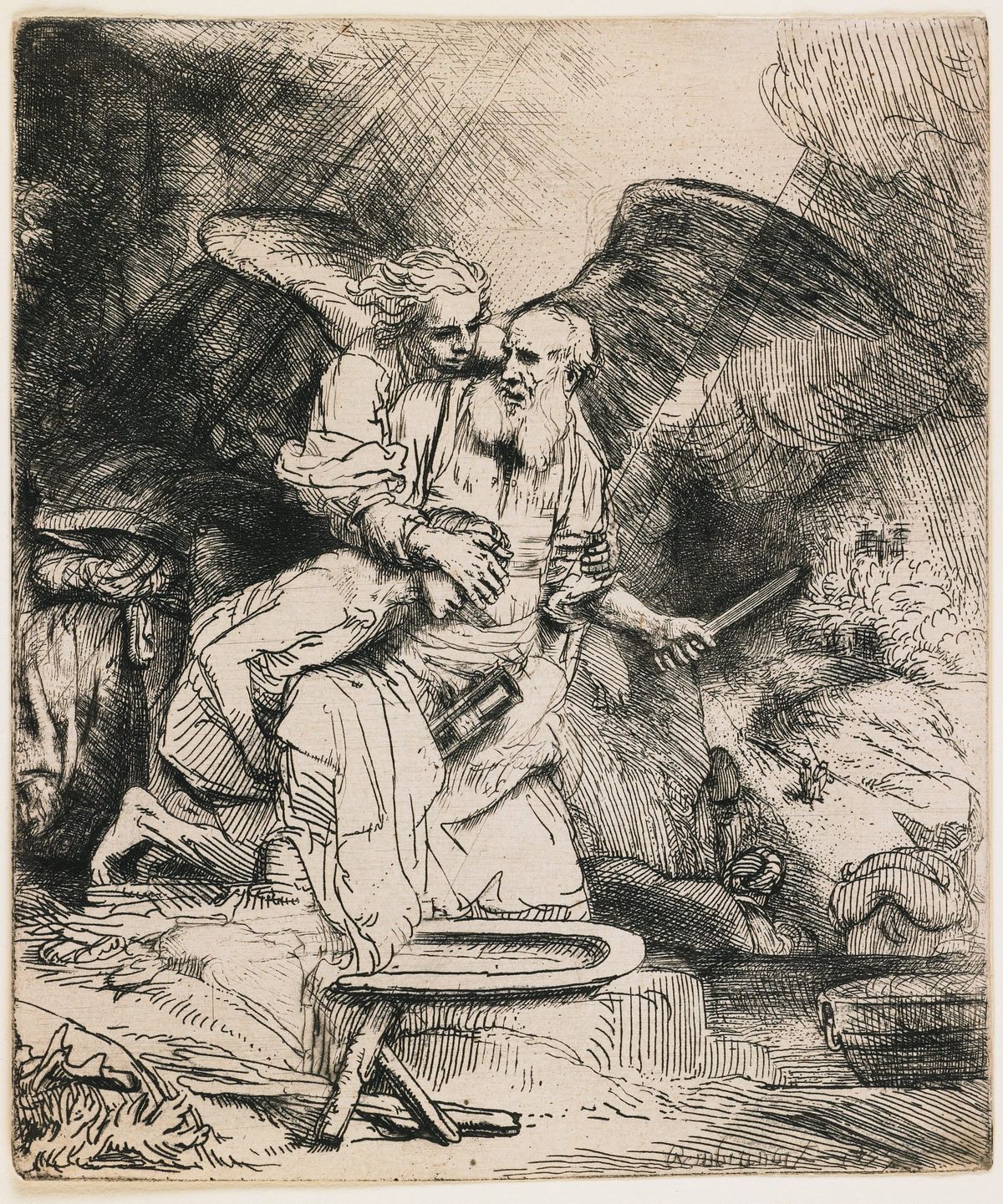
1655년 17세기 네덜란드 미술의 거장 렘브란트 반 레인(Rembrandt van Rijn)이 제작한 판화 작품 《이삭의 희생》은 에칭과 드라이포인트 기법으로 완성된 종교 역사화 판화의 불멸의 걸작으로, 현재 암스테르담 국립미술관(Rijksmuseum)과 런던 대영박물관(British Museum), 뉴욕 메트로폴리탄 미술관(The Metropolitan Museum of Art) 등에 원본 판화가 소장되어 있으며 실제 크기는 약 15.6 × 13.1 cm입니다.
이 화면은 구약성경 창세기 22장에 기록된 신앙의 시험, 즉 아브라함이 하나님의 명령에 순종하여 외아들 이삭을 제물로 바치려 칼을 들어 올린 바로 그 순간, 천사가 하늘에서 내려와 아브라함의 팔을 꼭 붙잡으며 제지하는 극적인 순간을 렘브란트 1650년대 특유의 대담하고 심리적인 에칭 선으로 포착해 낸 명작입니다. 화가는 아들의 눈을 가린 채 경악과 안도감이 교차하는 아브라함의 지친 얼굴과, 뒤에서 아브라함을 껴안듯 팔을 잡아채는 천사의 위엄 있는 동세, 그리고 아버지의 무릎 아래 무릎을 꿇고 있는 어린 이삭의 무방비한 신체를 강렬한 명암 대조 속에서 부각시켰습니다.
작품 속에는 1630년대 초기 유화 작품(1635년작 《이삭의 희생》)과 비교했을 때 렘브란트의 영적 깊이와 심리 묘사가 한층 성숙해진 비하인드 스토리가 흐릅니다. 청년 시절의 렘브란트가 칼이 공중에서 떨어지는 외형적이고 극적인 충격을 강조했다면, 50대에 접어들어 제작한 이 판화에서는 천사가 아브라함을 뒤에서 안아 물리적으로 멈춰 세우는 신체적 스킨십을 통해 두 인물 간의 친밀하고 영적인 교감을 시각화했습니다. 칼을 쥔 손에 힘이 빠지는 순간과, 충격에 휩싸인 아브라함의 눈빛은 신앙의 시련을 통과한 인간의 심리적 파동을 유감없이 보여줍니다.
후대 평단과 관객들은 이 소형 판화를 렘브란트 후기 종교 판화가 도달한 절정의 정서적 울림과 극적 드로잉 감각의 정수로 평가합니다. 동판 위를 자유롭게 가로지르는 촘촘한 해칭 선과 구원의 빛이 사선으로 쏟아지는 배경 연출은 관객에게 시대를 초월한 숭고한 감동과 깊은 영적 안식을 선사합니다.
이 그림을 마주하는 관람객의 무의식적 시선은 화면 중앙, 아브라함의 칼을 쥔 오른팔을 뒤에서 단단히 잡아채며 제지하는 천사의 얼굴과 아브라함의 경악에 찬 표정으로 가장 먼저 끌려갑니다. 신성한 개입이 이루어지는 순간의 일촉즉발 긴장감은 관람객의 마음에 묵직한 시각적 중심과 숭고한 숙연함을 안겨줍니다.
이어 시선은 아브라함의 손길 아래 얼굴이 가려진 채 무릎을 꿇고 있는 어린 이삭의 피로한 몸체와, 그 아래 놓인 제단용 대야 및 장작더미의 정교한 해칭 선으로 자연스럽게 이동합니다. 죽음의 위기에서 구원받는 어린 생명의 정숙한 포즈는 화면 전체에 든든한 서사적 온기와 신성한 구원의 기쁨을 더해줍니다.
마지막으로 시선은 우측 상단 하늘에서 사선으로 내리꽂히는 구원의 빛 줄기와, 화면 우측 하단 멀리 아득하게 묘사된 산길 및 작가의 서명 속으로 낙하하여 정착합니다. 이러한 무의식적 시선의 흐름은 시련을 넘어선 고요한 신앙의 안식처로 감상자를 자연스럽게 인도하며, 마음에 닿는 차분하고 정갈한 여운을 오래도록 남깁니다.
In 1655, Rembrandt van Rijn, one of the paramount masters of the Dutch Golden Age, created the intensely psychological etching titled "Abraham's Sacrifice" (also known as The Sacrifice of Isaac). Preserved in world-renowned print collections such as the Rijksmuseum in Amsterdam, the British Museum in London, and the Metropolitan Museum of Art in New York, this original print measures approximately 15.6 × 13.1 cm. This artwork finely captures the pivotal biblical moment of divine intervention through an extraordinarily expressive matrix of etched and drypoint lines.
The print visually manifests the dramatic climax from Genesis 22, depicting the moment an angel physically embraces and restrains the patriarch Abraham as he raises a knife to sacrifice his son Isaac. Historical context highlights Rembrandt's profound artistic evolution; whereas his famous 1635 painting of the same subject depicted the angel dramatically disarming Abraham mid-air, this mature print features the angel wrapping both arms around the aged father in a compassionate, physical embrace. By capturing Abraham's stunned, grief-stricken face and Isaac's helpless vulnerability, Rembrandt transformed a terrifying trial of faith into a tender miracle of redemption.
Art historians and critics continuously extol this sheet for its emotional intimacy and graphic power, celebrating Rembrandt's ability to condense intense spiritual drama into a compact copperplate format. The striking contrast between the radiant light streaming down from the upper right, the heavily hatched shadows enfolding the figures, and the physical weight of the angel's embrace creates an enduring atmosphere of sacred awe and emotional permanence.
The moment an observer encounters this artwork, their gaze is subconsciously drawn straight to the central interaction: the angel's hands grasping Abraham's wrists and the father's shocked, sorrowful eyes. This dramatic focal point immediately diffuses tension, instilling a comforting sense of divine protection and reverent stillness.
Next, the eye glides smoothly down along the frail, kneeling torso of Isaac resting upon his father's knees toward the sacrifice basin and altar wood below. The delicate linear definition of the boy's body endows the scene with profound emotional vulnerability and structural harmony.
Finally, the viewer's gaze drifts along the diagonal rays of heavenly light breaking through the clouds in the upper right before coming to rest upon the shadowy landscape background. This natural visual journey guides the spectator into a state of quiet, reverent reflection, leaving a lasting impression of grace, obedience, and timeless peace.
본 리뷰에서 작품을 제외한 컨텐츠의 저작권은 팔렛트제주에 있습니다.
"퍼블릭도메인 고전명화"를 제외한 모든 창작 콘텐츠는 저작권법 제4조 및 제10조에 의거하여 보호됩니다. 무단 도용시 저작권법 제136조(벌칙)에 의거, 당사의 사전 서면 승인 없는 저작권 침해 행위를 금지합니다.