임종을 맞이하는 사라 트럼블 (Sarah Trumbull on Her Deathbed)
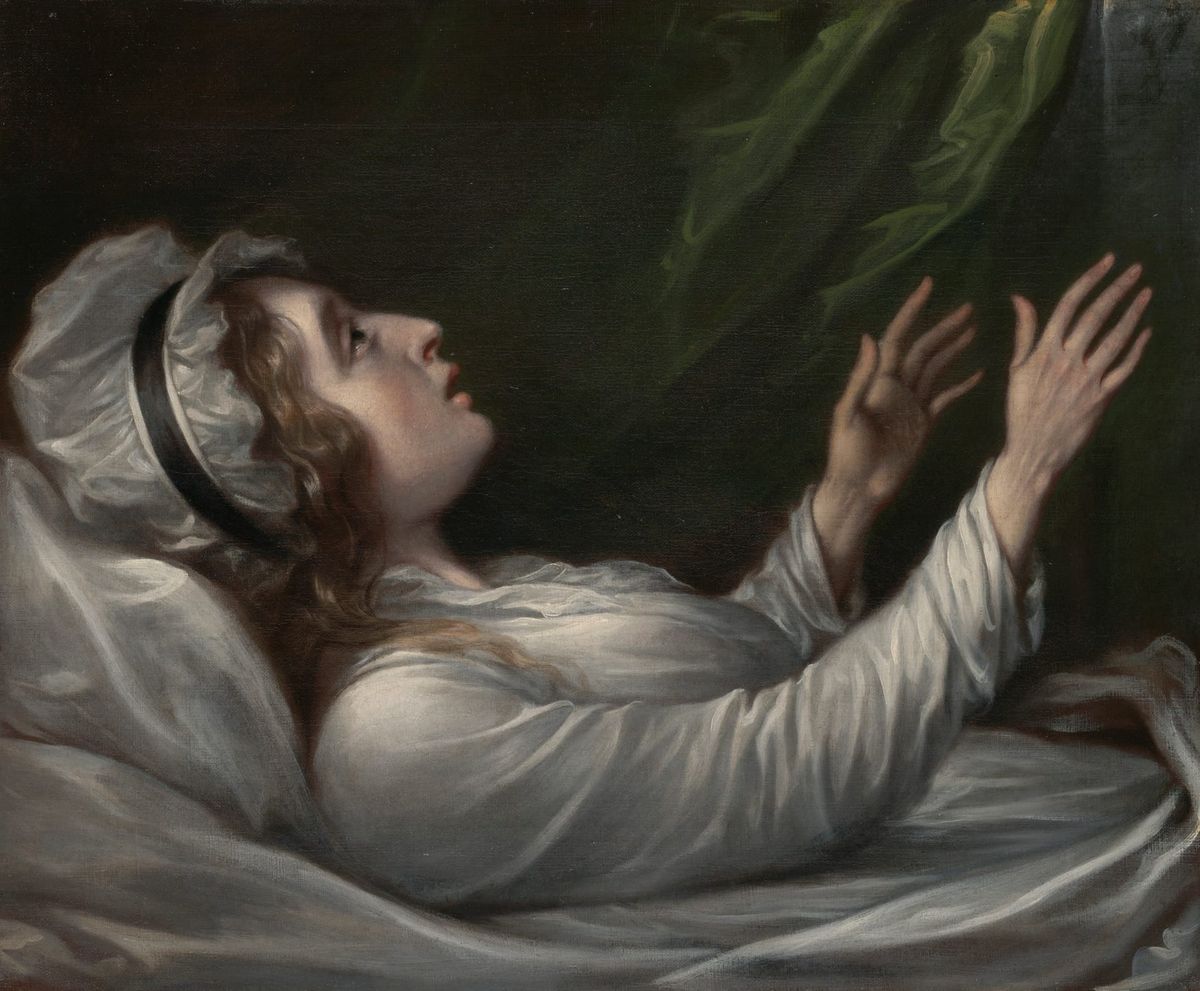
이 작품은 미국 독립 전쟁 시기의 거장 존 트럼블(John Trumbull)이 1824년 자신의 사랑하는 아내 사라 호프 하비(Sarah Hope Harvey)의 임종 순간을 포착하여 화폭에 담아낸 지극히 사적이면서도 숭고한 명작입니다. 결핵으로 세상을 떠나는 아내의 마지막 호흡과 구원을 향한 영적인 갈망을 그린 이 작품은, 단순한 인물 기록을 넘어 상실의 슬픔 앞에 선 화가의 애절한 마음과 낭만주의적 비극성을 정교하게 담아내고 있습니다. 침상에 누워 하늘을 향해 두 손을 간절히 뻗는 아내의 모습은 영혼의 구원과 영원한 이별이 교차하는 서사적 분위기를 가슴 먹먹하게 전달합니다.
감상자가 이 그림을 볼 때 직관적으로 깨닫지 못하지만 무의식적으로 매료되는 시각적 흐름의 핵심은 바로 '좌측 하단 베개에 기댄 머리에서 시작해 우상단을 향해 치솟는 두 손의 대각선 궤적'입니다. 화면 좌측 하단, 빛을 받아 창백하게 빛나는 베개와 아내의 옆얼굴은 관람객의 시선이 머무는 조형적 출발점이 됩니다. 관람객의 시선은 하늘을 바라보는 그녀의 아련한 눈동자와 열린 입술을 지나, 흰 옷소매를 따라 우상단 어둠을 향해 사선으로 길게 뻗은 두 손가락 끝으로 강렬하게 집속됩니다.
이 무의식적인 시선의 상승 곡선은 지상에서의 육체적 고통을 벗어나 천상적 평안을 향해 나아가려는 영혼의 도약을 시각적으로 체감하게 만듭니다. 어두운 배경과 우측 상단의 짙은 초록색 드레이프는 인물의 흰 의상과 창백한 피부에 떨어지는 빛을 극적으로 부각시키는 명암적 프레임으로 작용합니다. 하늘을 향해 간절히 뻗은 손끝은 삶에 대한 미련이자 신을 향한 순수한 구원의 염원을 은유하며, 비극적인 순간 속에서도 거룩한 정적을 불러옵니다.
존 트럼블은 화가이기 전에 남편으로서 느꼈던 절절한 슬픔과 고전주의적 정교한 필치를 결합하여 사랑하는 이의 마지막 순간을 미학적 승화로 이끌어냈습니다. 극적인 명암 대조와 인물의 내면적 영성을 깊이 있게 포착해낸 이 초상화는, 미국 미술사에서 가장 슬프고도 가슴 깊은 울림을 주는 사적 역사화이자 정직한 명화입니다.
Sarah Trumbull on Her Deathbed
Executed in 1824 by John Trumbull—the monumental master of the American Revolutionary era—this deeply personal yet sublime masterpiece captures the final moments of his beloved wife, Sarah Hope Harvey. Depicting her last breath as she succumbed to tuberculosis along with her spiritual yearning for salvation, the work moves beyond mere portraiture to delicately record the painter’s profound grief in the face of loss and the poignant tragedy of Romanticism. Lying on her deathbed with both hands earnestly outstretched toward the heavens, Sarah’s posture heartbreakingly conveys a narrative threshold where eternal farewell intersects with redemptive grace.
While viewers may not consciously realize it, the key visual mechanism that unconsciously draws the eye is a steep diagonal trajectory originating from her head resting against the pillow on the lower left and soaring toward her hands in the upper right. In the lower left of the canvas, the pale pillow bathed in light and the profile of his wife serve as the structural anchor for the spectator's gaze. The line of sight glides past her wistful eyes gazing upward and her parted lips, following the white sleeves to focus intensely on the tips of her fingers reaching diagonally toward the darkness above.
This subconscious visual ascent allows the viewer to physically experience the soul’s liberation from worldly suffering as it reaches toward celestial peace. The dark backdrop and the deep green drapery in the upper right act as a chiaroscuro frame, dramatically heightening the light illuminating her white garment and pale skin. Her hands outstretched toward heaven symbolize both a tender reluctance to part from life and a pure prayer for salvation, invoking a sacred stillness amidst the tragedy.
Uniting his raw grief as a husband with the refined draftsmanship of Neoclassicism, Trumbull elevates his beloved’s final moment into an aesthetic triumph. With its dramatic tonal contrast and profound capture of inner spirituality, this canvas endures as one of the most mournful, deeply resonance-inducing personal works in the history of American art.
본 리뷰에서 작품을 제외한 컨텐츠의 저작권은 팔렛트제주에 있습니다.
"퍼블릭도메인 고전명화"를 제외한 모든 창작 콘텐츠는 저작권법 제4조 및 제10조에 의거하여 보호됩니다. 무단 도용시 저작권법 제136조(벌칙)에 의거, 당사의 사전 서면 승인 없는 저작권 침해 행위를 금지합니다.