이중창 Duet
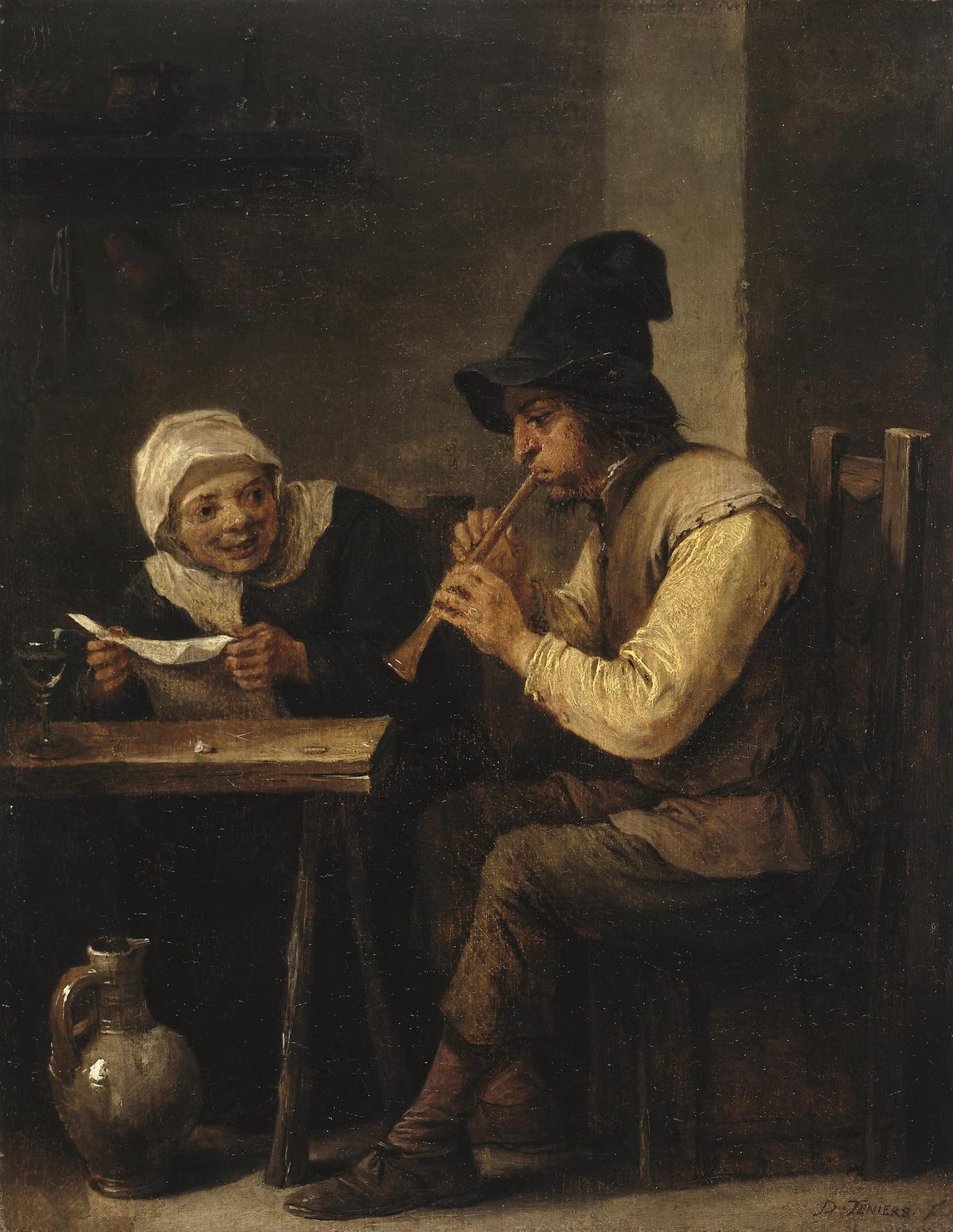
17세기 플랑드르 바로크 풍속화 및 실내 인물화의 거장 소 다비드 테니어르스(David Teniers le Jeune, 1610–1690)가 1640년대 중반에 완성한 기념비적 음악 풍속화 유화 이중창(Duet, 러시아어: Дуэт, 프랑스어: Le Duo, 소장품 번호: ГЭ-577)은 24.0 cm × 19.0 cm 크기의 아담한 목판(패널)에 유채로 그린 대표적인 북유럽 선술집 음악화 최고 걸작입니다.
현재 러시아 상트페테르부르크의 예르미타시 미술관(Hermitage Museum, Saint Petersburg)에 소장되어 있습니다.
오감 중 청각의 은유와 서민들의 소박한 화음을 향한 화가의 고뇌
17세기 플랑드르와 네덜란드 화단에서는 인간의 오감(시각, 청각, 후각, 미각, 촉각)을 일상적인 인물 풍속화 속에 절묘하게 녹여내는 회화적 전통이 큰 인기를 끌었습니다.
화가는 오감 연작 중 청각(Hearing)을 상징하는 이 장면에서, 웅장한 귀족 오케스트라 대신 어두운 주점 구석에서 흙파이프를 닮은 피리를 불고 악보를 읽으며 노래하는 평범한 서민 남녀의 진솔한 화음을 어떻게 따뜻한 인간미로 담아낼지 치열하게 번민했습니다.
당시 북유럽 풍속화에서 음악은 사랑의 조화와 화합을 상징하는 동시에, 연주가 끝나면 금세 사라져 버리는 찰나의 소리처럼 덧없는 인생의 허무(바니타스)를 경고하는 이중적 의미를 지니고 있었습니다.
화가는 투박한 나무 탁자에 마주 앉아 합주와 노래에 흠뻑 빠져든 젊은 피리 연주자와 나이 든 여인의 정겨운 순간을 화폭에 담았습니다.
화면 오른쪽에는 높은 고깔 모양의 검은 모자를 쓰고 밝은 황갈색 겉옷을 입은 청년이 나무 의자에 걸터앉아 나무 피리(샬뤼모 또는 리코더)에 온 신경을 집중하여 입술을 대고 손가락을 놀리고 있습니다.
탁자 건너편에서는 흰 두건을 두른 노파가 양손으로 악보 종이를 꼭 쥔 채, 눈을 가늘게 뜨고 박자를 맞추며 흥겹게 노래를 부르고 있습니다.
탁자 위에는 투명한 유리 와인잔이 놓여 있고, 바닥에는 묵직한 도자기 손잡이 주전자가 자리 잡고 있어 선술집 특유의 푸근한 정취를 더해줍니다.
어두운 방 안을 따스하게 비추는 부드러운 자연광과 두 사람이 만들어내는 소박한 이중창은, 화려하지 않아도 서로의 소리에 귀를 기울이며 일상의 피로를 잊는 보통 사람들의 순수한 기쁨을 손에 잡힐 듯 생생하게 웅변합니다.
피리를 부는 청년의 손끝에서 악보를 든 노파의 미소와 도자기 주전자로, 시선의 심리적 여정
그림을 마주하는 순간 관람객의 무의식적 시선은 화면 중앙 오른쪽에서 환한 빛을 받아 밝게 빛나는 청년의 황갈색 셔츠 소매와 가느다란 나무 피리를 쥐고 있는 정교한 손가락으로 가장 먼저 빨려 들어갑니다.
입술을 오므리고 뺨을 부풀리며 한 음 한 음 정성스럽게 피리를 부는 청년의 진지한 눈빛과 집중된 자세는 보는 이에게 깊은 시각적 몰입감과 함께 맑은 피리 소리가 귓가에 맴도는 듯한 생생한 현장감을 선사합니다.
이어 시선은 피리 끝이 가리키는 방향을 따라 화면 왼쪽 나무 탁자로 이동하여, 하얀 악보 종이를 두 손으로 꼭 쥐고 활짝 웃으며 노래하는 노파의 주름진 옆얼굴로 옮겨갑니다.
눈가에 장난기 어린 미소를 머금은 채 청년의 피리 소리에 맞춰 목소리를 높이는 노파의 유쾌한 표정을 확인하는 순간, 관람객은 웃음과 노랫가락이 넘쳐나는 17세기 플랑드르 선술집 한복판 속으로 온몸이 빨려 들어가게 됩니다.
마지막으로 시선은 탁자 모퉁이에 놓인 투명한 와인잔을 지나, 바닥에 묵직하게 놓여 있는 회색빛 도자기 술 주전자와 벽에 걸린 낡은 선반의 그림자에 멈춥니다.
어두운 배경과 인물들의 따뜻한 살결, 그리고 소박한 의복이 빚어내는 완벽한 명암의 조화를 마주하며, 관람객은 소박한 음악 속에서 피어나는 삶의 진정한 평온과 거장 테니어르스가 건네는 묵직한 서민적 위로를 가슴 깊이 마주하게 됩니다.
17세기 플랑드르 오감 풍속화의 정점과 조형미, 미술계의 평가
미술계는 예르미타시 미술관의 이중창을 테니어르스가 청각(Hearing)이라는 추상적인 감각을 인물들의 생동감 넘치는 표정과 동작을 통해 완벽하게 시각화해 낸 대표적인 최고봉 걸작으로 평가합니다.
단순한 선술집 노래 장면을 넘어 세대 간의 정겨운 교감과 음악적 하모니를 균형 잡힌 대각선 구도 속에 완벽하게 배치했을 뿐만 아니라, 거친 모직 옷감의 두께감, 주름진 손등의 디테일, 도자기 주전자의 매끄러운 질감을 극도로 섬세한 북유럽 사실주의 유화 기법으로 완벽하게 구현했기 때문입니다.
인간의 소박한 감각적 즐거움을 가장 품격 높은 시각 서정시로 승화시킨 테니어르스의 이 걸작 화폭은, 오늘날까지도 전 세계 수많은 감상자들에게 깊은 감탄과 잊을 수 없는 시각적 안식을 전해주는 불멸의 명작으로 손꼽히고 있습니다.
Duet
Painted in the mid-1640s by the master of Flemish Baroque genre and interior painting David Teniers the Younger (1610–1690), Duet (Russian: Дуэт, French: Le Duo, Inventory No. ГЭ-577) is an intimate musical genre masterpiece in oil on panel measuring 24.0 cm × 19.0 cm (9.4 in × 7.5 in).
It is preserved in the distinguished permanent collection of the Hermitage Museum in Saint Petersburg, Russia.
The Allegory of Hearing, Tavern Harmony, and the Solace of Peasant Song
In 17th-century Netherlandish art, the Five Senses were frequently depicted through intimate genre scenes capturing the everyday pastimes of ordinary folk.
In this evocative depiction of the Sense of Hearing, David Teniers the Younger departed from elite courtly concerts, choosing instead to capture the heartfelt musical harmony between a young instrumentalist and an elderly singer inside a shadowy rustic interior.
In Northern Baroque symbolism, music represented harmonious love and companionship, while also serving as a subtle vanitas reminder that acoustic melodies, like mortal human life, vanish almost instantaneously.
The composition portrays an intimate duet between an earnest young musician and an old woman seated across a simple wooden tavern bench.
On the right, a young man wearing a tall black conical hat, a beige tunic, and brown breeches perches upon a wooden chair, placing his fingers meticulously over the stops of a wooden flute.
Across the trestle table, an old woman in a white wimple holds a sheet of musical notation firmly in both hands, squinting affectionately as she sings along in rhythm.
A glass of wine rests on the table ledge while a glazed ceramic pitcher sits upon the floorboards, establishing an authentic atmosphere of humble companionship, shared laughter, and sensory delight.
Subconscious Trajectory of the Gaze: From the Woodwind to the Singing Crone
The observer's subconscious gaze is immediately magnetized by the central-right register, drawn to the luminous, sunlit sleeve of the young musician and the delicate alignment of his fingers along the slender wooden pipe.
His focused profile, pursed lips, and intense concentration create an instant focal point of acoustic precision, physical discipline, and quiet narrative absorption.
The visual path then follows the diagonal trajectory of the flute toward the left, arriving at the weathered, expressive visage of the old woman holding the musical score.
Taking in her beaming smile, squinting eyes, and animated singing posture, the viewer directly experiences the infectious joy and genuine warmth of shared folk music.
Finally, the visual trajectory descends past the rustic wooden table to the wine glass, before resting upon the stout earthenware flagon on the floor and the deep shadows of the rear wall.
Observing the harmonious equilibrium between warm chiaroscuro, restrained earth tones, and precise Netherlandish draftsmanship, the spectator perceives the timeless nobility of simple pleasures and the profound aesthetic solace Teniers embedded within the panel.
The Monument of Flemish Musical Genre: Critical Legacy
Art historians revere the Hermitage Duet as a tour de force of Teniers’s intimate cabinet style, illustrating his consummate mastery of psychological warmth, acoustic suggestion, and spatial intimacy.
By orchestrating delicate textural contrasts between weathered paper sheets, polished woodwind instruments, rough linen headcloths, coarse woolen doublets, and glazed ceramic pottery within a compact interior, Teniers elevated a modest musical interlude into an exquisite aesthetic treatise on human harmony.
This intimate historical panel endures as an inspiring testament to the master's creative fortitude, celebrating the quiet poetry of everyday existence and the transformative grace of living art.
본 컨텐트의 저작권은 팔렛트제주에 있습니다. 허가없는 무단전제를 금지합니다.
Copyright © Palette Jeju. All rights reserved. Unauthorized reproduction or redistribution is strictly prohibited.