이집트에서 돌아오는 성가족 The Return of the Holy Family from Egypt
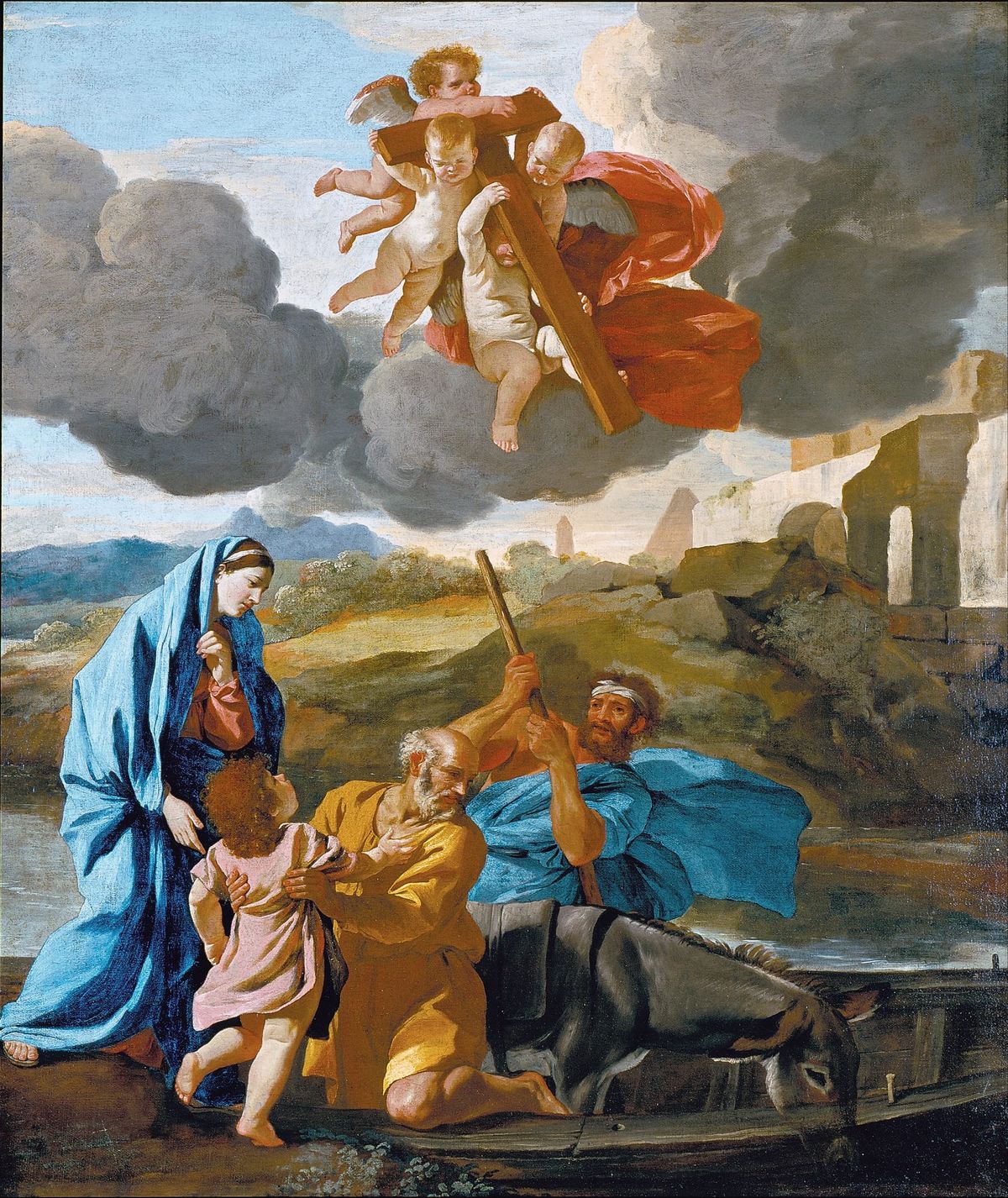
17세기 프랑스 고전주의 회화의 시조이자 서양 미술사 불멸의 거장 니콜라 푸생(Nicolas Poussin, 1594–1665)이 1628년에서 1629년경 로마 체류 초기에 완성한 기념비적 성경 유화 이집트에서 돌아오는 성가족(The Return of the Holy Family from Egypt, 프랑스어: Le Retour de la Sainte Famille d'Égypte, 소장품 번호: 1952.4.1)은 117.0 cm × 98.4 cm 크기의 세로형 캔버스에 유채로 그린 대표적인 신약 성서화 최고 걸작입니다.
현재 미국 오하이오주 클리블랜드의 클리블랜드 미술관(Cleveland Museum of Art, Cleveland)에 소장되어 있습니다.
로마 초기 궁핍 속에서 마주한 십자가의 예표와 화가의 깊은 고뇌
1620년대 후반 로마에서 극심한 생활고와 질병의 시련을 겪고 있던 서른 중반의 푸생은, 성경 마태오 복음서에 기록된 성가족의 귀환 여정을 화폭에 담으며 깊은 신앙적 성찰에 잠겼습니다.
헤롯 왕이 죽은 뒤 천사의 지시를 받아 고향 나사렛으로 돌아가는 이 여정은 겉으로는 기쁨의 귀향처럼 보이지만, 푸생은 그 이면에 도사린 미래의 비극적 운명인 십자가 수난을 어떻게 고전적 조형미 속에 녹여낼지 치열하게 번민했습니다.
화가는 강을 건너기 위해 나룻배를 타는 성가족과 하늘에서 나타난 거룩한 환상을 화폭에 담았습니다.
화면 아래쪽에는 충직한 늙은 나귀가 뱃전에서 강물을 마시고 있고, 무릎을 꿇은 성 요셉은 어린 아기 예수가 배에 안전하게 오르도록 두 손으로 부축하고 있습니다.
분홍빛 옷을 입은 어린 예수는 발걸음을 멈추고 하늘을 올려다보고 있으며, 짙푸른 망토를 두른 성모 마리아는 아들의 운명을 직감한 듯 슬픈 눈빛으로 아들을 내려다봅니다.
뱃사공이 힘차게 노를 젓는 가운데, 하늘의 짙은 먹구름 사이에서는 어린 아기 천사들이 무거운 나무 십자가를 짊어지고 날아오르며, 장차 인류를 구원하기 위해 감당해야 할 십자가의 고난을 손에 잡힐 듯 생생하게 웅변합니다.
하늘을 올려다보는 아기 예수의 눈빛에서 십자가를 든 아기 천사와 노 젓는 사공으로, 시선의 심리적 여정
그림을 마주하는 순간 관람객의 무의식적 시선은 화면 왼쪽 아래에서 따스한 햇살을 받아 분홍빛 옷을 입고 서서 천상을 향해 고개를 젖힌 어린 예수의 순진무구한 얼굴로 가장 먼저 빨려 들어갑니다.
어린아이의 걸음마를 멈추고 하늘의 계시를 응시하는 아기 예수의 맑은 눈망울과 부드러운 곱슬머리는 보는 이에게 깊은 시각적 연민과 함께 장차 다가올 거룩한 희생의 무게를 선사합니다.
이어 시선은 아기 예수의 시선을 따라 화면 상단 중앙으로 수직 상승하여, 짙은 먹구름 속에서 붉은 천을 두르고 거대한 나무 십자가를 낑낑거리며 짊어진 아기 천사들의 처연한 몸짓으로 옮겨갑니다.
천진난만한 천사들이 짊어진 무거운 십자가의 상징성을 확인하는 순간, 관람객은 단순한 피난길의 귀향을 넘어 구원자의 예정된 운명을 직면하는 깊은 영적 전율 한복판 속으로 온몸이 빨려 들어가게 됩니다.
마지막으로 시선은 화면 오른쪽에서 푸른 옷자락을 펄럭이며 힘차게 노를 잡고 있는 뱃사공의 구릿빛 근육과 무릎을 꿇고 아들을 받쳐 든 성 요셉의 자애로운 손길을 지나, 저 멀리 강 건너편의 피라미드와 고대 석조 건축물에 멈춥니다.
수직으로 솟아오른 십자가와 수평의 나룻배가 빚어내는 완벽한 기하학적 균형을 마주하며, 관람객은 비극 속에서도 피어나는 신성한 섭리와 젊은 거장 푸생이 건네는 묵직한 영혼의 위로를 가슴 깊이 마주하게 됩니다.
17세기 프랑스 고전주의 성서 서사화의 정점과 조형미, 미술계의 평가
미술계는 클리블랜드 미술관의 이집트에서 돌아오는 성가족을 푸생이 초기 로마 시절 티치아노의 극적인 색채 감각과 라파엘로의 완벽한 구도적 절제미를 완벽하게 조화시켜 완성한 최고봉의 성경 서사화 걸작으로 평가합니다.
단순한 일화적 풍경을 넘어 지상의 나룻배와 천상의 십자가 환영을 정교한 수직적 대칭 구도 속에 완벽하게 조직했을 뿐만 아니라, 성모의 푸른 망토와 사공의 파란 옷감, 요셉의 황금빛 의복이 이루는 선명한 색채 대비, 굽이치는 강물의 반사광을 극도로 섬세한 명암법으로 완벽하게 구현했기 때문입니다.
인간적인 애틋함과 신성한 구원의 예표를 가장 품격 높은 시각 교향곡으로 승화시킨 푸생의 이 걸작 화폭은, 오늘날까지도 전 세계 수많은 감상자들에게 깊은 감탄과 잊을 수 없는 시각적 전율을 전해주는 불멸의 명작으로 손꼽히고 있습니다.
The Return of the Holy Family from Egypt
Painted between 1628 and 1629 in Rome by the founder of French classicism and immortal master Nicolas Poussin (1594–1665), The Return of the Holy Family from Egypt (French: Le Retour de la Sainte Famille d'Égypte, Accession No. 1952.4.1) is a devotional oil on canvas measuring 117.0 cm × 98.4 cm (46.1 in × 38.7 in).
It is preserved in the distinguished permanent collection of the Cleveland Museum of Art in Cleveland, Ohio, United States.
Early Roman Trials, the Prophecy of the Passion, and Titian's Colorism
During the late 1620s in Rome, as Nicolas Poussin persevered through extreme poverty and physical infirmity, he engaged deeply with the scriptural accounts of the Flight and Return of the Holy Family from the Gospel of Matthew.
While the return to Nazareth following the death of King Herod was traditionally depicted as a moment of relief, Poussin meditated deeply on the tragic shadow of the future Passion, seeking to weave this sacred paradox into a disciplined classical narrative.
The master staged the Holy Family embarking upon a wooden ferryboat to cross a river on their homeward journey.
In the foreground, the faithful donkey drinks from the stream while Saint Joseph kneels to steady the steps of the young Christ Child.
Dressed in a soft rose tunic, the youthful Jesus pauses to gaze up into the heavens, while the Virgin Mary, cloaked in a sweeping lapis lazuli mantle, looks upon her son with melancholy maternal intuition.
As the muscular ferryman leverages his pole against the current in billowing blue drapery, a celestial vision opens in the storm clouds above: wingless putti carry a monumental wooden cross, visually announcing the divine destiny awaiting the Savior.
Subconscious Trajectory of the Gaze: From the Christ Child to the Cross-Bearing Putti
The observer's subconscious gaze is immediately magnetized by the lower-left register, drawn to the radiant, sunlit countenance and upright posture of the young Jesus stepping toward the boat.
His upturned profile, delicate curls, and open expression create an instant focal point of youthful innocence, spiritual awakening, and filial devotion.
The visual path then ascends along the vertical axis of his gaze directly into the dark, billowing clouds of the upper register.
Taking in the group of airborne putti laboring beneath the monumental timber cross and the vibrant crimson shroud, the viewer directly experiences the profound emotional gravity and spiritual foreshadowing of the Passion.
Finally, the visual trajectory descends past the muscular form of the bearded boatman handling the oar toward Saint Joseph kneeling in golden drapery, before moving across the distant Egyptian pyramid and classical ruins silhouetted along the riverbank.
Observing the harmonious equilibrium between vertical theological symbolism, dynamic horizontal staging, and Titianesque chromatic warmth, the spectator perceives the timeless nobility of sacred destiny and the profound aesthetic solace Poussin embedded within the canvas.
The Monument of Early French Classical Devotion: Critical Legacy
Art historians revere the Cleveland Return of the Holy Family from Egypt as a supreme pinnacle of Poussin’s early Roman maturity, illustrating his seamless synthesis of Venetian color richness with Raphael’s architectural discipline.
By orchestrating delicate textural contrasts between sunlit porcelain skin, fluttering silk draperies, cold river water, and weathered timber within a unified geometric scheme, Poussin elevated a traditional gospel journey into an exquisite aesthetic treatise on divine providence and mortal sacrifice.
This grand historical canvas endures as an inspiring testament to the master's creative fortitude, celebrating the triumph of sacred faith and the transformative grace of living art.
본 컨텐트의 저작권은 팔렛트제주에 있습니다. 허가없는 무단전제를 금지합니다.
Copyright © Palette Jeju. All rights reserved. Unauthorized reproduction or redistribution is strictly prohibited.