흰 보닛을 쓴 농촌 여인의 두상 - Head of a Peasant Woman with White Cap (Gordina de Groot)
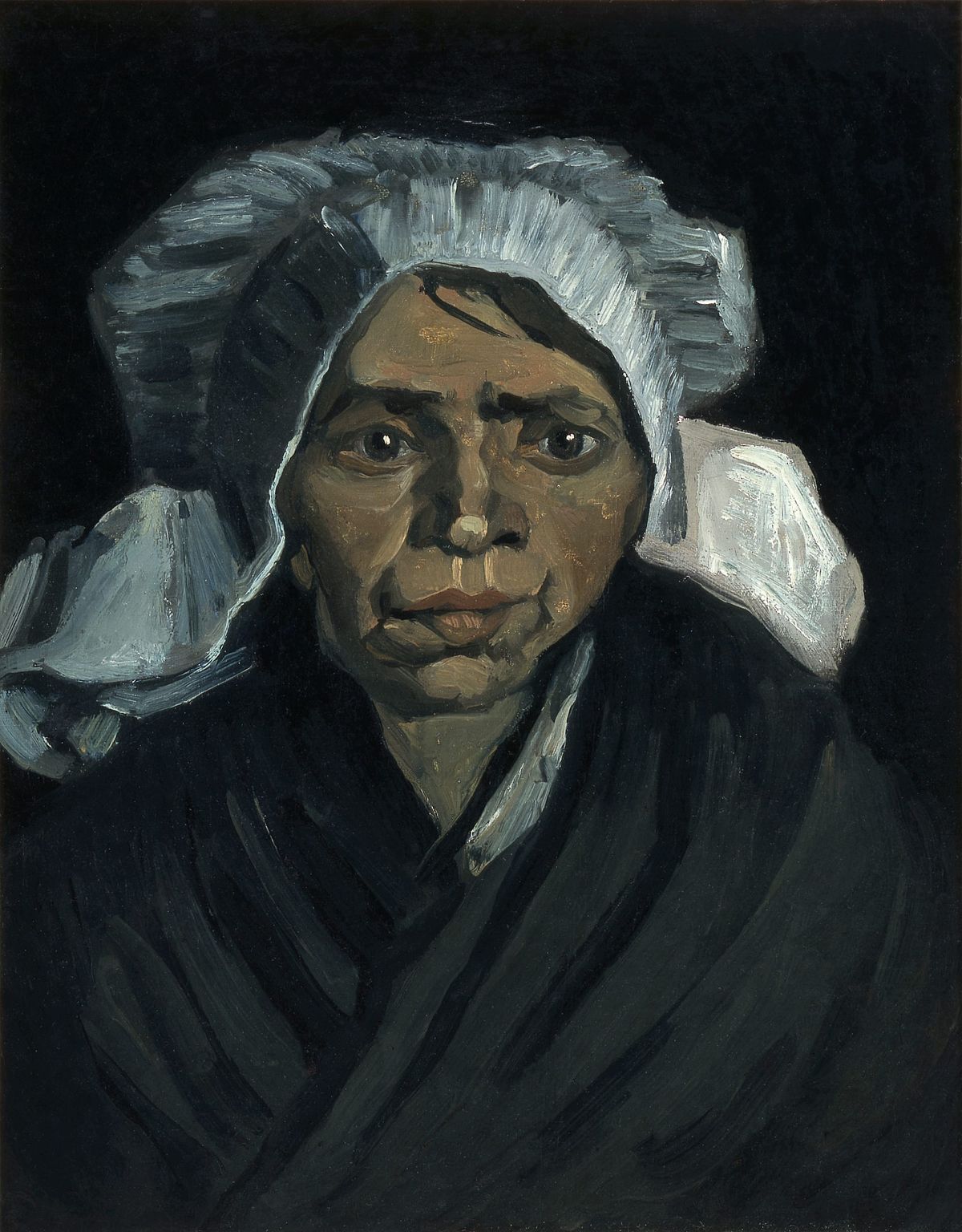
빈센트 반 고흐(Vincent van Gogh, 1853–1890)가 1885년 3월 네덜란드 뉘넌(Nuenen) 시절 완성한 '흰 보닛을 쓴 농촌 여인의 두상(Head of a Peasant Woman with White Cap)'은 캔버스에 유채(Oil on canvas)로 제작된 인물화입니다. 작품의 실제 규격은 세로 41.0cm, 가로 32.5cm이며, 현재 네덜란드 암스테르담의 반 고흐 미술관(Van Gogh Museum)에 영구 소장되어 있습니다.
고흐는 이 작품에서 칠흑같이 어두운 암갈색 배경 위에 거친 대지의 색채와 투박한 필치를 응축하여 농촌 여인의 얼굴을 빚어냈습니다. 흙먼지가 묻어나는 듯한 짙은 피부 톤과 깊게 파인 눈매, 굳게 다문 입술은 두터운 임파스토(Impasto) 기법으로 조각되어 삶의 고단함을 웅변합니다. 특히 어둠 속에서 하얗게 빛나는 주름진 면 보닛(White Cap)의 구조적인 양감과 맑게 열린 눈동자의 하이라이트는 렘브란트풍의 극적인 키아로스쿠로(Chiaroscuro) 명암을 이루며 인물의 진솔한 영혼을 드러냅니다.
이 그림 속 주인공은 반 고흐의 초기 최고 걸작인 《감자 먹는 사람들(The Potato Eaters)》의 핵심 모델이자, 고흐의 뉘넌 시절 가장 드라마틱한 스캔들에 얽혔던 실존 인물 고르디나 드 그루트(Gordina de Groot, 애칭 '시엔케')입니다. 1885년 초, 고흐는 시골 농부들의 정직하고 투박한 삶의 진실을 담아내기 위해 뉘넌의 가난한 농가들을 찾아다니며 무려 수십 점에 달하는 농부 두상 습작을 맹렬히 그렸습니다. 그중에서도 고르디나는 고흐가 가장 아끼고 신뢰했던 뮤즈로, 고흐는 그녀의 얼굴만 따로 20여 점 이상 그릴 정도로 그녀의 강인한 골격과 깊은 눈빛에 깊이 매료되었습니다.
당시 보수적인 뉘넌 시골 마을에서는 기이한 소문이 돌기 시작했습니다. 붉은 수염의 별난 목사 아들 고흐가 드 그루트 가문의 오두막을 매일같이 드나들던 중, 미혼이었던 고르디나가 덜컥 임신을 하게 된 것입니다. 마을 사람들과 지역 가톨릭 성당의 신부는 즉시 고흐를 아이의 아버지로 지목하며 거세게 비난했고, 주민들에게 "미치광이 화가의 모델을 서지 말라"고 보이콧을 종용했습니다.
하지만 고흐는 억울한 누명 속에서도 당당하게 맞섰습니다. 실제로 고르디나를 임신시킨 사람은 마을의 다른 친척 남성이었으며, 고흐는 순수하게 농민의 삶을 화폭에 담는 예술적 교감만을 나누었을 뿐이었습니다. 고흐는 동생 테오에게 보낸 편지에서 "사람들이 나를 모함하고 방해할지라도 나는 결코 붓을 멈추지 않는다. 고르디나의 얼굴은 갓 캐낸 감자처럼 투박하지만, 그 어떤 파리의 귀부인보다 정직하고 성스러운 대지의 숭고함을 품고 있다"며 굳은 예술적 신념을 토로했습니다. 고흐는 온갖 모욕과 소문 속에서도 고르디나와 그녀의 가족을 끝까지 설득하여 세기의 명작 《감자 먹는 사람들》의 식탁 중앙에 그녀를 당당히 앉혀 불멸의 인물로 남겼습니다.
후대의 미술사학자들과 평단은 이 뉘넌 시기의 농부 두상 연작을 반 고흐가 '대지의 화가'로서 인간에 대한 깊은 연민과 리얼리즘의 정수를 완성한 결정적 걸작으로 평가합니다. 겉치레와 세련된 미화를 거부하고 삶의 무게를 짊어진 평범한 노동자의 존엄성을 성화(Icon)처럼 숭고하게 끌어올린 이 조형적 성취는, 훗날 20세기 사회적 리얼리즘과 표현주의 인물화의 굳건한 뿌리가 되었습니다.
관람자의 시선은 가장 먼저 어둠 속에서 서늘하게 열려 관람자를 정면으로 응시하는 크고 깊은 눈망울과 이마의 단단한 골격에 안착합니다. 이어 갓 캐낸 흙처럼 거칠고 붉은 기운이 감도는 뺨과 굳게 다문 입술의 주름을 훑은 뒤, 머리를 단단하게 감싸 안은 순백의 주름진 보닛의 날개 구조와 터치로 이동합니다. 마지막으로 어깨를 묵직하게 감싸는 짙은 검은색 숄의 윤곽을 지나 배경의 깊은 어둠 속으로 유려하게 순환하게 됩니다.
심리적으로 관람자는 짙은 어둠 속에서도 꺾이지 않는 인물의 담담하고 정직한 눈빛에서 깊은 인간적 울림과 숙연한 평온을 경험하게 됩니다. 척박한 삶의 노동을 온몸으로 견뎌내면서도 잃지 않는 인간의 숭고한 존엄은 현대인의 마음에 자리한 허영과 불안을 차분하게 가라앉혀 주며, 어떤 역경 속에서도 묵묵히 자신의 삶을 지켜나가는 단단한 내면의 용기와 깊은 위안을 풍성하게 채워줍니다.
Head of a Peasant Woman with White Cap (Gordina de Groot)
Painted by Vincent van Gogh (1853–1890) in Nuenen in March 1885, Head of a Peasant Woman with White Cap is an iconic oil on canvas portrait measuring 41.0 cm in height and 32.5 cm in width. This historic masterpiece is permanently preserved in the prestigious collection of the Van Gogh Museum in Amsterdam, Netherlands.
Van Gogh constructed the portrait through intense chiaroscuro, emerging the weathered contours of the peasant woman from an impenetrable, dark umber background. Utilizing heavy, sculptural impasto strokes reminiscent of Rembrandt and Frans Hals, he articulated the coarse, earth-toned flesh, the chiselled brow, and the firmly set mouth. The starched white cotton bonnet (peasant cap) frames her face with stark luminous relief, establishing a powerful tonal contrast that captures the unvarnished dignity and psychological weight of rural labor.
The canvas holds an intimate history linked directly to Van Gogh's first acknowledged masterwork, The Potato Eaters, and a notorious village scandal. The sitter is Gordina de Groot (affectionately known as 'Sienke'), a member of the local farming family with whom Van Gogh established a close creative rapport. In early 1885, determined to master peasant portraiture, Van Gogh executed over forty head studies in Nuenen, painting Gordina more than twenty times due to her distinctive, expressive features.
During this period, local village gossip erupted when Gordina became pregnant out of wedlock. The village priest and hostile neighbors immediately accused the eccentric, red-bearded painter of fathering the child, actively urging parishioners to boycott his studio. Van Gogh vigorously defended his innocence—the true father was later revealed to be another villager—and refused to abandon his artistic pursuit. Writing to his brother Theo, Van Gogh maintained that her features held the sacred truth of the earth, akin to "an unpeeled potato," far surpassing the artificial beauty of high-society portraits.
Modern art historians celebrate this Nuenen portrait series as the foundational summit of Van Gogh's early Dutch realism. By rejecting sentimental idealization in favor of raw textural authenticity, Van Gogh elevated humble agrarian workers into timeless icons of human endurance, providing an essential cornerstone for modern Expressionist portraiture.
A viewer’s gaze is instantaneously locked onto the wide, penetrating dark eyes gazing forward with quiet resignation and inner fortitude. The eyes then traverse the chiselled ridges of the nose and cheekbones down to the resolute line of the lips, before rising to explore the architectural folds and bright impasto brushwork of the white peasant cap. Finally, the gaze descends across the heavy, shadowed black shawl, circulating effortlessly through the deep atmospheric ground.
Psychologically, encountering the uncompromised honesty and calm resilience etched into the sitter's face evokes an immediate sense of grounded stillness, empathy, and cathartic peace. The profound dignity of agrarian existence dissolves modern anxieties and superficial distractions, enveloping the observer in an enduring atmosphere of humble strength, emotional gravity, and restorative serenity.
본 리뷰에서 작품을 제외한 컨텐츠의 저작권은 팔렛트제주에 있습니다.
"퍼블릭도메인 고전명화"를 제외한 모든 창작 콘텐츠는 저작권법 제4조 및 제10조에 의거하여 보호됩니다. 무단 도용시 저작권법 제136조(벌칙)에 의거, 당사의 사전 서면 승인 없는 저작권 침해 행위를 금지합니다.