황혼의 포플러 오솔길 - Lane of Poplars at Sunset
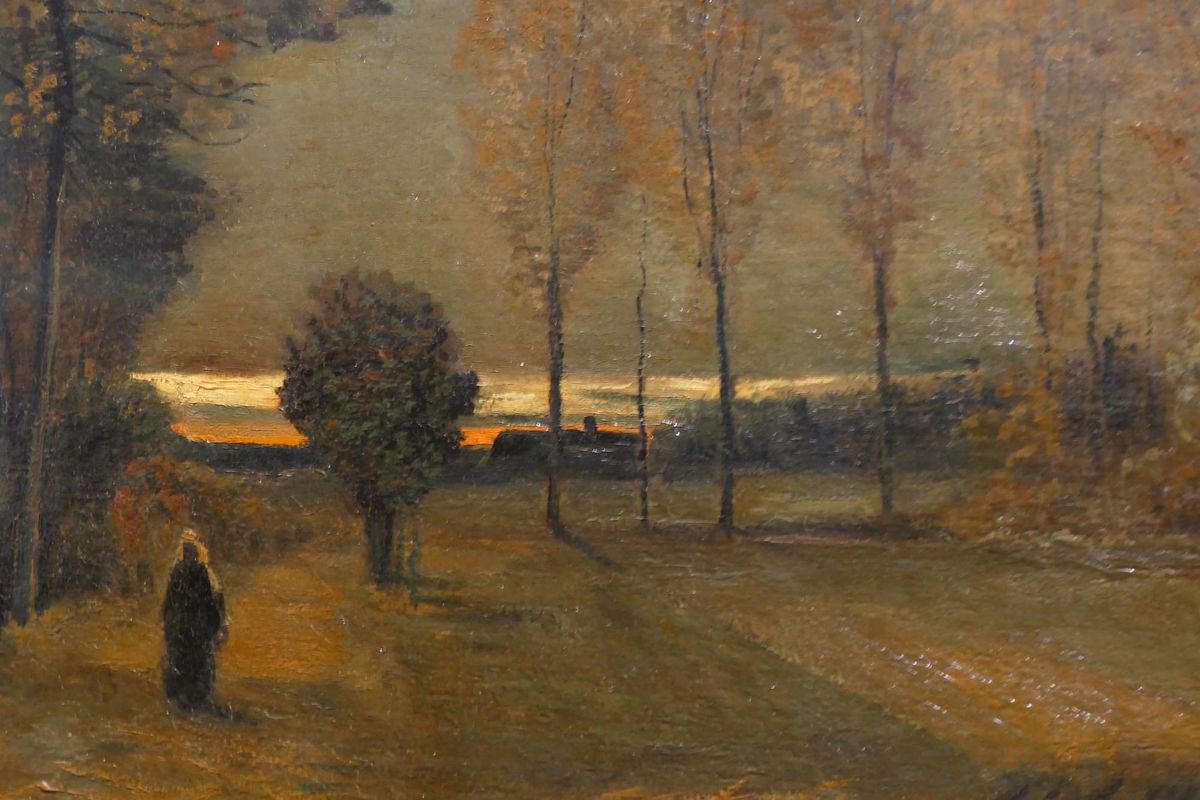
네덜란드의 후기 인상주의 거장 빈센트 반 고흐가 1884년 10월 뉘넌 체류 시절에 완성한 유화 작품으로, 캔버스에 유채 기법으로 제작되었으며 크기는 세로 45.8cm, 가로 32.2cm입니다. 현재 네덜란드 오테를로의 크뢸러 뮐러 미술관에 영구 소장되어 있습니다. 화면을 채운 묵직한 흙빛 갈색과 은은한 황갈색의 색채, 그리고 대지와 나뭇가지 위에 두텁게 얹힌 유화 물감의 물질감은 반 고흐가 파리로 건너가기 전 네덜란드 시골 브라반트의 원초적이고 진솔한 대자연을 탐구하던 초기 화풍의 정수를 고스란히 보여줍니다.
이 작품이 탄생하던 1884년 가을, 반 고흐는 뉘넌의 목사관 한구석에 간이 작업실을 마련하고 주변 농촌 풍경과 농민들의 고단한 일상에 깊이 몰두해 있었습니다. 당시 그는 가족과의 극심한 갈등과 경제적 빈곤으로 인한 고립감 속에서 매일 해 질 녘 시골길을 걸으며 자연과의 교감을 통해 유일한 위안을 얻었습니다. 동생 테오에게 보낸 편지에서 그는 저녁노을이 빽빽한 포플러 나무들 사이로 얇고 강렬하게 비쳐 드는 순간의 장엄한 빛과 그림자의 대비에 대해 벅찬 감동을 기록했습니다.
미술사학계와 평단에서는 이 작품을 훗날 아를과 생레미 시절에 찬란하게 폭발하는 반 고흐 특유의 극적인 명암 대비와 감정적 상징주의가 완벽히 잉태된 결정적 전조로 평가합니다. 화려한 기교 대신 시골길과 나무들의 실루엣에 인간 내면의 고뇌와 숭고한 생명력을 투영하여 묵직한 서사로 승화시킨 초기 대표 걸작으로 인정받고 있습니다.
작품을 마주하는 관람자의 무의식적인 시선은 화면 좌측 하단 오솔길을 따라 묵묵히 걸어가는 인물의 실루엣에서 출발합니다. 이 고요한 뒷모습은 일상의 번잡함과 피로에 지친 현대인에게 깊은 공감대를 형성하며 마음속에 엉켜 있던 긴장과 불안을 차분하게 가라앉혀 줍니다. 이어 시선은 리듬감 있게 늘어선 포플러 나무들의 수직적 선율과 길게 드리운 저녁 그림자를 따라 자연스럽게 이동하며, 고요한 대지가 전하는 아늑한 포용력을 경험하게 됩니다.
마지막으로 시선은 어두운 숲의 경계 너머 지평선 위에 얇고 강렬하게 타오르는 황금빛과 붉은빛의 노을에 머물게 됩니다. 어두운 숲길에서 출발해 환한 빛의 지평선으로 확장되는 이 시각적 여정은 보는 이의 뇌파를 안정시키고 깊은 심리적 안도감과 내면의 평온을 이끌어냅니다. 어스름 속에서 빛을 향해 묵묵히 나아가는 보행자의 모습은 관람객의 무의식 속에 고단했던 하루의 치유와 함께 내일을 향한 은은한 희망과 회복 탄력성을 불어넣어 줍니다.
Lane of Poplars at Sunset - Lane of Poplars at Sunset
Painted in October 1884 during his pivotal stay in Nuenen, this work by Dutch Post-Impressionist master Vincent van Gogh is an oil on canvas measuring 45.8 by 32.2 centimeters. It is currently preserved in the permanent collection of the Kröller-Müller Museum in Otterlo, Netherlands. Dominated by dense earth tones, rich ochres, and a tactile impasto across the soil and tree trunks, the painting exemplifies Van Gogh's early Dutch idiom, capturing the solemn gravity and rustic honesty of the Brabant landscape prior to his exposure to the Parisian avant-garde.
In the autumn of 1884, while laboring in a modest studio adjacent to his parents' vicarage in Nuenen, Van Gogh found himself surrounded by acute personal friction and financial hardship. In this period of deep emotional isolation, nature served as his ultimate sanctuary. In letters to his brother Theo, he passionately articulated his reverence for the fleeting moments of twilight, where the radiant glow of the setting sun sliced through the slender silhouettes of poplar trees, creating an arresting interplay of light and long evening shadows.
Modern art historians and critics regard this painting as an essential crucible in which his later, iconic mastery of dramatic contrast and emotional color symbolism was forged. Rather than pursuing mere academic imitation, Van Gogh infused the rustic avenue with existential depth, transforming a quiet rural vista into a profound narrative of resilience, solitude, and quiet spiritual yearning.
Upon engaging with the canvas, the viewer's subconscious gaze instinctively anchors on the lone, cloaked silhouette traversing the rustic path. This quiet presence establishes an immediate emotional resonance, gently dissolving tension and guiding the mind into a tranquil state of contemplation. The gaze then follows the rhythmic vertical trunks of the poplars and the elongated shadows cast across the open ground, experiencing the grounding sense of shelter and quietude offered by the autumn dusk.
Finally, the visual journey culminates in the vibrant, fiery band of amber light glowing across the horizon. Moving from deep shadow toward radiant atmospheric warmth, this organic flow of sight fosters a profound sense of inner security, emotional catharsis, and mental balance. The solitary traveler journeying through the quiet evening toward the light offers the viewer a restorative sanctuary of solace, renewing inner fortitude and inspiring gentle optimism.
본 리뷰에서 작품을 제외한 컨텐츠의 저작권은 팔렛트제주에 있습니다.
"퍼블릭도메인 고전명화"를 제외한 모든 창작 콘텐츠는 저작권법 제4조 및 제10조에 의거하여 보호됩니다. 무단 도용시 저작권법 제136조(벌칙)에 의거, 당사의 사전 서면 승인 없는 저작권 침해 행위를 금지합니다.