황금빛 파도 속에서 맞이하는 영원한 안식과 생명의 순환, 밀밭의 수확자 Wheat Field with a Reaper
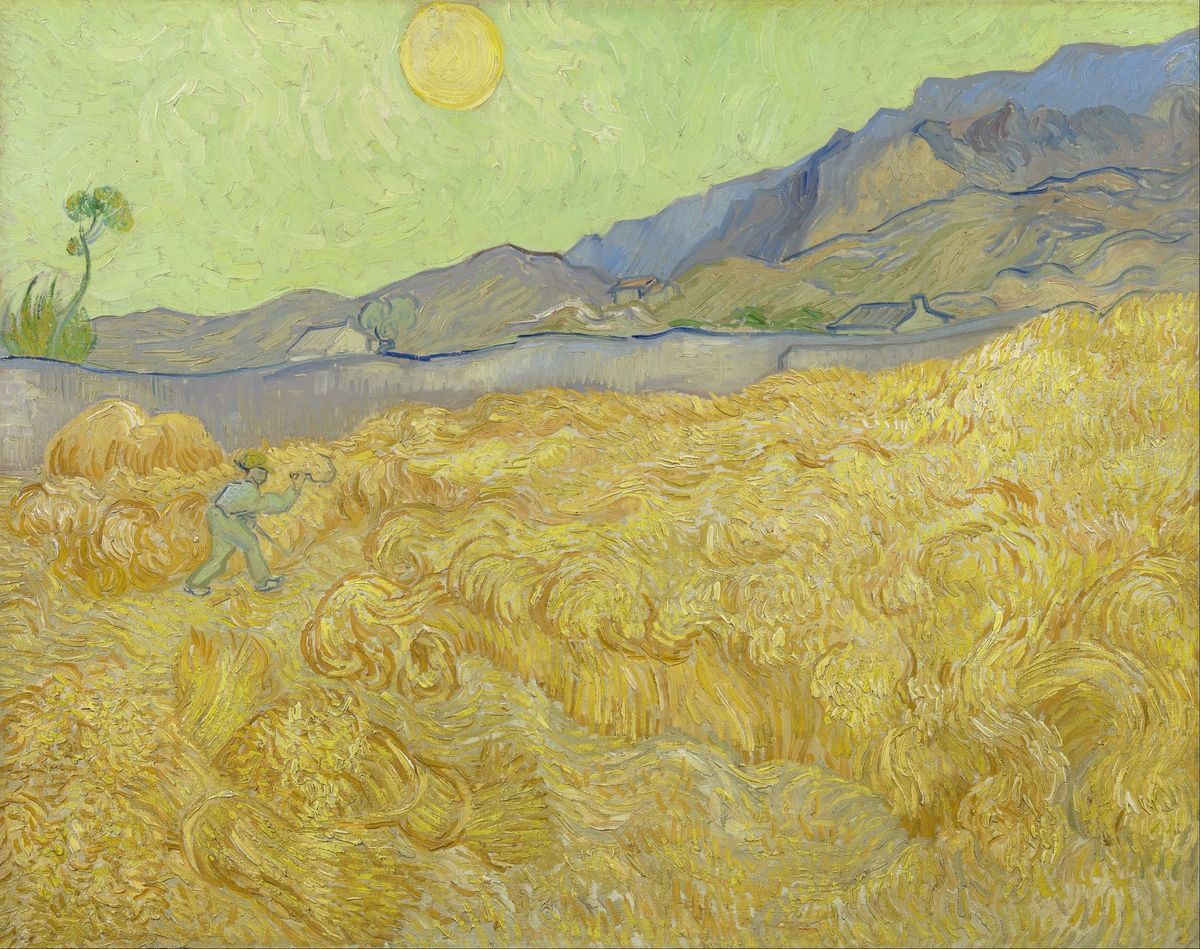
후기 인상주의의 거장 빈센트 반 고흐(Vincent van Gogh, 1853–1890)가 1889년 9월 초 프랑스 남부 생레미의 생폴 드 모졸 요양원에서 완성한 유화 밀밭의 수확자(Wheat Field with a Reaper, 또는 수확하는 사람이 있는 밀밭)는 73.2 cm × 92.7 cm 크기의 캔버스에 유채로 그린 대표작입니다. 현재 네덜란드 암스테르담의 반 고흐 미술관(Van Gogh Museum)에 영구 소장되어 전 세계인의 깊은 사랑을 받고 있습니다.
죽음의 상징에서 길어 올린 순수한 환희와 황금빛 태양
1889년 7월 심각한 정신적 위기를 겪은 뒤 병실에 격리되었던 반 고흐는 8월 말 기력을 되찾자마자 붓을 들고 요양원 창문 너머의 밀밭 풍경을 그리기 시작했습니다. 작열하는 프로방스의 태양 아래 대지를 황금빛으로 물들이며 밀을 베어내는 수확자의 모습은 그에게 깊은 영적 전율을 안겨주었습니다.
고흐는 이 작품에서 수확자를 단순한 농부로 보지 않고, 성서적인 의미의 '죽음'을 집행하는 거룩한 존재로 바라보았습니다. 그러나 그가 표현한 죽음은 결코 어둡거나 절망적인 비극이 아니었습니다. 순수한 황금빛 햇살 속에서 모든 것을 거두어들이는 자연스러운 순환이자, 고통스러운 육신의 속박을 벗어나 대자연의 영원성으로 회귀하는 숭고한 해방이었습니다. 동생 테오에게 보낸 편지에서 그는 "이 수확자 속에서 나는 인간이라는 밀을 거두어들이는 죽음의 이미지를 본다. 하지만 이 죽음 속에는 어떠한 슬픔도 없다. 모든 것이 순수한 황금빛으로 가득 찬 대낮의 햇살 속에서 이루어지기 때문이다"라고 감동적인 고백을 남겼습니다.
무의식 속 시선의 공간 회전과 숭고한 심리적 정화
감상자의 시선은 화폭 전면에 거대한 파도처럼 소용돌이치며 굽이치는 눈부신 황금빛 밀밭의 두터운 붓 터치들로 가장 먼저 빨려 들어갑니다. 화면을 가득 메운 노란색과 황토색의 역동적인 임파스토 텍스처는 보는 이의 무의식 속에 남프랑스 대지의 작열하는 열기와 거대한 자연의 호흡을 직접적으로 전달합니다.
이어 시선은 밀밭 좌측에서 묵묵히 낫을 휘두르며 전진하는 작은 수확자의 푸른빛 실루엣과 그가 베어낸 황금빛 짚단들로 자연스럽게 이동합니다. 거대한 황금의 바다 한가운데서 묵묵히 제 몫의 노동을 다하는 인간의 모습은 깊은 안도감과 실존적 경외감을 일깨웁니다.
그 후 시선은 들판을 둘러싼 돌담을 넘어, 화폭 우측 상단을 병풍처럼 웅장하게 가로막고 있는 알피유 산맥의 보랏빛 능선을 타고 화면 상단으로 상승합니다. 마침내 연둣빛 하늘 한가운데에서 백열로 타오르는 둥근 태양의 중심에 도달할 때, 감상자의 내면은 무한한 우주적 공간으로 확장됩니다. 대지의 따뜻한 금빛과 산맥의 서늘한 보랏빛, 그리고 하늘의 맑은 빛이 자아내는 찬란한 조화 속에서, 관람자는 의식하지 못하는 사이 인간의 유한한 고통을 잊고 영원한 생명의 빛 속에 안식하는 깊은 정서적 카타르시스를 맛보게 됩니다.
색채의 신성화와 현대 회화의 기념비, 미술사적 평가
미술계는 밀밭의 수확자를 반 고흐가 생레미 시기에 남긴 회화 중 영적 깊이와 색채의 표현력이 가장 완벽한 경지에 도달한 최고봉의 걸작으로 평가합니다.
단일한 노란색과 황금빛 계열을 무수히 미세한 뉘앙스로 분할하여 캔버스 전체를 빛의 덩어리로 직조해 낸 그의 기법은 인상주의를 훌륭하게 극복하고 감정의 절대성을 구현한 혁신이었습니다. 삶과 죽음의 영원한 순환을 성스러운 빛의 축제로 탈바꿈시킨 이 작품은, 훗날 20세기 표현주의 미술의 가장 위대한 정신적 영감으로 자리매김하고 있습니다.
The Eternal Dance of Harvest in Pure Gold, Wheat Field with a Reaper
Painted in early September 1889 during his momentous stay at the Saint-Paul de Mausole asylum in Saint-Rémy-de-Provence by Vincent van Gogh (1853–1890), Wheat Field with a Reaper (also known as Wheat Field with Reaper and Sun) is an oil on canvas measuring 73.2 cm × 92.7 cm (28.8 in × 36.5 in), preserved in the permanent collection of the Van Gogh Museum in Amsterdam, Netherlands.
The Transcendent Reaper: An Allegory of Death in Pure Solar Radiance
In late August 1889, having endured weeks of debilitating psychological collapse, Van Gogh returned to his canvas with an explosive spiritual urgency. Looking through the window of his studio at the enclosed wheat field ripening beneath the Provençal sun, he conceived this iconic composition as a profound meditation on the cycle of life, mortality, and cosmic continuity.
To Vincent, the figure of the solitary reaper was an explicit allegory of death—the great mower harvesting the wheat of humanity. Yet, this vision remained utterly free of sorrow or macabre dread. Instead, it was an ecstatic hymn to transcendence, occurring entirely under the incandescent glow of a pure golden sun. Writing to his brother Theo, Vincent movingly explained that he saw in this reaper the image of death as great nature speaks of it, emphasizing that there was nothing sad in this death because it took place in broad daylight, surrounded by a flood of liquid gold.
Psychological Trajectory of the Gaze and the Solar Apex
The observer’s subconscious gaze is immediately seized by the vast, undulating ocean of ripe wheat dominating the entire lower plane. Sculpted with concentric, muscular ribbons of chrome yellow and radiant ochre, this dynamic impasto establishes an instantaneous sensation of intense heat, rhythmic movement, and botanical abundance.
Visual perception then tracks the motion of the diminutive reaper in the mid-left field. Rendered in cool lavender and pale blue, this tiny figure swings his sickle with timeless grace, guiding the eye across the neat swathes of fallen grain toward the enclosing stone wall.
The gaze ascends past the low boundary into the rugged, monumental slopes of the Alpilles mountains before culminating at the blinding yellow solar orb anchored in the pale chartreuse sky. Navigating the sublime harmony between the fiery golden expanse of the earth and the cool lilac ridges of the ancient hills, the viewer subconsciously internalizes an enduring sense of existential peace, emotional catharsis, and cosmic reconciliation.
Chromatic Monolith and Spiritual Expressionism: Critical Legacy
Art historians revere Wheat Field with a Reaper as the philosophical and aesthetic zenith of Van Gogh’s Saint-Rémy period, standing alongside The Starry Night as his most complete metaphysical statement.
By orchestrating an entire landscape through subtle, vibrating variations of a singular golden hue, Van Gogh emancipated color from descriptive representation, transforming paint into a vehicle of the sublime. Transcending the physical reality of the field to celebrate the eternal rhythm of nature, this masterpiece endures as an immortal cornerstone of modern Expressionism.
본 컨텐트의 저작권은 팔렛트제주에 있습니다. 허가없는 무단전제를 금지합니다.
Copyright © Palette Jeju. All rights reserved. Unauthorized reproduction or redistribution is strictly prohibited.