황금빛 언덕과 계곡을 가르는 사냥의 질주, 디아나의 사냥 The Hunt of Diana
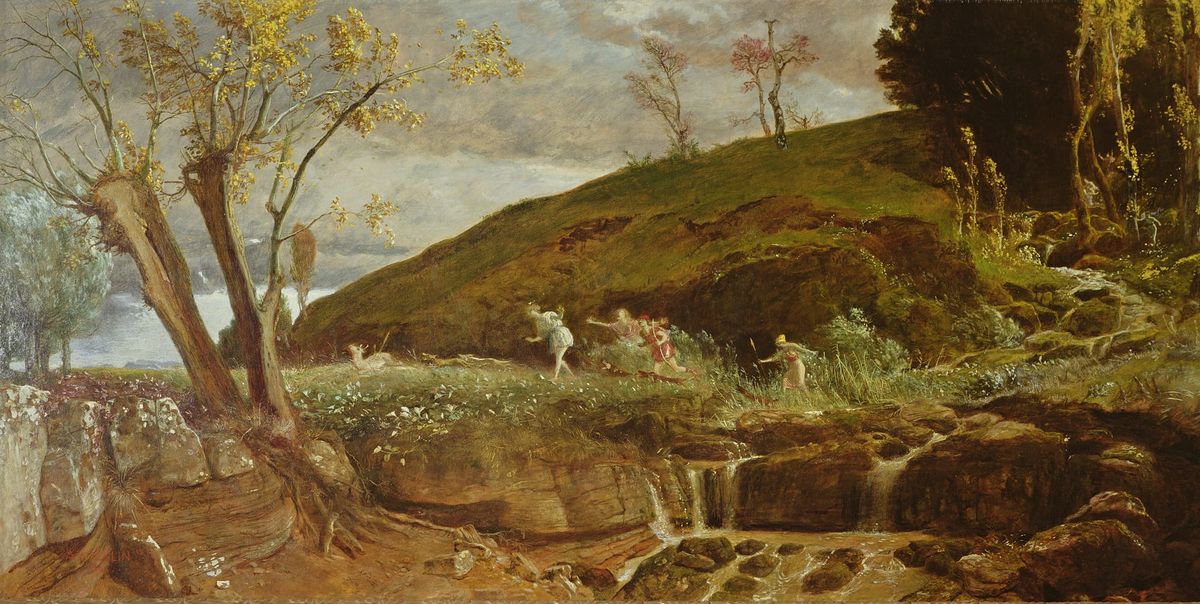
스위스 출신의 상징주의 거장 아놀드 뵈클린(Arnold Böcklin, 1827–1901)이 1896년에 이탈리아 피렌체 인근 산 도메니코에서 완성한 유화 디아나의 사냥(The Hunt of Diana, 독일어: Die Jagd der Diana)은 99.5 cm × 200.5 cm 크기의 대형 캔버스에 유채로 그린 대표적인 신화 풍경화 걸작입니다. 현재 프랑스 파리의 오르세 미술관(Musée d'Orsay, Paris)에 소장되어 있습니다.
노년의 병마를 딛고 지중해 자연에서 건져 올린 불굴의 예술혼
1890년대 중반 뵈클린은 스위스를 떠나 이탈리아 피렌체 교외의 아름다운 마을 산 도메니코에 정착했습니다. 뇌졸중 후유증으로 신체적인 마비와 쇠약을 겪던 69세의 노화가였지만, 토스카나의 온화한 햇살과 황금빛으로 물든 구릉 지대는 그의 가슴속에 잠들어 있던 원초적인 창작 열정을 다시금 눈부시게 일깨웠습니다. 화가는 로마 신화 속 사냥과 숲의 여신 디아나와 그녀를 따르는 님프들이 사냥개들과 함께 사슴을 쫓아 맹렬하게 질주하는 생동감 넘치는 순간을 가로 2미터의 장대한 화폭에 담았습니다.
평생 가난과 14명의 자녀 중 무려 8명을 어린 나이에 먼저 떠나보내는 지독한 참척의 고통을 겪었던 뵈클린에게, 인간의 손길이 닿지 않은 태고의 대자연은 상처 입은 영혼을 치유해 주는 성스러운 피난처였습니다. 화면 왼쪽에는 오랜 세월의 풍파를 견뎌낸 고목이 든든하게 뿌리를 내리고 있고, 중앙의 완만한 풀밭 언덕 아래로는 맑은 계곡물이 층층의 붉은 암반을 타고 시원하게 쏟아져 내립니다. 죽음의 그림자가 드리우던 생의 황혼기에서도 화가는 늙고 병든 육체에 굴복하지 않고, 신화 속 사냥의 활기찬 에너지를 통해 삶의 찬란한 생명력과 자유를 향한 불멸의 예술혼을 당당하게 노래했습니다.
언덕을 가르는 사냥의 무리에서 쏟아지는 계곡 폭포수로, 시선의 심리적 여정
그림을 마주하는 순간 관람객의 무의식적 시선은 화면 중앙의 부드러운 풀밭 언덕을 가로지르며 사슴을 쫓아 질주하는 여신 디아나의 하얀 옷자락과 날렵한 사냥개들의 움직임으로 가장 먼저 빨려 들어갑니다. 바람을 가르며 활을 겨누고 달리는 요정들의 역동적인 몸짓과 붉은 옷을 입은 사냥꾼의 긴박한 몸짓은 보는 이에게 손에 땀을 쥐게 하는 속도감과 숲의 서늘한 공기를 선사합니다.
이어 시선은 화면 왼쪽 전면에 우뚝 서서 황금빛 잎사귀를 떨구고 있는 거대한 고목의 굵은 줄기와 뿌리로 이동합니다. 거센 바람을 맞으며 묵묵히 서 있는 고목의 거친 나뭇결과 짙은 그림자를 확인하는 순간, 관람객은 격렬한 사냥의 움직임 이면에 자리한 대자연의 깊은 침묵과 영원성을 체감합니다.
마지막으로 시선은 요정들의 발아래로 펼쳐진 계단식 붉은 암반을 타고 흘러내려 화면 아래쪽을 가득 채우고 있는 맑은 계곡물과 하얗게 부서지는 작은 폭포들에 멈춥니다. 바위틈 사이로 시원하게 쏟아져 내리는 물줄기와 젖은 돌들의 생생한 질감을 마주하며, 관람객은 거친 대지 속에서도 멈추지 않고 순환하는 자연의 원초적인 활력과 티 없이 맑은 평화로움을 가슴 깊이 마주하게 됩니다.
신화와 대자연의 완벽한 파노라마, 미술계의 평가
미술계는 디아나의 사냥을 19세기 말 상징주의 회화가 도달한 가장 장엄하고 조화로운 신화 풍경화의 정점으로 평가합니다.
단순한 신화 이야기의 재현을 넘어서, 탁 트인 고산 능선과 숲, 흐르는 물과 움직이는 인물들을 완벽한 비례와 명암의 조화로 엮어내어 풍경 자체를 살아 숨 쉬는 대서사시로 승화시켰기 때문입니다. 현실의 깊은 고난을 딛고 자연의 영원한 젊음과 생명력을 웅장하게 그려낸 뵈클린의 이 눈부신 캔버스는 오늘날까지도 수많은 감상자들에게 대자연의 숭고한 아름다움과 깊은 감동을 전해주는 위대한 유산으로 손꼽힙니다.
The Primeval Sweep of the Golden Hills, The Hunt of Diana
Painted in 1896 in San Domenico near Florence by the preeminent Swiss Symbolist master Arnold Böcklin (1827–1901), The Hunt of Diana (German: Die Jagd der Diana) is a monumental oil on canvas measuring 99.5 cm × 200.5 cm (39.2 in × 78.9 in), preserved in the permanent collection of the Musée d'Orsay in Paris, France.
Tuscan Rejuvenation, Physical Frailty, and the Mythic Sanctuary
During the mid-1890s, Arnold Böcklin established his peaceful final studio in the hillside retreat of San Domenico near Florence. Though slowed by the lingering paralysis of a stroke and approaching his seventieth year, the golden sunlight and rolling hills of the Tuscan countryside reignited the veteran painter's creative fire. Turning away from the somber motifs of mortality, Böcklin channeled his energy into a sweeping two-meter panorama, capturing Diana, the classical goddess of the hunt, pursuing a stag across an open hillside alongside her nymphs and hound pack.
Having endured chronic poverty and the devastating loss of eight of his fourteen children throughout his life, Böcklin regarded untamed nature as a sacred refuge of spiritual healing. Anchored on the left by an ancient tree rooted firmly into weathered stone, the composition flows across a sun-drenched grassy slope toward a tiered brook cascading over reddish rock shelves. Rather than yielding to physical decay, the aging master asserted his unyielding vitality, transforming classical mythology into a kinetic celebration of primal speed, bodily energy, and uninhibited freedom.
Subconscious Trajectory of the Gaze: From Bounding Hunters to the Cascading Falls
The observer's subconscious gaze is instantly magnetized by the lithe silhouette of Diana running across the central grassy slope, drawn to the luminous white folds of her short tunic and the streamlined sprint of the hounds pursuing their quarry. The dynamic horizontal progression of the hunters with bows and spears generates an immediate sensation of open-air exhilaration and kinetic suspense.
The visual path then shifts leftward to the monumental tree standing in the foreground, taking in its gnarled trunk, exposed roots, and sparse golden foliage catching the wind against the sky. Observing this ancient sentinel rooted firmly within the landscape, the viewer perceives the enduring permanence of nature framing the transient rush of the hunt.
Finally, the trajectory descends into the lower register, resting upon the stratified, earth-toned rock terraces and the foaming mountain brook spilling over stone ledges. Taking in the transparent pools and glistening spray reflecting the daylight, the spectator confronts the harmonious integration of human movement with the self-renewing, uncorrupted forces of the natural earth.
The Monument of Late Mythological Symbolism: Critical Legacy
Art historians revere The Hunt of Diana as a crowning achievement of late 19th-century Symbolist landscape painting, seamlessly uniting narrative action with broad topographical scale.
By replacing dry academic classicism with saturated earthy tones, tactile textures of stone and water, and dynamic compositional flow, Böcklin revitalized antiquity through a modern expressive sensibility. This sweeping canvas endures as an inspiring testament to the master's late creative resurgence, celebrating the timeless vitality and majestic beauty of the untamed natural world.
본 컨텐트의 저작권은 팔렛트제주에 있습니다. 허가없는 무단전제를 금지합니다.
Copyright © Palette Jeju. All rights reserved. Unauthorized reproduction or redistribution is strictly prohibited.