황금빛 들판에 새겨진 숭고한 수확의 찬가, 프로방스의 밀 단 Wheat Stacks with Reaper / Sheaves of Wheat in Provence
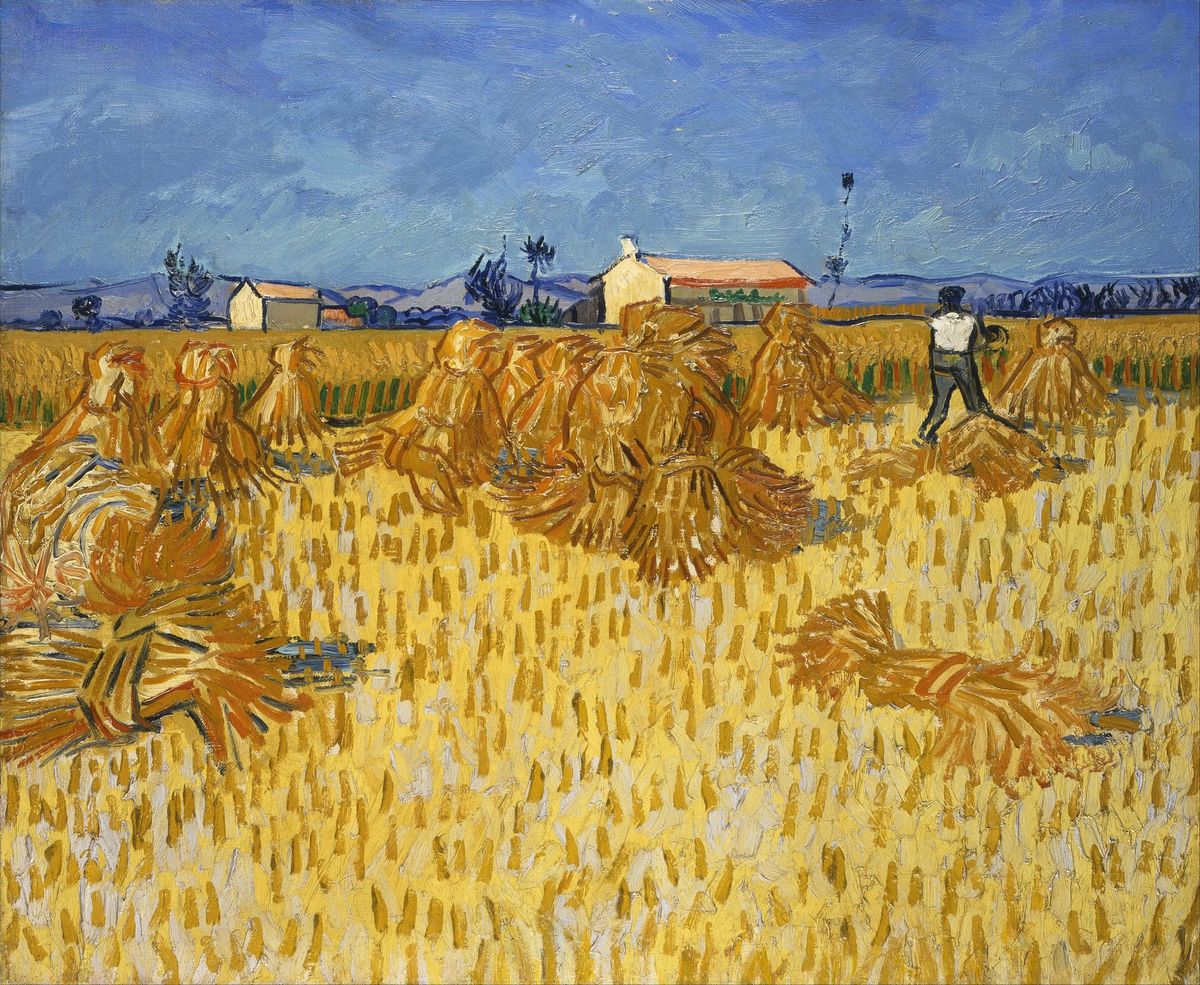
후기 인상주의의 거장 빈센트 반 고흐(Vincent van Gogh, 1853–1890)가 1888년 6월 프랑스 아를(Arles)에서 완성한 유화 프로방스의 밀 단(Wheat Stacks with Reaper, 또는 아를의 수확)은 73.0 cm × 92.5 cm 크기의 캔버스에 유채로 그린 대표작으로, 현재 미국 오하이오주 톨레도 미술관(Toledo Museum of Art)에 영구 소장되어 있습니다.
지중해의 작열하는 태양과 대지의 결실을 향한 찬미
1888년 6월, 남프랑스 아를의 크라 평야(La Crau)는 온통 황금빛으로 물든 밀밭의 장관을 이루고 있었습니다. 파리의 번잡함을 벗어나 프로방스의 강렬한 빛에 매료된 고흐는 밀이 익어가는 들판으로 달려 나가 며칠 동안 쉬지 않고 수확 연작에 몰두했습니다.
고흐에게 수확은 단순한 농경 활동을 넘어 생명의 순환과 인간 노동의 신성함을 대변하는 가장 성스러운 의식이었습니다. 그는 들판에 가지런히 세워진 풍성한 밀 단들과 묵묵히 낫을 휘두르는 농부의 모습을 화폭에 담으며, 자신이 깊이 존경했던 장 프랑수아 밀레의 농촌 리얼리즘을 계승하고자 했습니다. 동생 테오에게 보낸 편지에서 그는 "태양이 내리쬐는 들판에서 순수한 금빛과 노란빛의 향연을 그리고 있다. 숨 막힐 듯한 더위 속에서도 그림을 그리는 순간만큼은 무한한 환희를 느낀다"고 적었습니다. 대지가 인간에게 베푸는 풍요와 정직한 노동에 바치는 화가의 뜨거운 경의가 캔버스 전면에 가득 배어 있습니다.
무의식 속 시선의 공간 확장과 황금빛 시각적 파동
감상자의 시선은 화폭 전면에 짧고 굵은 터치로 촘촘하게 박혀 있는 밝은 노란색의 밀 그루터기들로 가장 먼저 이끌립니다. 바닥에서 솟아오르는 듯한 리드미컬하고 거친 질감은 보는 이의 무의식 속에 대지의 뜨거운 열기와 흙의 숨결을 직접적으로 전달합니다.
이어 시선은 화면 중앙에 피라미드처럼 단단하게 묶여 늘어선 거대한 밀 단들의 풍성한 양감으로 이동합니다. 짙은 황금빛과 갈색 선으로 빚어낸 밀 단들의 율동을 지나면, 화면 우측 상단에서 묵묵히 몸을 숙여 일하는 농부의 푸른색 바지와 흰 셔츠의 실루엣에 시선이 닿게 됩니다.
그 후 시선은 붉은 지붕을 얹은 농가와 보랏빛 능선을 넘어, 화면 상단을 시원하게 가르는 짙은 코발트 블루의 푸른 하늘로 상승합니다. 황금빛 대지의 작열하는 열기와 차가운 푸른 하늘이 이루는 완벽한 보색의 긴장감 속에서, 관람자는 의식하지 못하는 사이 풍요로운 결실이 주는 시각적 충만감과 인간의 숭고한 생명력에 깊이 젖어들게 됩니다.
색채의 자율성과 현대 풍경화의 도약, 미술사적 평가
미술계는 프로방스의 밀 단을 반 고흐가 아를 시기에 이룩한 색채 해방의 정점을 보여주는 수작으로 평가합니다.
원근에 따라 색조를 부드럽게 흐리는 고전적 기법을 거부하고, 캔버스 전체에 선명하고 두터운 물감 덩어리를 직접 병치하여 회화적 평면성과 역동적인 공간감을 동시에 성취했습니다. 자연의 외형을 단순히 재현하는 단계를 넘어 화가의 벅찬 감정과 자연의 원초적 에너지를 순수한 색채의 충돌로 승화시킨 이 작품은, 훗날 20세기 야수파와 현대 풍경화의 지평을 활짝 열어젖힌 독보적인 걸작으로 기억되고 있습니다.
A Sacred Anthem of Harvest Across Golden Plains, Wheat Stacks with Reaper
Painted in June 1888 during the radiant heights of his Arles period by Vincent van Gogh (1853–1890), Wheat Stacks with Reaper (also known as Sheaves of Wheat in Provence) is an oil on canvas measuring 73.0 cm × 92.5 cm (28.7 in × 36.4 in), preserved in the permanent collection of the Toledo Museum of Art in Toledo, Ohio.
Mediterranean Radiance and the Sacred Symphony of Labor
In June 1888, the vast La Crau plain surrounding Arles transformed into a sea of undulating gold. Energized by the brilliant southern sunlight, Van Gogh ventured daily into the fields, working with relentless momentum to capture the peak of the wheat harvest before the season slipped away.
To Vincent, the harvest was never a mere agricultural chore; it represented the eternal cycle of life, death, and resurrection, echoing the timeless humanism of Jean-François Millet, whom he revered. Constructing towering pyramids of gathered grain under a blazing sky, he celebrated the sanctity of rural toil. Writing to his brother Theo, Vincent rejoiced in the incandescent harmony of chrome yellows, gold, and vibrant ochres, noting that amidst the suffocating summer heat, the act of painting brought him an overwhelming spiritual euphoria. The resulting canvas stands as an ecstatic tribute to the abundance of the earth and the dignified rhythm of human labor.
Psychological Trajectory of the Gaze and Unconscious Vitality
The observer’s subconscious gaze is immediately welcomed by the dense carpet of cropped stubble in the foreground. Rendered in rhythmic, vertical strokes of dazzling yellow and warm ochre, this tactile texture establishes an immediate physical connection to the sun-baked soil.
From this shimmering base, visual perception glides upward through the sculptural volumes of the golden wheat stacks anchoring the midground. Traversing these radiant monuments, the eye discovers the distant silhouette of the reaper in the upper right, whose blue trousers and white shirt provide a vital human focal point amidst the golden expanse.
The gaze then travels past the red-roofed farmhouses and soft purple hills, culminating in the deep, saturated expanse of the cobalt blue sky above. Trapped within the electrifying complementary tension between incandescent gold and cool azure, the viewer subconsciously internalizes the profound equilibrium of nature and the triumphant spiritual resonance of the summer harvest.
Chromatic Autonomy and Textural Modernism: Critical Legacy
Art historians revere Wheat Stacks with Reaper as a consummate masterpiece of Van Gogh’s Provençal period, showcasing his revolutionary command of pure complementary contrast and expressive impasto.
Abandoning atmospheric sfumato in favor of bold, tactile paint application, Van Gogh unified foreground and background into a pulsing visual tapestry of pure energy. By elevating the rustic countryside into an arena of spiritual truth and modern chromatic power, this canvas stands as an enduring bridge toward 20th-century Fauvism and Expressionism, immortalizing the sublime harmony between man and nature.
Copyright © Palette Jeju. All rights reserved. Unauthorized reproduction or redistribution is strictly prohibited.
본 컨텐트의 저작권은 팔렛트제주에 있습니다. 허가없는 무단전제를 금지합니다.