회화의 알레고리 Allegory of Painting
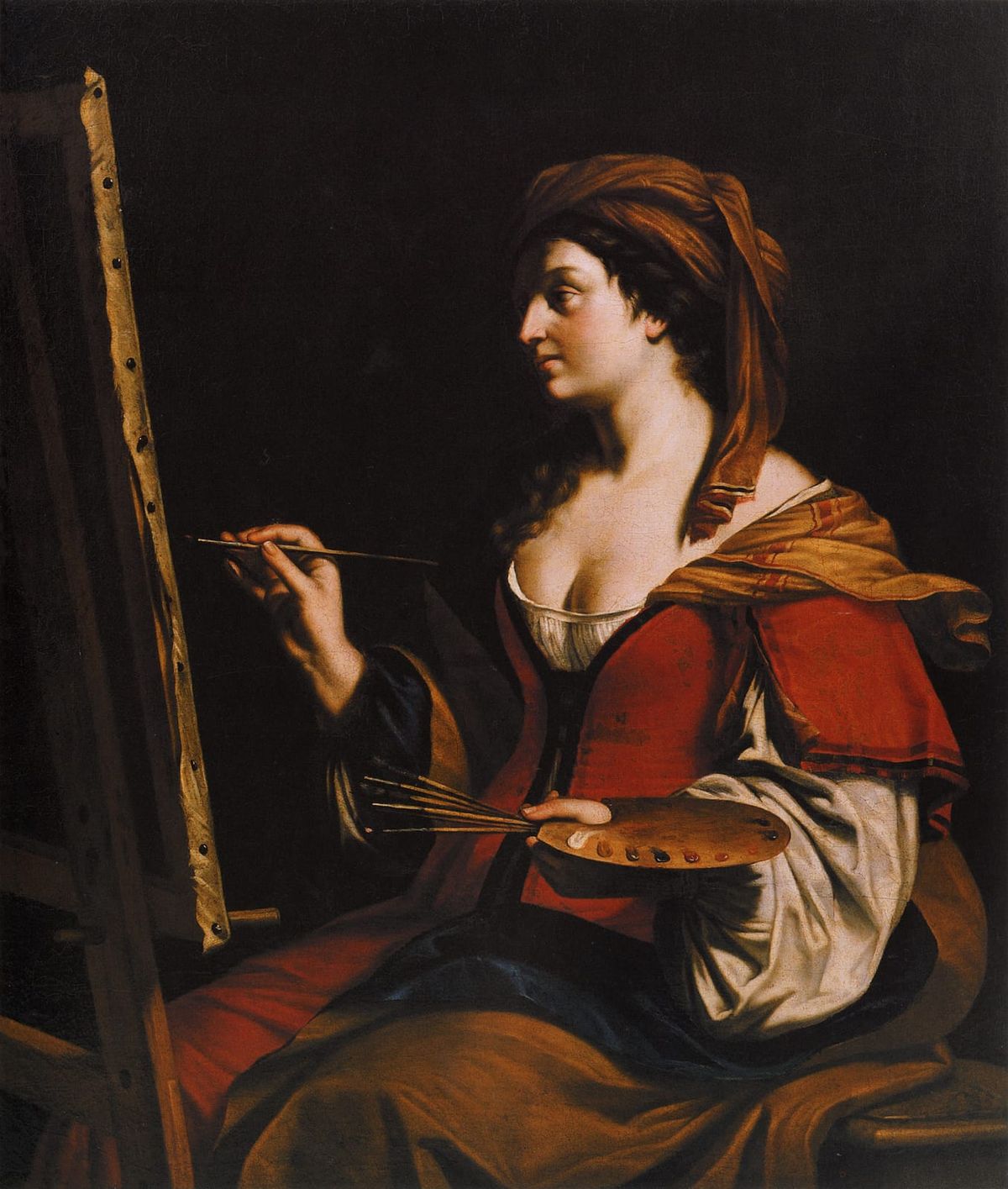
17세기 이탈리아 바로크 회화의 거장 조반니 프란체스코 바르비에리, 널리 귀에르치노(Guercino, 1591–1666)로 불리는 화가가 1620년대 중반에서 1630년경 원숙기에 완성한 유화 회화의 알레고리(Allegory of Painting, 이탈리아어: Allegoria della pittura)는 123.0 cm × 100.0 cm 크기의 캔버스에 유채로 그린 대표적인 예술 의인화 걸작입니다. 현재 유럽의 저명한 미술관 및 주요 개인 컬렉션에 소장되어 있습니다.
체사레 리파의 도상학과 화실 속 화가의 자화상적 고뇌
17세기 당시 유럽 예술계에서는 예술의 지위가 단순한 손기술에 불과한 기술인지, 아니면 시와 철학과 어깨를 나란히 하는 지적인 자유 인문학인지를 두고 격렬한 논쟁이 벌어지고 있었습니다. 귀에르치노는 당대 최고의 도상학 저서였던 체사레 리파(Cesare Ripa)의 이코놀로기아에 기록된 전통을 깊이 탐구했습니다. 리파는 회화의 여신을 입에 재갈을 물거나 헝클어진 머리칼을 휘날리며 붓을 든 여성으로 묘사했지만, 귀에르치노는 이러한 도식적인 틀에 머물지 않고 화가로서 자신이 평생 겪어온 창작의 고통과 진실한 영혼을 여인의 모습에 투영하고자 깊은 번민을 거듭했습니다.
화가는 캔버스 앞 이젤에 걸터앉아 붓을 쥐고 고요히 대상을 응시하는 여인의 모습을 통해, 그림을 그린다는 행위가 단순한 모방이 아니라 번뜩이는 영감과 치밀한 계산이 만나는 숭고한 정신 활동임을 웅변하고자 했습니다. 여인의 머리를 감싼 붉은 갈색 터번과 걷어 올린 굵은 흰 소매는 화실에서 땀 흘리는 장인의 노동을 상징하며, 붉은색 옷감과 어깨를 감싼 황토색 숄은 바로크 회화의 풍성한 색채 세계를 드러냅니다. 왼손에 쥔 나무 팔레트 위에는 실제로 화가가 물감을 개어놓은 듯 흰색과 흙빛 물감이 도톰하게 얹혀 있고, 엄지손가락으로 쥐고 있는 여러 자루의 가느다란 붓들은 회화 예술이 지닌 무한한 표현력을 상징합니다.
이젤을 향한 날카로운 눈빛에서 붓을 쥔 손과 나무 팔레트로, 시선의 심리적 여정
그림을 마주하는 순간 관람객의 무의식적 시선은 화면 상단 짙은 어둠 속에서 은은한 자연광을 받아 밝게 드러난 여인의 우아한 옆얼굴과 터번 아래로 흘러내린 머리칼로 가장 먼저 빨려 들어갑니다. 입술을 굳게 다문 채 이젤 위에 놓인 캔버스를 뚫어지게 응시하는 여인의 날카롭고도 지적인 눈빛은 보는 이에게 깊은 시각적 압도감과 함께 창작의 순간에 감도는 팽팽한 긴장감을 선사합니다.
이어 시선은 여인의 오른손으로 이동하여, 캔버스 표면에 가만히 붓끝을 대고 있는 가느다란 붓자루와 섬세한 손가락 마디마디로 옮겨갑니다. 하얀 린넨 캔버스 위에 새로운 생명을 불어넣기 직전의 조심스럽고도 단호한 붓질을 확인하는 순간, 관람객은 한 폭의 걸작이 탄생하는 화가의 내밀한 창작의 세계 속으로 온몸이 빨려 들어가게 됩니다.
마지막으로 시선은 여인의 가슴을 감싼 붉은색 코르셋과 어깨의 황토색 숄을 지나, 왼손에 묵직하게 받쳐 든 타원형 나무 팔레트와 붓다발, 그리고 팔레트 위에 도톰하게 짜인 유채 물감의 반짝임에 멈춥니다. 어두운 배경 속에서 오직 빛과 색채의 도구들만으로 빚어낸 회화 예술의 거룩한 위엄을 마주하며, 관람객은 시대를 초월한 창작의 숭고한 가치와 귀에르치노가 건네는 묵직한 영혼의 위로를 가슴 깊이 마주하게 됩니다.
17세기 볼로냐 바로크 회화론의 정점과 조형적 완성도, 미술계의 평가
미술계는 회화의 알레고리를 귀에르치노가 카라바조의 강렬한 테네브리즘 명암법과 볼로냐 고전주의의 단정한 인체 비례를 가장 완벽하게 융합한 자전적 예술 선언으로 평가합니다.
어두운 배경과 대비되는 캔버스 천의 질감, 투박한 원목 이젤의 입체감, 피부의 생생한 음영과 실크 직물의 부드러움을 극도로 섬세한 명암법으로 완벽하게 구현했을 뿐만 아니라, 화가라는 존재의 정체성과 자부심을 품격 높은 조형 언어로 승화시켰기 때문입니다. 예술을 향한 끝없는 열정과 헌신을 아름다운 시각적 찬가로 완성해 낸 귀에르치노의 이 기념비적인 화폭은, 오늘날까지도 전 세계 수많은 감상자들에게 깊은 경탄과 잊을 수 없는 시각적 감동을 전해주는 불멸의 명작으로 손꼽히고 있습니다.
Allegory of Painting
Painted around the mid-1620s to 1630 in Cento by the preeminent Italian Baroque master Giovanni Francesco Barbieri, universally celebrated as Guercino (1591–1666), Allegory of Painting (Italian: Allegoria della pittura) is an oil on canvas measuring 123.0 cm × 100.0 cm (48.4 in × 39.3 in), preserved in a distinguished European collection.
Cesare Ripa's Iconology, Artistic Solitude, and the Defense of the Noble Art
During the seventeenth century, European painters engaged in an enduring debate over the liberal status of painting, asserting that visual art was not mere manual craft but a supreme intellectual and philosophical endeavor equal to poetry and geometry. While Cesare Ripa’s influential handbook Iconologia prescribed the personification of Painting as a woman with a gold chain, disheveled hair, and a gag at her mouth to symbolize silent imitation, Guercino transformed this allegorical convention into an intimate, working studio scene that resonated with his own lifelong creative struggle.
Rather than portraying a detached, decorative goddess, Guercino depicted the personification of Painting as a dedicated master seated directly at her wooden easel in quiet concentration. Attired in a practical russet turban, gathered white sleeves, a crimson bodice, and an ochre mantle, she embodies both the physical labor of the workshop and the intellectual nobility of invention. In her left hand, she supports a wooden artist's palette laden with freshly blended lead white and earth pigments alongside a cluster of fine hair brushes, while her poised right hand carefully applies a delicate brushstroke to the primed canvas edge. Through this focused composition, Guercino celebrated painting as an act of profound contemplation and spiritual discipline.
Subconscious Trajectory of the Gaze: From Focused Profile to the Loaded Palette
The observer's subconscious gaze is immediately magnetized by the upper-central register, drawn to the luminous, sharply focused profile of the female artist illuminated against the enveloping dark background. Her intense, steady gaze fixed upon the upright easel and the warm light defining her brow and cheekbone establish an instant focal point of intellectual depth, creative resolve, and professional authority.
The visual path then follows the extended reach of her right arm toward the canvas edge on the left, observing her slender fingers grasping the fine brush poised against the linen surface. Taking in the tactile tension in her hand as it hovers above the unpainted ground, the viewer directly experiences the thrilling suspense of the creative act and the intimate silence of the painter's studio.
Finally, the visual trajectory descends across her crimson bodice and billowy white sleeve to the lower right, resting upon the oval wooden palette cradled in her left hand with its array of fine brushes and thick mounds of wet pigment. Observing the harmonious equilibrium between dramatic chiaroscuro, tactile material realism, and allegorical nobility, the spectator perceives the timeless dignity of artistic creation and the profound aesthetic solace Guercino embedded within the monumental canvas.
The Monument of Bolognese Artistic Idealism: Critical Legacy
Art historians revere Allegory of Painting as a consummate masterpiece of Guercino’s mature career, illustrating his synthesis of Caravaggesque naturalism with the classical balance and painterly dignity of the Bolognese school.
By orchestrating delicate textural contrasts between raw canvas, porous wood, shimmering draperies, and glistening oil paint within a unified chiaroscuro scheme, Guercino elevated an allegorical personification into a living visual manifesto on the integrity of the painter's craft. This magnificent historical canvas endures as an inspiring testament to the master's creative genius, celebrating the poetic power of human imagination and the transformative grace of living art.
본 컨텐트의 저작권은 팔렛트제주에 있습니다. 허가없는 무단전제를 금지합니다.
Copyright © Palette Jeju. All rights reserved. Unauthorized reproduction or redistribution is strictly prohibited.