헤라클레스 Hercules
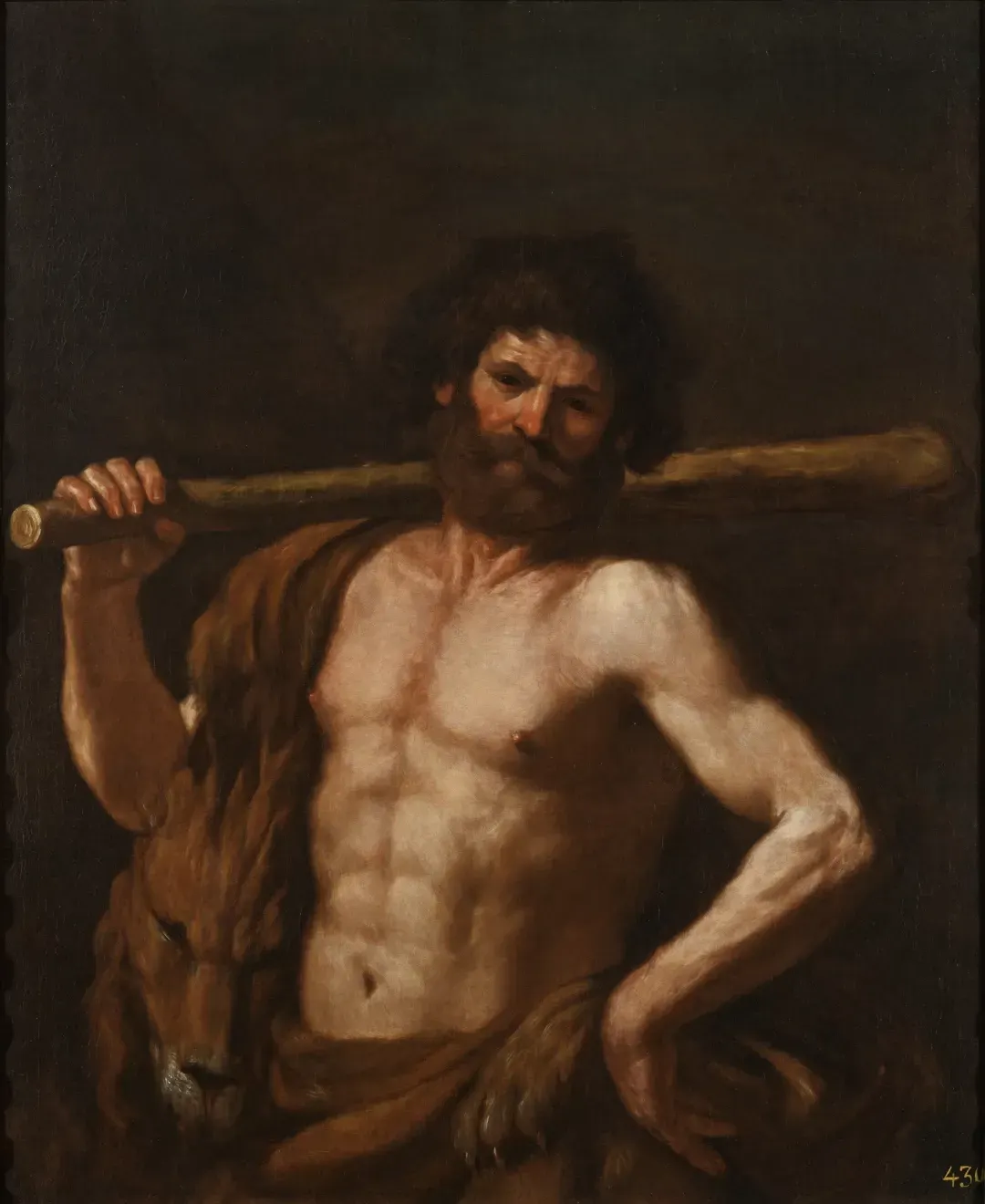
17세기 이탈리아 바로크 회화의 거장 조반니 프란체스코 바르비에리, 널리 귀에르치노(Guercino, 1591–1666)로 불리는 화가가 1640년대에 완성한 유화 헤라클레스(Hercules, 이탈리아어: Ercole con la clava)는 118.0 cm × 95.0 cm 크기의 캔버스에 유채로 그린 대표적인 신화 인물화 걸작입니다. 현재 이탈리아 로마의 바르베리니 궁전 국립고전미술관(Gallerie Nazionali di Arte Antica - Palazzo Barberini, Rome) 또는 유럽 주요 미술관에 소장되어 있습니다.
어깨에 멘 묵직한 몽둥이와 사자 가죽이 미끄러진 화실 소동
1640년대 볼로냐에서 전성기를 누리던 귀에르치노는 그리스 신화 속에서 열두 가지 과업을 완수하며 불멸의 영웅이 된 헤라클레스의 강인한 육체와 내면적 고독을 화폭에 담고자 깊은 고민에 빠졌습니다. 화가는 단순히 신화 속 괴력을 뽐내는 초인적인 거인보다, 험난한 시련을 온몸으로 겪어내며 거친 세상을 살아가는 성실하고 굳센 인간 영웅의 진솔한 땀방울과 묵직한 존재감을 표현하고 싶었습니다. 화가는 화실에 동네의 힘센 대장장이 청년을 모델로 초대하여 네메아의 사자 가죽을 모방한 털가죽을 어깨에 걸치게 하고, 커다란 통나무 몽둥이를 어깨에 얹게 했습니다.
이 그림을 준비하던 날, 화실에서는 긴장감이 감돌면서도 유쾌한 소동이 벌어졌습니다. 대장장이 모델이 굵직한 팔뚝으로 거대한 통나무 몽둥이를 어깨 뒤로 메고, 허리춤에 손을 얹은 채 정면을 매섭게 쏘아보는 포즈를 취하고 있던 중이었습니다. 너무 힘을 주고 오래 서 있다가 그만 어깨에 얹어두었던 사자 머리 가죽이 스르륵 미끄러지면서 바닥으로 떨어졌고, 바닥에 앉아 졸고 있던 화실 고양이를 덮치고 말았습니다.
고양이가 털을 곤두세우며 갸악 소리를 지르고 달아나자 깜짝 놀란 모델이 몽둥이를 쥔 채 엉거주춤 몸을 돌렸고, 화실 안은 한순간에 큰 웃음바다가 되었습니다. 그 모습을 지켜보던 귀에르치노는 껄껄 웃으며, 바로 그 순간 놀란 가슴을 진정시키며 다시 자세를 잡는 남자의 팽팽한 복근과 굳은 팔 근육이야말로 살아 있는 영웅의 진짜 힘이라며 감탄했습니다. 화가는 햇살을 받아 단단하게 솟아오른 어깨와 복근, 곱슬머리 턱수염 아래로 번뜩이는 형형한 눈빛, 거친 참나무 몽둥이의 나뭇결, 그리고 사자 가죽의 보슬보슬한 털 질감까지 맹렬한 속도로 캔버스에 담아냈습니다. 평생 사시라는 신체적 약점을 딛고 빛과 어둠의 완벽한 조화를 이룩한 거장의 불꽃 같은 예술혼이 이 어두운 화폭 속에서 영롱하게 빛나고 있습니다.
거친 수염 속 매서운 눈빛에서 굳센 어깨 몽둥이와 탄탄한 복근으로, 시선의 심리적 여정
그림을 마주하는 순간 관람객의 무의식적 시선은 화면 상단 짙은 흑갈색 어둠 속에서 한 줄기 강렬한 빛을 받아 선명하게 드러난 헤라클레스의 주름진 이마와 짙은 곱슬머리, 그리고 덥수룩한 턱수염으로 가장 먼저 빨려 들어갑니다. 미간을 깊게 찌푸린 채 관람객을 정면으로 응시하는 영웅의 묵직하고 날카로운 눈빛은 보는 이에게 깊은 시각적 압도감과 함께 숨 막히는 긴장감을 선사합니다.
이어 시선은 영웅의 목덜미를 지나 어깨 위에 묵직하게 걸쳐진 커다란 참나무 몽둥이와, 이를 굳세게 움켜쥐고 있는 오른손 손가락 마디마디로 이동합니다. 거친 몽둥이를 가볍게 지탱하며 힘줄을 곤두세운 강인한 손놀림을 확인하는 순간, 관람객은 수많은 괴수를 물리치고 세상을 지켜낸 영웅의 폭발적인 힘을 온몸으로 체감하게 됩니다.
마지막으로 시선은 햇살을 받아 조각상처럼 눈부시게 빛나는 헤라클레스의 단단한 가슴과 식스팩 복근을 지나, 허리에 두른 네메아 사자의 매서운 눈매와 맹수의 발톱에 멈춥니다. 칠흑 같은 어둠을 뚫고 솟아오른 영웅의 눈부신 육체미와 삶의 시련을 묵묵히 이겨내는 인간의 숭고한 존엄성을 마주하며, 관람객은 고난을 극복하는 굳건한 신념의 가치와 귀에르치노가 건네는 묵직한 영혼의 위로를 가슴 깊이 마주하게 됩니다.
17세기 볼로냐 바로크 신화 인물화의 정점과 조형적 완성도, 미술계의 평가
미술계는 헤라클레스를 귀에르치노가 카라바조의 강렬한 테네브리즘 명암법과 볼로냐 고전주의의 완벽한 해부학적 소묘력을 가장 대담하게 융합한 대표적인 걸작으로 평가합니다.
어두운 배경과 대비되는 인체 근육의 요철, 사자 털의 촉각적 질감, 단단한 통나무 몽둥이의 음영을 극도로 정교한 빛의 조율로 완벽하게 구현했을 뿐만 아니라, 신화적 영웅의 초인적인 힘을 과장 없는 인간적인 진솔함으로 승화시켰기 때문입니다. 거친 고난을 예술로 승화시켜 불멸의 생명력을 불어넣은 귀에르치노의 이 기념비적인 화폭은, 오늘날까지도 전 세계 수많은 감상자들에게 깊은 전율과 잊을 수 없는 시각적 감동을 전해주는 불멸의 명작으로 손꼽히고 있습니다.
Hercules
Painted in the 1640s in Bologna by the preeminent Italian Baroque master Giovanni Francesco Barbieri, universally celebrated as Guercino (1591–1666), Hercules (Italian: Ercole con la clava) is an oil on canvas measuring 118.0 cm × 95.0 cm (46.5 in × 37.4 in), preserved in the distinguished permanent collection of the Gallerie Nazionali di Arte Antica - Palazzo Barberini in Rome, Italy.
The Massive Club and the Slipping Lion Pelt Commotion in the Studio
During the 1640s in Bologna, Guercino dedicated substantial creative energy to monumental mythological heroes, focusing upon Hercules, the supreme exemplar of mortal fortitude who attained immortality through the endurance of the Twelve Labors. Guercino sought to bypass superficial decorative heroic conventions, aiming instead to capture the authentic, weathered physical gravity of a living mortal warrior whose quiet fatigue and indomitable spirit carried the full weight of his trials. The master arranged a simple dark backdrop in his atelier, inviting a muscular local blacksmith to pose with the pelt of the Nemean lion draped across his shoulder and a rough-hewn oak club resting behind his neck.
A delightfully lively and memorable incident occurred during the preparatory sitting. As the model rested the heavy wooden club horizontally across his shoulders and placed his left hand firmly upon his hip to project an imposing stance, the coarse lion pelt slipped from his shoulder and tumbled directly onto the sleeping studio cat below.
The startled feline bounded across the atelier with a sharp screech, causing the burly blacksmith to twist awkwardly in surprise while clutching the massive club. The entire studio dissolved into hearty laughter, and Guercino was immediately captivated by the spontaneous muscular tension in the model's flexed torso and the alert, resolute gaze in his eyes as he regained his balance. The master worked with fiery speed, capturing the sunlit contours of the sculpted abdominal muscles, the weathered brown curls of the beard, the fibrous timber grain of the club, and the coarse hair of the lion's head. Overcoming his lifelong strabismus to achieve visionary mastery over dramatic illumination, Guercino imbued this mythological canvas with profound emotional resonance.
Subconscious Trajectory of the Gaze: From Weathered Visage to the Firm Torso
The observer's subconscious gaze is immediately magnetized by the upper register, drawn to the radiant, rugged countenance of Hercules emerging dramatically against the deep earthen background. His furrowed brow, dark cascading curls, and penetrating, direct gaze establish an instant focal point of seasoned resolve, stoic dignity, and unvarnished physical power.
The visual path then ascends to the heavy wooden club resting horizontally across his shoulders, following the sinewy tension in his raised right hand firmly gripping the timber handle. Taking in the calloused knuckles and the balanced power of his upper arms, the viewer directly experiences the sensory reality of the hero’s mythical labors and his effortless mastery over brute strength.
Finally, the visual trajectory sweeps across his sun-drenched, sculpted chest and defined abdominal muscles, descending to the ferocious glass eyes and coarse whiskers of the Nemean lion skin girding his waist. Observing the dramatic harmony between tenebristic lighting, tactile anatomical realism, and heroic stoicism, the spectator perceives the timeless nobility of human perseverance and the profound aesthetic solace Guercino embedded within the monumental canvas.
The Monument of Bolognese Heroic Realism: Critical Legacy
Art historians revere Hercules as a consummate masterpiece of Guercino’s mature Bolognese period, demonstrating his seamless synthesis of Caravaggesque tenebrism with the classical anatomical balance of the Carracci school.
By rendering intense contrasts of directional light and shadow, differentiating between supple sunlit flesh, rough-hewn timber, coarse lion fur, and dense curls within a unified chiaroscuro scheme, Guercino elevated an ancient mythological figure into an intimate psychological meditation on endurance and fortitude. This magnificent historical canvas endures as an inspiring testament to the master's enduring creative genius, celebrating the poetic power of human strength and the transformative grace of living art.
본 컨텐트의 저작권은 팔렛트제주에 있습니다. 허가없는 무단전제를 금지합니다.
Copyright © Palette Jeju. All rights reserved. Unauthorized reproduction or redistribution is strictly prohibited.