헤이그의 Schenkweg 가의 정원 The Garden of the Schenkweg in The Hague
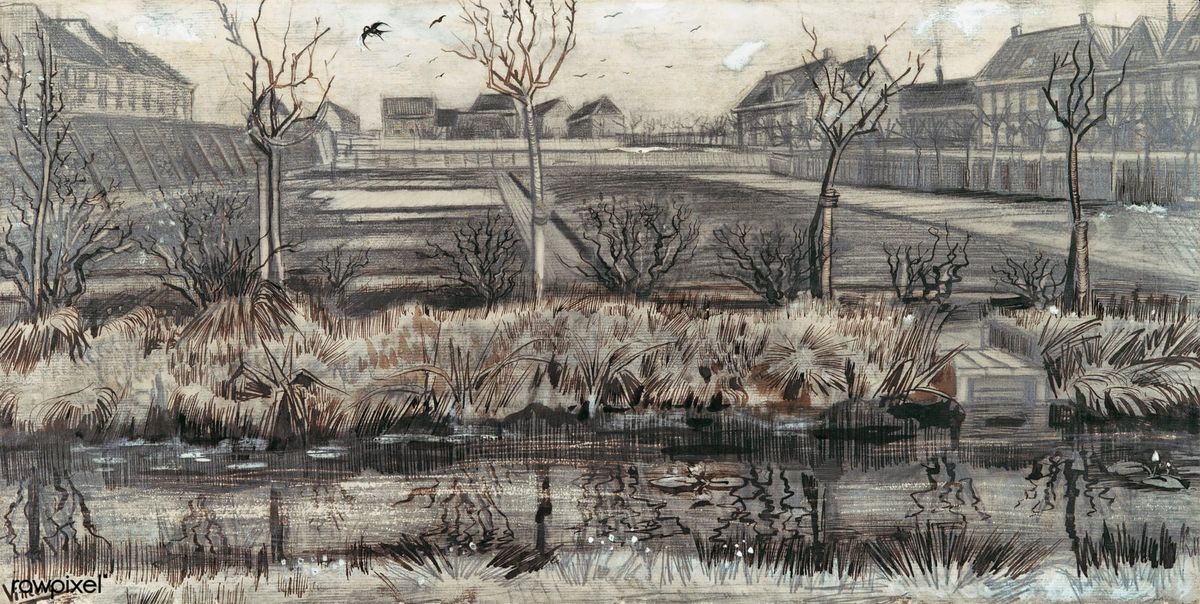
빈센트 반 고흐(Vincent van Gogh, 1853–1890)는 1882년 3월 네덜란드 헤이그에 정착하여 삶의 거친 터전을 일구던 시기에, 자신이 머물던 작업실 근처의 풍경을 담아내며 화가로서의 본격적인 기틀을 다져나갔습니다.
이 작품은 그가 헤이그에 체류하던 1882년 봄에 제작된 드로잉이자 수채화 작품으로, 야콥 바르트 드 라 파이유의 전작 도록 기준 공식 등록번호는 F932이며 실제 작품의 실측 규격은 33.5 × 58.5 cm입니다.
현재 네덜란드 암스테르담에 위치한 반 고흐 미술관에서 소장하고 있습니다.
작가의 고뇌와 비하인드
작품을 제작할 당시 헤이그의 작업실 창밖으로는 매서운 봄비와 축축한 흙냄새가 섞인 스산한 대기가 짓누르고 있었고, 화가의 일상은 매 끼니를 걱정해야 하는 극심한 가난과 타인과의 거친 마찰 속에서 숨통이 조여드는 시간들이었습니다.
사회적 냉대와 지독한 고립 속에서 그는 거창한 이상을 논할 여유조차 없었기에, 눈앞에 펼쳐진 차갑고 메마른 풍경을 악착같이 펜 끝에 짓이기며 하루를 버텨내고 있었습니다.
화면 전면에는 차갑고 무거운 물결이 흐르는 운하와 그 주변을 감싼 거친 풀숲의 스산한 질감이 정교한 펜 선과 수채 물감으로 묵직하게 표현되어 있습니다.
중경에는 잎사귀를 모두 떨군 앙상한 나무 기둥들이 일렬로 서서 스산한 정원을 가로지르고 있으며, 그 뒤로 길게 펼쳐진 대지와 농경지의 평평한 구획이 냉혹한 현실의 공간감을 형성합니다.
원경의 배경에는 낮은 지평선 너머로 헤이그 변두리의 주택들과 공장 굴뚝의 실루엣이 흐릿하게 어우러져, 19세기 말 네덜란드 도시 교외의 쓸쓸하면서도 묵묵한 대기감을 완성합니다.
무의식 속 시선 및 심리 흐름
관람객의 시선은 가장 먼저 화면 아래를 가득 채운 차가운 운하의 물결과 그 위에 비친 메마른 풀숲의 어두운 반영에 닿으며 묘한 쓸쓸함을 느끼게 됩니다.
이어지는 시선은 화면을 가로지르는 앙상한 나무들의 수직선과 그 너머로 펼쳐진 정원의 평평한 대지 위를 걸어가듯 안쪽으로 이동합니다.
마지막으로 멀리 희미하게 자리 잡고 있는 헤이그의 건물들과 옅은 하늘의 대기감 속으로 시선이 넓게 퍼져나가며, 지독한 가난과 외로움 속에서 현실의 무게를 온몸으로 받아내던 화가의 씁쓸하고도 날카로운 심리적 울림을 체감하게 됩니다.
미술계의 평가와 조형미
미술사학계에서는 이 작품을 두고 고흐가 헤이그 초기 시기에 철저한 원근법과 다양한 재료의 실험을 통해 단순한 풍경의 기록을 넘어선 실존적 깊이를 담아낸 뛰어난 초기 수작으로 평가합니다.
화면 전반을 지배하는 모노톤의 차분한 색채와 펜 선의 섬세한 집합은 시각적 깊이감을 극대화합니다.
눈에 보이는 정원의 재현을 넘어, 화가가 가혹한 현실의 무게를 온몸으로 견디며 종이 위에 날것 그대로 아로새긴 예술적 투지와 인간적 진정성을 담아낸 위대한 미술사적 성취입니다.
The Garden of the Schenkweg in The Hague
Vincent van Gogh captured the stark and moody atmosphere of the Dutch landscape after settling in The Hague in March 1882, laying the foundational techniques of his artistic career while documenting the bleak surroundings near his studio.
Created in the spring of 1882 during his time in The Hague, this work executed in watercolor, opaque watercolor, and pencil is cataloged as F932 in J.B. de la Faille's catalogue raisonné and measures 33.5 × 58.5 cm.
The painting is currently housed in the Van Gogh Museum in Amsterdam.
During the period of its creation, a biting spring chill and damp drizzle hung over the flat outskirts of The Hague, mirroring the relentless poverty, social isolation, and harsh struggle for survival that shadowed the artist's daily life.
Though his existence was heavily burdened by destitution and painful human conflicts, he sought a quiet refuge in observing the stark, unvarnished reality of the urban fringe, channeling his deep emotional endurance into meticulous draftsmanship.
The foreground is anchored by a cold canal reflecting the linear patterns of reeds and muted banks rendered through dense pen work and washes.
In the middle ground, bare winter trees stand in a staggered row across the gardens, framing the flat, expansive plots of land that stretch toward the horizon.
In the distant background, the low silhouettes of houses and suburban structures under a pale sky establish a somber and atmospheric sense of place.
The viewer's gaze is initially drawn toward the dark, linear reflections shimmering across the water in the lower register.
The perspective then follows the rhythm of the bare trees and garden paths inward toward the distant horizon.
Finally, the eye diffuses into the pale, muted sky of the background, allowing the observer to experience a tranquil psychological transition from physical observation to an intimate awareness of the artist's solitary introspection.
Art historians regard this canvas as a defining early masterpiece of Van Gogh's Hague period, where rigorous attention to perspective and expressive draftsmanship elevate a modest suburban view into a profound psychological study.
The uncompromising interplay between delicate pen strokes and tonal washes generates an exceptional visual rhythm and emotional depth.
It stands as an enduring artistic monument that immortalizes the artist's relentless confrontation with his environment and his early, steadfast commitment to capturing the authentic pulse of the earth.
본 컨텐트의 저작권은 팔렛트제주에 있습니다. 허가없는 무단전제를 금지합니다.
Copyright © Palette Jeju. All rights reserved. Unauthorized reproduction or redistribution is strictly prohibited.