헤이그의 제철소 The Iron Mill in The Hague
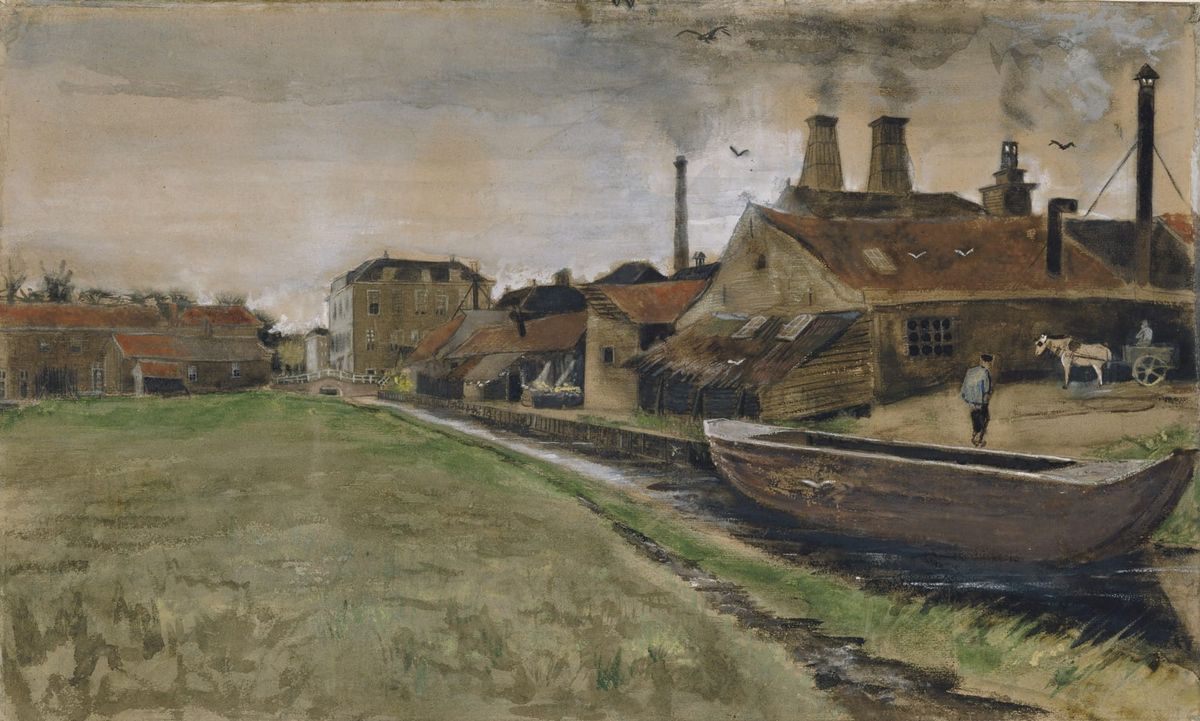
빈센트 반 고흐(Vincent van Gogh, 1853–1890)는 1882년 네덜란드 헤이그에 체류하던 시기에 도시 변두리의 산업적인 풍경과 노동하는 사람들의 거친 일상을 화폭에 담아내는 작업에 깊이 몰두했습니다.
이 작품은 그가 헤이그에 머물던 1882년 7월에 제작된 연필, 수채, 과슈 및 펜을 활용한 혼합 매체 드로잉으로, 야콥 바르트 드 라 파이유의 전작 도록 기준 공식 등록번호는 F966이며 실제 작품의 실측 규격은 38.5 × 66.5 cm입니다.
현재 네덜란드 암스테르담에 위치한 반 고흐 미술관에서 소장하고 있습니다.
작가의 고뇌와 비하인드
작품을 제작할 당시 헤이그의 거리는 차가운 여름 장맛비와 회색빛 해풍이 끊임없이 내리치며 도시 전체를 무거운 시름에 잠기게 만들었고, 화가 자신 역시 가난과 사회적 냉대 속에서 동거인 시엔 호른과의 위태로운 삶을 지탱하느라 심신이 극도로 지쳐 있었습니다.
스산한 공기와 매캐한 공단 연기가 뒤엉키는 스산한 물리적 환경 속에서도 그는 사회의 밑바닥에서 묵묵히 돌아가는 산업 현장의 진실을 마주하며, 소외된 노동자들의 거친 숨결을 정직하게 담아내고자 비바람을 맞으며 이 풍경을 그려나갔습니다.
화면 전면에는 잔디가 깔린 넓은 공터와 어두운 물길을 따라 묵직하게 정박해 있는 커다란 목선이 자리 잡고 있습니다.
중경에는 굴뚝에서 피어오르는 연기를 뿜어내는 공장 건물들과 함께, 마당에서 수레를 끄는 말과 사람이 분주하게 움직이는 노동의 현장이 펼쳐집니다.
원경의 배경에는 잿빛 하늘 아래로 도시의 집들과 굴뚝들이 길게 이어져 있어 산업화 초기 도시 변두리가 자아내는 적막하고 쓸쓸한 대기의 깊이감을 완성합니다.
무의식 속 시선 및 심리 흐름
관람객의 시선은 가장 먼저 화면 오른쪽 아래에 거대하게 멈춰 선 목선의 묵직한 선체와 어두운 물결의 질감에 자연스럽게 닿으며 차분한 고요함을 느끼게 됩니다.
이어지는 시선은 공장 마당에서 움직이는 사람과 말의 실루엣을 거쳐, 굴뚝에서 피어오르는 연기가 흩어지는 중경의 건축물들로 부드럽게 이동합니다.
마지막으로 화면 상단을 짓누르는 잿빛 하늘과 멀리 펼쳐진 지평선 속으로 시선이 넓게 퍼져나가며, 산업화의 물결 속에서 피어오르는 고단한 삶의 애환과 깊은 정서적 몰입을 체감하게 됩니다.
미술계의 평가와 조형미
미술사학계에서는 이 작품을 두고 고흐가 초기 네덜란드 시기에 수채와 과슈의 섬세한 기법을 활용하여 산업 노동 현장의 풍경을 거칠면서도 서정적인 리얼리티로 승화시킨 수작으로 평가합니다.
화면 전체를 지배하는 차분한 갈색과 회색 톤의 조화는 당시 도시 변두리가 지닌 쓸쓸하고 묵직한 분위기를 극대화합니다.
눈에 보이는 풍경의 단순한 재현을 넘어, 화가가 가혹한 현실 속에서도 잃지 않았던 삶을 향한 끈질긴 시선과 예술적 진정성을 도미니크적인 붓질로 캔버스 위에 영원히 아로새긴 위대한 미술사적 성취입니다.
The Iron Mill in The Hague
Vincent van Gogh captured the gritty industrial landscape and the stark reality of urban labor on the outskirts of the city through expressive works on paper during his stay in The Hague in July 1882.
Created in July 1882, this mixed-media drawing utilizing pencil, watercolor, gouache, and pen is cataloged as F966 in J.B. de la Faille's catalogue raisonné and measures 38.5 × 66.5 cm.
The artwork is currently housed in the Van Gogh Museum in Amsterdam.
During the period of its creation, heavy summer rain and biting coastal winds swept across the outskirts of The Hague, enveloping the city in a somber, melancholic dampness while Van Gogh himself endured crushing poverty and deep emotional strain while living with Sien.
Amidst this bleak physical environment where the harsh winds and the heavy smoke of the industrial fringe pressed closely upon him, he sought profound focus by translating the unvarnished reality of working-class toil into his art.
The foreground is anchored by a vast grassy field and a large, dark wooden barge moored quietly along the edge of a water channel.
In the middle ground, brick factory buildings with towering chimneys venting smoke, alongside figures and a horse-drawn cart in the courtyard, establish the active core of industrial labor.
In the distant background, a low horizon under an overcast gray sky stretches across the upper register, establishing a quiet and melancholy urban atmosphere.
The viewer's gaze is initially drawn toward the heavy wooden hull of the barge and the dark water channel in the lower right register. The perspective then follows the horizontal line of the buildings inward toward the smoking factory chimneys of the middle ground.
Finally, the eye ascends into the overcast sky and the faint plumes of smoke drifting above, allowing the observer to experience a tranquil psychological transition from urban observation to a profound sense of solitude.
Art historians regard this drawing as a masterwork of Van Gogh's early Dutch period, where the delicate yet robust combination of watercolor and gouache elevates an industrial scene into a poignant sociological study.
The sophisticated tonal harmony between earthy browns and muted grays generates an exceptional visual rhythm and emotional depth.
It stands as an enduring artistic monument that immortalizes the artist's empathetic eye and his unwavering commitment to recording the quiet poetry of ordinary labor.
본 컨텐트의 저작권은 팔렛트제주에 있습니다. 허가없는 무단전제를 금지합니다.
Copyright © Palette Jeju. All rights reserved. Unauthorized reproduction or redistribution is strictly prohibited.