하얀 가옥이 있는 밀밭 Field of Wheat with a White House
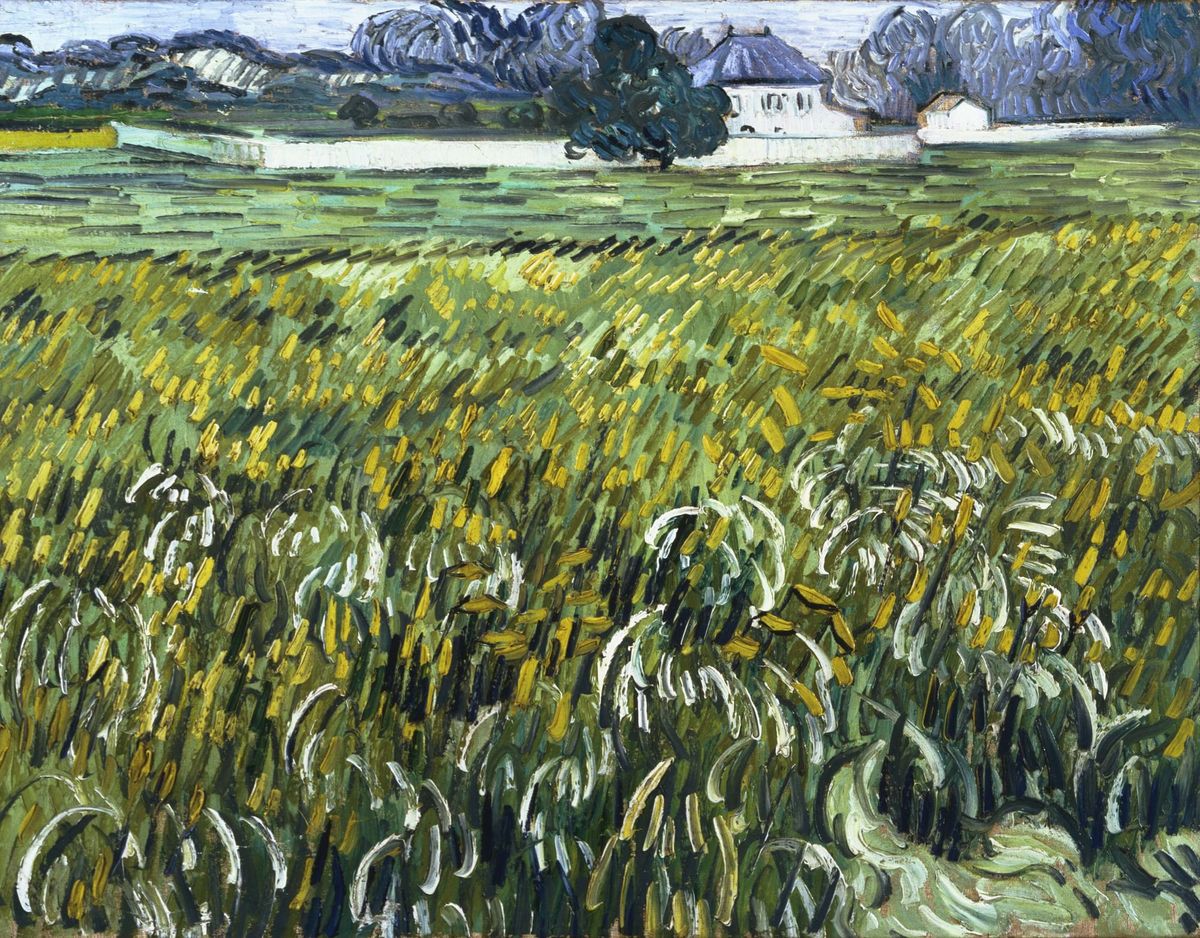
이 작품은 네덜란드의 후기 인상주의 거장 빈센트 반 고흐가 1890년 6월 프랑스 오베르쉬르우아즈 체류 시기에 제작한 유화입니다. 공식 소장품 등록번호는 F804이며, 캔버스 위에 유채로 그려진 실제 실측 규격은 49 x 64 cm입니다. 현재 이 작품은 독일 슈투트가르트에 위치한 슈타아트갈레리 미술관에 공식적으로 소장되어 있으며, 오베르 시기의 눈부신 자연 풍경을 담아낸 대표적인 걸작으로 전 세계 관람객들을 만나고 있습니다.
작가의 고뇌와 창작 비하인드
생레미 요양원을 떠나 오베르쉬르우아즈에 정착한 반 고흐는, 삶의 마지막 시기를 맞아 드넓게 펼쳐진 밀밭과 평화로운 전원 풍경 속에서 치열한 예술적 몰입을 이어갔습니다. 당시 그는 동생 테오에게 보낸 편지에서 오베르의 거친 초목과 대지에서 느껴지는 생명력에 깊이 매료되었다고 전하며, 자연의 역동적인 숨결을 대담한 붓터치와 색채로 화폭에 담아내는 데 온 힘을 쏟았습니다.
작품 전경에는 초록빛과 노란빛이 거칠게 얽혀 물결치듯 흔들리는 밀밭의 생생한 풀잎들이 화면 아래를 가득 채우고 있습니다. 중경에는 화면을 가로지르는 하얀 담장과 그 뒤로 아늑하게 자리 잡은 하얀색 가옥, 그리고 짙은 초록색의 둥근 나무가 평화로운 전원의 정취를 자아냅니다.
배경으로는 푸르스름한 보색 계열의 숲과 멀리 지평선 위로 흩날리는 차갑고 맑은 하늘빛 대기가 어우러져, 오베르 시기 특유의 깊이 있는 공간감을 완성합니다.
무의식 속 시선 및 심리 흐름
관람객의 시선은 가장 먼저 화면 전경에서 바람에 흔들리는 듯 생동감 넘치는 밀밭의 거친 풀잎들과 하얀 물결무늬 터치로 향하며, 대지가 품은 뜨거운 생명력을 마주하게 됩니다. 이어지는 시선은 밀밭 너머의 하얀 담장과 가옥이 자리한 중경으로 이동하여, 번잡한 삶을 떠나 전원에서 안식을 찾고자 했던 화가의 소박한 바람을 체감하게 됩니다.
시선이 다시 멀리 숲과 하늘의 배경으로 확장될 때, 관람객은 쓸쓸함과 아름다움이 교차하는 자연 속에서 삶의 깊은 여운을 느끼며 작가의 내면세계에 온전히 동화됩니다. 이 일련의 시선 이동은 단순한 풍경 묘사를 넘어, 생의 마지막 순간까지 자연을 사랑하며 예술혼을 불태웠던 거장의 맑고 깊은 영혼과 마주하는 감정적 여정을 선사합니다.
미술계의 평가 및 조형미
미술사학계와 평단은 본 작품을 고흐가 오베르 시기에 도달한 풍경화의 정수이자, 자연의 율동감을 대담한 필치와 색채로 완벽히 승화시킨 걸작으로 평가합니다. 캔버스 위에 두껍고 역동적으로 얹어진 임파스토 기법은 밀밭의 결, 하얀 가옥의 벽면, 그리고 숲의 질감을 손에 잡힐 듯 생생하게 살아나게 완성했습니다.
화면 전반을 지배하는 초록색과 노란색의 조화 속에 하얀 담장과 가옥이 만들어내는 명암의 대비는 시각적인 안정감과 뛰어난 조형적 완성도를 동시에 선사합니다. 자연의 숨결을 독창적인 감각으로 빚어낸 이 작품은, 시대를 초월해 관람객의 마음에 깊은 울림을 전하는 불멸의 예술적 가치를 지닙니다.
Field of Wheat with a White House
Executed in June 1890 during his final months in Auvers-sur-Oise, France, this oil painting is a luminous and deeply moving masterpiece by the Dutch Post-Impressionist master Vincent van Gogh. Officially cataloged under inventory number F804 and measuring 49 x 64 cm on canvas, the work is housed in the permanent collection of the Staatsgalerie Stuttgart in Germany, serving as a quintessential example of his late creative peak.
The Artist's Turmoil and Creative Background
Having left the asylum at Saint-Rémy to settle in the tranquil village of Auvers, Van Gogh poured his remaining energy into capturing the sweeping wheat fields and rural architecture that surrounded him. In his correspondence, he frequently expressed a profound connection to the rolling countryside, striving to translate the vibrant energy and rhythmic vitality of nature into bold, expressive brushstrokes and powerful chromatic harmonies.
The foreground is dominated by a dense, turbulent expanse of wheat stalks rendered in vibrant strokes of green and yellow, capturing the wind-swept motion of the crops. In the middle ground, a crisp white fence stretches horizontally across the canvas, framing a charming white-walled house with a dark roof and a solitary, dark green tree that anchors the rural scene.
The background recedes into cool blue-toned rolling hills and a pale, atmospheric sky that bathes the entire landscape in the crisp morning light of the French countryside.
Psychological Flow and the Unconscious Gaze
The viewer's gaze is initially drawn to the textured, swirling brushstrokes of the wheat field in the foreground, establishing an immediate visceral connection to the living, breathing earth. The eye then migrates upward across the horizontal barrier of the white fence toward the quiet white house in the middle ground, grounding the restless energy of the fields in domestic serenity.
As the gaze expands outward into the distant hills and the expansive sky, the observer is enveloped in a poignant sense of space and melancholy that reflects the artist's complex emotional state during his final summer. This deliberate visual progression moves the viewer from a dynamic physical encounter with nature into an expansive, reflective meditation on solitude and peace.
Critical Acclaim and Formal Analysis
Art historians and critics widely celebrate this painting as a triumphant achievement of Van Gogh's Auvers period, recognizing it as a brilliant synthesis of raw emotional intensity and masterful compositional control. The vigorous application of paint through a heavy impasto technique imparts a tangible, sculptural reality to the rustling wheat, the architectural walls, and the distant foliage.
The sophisticated orchestration of warm yellows and greens against cool background tones generates a balanced visual rhythm charged with poetic resonance. Capturing the transient beauty of the French countryside with visionary brilliance, this masterpiece endures as an immortal testament to Van Gogh's genius.
본 컨텐트의 저작권은 팔렛트제주에 있습니다. 허가없는 무단전제를 금지합니다.
Copyright © Palette Jeju. All rights reserved. Unauthorized reproduction or redistribution is strictly prohibited.