해질녘의 씨 뿌리는 사람 - The Sower at Sunset
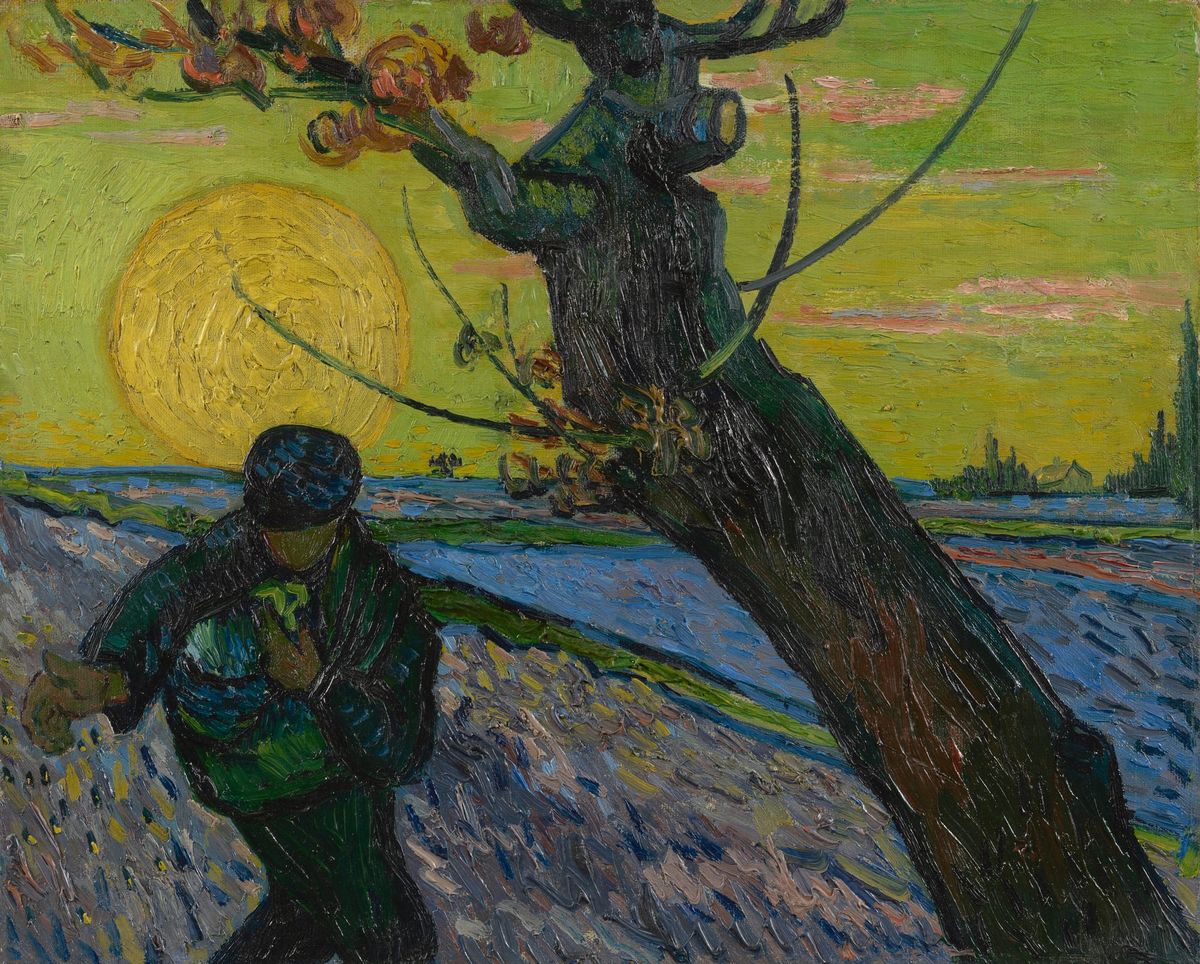
빈센트 반 고흐(Vincent van Gogh)가 남프랑스 아를(Arles)에서 폴 고갱과 함께 머물던 1888년 11월에 완성한 대표적인 유화 걸작(The Sower / Sower with Setting Sun)입니다. 현재 스위스 취리히의 에밀 뷔를레 컬렉션(Foundation E.G. Bührle Collection)에 소장되어 있으며, 캔버스 위에 유채로 제작된 이 작품의 실제 사이즈는 약 73.5 × 93.0 cm입니다. 화면을 대담하게 가로지르는 거대한 버드나무 고목과 지평선 위로 타오르는 황금빛 태양, 그리고 보랏빛 밭이랑에 씨앗을 뿌리는 농부의 숭고한 모습을 두텁고 역동적인 임파스토(Impasto) 기법과 강렬한 보색 대비로 포착해냈습니다.
고흐는 물감을 캔버스 위에 두껍게 얹어 사선으로 뻗은 고목의 거친 수피와 흙이랑의 촉각적인 결, 그리고 태양을 둘러싼 눈부신 원형의 광채를 조각하듯 입체적으로 구축했습니다. 하늘을 가득 채운 레몬 옐로와 라임 그린의 찬란한 광선은 대지를 물들인 짙은 청자색 및 보랏빛 토양과 극적인 보색 대비를 이루며, 화면 우측에서 좌측 상단으로 뻗어 올라간 굵은 나무 기둥은 일본 판화(우키요에)의 영향을 받아 화면에 파격적인 공간감과 조형적 긴장감을 불어넣습니다.
1888년 늦가을, 아를에서 고갱과 교유하며 예술적 실험을 거듭하던 고흐는 평생의 스승으로 여겼던 장 프랑수아 밀레의 대표 모티프인 '씨 뿌리는 사람'을 현대적이고 상징적인 색채로 재해석했습니다. 고흐에게 대지 위에 씨앗을 뿌리는 행위는 단순한 농사일을 넘어, 어둠과 죽음을 딛고 다시 피어날 생명의 부활이자 새로운 시대를 향해 희망의 메시지를 전하는 예술가의 성스러운 사명이었습니다. 그는 거대한 태양을 성인의 후광처럼 농부의 머리 뒤편에 배치함으로써, 정직한 노동의 숭고함과 자연의 무한한 순환을 화폭에 선언했습니다.
대지를 성큼 걸어가는 농부의 다부진 실루엣과 사방으로 뻗어나간 나뭇가지의 생명력은 인간과 자연의 끈질긴 유대감을 증명합니다. 미술사에서는 고흐가 사실주의적 농촌화를 뛰어넘어 순수 원색의 해방과 상징주의적 공간 구성을 결합해 표현주의의 문을 활짝 연 아를 시기의 최고봉 명작으로 평가하고 있습니다.
관람객의 무의식적인 시선은 화면 좌측 상단에서 지평선을 집어삼킬 듯 거대하고 눈부시게 타오르는 황금빛 태양의 둥근 원형과 라임빛 하늘의 찬란한 광채에서 자연스럽게 출발합니다. 온 대지를 감싸 안는 태양의 압도적인 에너지와 두터운 붓 터치에 시선이 머무는 순간, 보는 이는 찰나의 침묵과 함께 프로방스 가을 해질녘의 뜨거운 숨결 속으로 단숨에 몰입하게 됩니다.
이어 시선은 태양의 후광을 등지고 화면 좌측 하단을 향해 힘차게 팔을 뻗으며 전진하는 씨 뿌리는 농부의 짙은 실루엣과 푸른빛 작업복으로 이동합니다. 흙먼지 속에서 미래의 결실을 기약하며 씨앗을 던지는 성실한 농부의 숭고한 동작을 마주하며, 대지가 품은 생명의 영원한 순환과 벅찬 생명력을 깊이 체감하게 됩니다.
이후 시선은 화면 우측을 대담한 대각선으로 가로지르며 위풍당당하게 솟아오른 버드나무 고목의 짙푸른 줄기와 붉은 잎사귀들을 타고 상승한 뒤, 대지 전체에 푸른 물결처럼 깔린 보랏빛 밭이랑을 훑어 다시금 전경의 흙바닥으로 유연하게 내려앉습니다.
타오르는 태양의 황금빛과 대지의 짙은 보랏빛이 빚어내는 장엄한 색채의 순환을 따라 순환한 시선이 편안히 안착할 때, 관람객의 내면에는 복잡한 일상의 번뇌와 피로가 씻겨 내려가고, 씨앗을 품은 대지가 건네는 깊은 위로와 함께 흔들리지 않는 심리적 안도감이 가득 차오르게 됩니다.
The Sower at Sunset
Painted by Vincent van Gogh in November 1888 during his famous collaboration with Paul Gauguin at the Yellow House in Arles, France, this monumental masterpiece is preserved in the permanent collection of the Foundation E.G. Bührle in Zurich, Switzerland. Executed in oil on canvas, the actual size of the work is approximately 73.5 × 93.0 cm. Framing a resolute sower and an incandescent sun behind a giant, diagonally leaning pollard willow, the composition unites dense impasto, pure complementary contrasts, and dramatic spatial dynamics into a visionary anthem of renewal.
Van Gogh applied unmixed paint with sculptural density, carving out the rugged, knotted bark of the foreground willow, the tactile ridges of the plowed field, and the radiating solar aura above the horizon. The glowing chrome yellows and chartreuse greens dominating the sky establish an intense complementary vibration against the deep violet, indigo, and magenta tones of the tilled soil. Strongly influenced by the cropped, diagonal foregrounds of Japanese ukiyo-e woodblock prints, the massive tree trunk cuts across the picture plane, establishing extraordinary atmospheric depth and compositional energy.
During late autumn 1888, Van Gogh revisited the quintessential theme of Jean-François Millet’s The Sower, transforming the 19th-century realist archetype into a modern spiritual allegory. To him, the act of sowing seed was a sacred metaphor for agricultural continuity, psychological resurrection, and the artist's own mission to plant seeds of hope amidst adversity. By aligning the colossal disc of the setting sun directly behind the head of the worker like a divine halo, he monumentalized the transcendent nobility of daily labor.
The vigorous forward stride of the solitary figure amidst the fertile, furrowed earth celebrates the eternal cycles of nature and human endurance. Art historians revere this composition as one of the definitive pinnacles of Van Gogh's Arles period, demonstrating his radical leap into expressive color symbolism and establishing a vital foundation for modern Expressionism.
A viewer's subconscious gaze is intuitively anchored first by the colossal, golden disc of the setting sun blazing intensely on the upper left, framed by radiating strokes of luminous yellow-green. Lingering upon this cosmic source of generative light, the observer is drawn into an immediate atmosphere of rustic majesty, quiet awe, and emotional stillness.
The gaze is then carried downward along the silhouette of the sower striding purposefully across the violet-shadowed furrows, his outstretched arm captured in the timeless gesture of scattering seed. Absorbing the physical power and moral dignity of this lone laborer working against the oncoming dusk, the viewer experiences a reassuring sense of purpose, natural continuity, and agrarian peace.
The eye ascends along the powerful diagonal thrust of the gnarled willow tree anchored on the right, taking in its expressive branches and autumn buds before sweeping across the sweeping purple fields back to the foreground.
Completing this visual and psychological circulation, the observer feels a profound release of modern tension. The timeless harmony of fertile earth, radiant light, and human dedication leaves the viewer restored with a lasting sense of emotional grounding, spiritual renewal, and enduring psychological peace.
본 리뷰에서 작품을 제외한 컨텐츠의 저작권은 팔렛트제주에 있습니다.
"퍼블릭도메인 고전명화"를 제외한 모든 창작 콘텐츠는 저작권법 제4조 및 제10조에 의거하여 보호됩니다. 무단 도용시 저작권법 제136조(벌칙)에 의거, 당사의 사전 서면 승인 없는 저작권 침해 행위를 금지합니다.