해바라기 - Two Cut Sunflowers
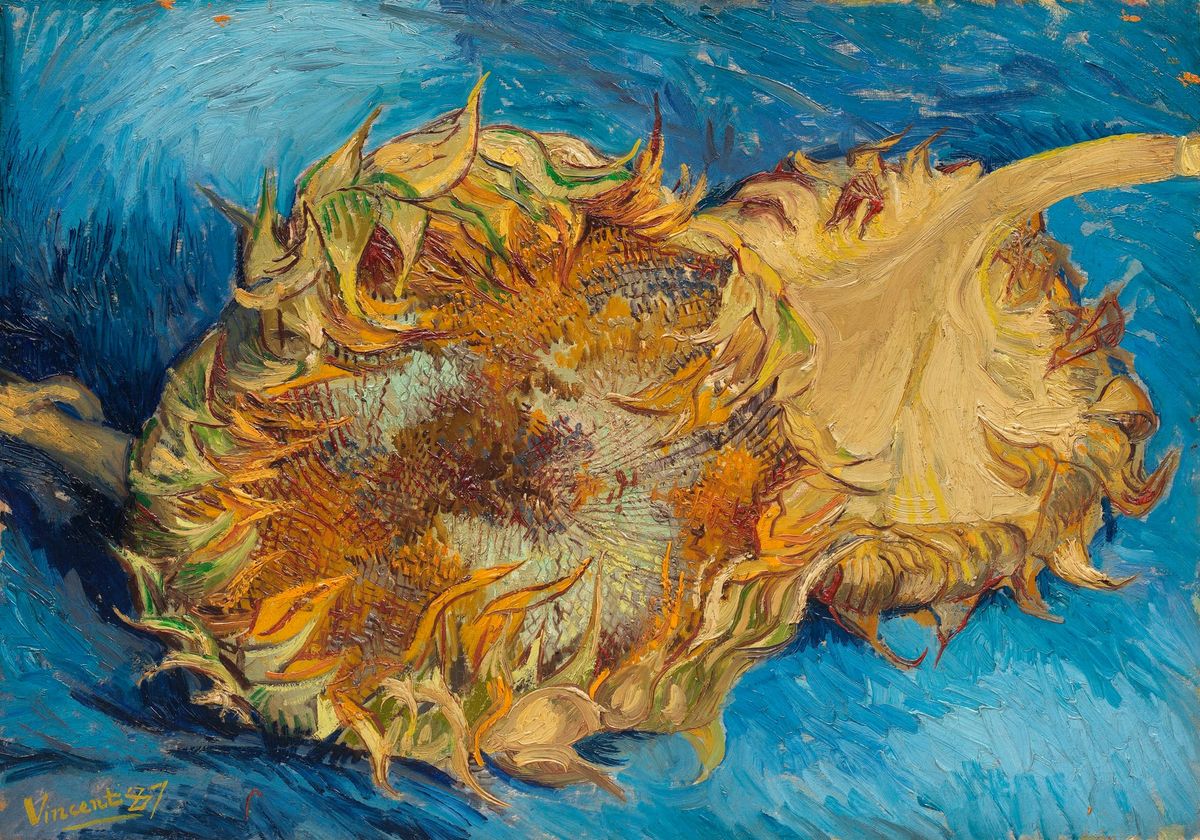
빈센트 반 고흐(Vincent van Gogh)가 파리 체류 시기인 1887년 늦여름에서 초가을 사이에 완성한 대표적인 유화 정물화입니다. 현재 네덜란드 암스테르담의 반 고흐 미술관(Van Gogh Museum)에 소장되어 있으며, 캔버스 위에 유채로 제작된 이 작품의 실제 사이즈는 약 43.2 × 61.0 cm입니다. 바닥에 꺾여 놓인 두 송이의 시든 해바라기 머리와 씨앗의 유기적인 결, 그리고 배경을 가득 채운 선명한 터키옥빛 푸른 수평선들을 두텁고 역동적인 임파스토(Impasto) 기법과 강렬한 보색 대비로 포착해냈습니다.
고흐는 물감을 캔버스 위에 두껍게 얹어 해바라기 씨방의 빽빽한 질감, 뒤틀리며 메말라가는 꽃잎들의 날렵한 곡선, 그리고 줄기의 거친 마티에르를 조각하듯 입체적으로 구축했습니다. 해바라기를 물들인 찬란한 황금빛 노란색과 짙은 황토색, 주황빛 톤은 배경의 선명한 코발트블루 및 터키옥빛 푸른 바탕과 마주하며 극적인 시각적 전율을 일으킵니다. 사방으로 물결치듯 뻗어나가는 붓자국과 좌측 하단에 선명하게 새겨진 붉은 서명은 꺾인 꽃의 정물 속에서도 꺼지지 않는 폭발적인 생명력의 에너지를 뿜어냅니다.
1887년 늦여름, 파리 몽마르트르에 머물던 고흐는 화병에 꽂힌 정형화된 꽃 대신 길가에서 꺾여 씨를 맺고 시들어가는 해바라기의 원초적인 형상에 깊이 매료되었습니다. 고흐에게 해바라기는 단순한 식물이 아니라, 태양의 뜨거운 열기를 온몸으로 받아들이고 생의 마지막 순간까지 대지의 결실을 품어내는 거룩한 헌신이자 예술가 자신의 불타는 영혼을 대변하는 상징이었습니다. 당시 파리에서 이 작품을 본 폴 고갱은 해바라기를 완벽하게 장악한 고흐의 독창성에 찬사를 보내며 작품을 직접 교환하기도 했습니다.
생과 사의 경계에서 황금빛 씨앗을 품고 있는 해바라기의 웅장한 볼륨감은 자연의 영원한 순환과 숭고한 결실을 증명합니다. 미술사에서는 고흐가 아를 시기의 유명한 '화병 속 해바라기' 연작으로 나아가기 전, 형태와 색채의 완전한 해방을 이룩해낸 파리 시기의 가장 혁신적이고 기념비적인 정물 걸작으로 평가하고 있습니다.
관람객의 무의식적인 시선은 화면 중심에서 묵직한 원형을 그리며 빽빽하게 박혀 있는 좌측 해바라기의 어두운 씨방과 소용돌이치듯 뒤틀린 황금빛 꽃잎들의 두터운 붓 터치에서 자연스럽게 출발합니다. 거친 생명의 흔적을 고스란히 간직한 채 태양의 불꽃처럼 이글거리는 꽃의 질감에 시선이 머무는 순간, 보는 이는 찰나의 침묵과 함께 자연의 깊은 숨결 속으로 단숨에 몰입하게 됩니다.
이어 시선은 우측으로 고개를 돌린 또 다른 해바라기의 매끄럽고 밝은 황토빛 꽃받침과 우아하게 뻗은 줄기의 유려한 궤적을 타고 이동하여, 뒤틀린 꽃잎 가장자리의 섬세한 붓자국들에 도달합니다. 소박한 식물이 간직한 구조적인 조형미와 대지의 결실을 마주하며, 묵묵히 시련을 견뎌내는 자연의 끈질긴 생명력과 내면의 온기를 깊이 체감하게 됩니다.
이후 시선은 두 송이 해바라기를 둘러싸고 사방으로 역동적인 물결을 일으키며 뻗어나가는 선명한 터키옥빛 푸른 배경의 촘촘한 붓자국들을 훑은 뒤, 좌측 하단의 붉은 서명을 지나 다시금 중심부의 풍성한 씨방으로 유연하게 내려앉습니다.
대지의 찬란한 황금빛과 배경의 청량한 푸른빛이 빚어내는 장엄한 보색의 순환을 따라 순환한 시선이 편안히 안착할 때, 관람객의 내면에는 복잡한 일상의 번뇌와 피로가 정돈되고, 마지막 순간까지 온 힘을 다해 빛을 발하는 생명력이 건네는 깊은 위로와 함께 흔들리지 않는 심리적 안도감이 가득 차오르게 됩니다.
Two Cut Sunflowers
Painted by Vincent van Gogh in the late summer to early autumn of 1887 during his pivotal Paris period, this revolutionary still life resides in the permanent collection of the Van Gogh Museum in Amsterdam, Netherlands. Executed in oil on canvas, the actual size of the work is approximately 43.2 × 61.0 cm. Capturing two severed sunflower seed heads resting on a radiant azure surface, the composition orchestrates pure complementary contrasts, dense tactile impasto, and dynamic directional brushwork into a profound anthem of natural endurance and chromatic vitality.
Van Gogh applied unmixed paint with sculptural density, carving out the intricate geometric lattice of the seed heads, the curling, dried petals resembling tongues of flame, and the firm woody stems. The glowing chrome yellows, ochres, and amber tones of the decaying blossoms establish an intense complementary vibration against the pulsating turquoise and cobalt-blue background. Radiating with rhythmic, tactile energy, the composition transforms the modest botanical motif into a monument of raw, expressive power, proudly anchored by the artist's red signature in the lower left corner.
In the late summer of 1887, seeking a motif that could embody both pure color and primal vitality, Van Gogh turned to sunflowers that had gone to seed in the Parisian gardens. To him, the sunflower was not merely a decorative blossom, but a sacred emblem of the sun, spiritual aspiration, and total artistic devotion. When Paul Gauguin visited Van Gogh’s studio in Paris later that year, he was profoundly moved by this exact series, recognizing in these severed heads a groundbreaking mastery of color and form, which led to a historic exchange of artworks between the two masters.
The unvarnished realism and cosmic energy vibrating through the seed beds celebrate the eternal cycles of ripening, decay, and rebirth. Art historians revere this masterpiece as a monumental turning point in Van Gogh's career, serving as the direct experimental prelude to his world-famous Arles sunflower series and marking a major milestone in the birth of modern Expressionism.
A viewer's subconscious gaze is intuitively anchored first by the dark, dense center of the left sunflower head, whose textured grid of seeds is framed by a swirling crown of golden-yellow petals. Lingering upon the thick, sculptural impasto that gives the dried blossom its fiery organic presence, the observer is drawn into an immediate atmosphere of rustic truth, quiet focus, and emotional stillness.
The gaze is then carried rightward to the upturned back of the second sunflower, tracing the smooth, sunlit ochre sepals and the elegant curve of the thick stem. Absorbing the architectural balance and botanical dignity of the resting flower, the viewer experiences a reassuring sense of natural fortitude, abundance, and grounding peace.
The eye ascends into the surrounding field of electric turquoise and azure brushstrokes sweeping horizontally across the support, taking in the radiant chromatic halo before descending past the warm red signature back to the fertile core of the blooms.
Completing this visual and psychological circulation, the observer feels a profound release of modern tension. The timeless vitality and incandescent beauty of nature leave the viewer restored with a lasting sense of emotional grounding, spiritual renewal, and enduring psychological peace.
본 리뷰에서 작품을 제외한 컨텐츠의 저작권은 팔렛트제주에 있습니다.
"퍼블릭도메인 고전명화"를 제외한 모든 창작 콘텐츠는 저작권법 제4조 및 제10조에 의거하여 보호됩니다. 무단 도용시 저작권법 제136조(벌칙)에 의거, 당사의 사전 서면 승인 없는 저작권 침해 행위를 금지합니다.