해바라기 (세 송이 해바라기) - Three Sunflowers in a Vase (Sunflowers)
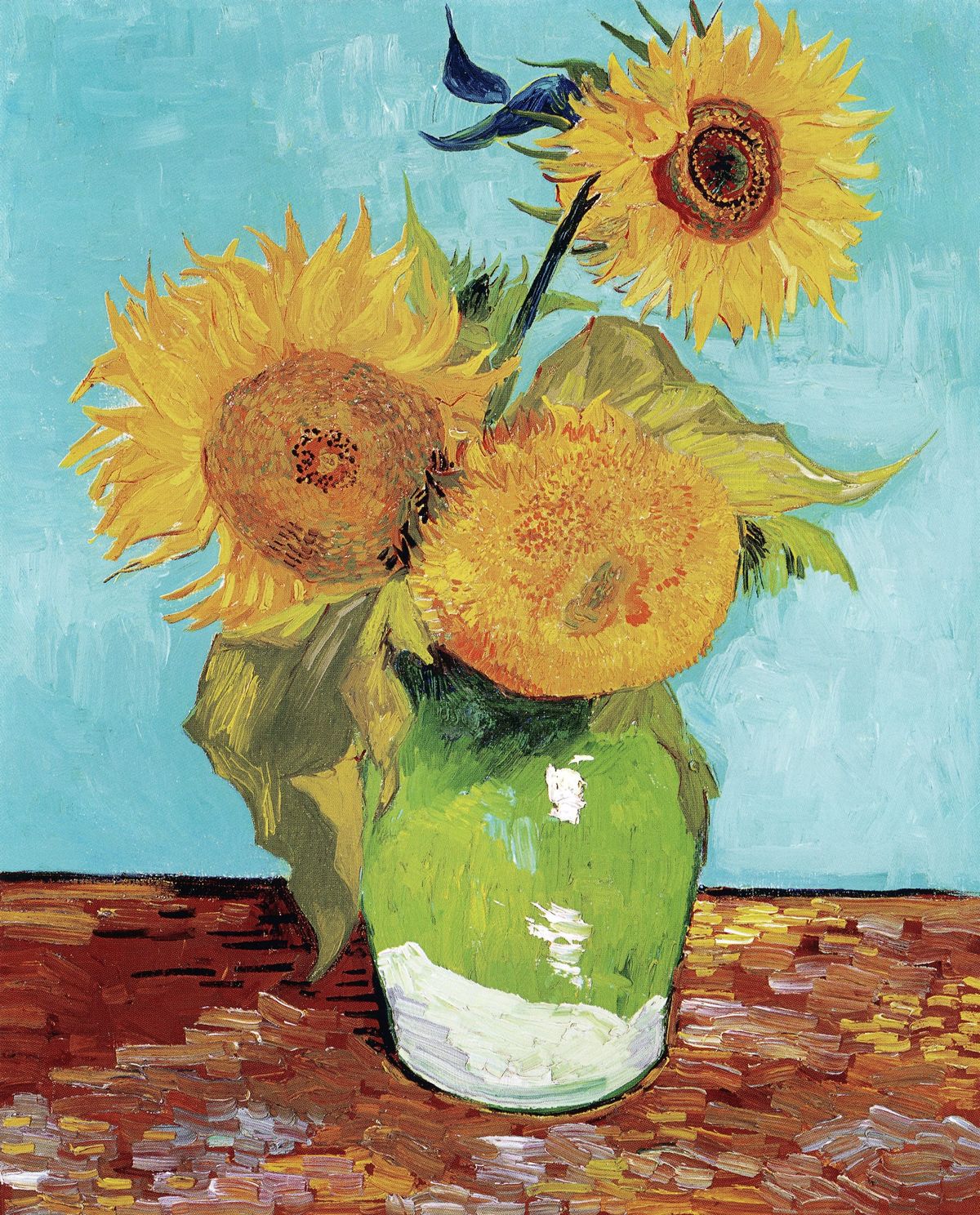
빈센트 반 고흐(Vincent van Gogh, 1853–1890)가 1888년 8월 프랑스 남부 아를(Arles)의 '노란 집'에서 완성한 '해바라기(Three Sunflowers in a Vase)'는 캔버스에 유채(Oil on canvas)로 제작된 정물화입니다. 작품의 실제 규격은 세로 73.0cm, 가로 58.0cm이며, 현재 미국 개인 컬렉션(Private Collection)에 소장되어 있습니다.
고흐는 이 작품에서 화면 상단을 가득 채운 청량하고 투명한 터키석빛 청록색(Turquoise blue) 배경 위에 눈부신 황금빛 해바라기 세 송이와 싱그러운 녹색 도자기 화병을 대담하게 배치했습니다. 활짝 만개한 꽃송이와 솜털처럼 빽빽한 씨앗 머리, 그리고 테이블을 장식하는 황토색과 적갈색 빗살무늬 붓 터치는 극적인 보색 대비를 완성합니다. 캔버스 표면에 물감을 조각하듯 두텁게 얹어 올린 특유의 임파스토(Impasto) 기법은 꽃잎의 날카로운 리듬과 식물의 왕성한 생명력을 생생하게 뿜어냅니다.
이 그림에는 고흐가 아를에서 야심 차게 기획했던 전설적인 '해바라기 연작'의 역사적인 첫 신호탄이자, 동료 화가 폴 고갱(Paul Gauguin)을 기다리며 쏟아부었던 가슴 벅찬 인간적 에피소드가 깃들어 있습니다. 1888년 늦여름, 고흐는 남프랑스에 화가들의 공동 아틀리에를 만들겠다는 꿈에 부풀어 있었습니다. 파리에 머물던 고갱이 마침내 아를의 노란 집으로 합류하겠다는 소식을 전해오자, 고흐는 기쁨에 겨워 친구의 방을 온통 태양의 빛으로 장식할 거대한 해바라기 장식 프로젝트를 시작했습니다.
이 세 송이 해바라기는 고흐가 아를에서 붓을 든 최초의 해바라기 작품이었습니다. 꽃이 남프랑스의 뜨거운 햇살 아래 금세 시들어버리기 때문에, 고흐는 매일 새벽 동이 트기 무섭게 들판으로 뛰어나가 가장 싱싱한 해바라기들을 꺾어와 화병에 꽂았습니다. 그는 동생 테오에게 보낸 편지에서 "고갱과 함께 살 화실을 꾸미기 위해 해바라기 연작을 시작했다. 세 송이의 커다란 꽃이 청록색 배경과 어우러져 마치 보석처럼 빛난다. 촛대처럼 타오르는 이 노란 꽃들은 남부의 찬란한 빛이자 진정한 우정의 선물이다"라고 적었습니다.
당시 아를의 이웃들은 덧창을 반쯤 닫은 채 땀을 비 오듯 흘리며 캔버스 위에 노란색 물감을 퍼붓듯 짓이기던 붉은 머리의 고흐를 신기하게 바라보았습니다. 평생 지독한 가난과 외로움 속에서 방황했던 고흐에게, 맑은 청록색 하늘빛 아래 활짝 피어난 이 세 송이의 해바라기는 곧 다가올 소중한 벗을 향한 가장 순수하고 뜨거운 환대의 첫인사였습니다.
후대의 미술사학자들과 평단은 이 작품을 반 고흐가 '해바라기의 화가'로 역사에 우뚝 서게 만든 불멸의 출발점이자, 보색 대비의 강렬함과 서정적인 조화가 완벽한 균형을 이룬 초기 아를 시대의 최고 마스터피스로 평가합니다. 1948년 클리블랜드 미술관 전시 이후 오랜 세월 대중에게 공개되지 않다가 현대에 이르러 다시 그 가치를 인정받으며 미술사적 찬사를 한몸에 받고 있습니다.
관람자의 시선은 가장 먼저 화면 상단 우측에서 정면을 향해 활짝 꽃잎을 펼치며 태양처럼 방사형으로 타오르는 해바라기 꽃송이에 사로잡힙니다. 이어 좌측과 중앙에서 두터운 크림빛 오커톤으로 빽빽한 씨앗을 품고 있는 두 송이의 거대한 꽃 머리로 내려온 뒤, 짙푸른 녹색 잎사귀들을 타고 맑은 에메랄드빛 도자기 화병의 유려한 곡선에 머물게 됩니다. 마지막으로 모자이크 패턴처럼 직조된 적갈색 테이블의 붓 터치를 지나 맑은 청록색 배경의 공간으로 화면 전체를 유려하게 순환하게 됩니다.
심리적으로 관람자는 청량한 터키석빛 배경과 따스하게 타오르는 황금빛 꽃송이가 자아내는 완벽한 조화 속에서 깊은 정서적 안정감과 상쾌한 활력을 경험하게 됩니다. 소중한 사람을 맞이하기 위해 온 영혼을 담아 피워낸 화가의 따뜻한 온도는 현대인의 마음에 쌓인 피로와 공허함을 맑게 씻어내 주며, 일상의 어떤 고단함 속에서도 삶을 긍정하는 찬란한 희망과 내면의 깊은 평온을 풍성하게 채워줍니다.
Three Sunflowers in a Vase (Sunflowers)
Painted by Vincent van Gogh (1853–1890) in Arles in August 1888, Three Sunflowers in a Vase is an iconic oil on canvas still life measuring 73.0 cm in height and 58.0 cm in width. This celebrated masterwork is preserved in a prestigious private collection in the United States.
Van Gogh constructed the composition around an electric complementary harmony, setting three sculptural, radiant golden sunflowers against a brilliant turquoise-blue background. The lively green ceramic pot rests upon a woven terracotta and ochre tabletop, anchoring the upright botanical arrangement. Working with thick, directional impasto, Van Gogh modeled the twisting petals and the dense, velvety seed heads with sculptural presence, infusing the traditional floral still life with pulsating solar energy and structural clarity.
The canvas holds an intimate history as the historic opening piece of Van Gogh’s legendary Arles Sunflower series. In late August 1888, having secured Paul Gauguin’s promise to join him at the Yellow House, Van Gogh conceived an ambitious decorative suite to adorn his companion's future bedroom. Because the southern heat caused cut blooms to fade rapidly, he woke before sunrise each day to execute the paintings in rapid, unbroken bursts of creative concentration.
To Van Gogh, this initial trio of blooms was the foundation of his chromatic vision. Writing to his brother Theo, he described his immediate excitement: "I am hard at it, painting with the enthusiasm of a Marseillais eating bouillabaisse... The first is three huge flowers in a green vase, with a light turquoise background." Working in isolation inside his sunlit studio, drenched in sweat and sustained only by bread and coffee, Van Gogh poured his vital spirit into the pigment. The sunflowers were not merely botanical subjects, but glowing emblems of gratitude, warmth, and fraternal hospitality.
Modern art historians celebrate this masterpiece as a defining milestone in Post-Impressionist painting. By balancing the cool Mediterranean luminosity of the turquoise ground with the incandescent warmth of pure chrome yellows, Van Gogh redefined modern still life into an unvarnished spiritual testament to natural vitality and human hope.
A viewer’s gaze is instantaneously magnetized by the fully open, spiky sunflower radiating at the upper right of the arrangement. The eyes then traverse the dense, textured vortex of the two mature seed heads clustering in the center and left, before descending along the drooping viridian leaves to the cool green ceramic vase. Finally, the gaze expands into the radiant, crystalline expanse of the turquoise ground, circulating effortlessly throughout the harmonious composition.
Psychologically, immersion in this dazzling dialogue of sun-drenched gold, tranquil turquoise, and grounded terracotta induces an immediate sensation of clarity, emotional warmth, and inner vitality. The artist's triumphant generosity and unshakeable creative resolve dissolve modern anxiety and mental weariness, enveloping the observer in an enduring atmosphere of purpose, joyful optimism, and restorative peace.
본 리뷰에서 작품을 제외한 컨텐츠의 저작권은 팔렛트제주에 있습니다.
"퍼블릭도메인 고전명화"를 제외한 모든 창작 콘텐츠는 저작권법 제4조 및 제10조에 의거하여 보호됩니다. 무단 도용시 저작권법 제136조(벌칙)에 의거, 당사의 사전 서면 승인 없는 저작권 침해 행위를 금지합니다.