겸손의 성모 - The Madonna of Humility (After Robert Campin)
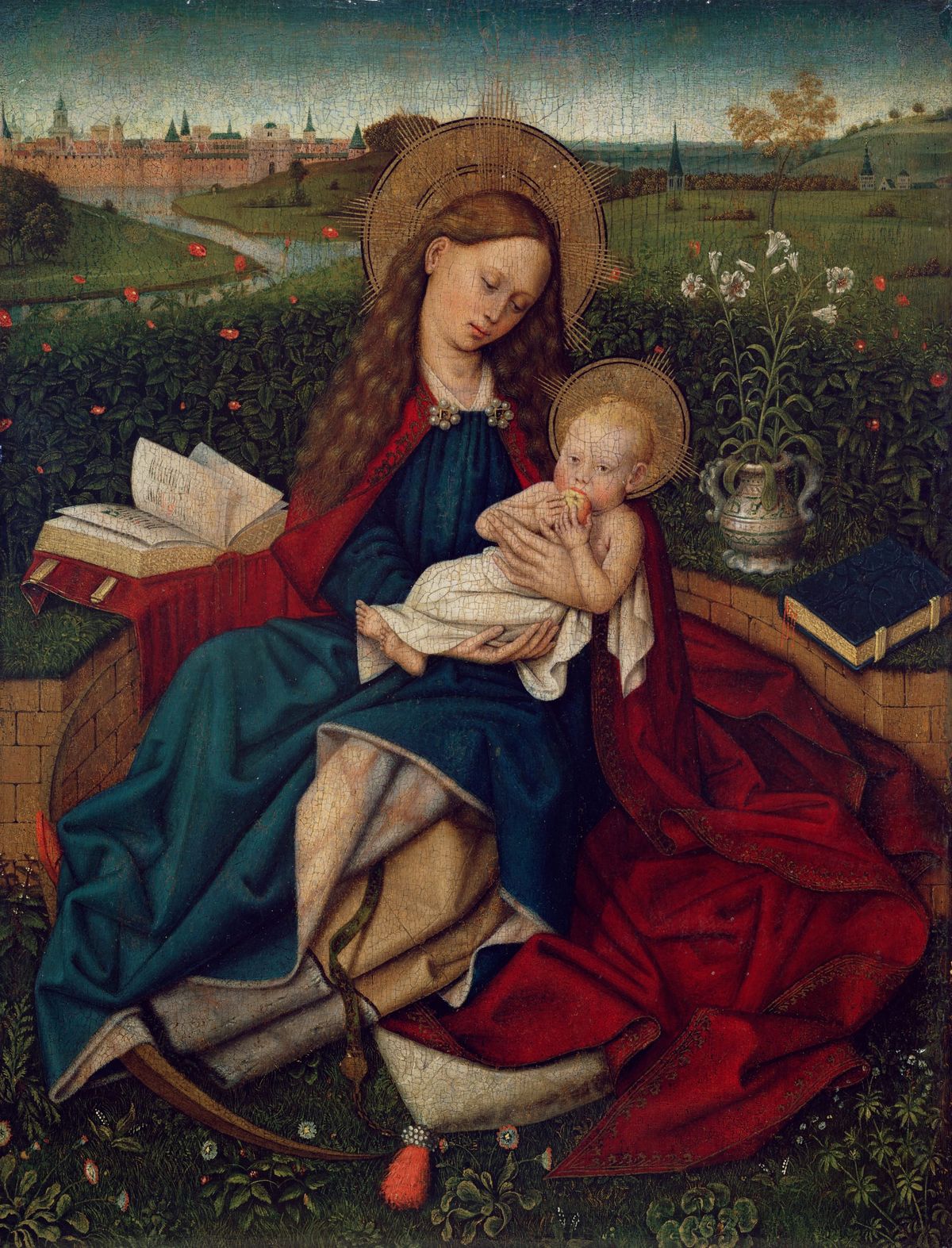
1430–1450년경 15세기 북유럽 르네상스의 거장 로베르 캉팽(Robert Campin)의 양식 및 원작을 바탕으로 그의 추종자나 공방에서 제작한 유화 작품 《겸손의 성모》는 플랑드르 종교화의 정교함과 중세적 상징주의가 결합된 마스터피스로, 현재 미국 로스앤젤레스 J. 폴 게티 미술관(J. Paul Getty Museum, Los Angeles)에 원본 유화가 소장되어 있으며 실제 크기는 약 48.0 × 36.5 cm입니다.
이 화면은 화려한 왕좌 대신 장미와 수풀로 둘러싸인 담장 앞 잔디밭에 다소곳이 낮게 앉아(겸손의 성모, Madonna of Humility) 아기 예수를 보살피는 성모 마리아의 성스럽고 아늑한 순간을 정교한 플랑드르 유화 기법으로 포착해 낸 명작입니다. 화가는 푸른 드레스 위에 붉은 겉옷을 넓게 펼쳐 입은 마리아와, 그녀의 품에 안겨 사과(원죄의 구원을 상징)를 베어 물고 있는 아기 예수, 그리고 주변에 섬세하게 배치된 펼쳐진 기도서와 화병 속 백합, 뒤편으로 아득하게 펼쳐진 강가와 고딕 도시 풍경을 정밀하게 부각시켰습니다.
작품 속에는 15세기 초 플랑드르 유화 혁명을 이끈 로베르 캉팽 도상학의 핵심적 비하인드 스토리가 흐릅니다. 높다란 신성함을 상징하던 중세 이콘의 틀을 깨고 잔디가 깔린 닫힌 정원(Hortus Conclusus)에 성모를 차분히 앉힌 이 도상은 마리아의 겸손과 순결을 시각적으로 극대화합니다. 하얀 백합은 동정성을, 붉은 장미와 아기 예수의 사과는 수난과 구원을 상징하는 알레고리입니다. 섬세한 자수가 놓인 옷자락과 바닥의 주름, 그리고 멀리 보이는 강변 도시의 미세한 건축적 묘사는 천상의 구원 서사가 지상의 아늑한 일상 속으로 스며든 순간을 생생하게 증명합니다.
후대 평단과 관객들은 이 작품을 초기 네덜란드 회화가 도달한 섬세한 질감 묘사 및 신성함과 일상의 완벽한 조화를 보여주는 걸작으로 평가합니다. 붉은색과 푸른색의 강렬한 옷감 대조, 정원의 맑은 녹색, 그리고 배경을 감싸는 투명한 빛의 스펙트럼은 관객에게 시대를 초월한 정숙한 감동과 깊은 평온함을 선사합니다.
이 그림을 마주하는 관람객의 무의식적 시선은 가장 먼저 후광을 두르고 머리를 기울여 아기 예수를 따스하게 바라보는 성모 마리아의 온화한 얼굴과 부드러운 피붓결로 가장 먼저 끌려갑니다. 자애로운 모성이 느껴지는 인물의 포즈는 관람객의 마음에 묵직한 시각적 중심과 정숙한 평온함을 안겨줍니다.
이어 시선은 마리아의 품에 안겨 사과를 베어 물고 있는 아기 예수의 작고 귀여운 자태를 지나, 왼쪽에 놓인 펼쳐진 기도서와 오른쪽에 놓인 화병 속 백합, 그리고 마리아의 푸른 드레스와 바닥에 넓게 겹쳐진 붉은 로브의 화려한 주름선으로 자연스럽게 이동합니다. 세밀한 붓질로 올려진 물감의 양감과 섬세한 자수 장식은 화면 전체에 든든한 조형적 안정감과 품격을 더해줍니다.
마지막으로 시선은 정원 담장 너머 굽이쳐 흐르는 강물과, 멀리 지평선에 작고 정교하게 그려진 고딕풍 도시의 건축물 및 맑은 하늘 여백 속으로 낙하하여 정착합니다. 이러한 무의식적 시선의 흐름은 신성한 구원과 정결한 아름다움이 숨 쉬는 고요하고 아늑한 안식처로 감상자를 자연스럽게 인도하며, 마음에 닿는 차분하고 정갈한 여운을 오래도록 남깁니다.
In c. 1430–1450, an artist working in the immediate circle or workshop of Robert Campin—one of the founding pioneers of Northern Renaissance painting—created the exquisite devotional panel titled "The Madonna of Humility" (After Robert Campin). Preserved in the J. Paul Getty Museum in Los Angeles, this original oil-on-panel measures approximately 48.0 × 36.5 cm. This artwork finely captures the serene maternal warmth of the Virgin Mary seated on a grassy bench through an extraordinary, unmatched mastery of early Flemish naturalism and complex iconography.
The panel visually manifests the Virgin Mary seated low upon a turf bench within a turf-walled garden (hortus conclusus), cradling the infant Jesus who bites into an apple while surrounded by symbolic objects including a vase of white lilies and illuminated prayer books. Historical context highlights the profound theological program pioneered by Campin; by placing Mary on the earth rather than an elevated throne—defining the iconographic type of the Madonna of Humility—the image bridges divine glory with human accessibility. The apple symbolizes the redemption of Original Sin, while the blooming lilies and enclosed garden reinforce Mary's perpetual virginity. Through the meticulous rendering of gold-embroidered hems, soft linen folds, and a distant winding river leading toward a fortified Gothic city, the workshop captured a universally tender scene infused with sacred symbolism.
Art historians and critics continuously extol this panel as a radiant triumph of 15th-century Netherlandish oil technique, celebrating the painter's ability to render jewel-like colors, fine textile textures, and atmospheric perspective. The striking contrast between Mary's deep lapis blue robe, her voluminous crimson mantle, and the lush green background creates an enduring atmosphere of sacred peace and emotional permanence.
The moment an observer encounters this artwork, their gaze is subconsciously drawn straight to the gentle, haloed face of the Virgin Mary inclining down toward her child. Her calm, loving expression immediately diffuses tension, instilling a comforting sense of grace and quiet composure.
Next, the eye glides smoothly along her shoulder toward the infant Jesus cradled in her arms, tracing the open manuscript on the left and the ceramic vase holding white lilies on the right. The rich, tactile definition of the heavy drapery folds endows the figures with monumental physical weight and structural clarity.
Finally, the viewer's gaze drifts past the low garden wall toward the winding river, distant hills, and detailed medieval cityscape dotting the background before coming to rest upon the shadowed perimeter of the frame. This natural visual journey guides the spectator into a state of quiet, reverent reflection, leaving a lasting impression of devotion, elegance, and timeless peace.
본 리뷰에서 작품을 제외한 컨텐츠의 저작권은 팔렛트제주에 있습니다.
"퍼블릭도메인 고전명화"를 제외한 모든 창작 콘텐츠는 저작권법 제4조 및 제10조에 의거하여 보호됩니다. 무단 도용시 저작권법 제136조(벌칙)에 의거, 당사의 사전 서면 승인 없는 저작권 침해 행위를 금지합니다.