귀를 기울여 죽음의 바이올린 소리를 듣다, 바이올린을 켜는 죽음이 있는 자화상 Self-Portrait with Death Playing the Fiddle
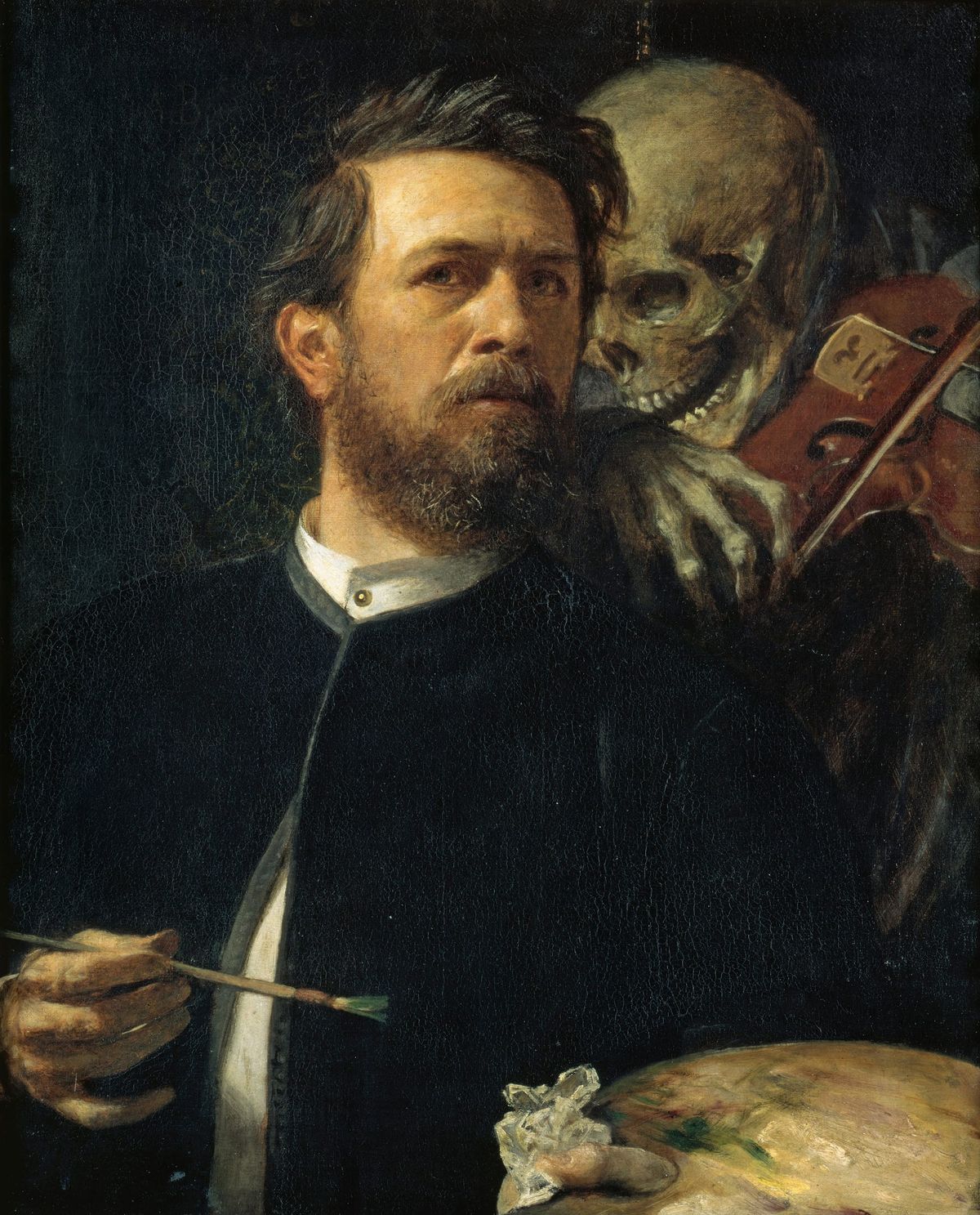
스위스 출신의 상징주의 거장 아놀드 뵈클린(Arnold Böcklin, 1827–1901)이 1872년 독일 뮌헨에서 완성한 유화 바이올린을 켜는 죽음이 있는 자화상(Self-Portrait with Death Playing the Fiddle)은 75.0 cm × 61.0 cm 크기의 캔버스에 유채로 그린 대표작입니다. 현재 독일 베를린의 구 국립미술관(Alte Nationalgalerie, Berlin)에 소장되어 있습니다.
귓가를 파고드는 해골의 연주와 화실에서 벌어진 일화
1872년 가을, 뮌헨의 화실에서 뵈클린은 거울을 보며 자신의 모습을 정성스럽게 그리고 있었습니다. 화실을 찾아온 그의 절친한 친구이자 화가였던 루돌프 콜러는 그림 속 뵈클린의 표정이 마치 무언가에 홀린 듯 허공에 귀를 기울이고 있는 것을 보고 무엇을 듣고 있느냐고 물었습니다. 이에 뵈클린은 씨익 웃으며 며칠만 기다려보라고 답했습니다. 며칠 뒤 다시 화실을 찾은 친구는 큰 충격을 받았습니다. 뵈클린의 어깨 바로 뒤 어둠 속에서 오직 한 줄만 남은 바이올린을 켜며 기괴하게 웃고 있는 해골이 생생하게 그려져 있었기 때문입니다.
이 기묘한 그림에는 평생 가난과 가족의 죽음을 곁에 두고 살아야 했던 화가의 뼈아픈 고뇌가 담겨 있습니다. 뵈클린은 사랑하는 자녀들을 잇달아 잃었고, 언제 자신을 덮칠지 모르는 죽음의 그림자를 늘 느끼며 붓을 들었습니다. 뼈만 앙상한 해골이 연주하는 바이올린은 가장 낮고 무거운 소리를 내는 단 하나의 G현(G string)만 걸려 있습니다. 이는 인생의 마지막 순간이 얼마 남지 않았음을 알리는 경고이자, 죽음이라는 냉혹한 운명이 코앞에 닥쳐와도 끝까지 붓을 놓지 않고 그림을 완성하겠다는 화가의 처절한 예술적 다짐이었습니다.
번뜩이는 눈동자에서 해골의 섬뜩한 미소로, 시선의 심리적 여정
그림을 마주하는 순간 관람객의 무의식적 시선은 화면 한가운데서 관람객을 뚫어지게 바라보는 화가의 형형한 눈동자로 가장 먼저 이끌립니다. 붓을 든 채 살짝 고개를 기울이고 소리에 집중하는 그의 진지한 표정은 감상자에게 거대한 긴장감을 불러일으킵니다.
이어 시선은 화가의 귓가 바로 뒤편 어둠 속에서 번뜩이는 해골의 이빨과 텅 빈 눈구멍으로 이동합니다. 뼈마디가 드러난 손으로 활을 쥐고 화가의 귓가에 바짝 다가와 악기를 켜는 죽음의 섬뜩한 존재감을 확인하는 순간 관람객은 등골이 서늘해지는 시각적 충격을 경험합니다.
마지막으로 시선은 화면 아래쪽으로 내려와 물감이 묻은 팔레트와 붓을 쥐고 있는 화가의 단단한 손에 멈춥니다. 등 뒤에서 죽음의 음악이 울려 퍼지는 극한의 위기 속에서도 결코 흔들리지 않고 작업을 이어가는 예술가의 손끝을 보며, 관람객은 유한한 인간의 삶을 딛고 영원한 예술을 창조하려는 불굴의 의지를 깊이 실감하게 됩니다.
메멘토 모리의 현대적 부활, 미술계의 평가
미술계는 이 자화상을 중세 이래 이어져 온 메멘토 모리(죽음을 기억하라)의 전통을 19세기 낭만주의와 상징주의의 정점으로 끌어올린 독보적인 걸작으로 평가합니다.
단순히 죽음에 대한 공포를 묘사하는 데 그치지 않고, 예술적 영감의 원천으로서 죽음과 화가가 나누는 내밀한 대화를 완벽하게 시각화했기 때문입니다. 훗날 로비스 코린트 등 수많은 독일 표현주의 화가들에게 직접적인 영향을 끼친 이 자화상은 화가 뵈클린의 치열했던 삶과 예술혼을 가장 잘 보여주는 역사적인 명작으로 손꼽힙니다.
The Whisper of the Macabre Melody, Self-Portrait with Death Playing the Fiddle
Painted in 1872 in Munich by the Swiss Symbolist master Arnold Böcklin (1827–1901), Self-Portrait with Death Playing the Fiddle is an oil on canvas measuring 75.0 cm × 61.0 cm (29.5 in × 24.0 in), preserved in the permanent collection of the Alte Nationalgalerie in Berlin, Germany.
The Studio Anecdote and the Solitary String of Mortality
In the autumn of 1872, Arnold Böcklin was working intently on a self-portrait in his Munich studio. His close friend, the painter Rudolf Koller, visited and inquired why the painted figure possessed such an unusual, listening expression. Böcklin smiled and asked his companion to return in a few days. Upon returning, Koller was astonished to discover that Böcklin had rendered a grinning skeleton leaning over his shoulder, furiously playing a violin directly into his ear.
This haunting conceit reflected the profound personal tragedies that shadowed Böcklin's life, including the heartbreaking loss of his young children and chronic financial distress. The violin held by Death features only a single, low-pitched G string remaining unbroken. This singular string serves as a visceral reminder of life's fleeting nature, suggesting that the final tune is near, while capturing the artist’s defiant resolution to continue painting with absolute dedication until the last note fades.
Subconscious Trajectory of the Gaze: From Focused Eyes to the Skeletal Grin
The observer's subconscious gaze is immediately arrested by the piercing, concentrated eyes of the artist looking outward from the dark pictorial space. Pausing his hand mid-stroke with his ear slightly tilted toward the background sound, his intense visage generates immediate psychological suspense.
The trajectory of sight then shifts to the shadowy space directly behind his shoulder, confronting the macabre grin and hollow eye sockets of Death. Witnessing the skeletal fingers guiding the bow across the lone string just inches from the living ear, the viewer experiences a chilling encounter with the supernatural.
Finally, the visual path descends to the lower foreground, resting upon the wooden palette smeared with paints, the cleaning cloth, and the steady hand holding the brush. Recognizing that the artist remains composed and focused on his craft despite the looming specter of mortality, the spectator perceives the triumphant fortitude of human creativity prevailing over inevitable decay.
The Modern Revival of Memento Mori: Critical Legacy
Art historians revere this self-portrait as a landmark achievement that reinvented the medieval Danse Macabre tradition through a modern psychological lens.
By transforming mortality into a creative muse rather than merely a terrifying antagonist, Böcklin established a powerful visual dialogue between artistic creation and temporal finitude. This iconic masterpiece deeply influenced the next generation of Symbolist and Expressionist painters, enduring as one of the most compelling self-portraits in European art history.
본 컨텐트의 저작권은 팔렛트제주에 있습니다. 허가없는 무단전제를 금지합니다.
Copyright © Palette Jeju. All rights reserved. Unauthorized reproduction or redistribution is strictly prohibited.