귀에 붕대를 감고 파이프를 문 자화상 - Self-Portrait with Bandaged Ear and Pipe
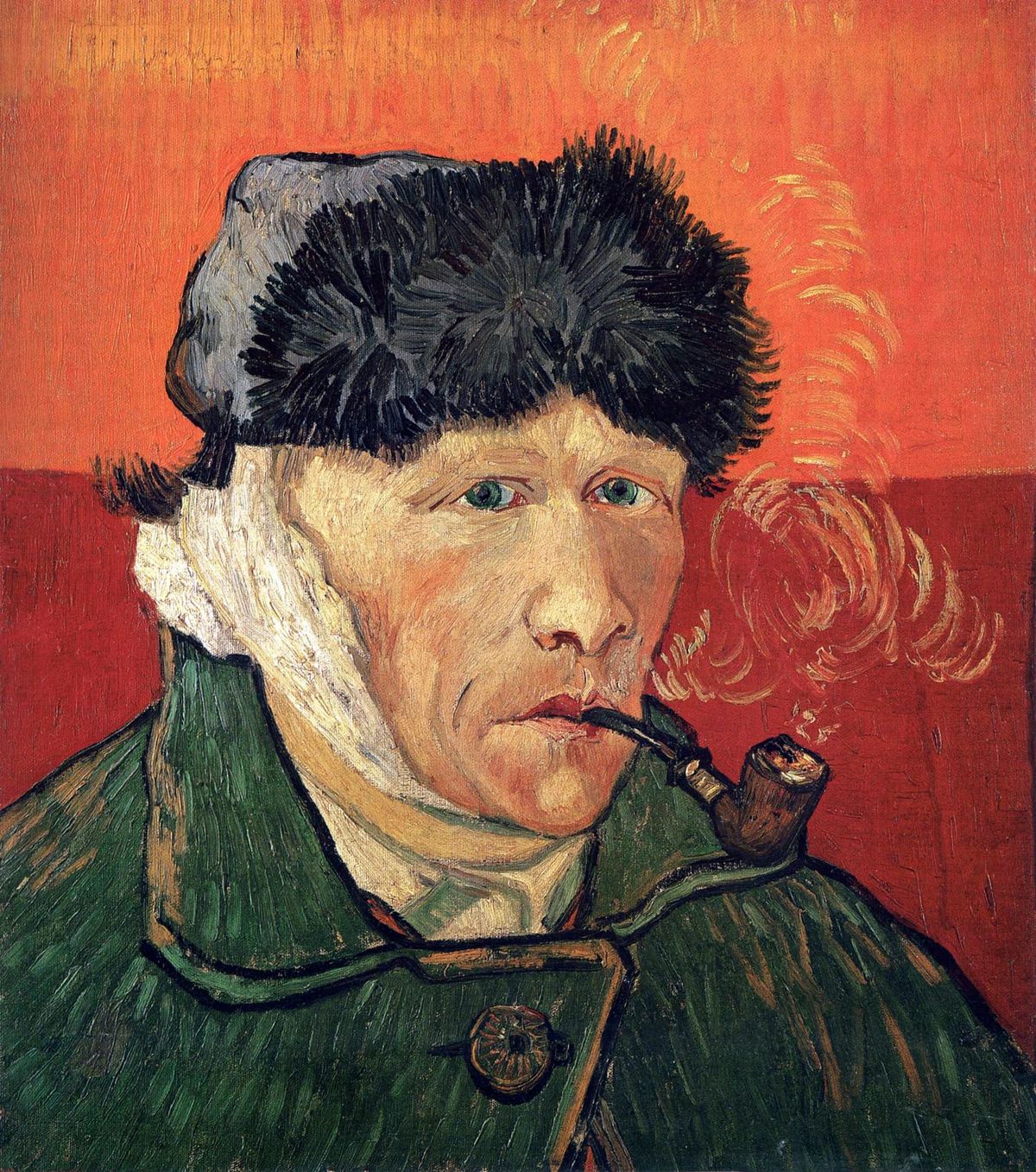
빈센트 반 고흐(Vincent van Gogh, 1853–1890)가 1889년 1월 프랑스 남부 아를(Arles)의 노란 집에서 완성한 '귀에 붕대를 감고 파이프를 문 자화상(Self-Portrait with Bandaged Ear and Pipe)'은 캔버스에 유채(Oil on canvas)로 제작된 인물화입니다. 작품의 실제 규격은 세로 51.0cm, 가로 45.0cm이며, 현재 스위스 취리히의 니아르코스 컬렉션(Niarchos Collection, Private Collection) 처에 보존되어 있습니다.
고흐는 이 작품에서 배경을 상하로 양분하는 강렬한 주황빛 황토색과 핏빛에 가까운 붉은색, 그리고 외투의 짙은 에메랄드 그린 간의 파격적인 보색 대비를 구사했습니다. 털모자의 검푸른 모피 질감과 두텁게 감긴 하얀 붕대는 거친 나이프 터치와 임파스토(Impasto) 기법으로 조각하듯 얹혀 있으며, 파이프 끝에서 피어오르는 연기의 나선형 붓질은 팽팽한 심리적 긴장감 속에 묘한 서정적 율동감을 불어넣습니다.
이 그림에는 서양 미술사상 가장 비극적이고도 유명한 사건인 '귀 절단 사건' 직후, 파멸의 벼랑 끝에서 화폭을 마주했던 고흐의 처절한 인간적 에피소드가 깃들어 있습니다. 1888년 12월 23일 밤, 아를의 노란 집에서 동거하던 폴 고갱과의 격렬한 예술적 불화 끝에 고흐는 자신의 왼쪽 귀를 면도칼로 자르는 극단적인 신경 쇠약 발작을 일으켰습니다. 피투성이가 된 채 지역 병원으로 실려 간 고흐는 기적적으로 목숨을 건졌고, 퇴원하자마자 피로 얼룩졌던 노란 집 작업실로 돌아왔습니다.
마을 사람들은 고흐를 '위험한 미치광이'로 규정하고 마을에서 쫓아내기 위한 탄원서를 돌렸으며, 고갱은 파리로 도망치듯 떠나버렸습니다. 세상 모든 사람들로부터 버림받고 지독한 고립 속에 남겨진 고흐는, 자신이 결코 미치지 않았으며 여전히 그림을 그릴 수 있는 위대한 예술가임을 증명하기 위해 거울 앞에 앉았습니다. 그림 속에서 붕대가 오른쪽 귀에 감겨 있는 이유는 고흐가 거울에 비친 자신의 상을 그대로 캔버스에 옮겨 그렸기 때문입니다.
고흐는 살을 에는 남프랑스의 겨울 추위를 견디기 위해 푸른 모직 코트를 여미고 털모자를 푹 눌러쓴 채, 떨리는 손으로 파이프를 입에 물었습니다. 당시 고흐는 동생 테오에게 "파이프를 물고 연기를 피워 올릴 때 비로소 내 귓가에 맴돌던 끔찍한 환청과 지옥 같은 공포가 잠잠해진다. 나는 붓을 쥐고 있는 한 결코 무너지지 않는다"며 눈물겨운 창작 의지를 털어놓았습니다. 고흐는 붕대로 칭칭 감긴 자신의 흉측한 상처를 숨기지 않고 캔버스 위에 당당하게 드러냄으로써, 고통과 파멸의 운명을 예술적 승리로 승화시켰습니다.
훗날 이 작품은 20세기 거대 부호이자 그리스의 선박왕 스타브로스 니아르코스(Stavros Niarchos)의 손에 들어가며 세계에서 가장 귀중한 개인 소장 명작 중 하나가 되었습니다. 후대의 미술사학자들과 평단은 이 자화상을 인간의 나약함과 상처, 그리고 이를 극복해 내는 예술혼의 숭고한 승리를 증명한 19세기 최고의 심리주의 걸작이자 표현주의의 문을 연 불멸의 이정표로 평가합니다.
관람자의 시선은 가장 먼저 화면을 지배하는 하얗고 두터운 붕대와 관람자를 꿰뚫어 보듯 서늘하게 빛나는 고흐의 맑은 청록빛 눈동자에 얼어붙듯 머뭅니다. 이어 단단하게 다문 입술과 입에 물린 묵직한 나무 파이프로 내려온 뒤, 붉은 배경을 가르며 타오르듯 피어오르는 나선형 연기의 율동감을 따라 시선이 이동합니다. 마지막으로 인물의 어깨를 단단히 감싼 짙푸른 녹색 외투와 털모자의 검푸른 질감을 훑으며 화면 전체를 유려하게 순환하게 됩니다.
심리적으로 관람자는 붉고 주황빛 배경이 뿜어내는 격렬한 긴장감 속에서도 한 모금의 연기를 뿜어내며 평정을 되찾으려는 인물의 굳은 눈빛에서 깊은 연민과 숭고한 내적 카타르시스를 경험하게 됩니다. 벼랑 끝의 시련 속에서도 자신을 속이지 않고 상처를 마주했던 화가의 진솔한 용기는 보는 이의 내면에 자리한 불안과 상처를 부드럽게 감싸 안아주며, 어떠한 비극 앞에서도 끝내 삶을 포기하지 않고 버텨낼 수 있는 단단한 회복 탄력성과 깊은 평온의 에너지를 풍성하게 채워줍니다.
Self-Portrait with Bandaged Ear and Pipe
Painted by Vincent van Gogh (1853–1890) in the Yellow House in Arles in January 1889, Self-Portrait with Bandaged Ear and Pipe is an iconic oil on canvas masterpiece measuring 51.0 cm in height and 45.0 cm in width. This legendary masterwork is preserved within the prestigious Niarchos Collection in Zurich, Switzerland.
Van Gogh established a dramatic chromatic tension by dividing the background into intense fields of amber-orange and blood-red, which interact in sharp complementary contrast with the deep emerald green of his heavy winter coat. The dense textures of the blue fur cap and the thick, protective bandage are sculpted with bold impasto, while the curling, rhythmic swirl of pipe smoke introduces a meditative, lyrical movement into an otherwise fraught psychological composition.
The painting holds one of the most famous and agonizing behind-the-scenes dramas in the history of art. On the night of December 23, 1888, following an unbearable ideological clash with Paul Gauguin, Van Gogh severed part of his left ear during an acute mental crisis. After being hospitalized and narrowly surviving severe blood loss, he returned to the silent, blood-stained rooms of the Yellow House.
With Gauguin having fled back to Paris and local citizens signing a petition to have the "madman" expelled, Van Gogh found himself entirely abandoned. Determined to prove to himself and to his brother Theo that his mind was clear and his artistic faculties intact, he set up his mirror. Because he painted his own mirror reflection, the thick dressing appears over his right ear on the canvas rather than his left.
Dressed in a heavy winter coat and fur hat to ward off the biting cold of Provence, Van Gogh clenched his pipe between his teeth to steady his nerves. Writing to Theo, he expressed that smoking remained his solitary grounding ritual against the auditory hallucinations that had haunted his breakdown. By painting his wound with unsparing candor, Van Gogh transformed a catastrophic personal breakdown into an enduring monument of artistic rebirth.
Modern art historians celebrate this masterpiece as the ultimate triumph of human resilience over existential despair. By refusing to hide his physical vulnerability, Van Gogh elevated the genre of self-portraiture into an unvarnished spiritual testament, inspiring the raw psychological depth of twentieth-century Expressionism.
A viewer’s gaze is instantaneously captured by the stark white bandage wrapping the artist's head and the cool, penetrating clarity of his translucent green eyes. The eye then moves down to the clenched wooden pipe and traces the ethereal smoke wafting across the fiery red backdrop, before following the structured contours of the green coat and dark fur cap to circulate continuously through the harmonious composition.
Psychologically, the juxtaposition of the fiery backdrop with the stillness of the artist's focused gaze induces an immediate sensation of grounding, profound empathy, and cathartic fortitude. Confronting this raw victory of the human spirit over personal catastrophe dissolves internal anxieties and fatigue, enveloping the observer in an enduring atmosphere of emotional strength, quiet courage, and transformative peace.
본 리뷰에서 작품을 제외한 컨텐츠의 저작권은 팔렛트제주에 있습니다.
"퍼블릭도메인 고전명화"를 제외한 모든 창작 콘텐츠는 저작권법 제4조 및 제10조에 의거하여 보호됩니다. 무단 도용시 저작권법 제136조(벌칙)에 의거, 당사의 사전 서면 승인 없는 저작권 침해 행위를 금지합니다.