귀부인과 사냥감이 있는 주방 풍경 Kitchen Scene
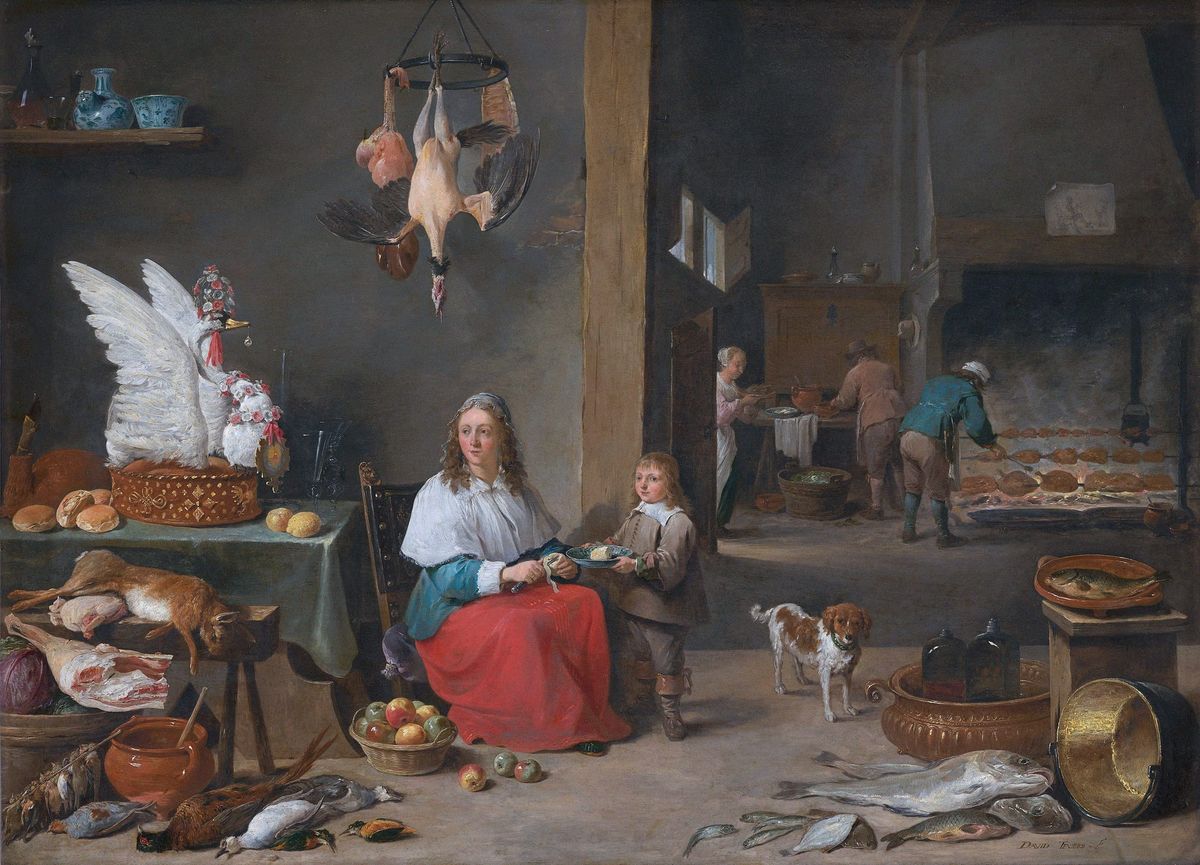
17세기 플랑드르 바로크 풍속화 및 대형 궁정 주방 정물화의 거장 소 다비드 테니어르스(David Teniers le Jeune, 1610–1690)가 1644년에 완성한 기념비적 주방 정물 풍속화 유화 귀부인과 사냥감이 있는 주방 풍경(Kitchen Scene, 또는 호화로운 주방 정물과 시중드는 소년, 프랑스어: Scène de cuisine, 네덜란드어: Keukenscène, 스페인어: Escena de cocina, 소장품 번호: 710 / FXD)은 171.0 cm × 237.0 cm 크기의 초대형 캔버스에 유채로 그린 대표적인 북유럽 궁정 주방 정물화 최고 걸작입니다.
유럽 유수의 왕실 컬렉션을 거쳐 현재 네덜란드 헤이그의 명문 왕립미술관인 마우리츠하위스 미술관(Mauritshuis, The Hague)에 영구 소장되어 보존되어 오고 있습니다.
피터르 아에르센의 주방 정물 전통과 귀족적 만찬의 풍요를 향한 화가의 고뇌
1640년대 중반 안트베르펜 화단에서 독보적인 명성을 떨치던 삼십 대의 테니어르스는, 16세기 플랑드르 대선배 피터르 아에르센과 프란스 스네이데르스가 확립한 초대형 주방 정물화의 유구한 전통을 자신만의 세련된 궁정풍 회화로 새롭게 승화시키고자 깊이 몰두했습니다.
화가는 주방 전면에 산더미처럼 쌓인 육해공의 풍성한 식재료들을 단순한 물질적 사치가 아닌, 지상에 베풀어진 사계절 자연의 축복과 가정의 고귀한 품격을 어떻게 맑고 투명한 은빛 대기(Silvery manner) 속에 조화롭게 담아낼지 치열하게 번민했습니다.
화가는 웅장한 귀족 저택의 거대한 조리실 안에서, 우아한 귀부인이 과일을 깎으며 시중드는 어린 아들과 눈을 맞추는 다정한 순간과 뒤편에서 만찬을 준비하는 요리사들의 분주한 순간을 화폭에 담았습니다.
화면 중앙에는 흰 어깨보에 푸른 소매와 붉은 치마를 입은 단아한 안주인이 의자에 앉아 사과 껍질을 깎고 있고, 그 곁에는 단정한 갈색 옷에 흰 레이스 칼라를 두른 소년이 접시를 공손히 받쳐 들고 어머니를 바라보고 있습니다.
화면 왼쪽 탁자 위에는 꽃과 리본으로 화려하게 장식된 거대한 백조 파이가 우뚝 솟아 있고, 선반 위의 고급 청화백자 사발과 허공에 매달린 백로와 오리, 바닥에 놓인 사슴과 꿩, 신선한 생선들은 호화로운 연회의 시작을 알립니다.
뒤편 거대한 벽난로 앞에서는 수많은 고기 꼬치가 숯불 위에서 노릇노릇하게 구워지고 있으며, 오른쪽 바닥의 황동 대야와 바구니, 그리고 꼬리를 흔드는 점박이 사냥개는 활기찬 궁정 주방의 풍요로운 온기를 손에 잡힐 듯 생생하게 웅변합니다.
화려한 백조 파이와 붉은 치마의 여인에서 숯불 위 고기 꼬치로, 시선의 심리적 여정
그림을 마주하는 순간 관람객의 무의식적 시선은 화면 왼쪽 탁자 위에서 꽃관을 쓰고 날개를 활짝 펼친 채 순백의 깃털을 뽐내는 거대한 백조 파이와 그 아래 화사한 붉은 치마를 입은 여인의 온화한 자태로 가장 먼저 빨려 들어갑니다.
사과를 깎으며 차분한 눈빛으로 공간을 지키는 여인의 우아한 기품과 어머니를 향해 접시를 내미는 소년의 다정한 눈망울은 보는 이에게 깊은 시각적 안정감과 함께 궁정 명문가의 품격 있는 평온을 선사합니다.
이어 시선은 바닥에 쏟아지듯 널려 있는 사냥감들로 이동하여, 갓 잡은 노루의 부드러운 털과 꿩의 알록달록한 깃털, 그리고 오른쪽 바닥에 놓인 커다란 대구와 도미의 번쩍이는 은빛 비늘로 옮겨갑니다.
대지와 바다가 선사한 눈부신 수확물의 싱싱한 생명력을 확인하는 순간, 관람객은 갓 구운 빵 냄새와 고소한 기름 향기가 번져오는 17세기 플랑드르 대저택 주방 한복판 속으로 온몸이 빨려 들어가게 됩니다.
마지막으로 시선은 영리한 눈빛으로 주인을 올려다보는 사냥개와 반짝이는 황동 대야를 지나, 화면 오른쪽 뒤편 거대한 화덕에서 활활 타오르는 숯불을 조절하며 일렬로 늘어선 고기 꼬치를 돌리는 요리사들의 분주한 손놀림에 멈춥니다.
전면의 정적인 가족의 온기와 후면의 역동적인 조리 현장이 빚어내는 완벽한 공간적 깊이를 마주하며, 관람객은 일상과 예술이 만나는 가장 찬란한 풍요의 순간과 거장 테니어르스가 건네는 묵직한 서정적 감동을 가슴 깊이 마주하게 됩니다.
17세기 플랑드르 궁정 주방 정물화의 정점과 조형미, 미술계의 평가
미술계는 마우리츠하위스 미술관의 귀부인과 사냥감이 있는 주방 풍경을 테니어르스가 풍속 인물화와 대형 정물화, 그리고 원근법적 공간 구성을 사상 최대 규모로 융합해 낸 불멸의 기념비적 최고봉 걸작으로 평가합니다.
단순한 조리 풍경을 넘어 궁정 문화의 격조 높은 식탁 예술을 완벽한 좌우 대칭과 원근 구도 속에 배치했을 뿐만 아니라, 백조 깃털의 보송보송한 감촉, 생선 비늘의 축축한 광채, 황동 대야의 매끄러운 금속성 반사광, 타오르는 장작불의 은은한 조도를 극도로 섬세한 북유럽 사실주의 유화 기법으로 완벽하게 구현했기 때문입니다.
자연의 풍성한 혜택과 인간의 품격 있는 삶을 가장 웅장하고 품격 높은 시각 교향곡으로 완성해 낸 테니어르스의 이 걸작 화폭은, 오늘날까지도 전 세계 수많은 감상자들에게 깊은 감탄과 잊을 수 없는 시각적 전율을 전해주는 불멸의 명작으로 손꼽히고 있습니다.
Kitchen Scene
Painted in 1644 by the master of Flemish Baroque genre and monumental court still-life painting David Teniers the Younger (1610–1690), Kitchen Scene (also titled Interior of a Kitchen with a Lady and a Page, French: Scène de cuisine, Dutch: Keukenscène, Spanish: Escena de cocina, Inventory No. 710 / FXD) is a monumental kitchen interior masterpiece in oil on canvas measuring 171.0 cm × 237.0 cm (67.3 in × 93.3 in).
Preserved across distinguished European royal collections, it is housed today in the celebrated permanent collection of the Mauritshuis in The Hague, Netherlands.
The Aertsen-Snyders Heritage, Culinary Abundance, and Domestic Magnificence
During the mid-1640s in Antwerp, David Teniers the Younger expanded the scope of his genre repertoire by engaging with the grand kitchen pieces established by Pieter Aertsen and Frans Snyders, transforming the tradition into an aristocratic display of domestic harmony and courtly refinement.
The master meditated deeply on how to orchestrate a breathtaking abundance of terrestrial game, marine produce, and pastry artistry without descent into chaos, uniting domestic intimacy with the festive majesty of culinary preparation bathed in his celebrated silvery atmospheric light.
Teniers staged the monumental composition within the vaulted kitchen of a grand estate preparing for an aristocratic banquet.
In the center foreground, an elegant lady dressed in a white capelet, blue sleeves, and a rich crimson skirt sits calmly peeling an apple, while an attentive young page boy in a lace collar presents a pewter dish to receive the fruit.
To the left, crowned with flowers and standing upon a raised draped table, an elaborate decorative swan pie commands the room beside hanging game birds, fine Chinese porcelain bowls, venison, and freshly harvested orchard fruit.
To the right, before a monumental open hearth, scullions turn spits of roasting fowl over glowing charcoal embers, while across the foreground floor lies a lavish cascade of sea fish, a polished brass basin, and a faithful hunting hound, celebrating the boundless richness and culinary splendor of 17th-century aristocratic life.
Subconscious Trajectory of the Gaze: From the Decorated Swan Pie to the Roasting Spits
The observer's subconscious gaze is immediately magnetized by the central-left register, drawn to the luminous white plumage of the decorative swan pie, the lady’s radiant white capelet, and the brilliant scarlet folds of her voluminous skirt.
Her composed demeanor, delicate handling of the fruit knife, and the gentle eye contact shared with the youthful page establish an instant focal point of physical grace, maternal dignity, and psychological harmony.
The visual path then descends across the opulent foreground still life, examining the fur of the hunted hare, the colorful feathers of dead game birds, and the glistening silver scales of cod and flatfish scattered upon the flagstones.
Absorbing the tactile richness and variety of sea and land, the viewer directly experiences the authentic, sensory abundance of a 17th-century manor house kitchen.
Finally, the visual trajectory moves toward the right, following the alert spaniel past the gleaming copper basin toward the glowing embers of the open hearth in the background, where cooks turn rows of roasting game upon heavy iron spits.
Observing the harmonious equilibrium between foreground stillness, deep architectural recession, and precise Netherlandish draftsmanship, the spectator perceives the timeless nobility of nature's bounty and the profound aesthetic brilliance Teniers embedded within the canvas.
The Monument of Flemish Culinary Grandeur: Critical Legacy
Art historians revere the Mauritshuis Kitchen Scene as one of the grandest triumphs in Teniers’s oeuvre, illustrating his consummate ability to unite multi-figure narrative, intimate domestic portraiture, and grand still life on a monumental scale.
By orchestrating delicate textural contrasts between soft swan down, glossy fish scales, burnished copper cauldrons, crackling pastry crusts, and glowing charcoal embers within a unified perspectival space, Teniers elevated a culinary workspace into an exquisite aesthetic treatise on peace, prosperity, and human refinement.
This magnificent historical canvas endures as an inspiring testament to the master's creative fortitude, celebrating the quiet poetry of everyday existence and the transformative grace of living art.
본 컨텐트의 저작권은 팔렛트제주에 있습니다. 허가없는 무단전제를 금지합니다.
Copyright © Palette Jeju. All rights reserved. Unauthorized reproduction or redistribution is strictly prohibited.