구두 한 켤레 - A Pair of Shoes
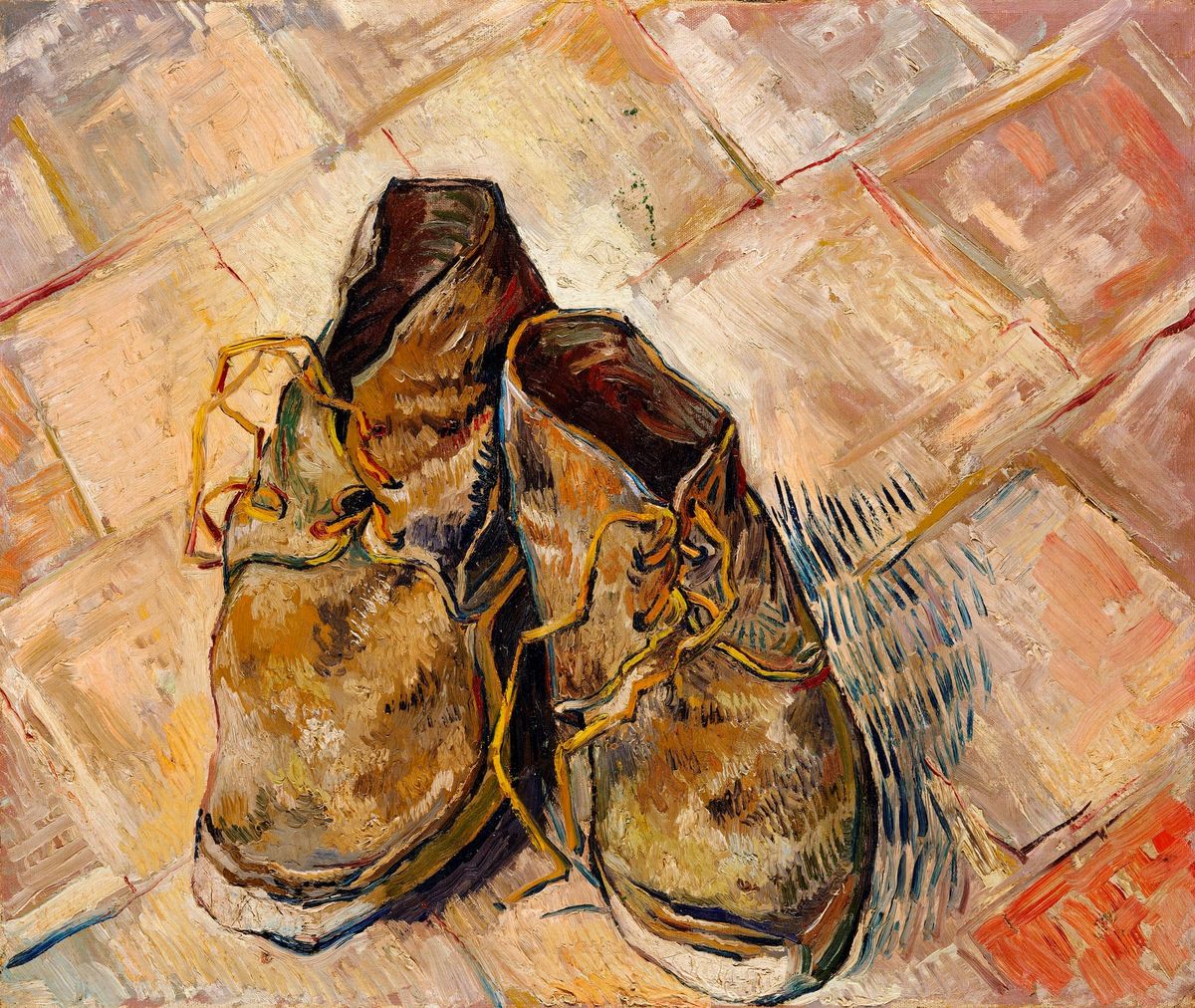
빈센트 반 고흐(Vincent van Gogh)가 파리 체류 시기인 1887년 초에 완성한 대표적인 유화 작품입니다. 현재 미국 볼티모어 미술관(Baltimore Museum of Art)에 소장되어 있으며, 작품의 실제 크기는 약 37.5 × 45.5 cm입니다. 캔버스 위에 유채로 제작된 이 작품은 닳고 낡은 가죽 구두 한 켤레를 단독 정물로 삼아, 굵고 리드미컬한 임파스토(Impasto) 기법과 격자형 바닥의 분할주의적 필치를 통해 묵직한 조형미와 질감을 구현해냈습니다.
고흐는 물감을 두껍게 얹어 구두 표면의 주름과 꺾인 가죽의 상처, 풀어진 노란 신발 끈의 궤적을 마치 손으로 빚어내듯 조각적으로 묘사했습니다. 배경이 되는 타일 바닥은 분홍빛, 베이지색, 붉은색의 짧고 경쾌한 붓터치들이 격자 패턴을 이루며 진동하듯 펼쳐져 있어, 전면의 묵직한 가죽 구두와 강렬한 시각적 대비를 이룹니다. 대상의 단순한 형태 묘사를 넘어 가죽이 머금은 시간의 무게를 생생한 촉각성으로 전해줍니다.
이 작품에는 파리 시절 고흐의 인간적인 고뇌와 예술적 열정이 얽힌 흥미로운 비하인드 스토리가 전해집니다. 고흐는 파리의 벼룩시장에서 튼튼하지만 투박한 중고 노동자 작업화를 직접 구매했습니다. 그러나 신발이 화폭에 담기에는 너무 온전하다고 느낀 그는, 비가 내리는 진흙탕 길을 며칠 동안 신고 걸어 다니며 신발에 흙먼지와 주름, 닳아 해진 자국을 일부러 새겨 넣은 뒤에야 비로소 캔버스 앞에 앉아 그림을 완성했습니다.
고흐에게 낡은 구두는 단순한 일상용품이 아니라 정직한 땀방울을 흘리며 대지를 딛고 살아가는 노동자의 숭고한 삶 그 자체이자, 예술적 방황과 고독 속을 묵묵히 걸어가던 화가 자신의 자화상이었습니다. 후대 미술사 및 철학계에서는 이 작품을 각별히 주목했습니다. 특히 독일의 철학자 마르틴 하이데거는 그의 저서 『예술작품의 근원』에서 이 구두를 '대지의 부름에 응답하며 묵묵히 고난을 견뎌내는 농민의 도구적 실존과 존재의 진리'로 해석하며 20세기 현대 미학의 핵심적 상징으로 격상시켰습니다.
관람객의 무의식적인 시선은 화면 중심에 다부지게 놓인 낡은 가죽 구두의 앞코와 깊게 패인 주름선에서 자연스럽게 출발합니다. 거친 길을 수없이 디뎌온 흔적이 고스란히 묻어나는 가죽 표면의 두터운 붓 터치를 따라 시선이 머무는 순간, 묵묵한 인내와 삶의 고단함이 전하는 묵직한 울림에 깊이 몰입하게 됩니다.
이어 시선은 구두 둘레를 타고 자유롭게 풀려 바닥으로 흘러내린 선명한 노란 신발 끈의 곡선을 지나, 구두 발목 안쪽의 어둡고 깊은 공간으로 이동합니다. 빈 공간이 품고 있는 온기와 쉼의 뉘앙스를 음미한 시선은, 구두 밑으로 드리워진 짙은 푸른빛 그림자를 거쳐 사방으로 따뜻하게 퍼져나가는 격자형 타일 바닥의 경쾌한 필치로 부드럽게 확장됩니다.
타일 바닥의 따스한 분홍빛과 베이지색 파동을 감상한 시선이 다시금 굳건하게 자리를 지키고 있는 구두 한 켤레로 편안히 회귀할 때, 관람객의 내면에는 일상의 피로와 번뇌가 정돈되고, 험난한 여정을 꿋꿋이 버텨낸 대상이 건네는 깊은 위로와 흔들리지 않는 심리적 안도감이 가득 차오르게 됩니다.
A Pair of Shoes
Painted by Vincent van Gogh in early 1887 during his formative Paris period, this iconic still life resides in the permanent collection of the Baltimore Museum of Art in the United States. Executed in oil on canvas measuring approximately 37.5 × 45.5 cm, the composition elevates a weathered, humble pair of worn leather boots into a monumental subject, rendered through sculptural impasto and a dynamically cross-hatched background.
Rejecting smooth academic surfaces, Van Gogh built up thick layers of pigment to carve the crevices, folds, and rugged scuffs of the aged leather with profound physical presence. The tiled floor behind the footwear is animated with rhythmic dashes of pink, terracotta, and soft cream, creating a vibrant optical counterpoint that throws the dark, grounded weight of the shoes into sharp relief. This tactile execution transforms ordinary inanimate objects into a powerful vehicle of raw emotional expression.
The painting is enriched by a celebrated anecdote from Van Gogh’s Paris days. Having purchased a pair of sturdy, unadorned work boots at a Parisian flea market, he felt they appeared too fresh to convey the true spirit of labor. To imbue them with authentic history, Van Gogh wore the heavy boots through rain-soaked streets and muddy alleys for days until they were thoroughly worn, creased, and caked with mud before finally setting them upon his studio floor to paint.
To Van Gogh, these battered shoes were never mere clothing; they stood as a profound emblem of the working class and an intimate, surrogate self-portrait of an artist tirelessly traversing a world of hardship and isolation. Art historians and philosophers have revered this composition for generations. Notably, the German philosopher Martin Heidegger famously analyzed the painting in The Origin of the Work of Art, interpreting the boots as an embodiment of the peasant's quiet endurance, their sacred connection to the earth, and the revelation of existential truth through art.
A viewer's subconscious gaze is intuitively anchored first by the sturdy, rounded toes and deep leather creases of the boots resting at the center of the frame. Lingering upon the thick, layered brushwork that marks years of heavy steps, the observer is drawn into an atmosphere of quiet resilience and visceral authenticity.
The eye is then guided along the fluid loops of the bright yellow laces trailing untied across the surface, moving upward into the dark, cavernous hollows of the boot collars. Sensing the lingering warmth and respite of rest within these empty interiors, the gaze drifts across the dense blue-tinted shadow beneath the soles and expands outward into the warm, woven grid of the surrounding tiled floor.
After tracing the uplifting rhythm of pastel strokes across the ground, the gaze smoothly returns to settle upon the grounded stability of the boots. This complete visual circuit allows everyday anxieties to recede, leaving the viewer enveloped in a deeply comforting sense of grounding, endurance, and profound psychological solace.
본 리뷰에서 작품을 제외한 컨텐츠의 저작권은 팔렛트제주에 있습니다.
"퍼블릭도메인 고전명화"를 제외한 모든 창작 콘텐츠는 저작권법 제4조 및 제10조에 의거하여 보호됩니다. 무단 도용시 저작권법 제136조(벌칙)에 의거, 당사의 사전 서면 승인 없는 저작권 침해 행위를 금지합니다.