공장 굴뚝의 연기와 황금빛 볏가리의 대조, 아를의 밀밭과 도시 풍경 Wheat Field with Sheaves and Arles in the Background
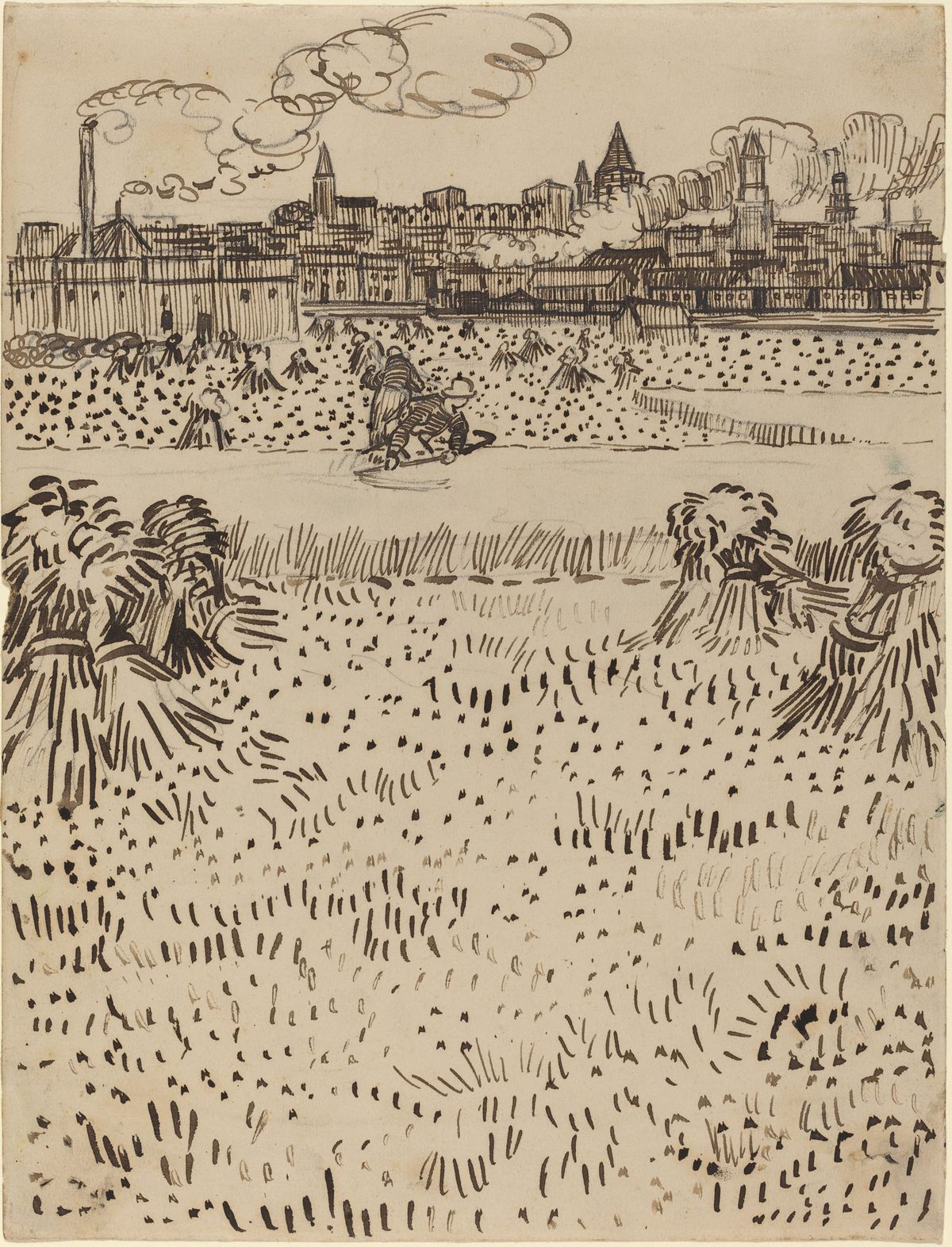
네덜란드 출신의 후기 인상주의 거장 빈센트 반 고흐(Vincent van Gogh, 1853–1890)가 1888년 8월에 남프랑스 아를에서 완성한 펜 드로잉 아를의 밀밭과 도시 풍경(Wheat Field with Sheaves and Arles in the Background, 프랑스어: Moisson en Provence, vue d'Arles)은 47.6 cm × 36.8 cm 크기의 종이에 갈대 펜과 잉크, 그리고 흑연 연필로 정교하게 그린 대표적인 아를 시절의 소묘 걸작입니다. 현재 미국 워싱턴 D.C.의 국립미술관(National Gallery of Art, Washington, D.C.)에 소장되어 있습니다.
론강변의 갈대를 깎던 칼과 친구 베르나르를 놀라게 한 편지
1888년 8월의 뜨거운 여름, 남프랑스 아를의 햇살 아래서 반 고흐는 새로운 드로잉 기법을 완성하기 위해 매일같이 론강변을 서성였습니다. 당시 화가는 비싼 쇠 펜촉이나 붓 대신, 일본 목판화(우키요에)에서 영감을 얻어 강가에 자라난 천연 갈대를 직접 칼로 깎아 펜을 만들기 시작했습니다. 갈대 끝을 뾰족하게 다듬거나 뭉툭하게 깎아내며 잉크를 듬뿍 머금게 하자, 철제 펜으로는 도저히 흉내 낼 수 없는 굵고 탄력 넘치는 선들이 종이 위에 거침없이 터져 나왔습니다.
이 드로잉을 완성한 날, 반 고흐는 친구이자 동료 화가인 에밀 베르나르에게 완성된 소묘를 편지에 동봉해 보내며 자랑스러운 편지를 썼습니다. 그는 자신이 지금 그리고 있는 밀밭이야말로 메마른 아카데미의 훈계 따위는 완전히 잊어버리게 만드는 진짜 살아 숨 쉬는 대지라고 외쳤습니다. 뙤약볕 아래서 낫을 휘두르는 농부들의 등골을 따라 흐르는 땀방울을 관찰하다가 잉크병을 쏟아 바지를 온통 검게 물들였던 일화를 털어놓으며, 흙먼지와 땀 냄새가 밴 갈대 펜의 거친 획이야말로 자연의 숨결을 그대로 담아내는 마법이라고 흥분했습니다.
그는 화면 아래쪽에 볏가리를 묶어 세운 전통적인 농촌의 풍경과, 저 멀리 지평선에 치솟은 현대 공장의 굴뚝 연기를 하나의 화면에 대담하게 배치했습니다. 사라져 가는 옛 농촌의 따스한 정취와 무섭게 밀려드는 산업화의 물결 사이에서 깊은 고뇌를 느끼면서도, 대지를 일구는 인간의 숭고한 노동을 끝까지 찬양하고자 했던 화가의 뜨거운 예술혼이 이 종이 위에 생생하게 각인되어 있습니다.
단단하게 묶인 볏가리에서 낫을 휘두르는 농부와 도시의 굴뚝으로, 시선의 심리적 여정
그림을 마주하는 순간 관람객의 무의식적 시선은 화면 앞쪽 좌우에 굵고 강렬한 펜 터치로 우뚝 솟아 있는 세 개의 커다란 볏가리 묶음으로 가장 먼저 빨려 들어갑니다. 갈대 펜 특유의 거칠고 두꺼운 먹선으로 촘촘하게 엮어낸 볏짚의 풍성한 질감과 밭고랑에 점점이 찍힌 그루터기들은 보는 이에게 풍성한 가을 수확의 기쁨과 대지의 묵직한 무게감을 선사합니다.
이어 시선은 화면 한가운데서 허리를 깊게 숙인 채 거대한 낫을 휘두르고 있는 농부와, 잘려 나간 곡식을 부지런히 모으는 여인의 역동적인 움직임으로 이동합니다. 찌는 듯한 남프랑스의 열기 속에서도 한 치의 흐트러짐 없이 곡식을 베어 넘기는 일꾼들의 성실한 몸짓을 확인하는 순간, 관람객은 대지와 맞닿은 정직한 노동의 가쁜 숨소리를 온몸으로 체감하게 됩니다.
마지막으로 시선은 곡식이 가득 쌓인 넓은 들판을 지나, 저 멀리 지평선을 병풍처럼 가로막고 선 아를 시가지의 고대 유적과 우뚝 솟은 중세 성당의 탑, 그리고 하늘 높이 검은 연기를 뿜어 올리는 거대한 공장 굴뚝에 멈춥니다. 묵묵히 땀 흘리는 농부들의 태고적 삶과 그 너머로 다가오는 근대 도시의 차가운 그림자를 마주하며, 관람객은 급변하는 시대의 불안 속에서도 변치 않는 대자연의 영원한 생명력과 반 고흐가 바친 정직한 예술적 진심을 가슴 깊이 마주하게 됩니다.
갈대 펜 드로잉의 독보적 정점과 조형적 완성도, 미술계의 평가
미술계는 아를의 밀밭과 도시 풍경을 반 고흐가 아를 시절에 개척한 갈대 펜 소묘 양식이 가장 완벽한 조형적 균형과 서사적 깊이에 도달한 최고 수준의 명작으로 평가합니다.
단순한 밑그림의 단계를 뛰어넘어, 점과 선, 빗금과 소용돌이라는 다양한 필치를 자유자재로 구사하여 볏짚의 촉감, 흙의 밀도, 공기의 흐름, 그리고 도시의 건축적 구조까지 흑백의 잉크만으로 완벽하게 구현했기 때문입니다. 색채가 없는 펜 선만으로도 눈부신 프로방스의 태양빛과 대지의 열기를 온전히 전달하는 반 고흐의 이 대담한 드로잉은, 오늘날까지도 현대 드로잉 예술의 불멸의 교과서로 손꼽히고 있습니다.
The Resonant Rhythms of the Provençal Harvest, Wheat Field with Sheaves and Arles in the Background
Executed in August 1888 in Arles by the preeminent Dutch Post-Impressionist master Vincent van Gogh (1853–1890), Wheat Field with Sheaves and Arles in the Background (French: Moisson en Provence, vue d'Arles) is a reed pen, brown ink, and graphite drawing on wove paper measuring 47.6 cm × 36.8 cm (18.7 in × 14.5 in), preserved in the permanent collection of the National Gallery of Art in Washington, D.C.
Carving River Reeds by the Rhône and the Triumphant Letter to Émile Bernard
During the sweltering August of 1888 under the brilliant sun of Arles, Vincent van Gogh sought an innovative graphic vocabulary inspired by Japanese woodblock prints (ukiyo-e). Rather than relying upon conventional steel nibs or delicate watercolor brushes, the master regularly harvested wild reeds growing along the banks of the Rhône River, whittling them with his pocketknife into expressive, flexible pens. By adjusting the bevel and width of the reed tips, Van Gogh unlocked bold, rhythmic, and calligraphic strokes that saturated the heavy paper with unprecedented kinetic power.
Upon finishing this ambitious sheet, Van Gogh enclosed it in a letter to his friend and fellow artist Émile Bernard, enthusiastically proclaiming the arrival of a new graphic style. He declared that these windswept wheat fields captured the living pulse of the earth, entirely free from the stale dogmas of the Paris academies. Recounting how he had accidentally knocked over his open inkpot in his excitement—staining his working trousers black while observing laborers swing their scythes beneath the midday heat—the master marveled at how the raw strokes of the reed pen could translate the tactile heat and scent of the soil onto paper.
He daringly contrasted the ancient agricultural task of harvesting grain with the distant, smoking brick chimneys of the modernizing industrial city on the horizon. Navigating the existential tension between vanishing rural traditions and modern mechanized industry, Van Gogh created an unyielding visual hymn to the enduring nobility of human labor.
Subconscious Trajectory of the Gaze: From Bound Sheaves to the Industrial Smokes
The observer's subconscious gaze is immediately seized by the lower register, drawn to the heavily crosshatched, monumental sheaves of harvested wheat standing prominently on the left and right. The dense, tactile strokes of the reed pen defining the bound stalks and the stippled field of stubble establish an instant sensation of physical abundance and the rich weight of the autumn earth.
The visual path then surges into the middle ground, guided by the dynamic, angular figure of the peasant swinging a scythe while bent sharply over the golden swath, accompanied by a female laborer gathering fallen stalks. Observing the rhythmic, physical determination of the harvesters working beneath the scorching sun, the viewer directly experiences the sensory heat of the terrain and the quiet cadence of rural labor.
Finally, the visual trajectory sweeps across the vast plain to the horizon, resting upon the architectural panorama of Arles, dominated by Roman monuments, medieval church steeples, and the tall, billowing smoke plume of an industrial factory chimney rising into stylized clouds. Observing the profound dialogue between the timeless sanctity of agricultural toil and the encroaching modernity of the urban center, the spectator perceives the inviolable vitalism of nature and the deep spiritual empathy underlying Van Gogh’s graphic genius.
The Monument of Reed Pen Virtuosity: Critical Legacy
Art historians revere Wheat Field with Sheaves and Arles in the Background as a consummate masterpiece of Van Gogh’s graphic oeuvre, representing the zenith of his experimental reed pen techniques.
By combining variable dots, energetic hatching, and undulating calligraphic marks, Van Gogh conveyed atmospheric light, physical texture, and deep spatial recession entirely through monochrome ink. This historic work endures as an inspiring testament to the artist's enduring creative vigor, celebrating the sacred dignity of labor and the timeless poetry of the earth.
본 컨텐트의 저작권은 팔렛트제주에 있습니다. 허가없는 무단전제를 금지합니다.
Copyright © Palette Jeju. All rights reserved. Unauthorized reproduction or redistribution is strictly prohibited.