고대 용사의 측면 두상 (Profile of a Warrior in Fanciful Armor / Bust of a Warrior)
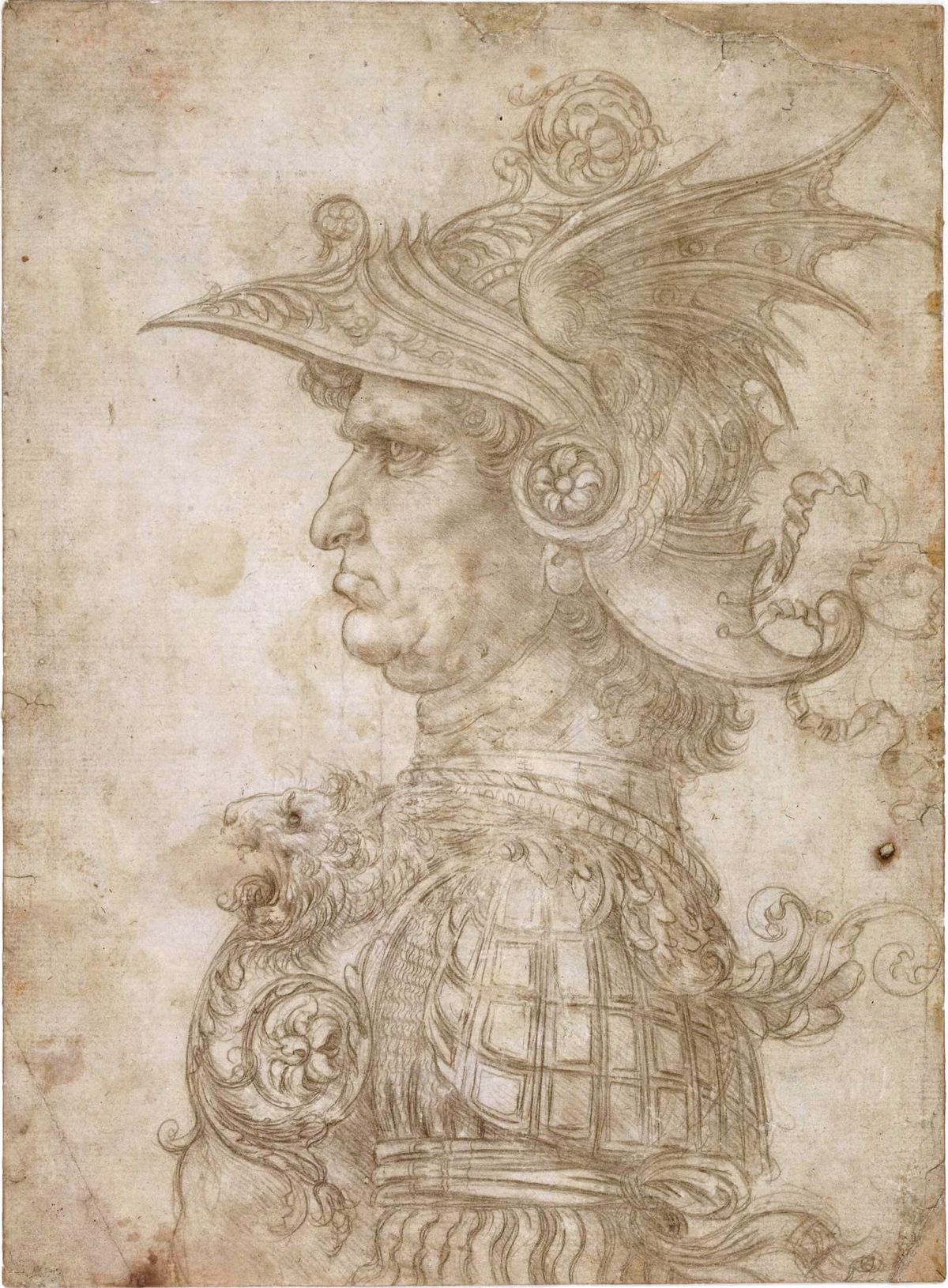
이 작품은 르네상스 시기 천재 거장 레오나르도 다 빈치(Leonardo da Vinci, 1452–1519)가 1475–1480년경 완성한 은침 소묘 명작 <투구를 쓴 고대 용사의 측면 두상 (Bust of a Warrior in Profile / Profile of a Warrior in Fancy Armor)>으로, 실제 규격은 가로 20.7cm, 세로 28.7cm 크기이며 현재 영국 런던의 대영박물관(The British Museum, London)에 소장되어 있습니다. 준비된 종이 위에 은침(Silverpoint)을 활용해 화려하게 장식된 갑옷과 투구를 쓴 고대 장군의 결연하고 강인한 측면 모습을 정교하게 담아낸 소묘 수작입니다.
미술사학계의 도상학적 분석에 따르면, 작품 속 인물은 고대 로마나 영웅 전설 속의 장수를 연상시키는 영웅적 인물로 묘사되어 있습니다. 투구 상단의 박쥐 날개 장식과용 모티프, 가슴 갑옷에 입체적으로 새겨진 사자 머리 장식은 맹렬한 용맹함과 지배권, 신성한 힘을 상징합니다. 굳게 다문 입술과 날카롭게 전방을 응시하는 눈빛, 주름진 턱선의 정교한 사선 해칭 필치는 인물의 단단한 의지와 기개, 인문주의적 자의식을 극대화하여 보여줍니다.
이 화폭에는 레오나르도의 청년기 스승 공방 시절과 연관된 흥미로운 비하인드 스토리와 역사적 평가가 담겨 있습니다. 이 드로잉은 레오나르도가 피렌체의 스승 안드레아 델 베로키오(Andrea del Verrocchio) 공방에서 수련하던 시절 제작한 것으로, 당시 피렌체의 통치자 로렌초 데 메디치가 헝가리의 왕 마티아스 코르비누스에게 선물하기 위해 베로키오에게 의뢰했던 고대 영웅의 대리석 부조 릴리프 작업과 깊은 연관이 있습니다. 후대 미술사학자들은 이 드로잉을 단순한 아이디어 스케치를 넘어 은침 기법의 섬세함과 금속 공예적 장식미, 그리고 인간의 강렬한 기품을 완벽하게 포착한 르네상스 초기 드로잉의 대표 걸작으로 극찬합니다.
이 그림을 가만히 바라보고 있으면 보는 이의 무의식 속에서 은은한 수직·수평적 시선 순환 구조가 부드럽게 작동합니다. 가장 먼저 용사의 날카로운 눈빛과 굳게 다문 입술선에 시선이 머문 뒤, 상단으로 피어오르듯 장식된 날개 모양 투구의 화려한 곡선 윤곽을 따라 이동합니다. 이후 등 뒤로 흘러내리는 투구 장식 끈과 가슴 갑옷의 정교한 사자 머리 및 격자무늬 문양을 거쳐 다시 용사의 강인한 턱선과 전방을 향한 시선으로 되돌아오는 유연한 시선 흐름을 완성합니다. 이러한 시각적 순환 유도는 대뇌 인지 영역에서 찰나의 긴장감을 해쇄하고, 거장의 정교한 은침 필선 속에서 깊은 내면의 평온과 안식을 선사합니다.
This masterpiece, titled Bust of a Warrior in Profile (also known as Profile of a Warrior in Fancy Armor), was created around 1475–1480 by Renaissance genius Leonardo da Vinci (1452–1519). Measuring 20.7 cm in width by 28.7 cm in height, this exquisite silverpoint drawing on prepared paper is currently preserved in The British Museum in London, United Kingdom. Depicting an ancient military commander adorned in elaborately decorated armor and a winged helmet, the sheet stands as a landmark triumph of Early Renaissance metalpoint draftsmanship.
Art historical scholarship highlights the rich iconographic symbolism embedded within the warrior's ornate attire. The helmet featuring bat-like dragon wings and classical foliate scrolls symbolizes fierce martial vigor and divine protection, while the roaring lion motif sculpted upon his breastplate embodies majestic power and nobility. Leonardo's precise diagonal hatching captures the tense muscles of the neck, firm jawline, and resolute gaze, synthesizing classical heroic idealism with intense psychological realism.
Fascinating historical backstories and glowing post-Renaissance evaluations define this famous sheet. Created while Leonardo was working in the Florentine workshop of his master Andrea del Verrocchio, the drawing directly relates to marble reliefs of classical captains commissioned by Lorenzo de' Medici as diplomatic gifts for King Matthias Corvinus of Hungary. Modern art historians revere this page as one of Leonardo's earliest and most captivating masterworks, celebrating its breathtaking technical mastery of silverpoint, sculptural clarity, and aristocratic elegance.
Gazing upon this heroic profile gently awakens a subtle subconscious visual rhythm. The viewer’s eye originates at the warrior's sharp, focused gaze and firm lips, ascends along the sweeping winged crest of his helmet, and glides downward across the intricate lion medallion and grid-patterned breastplate. The gaze then ascends fluidly along the contours of his chin back to his eyes, completing a soft, circular loop. This harmonious visual movement dissolves inner cognitive tension, inviting the mind into a quiet sanctuary of artistic wonder and serene contemplation.
본 리뷰에서 작품을 제외한 컨텐츠의 저작권은 팔렛트제주에 있습니다.
"퍼블릭도메인 고전명화"를 제외한 모든 창작 콘텐츠는 저작권법 제4조 및 제10조에 의거하여 보호됩니다. 무단 도용시 저작권법 제136조(벌칙)에 의거, 당사의 사전 서면 승인 없는 저작권 침해 행위를 금지합니다.