깃펜 끝에 머문 사랑의 밀어와 따스한 눈빛, 편지를 쓰는 우아한 여인 Elegant Lady Writing at Her Desk
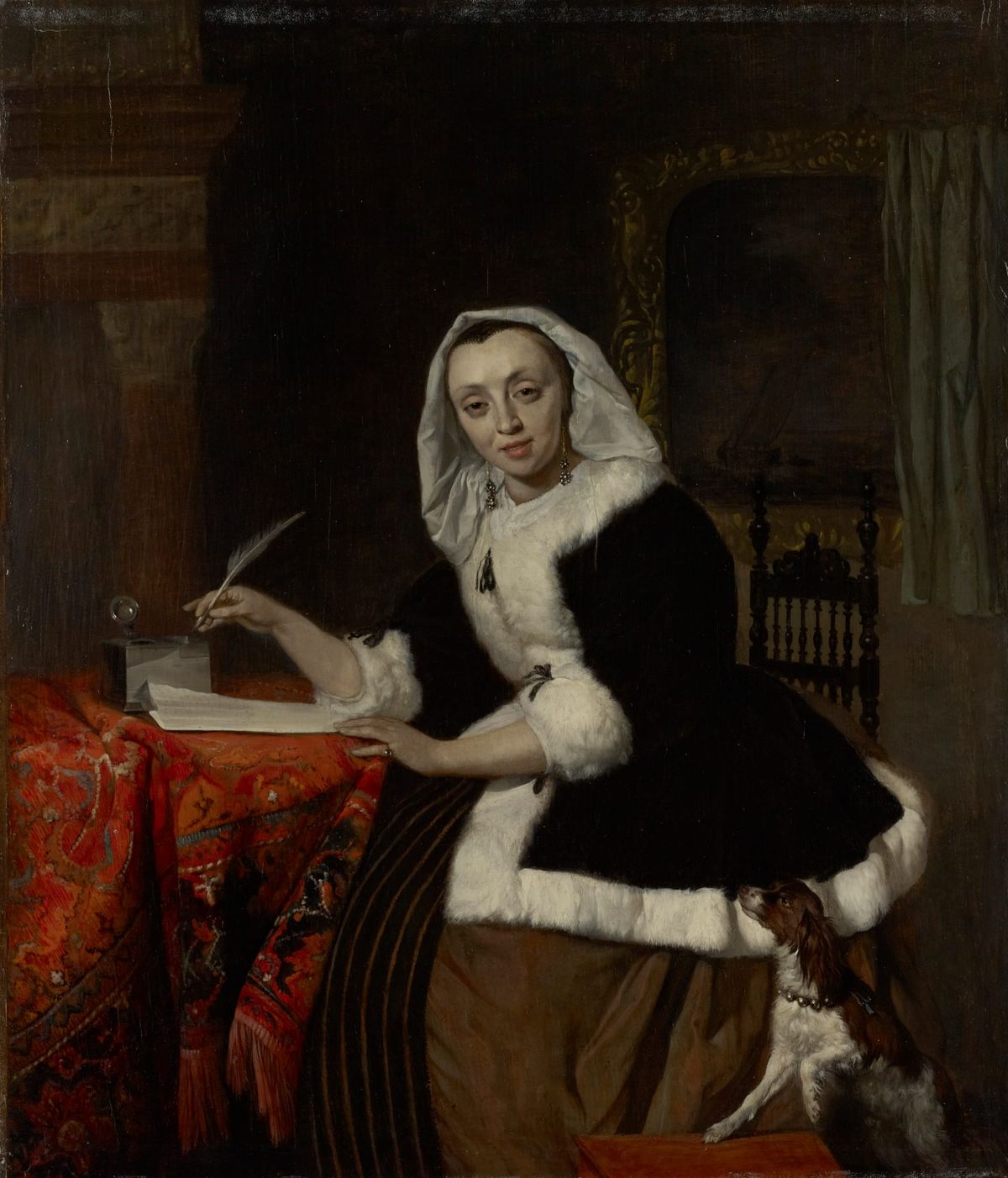
17세기 네덜란드 황금시대의 풍속화 거장 가브리엘 메추(Gabriel Metsu, 1629–1667)가 1660년대 중반에 완성한 유화 편지를 쓰는 우아한 여인(Elegant Lady Writing at Her Desk, 또는 Woman Writing a Letter)은 39.4 cm × 33.5 cm 크기의 패널에 유채로 그린 대표적인 상류사회 실내 풍속화 걸작입니다. 현재 미국 워싱턴 D.C.의 국립미술관(National Gallery of Art, Washington, D.C.) 등에 소장되어 있습니다.
아내의 비밀 편지를 엿보려던 화가와 강아지가 일으킨 작은 소동
1660년대 중반 암스테르담의 부유한 가정에서는 연인에게 마음을 담아 편지를 쓰고 이를 전하는 우아한 서간 문화가 큰 유행이었습니다. 당시 메추는 단순히 편지를 쓰는 겉모습만 그리는 것을 넘어, 편지지에 진심을 적어 내려가다 인기척을 느끼고 고개를 돌리는 순간의 미묘하고 설레는 눈빛을 화폭에 담아내고 싶어 했습니다. 그는 사랑하는 아내 이사벨라를 화실 책상에 앉히고 하얀 깃펜과 은제 잉크함을 쥐여주며 포즈를 부탁했습니다.
이 그림을 그릴 당시 화실에서는 한바탕 유쾌한 실랑이가 벌어졌습니다. 메추가 그림을 그리다 말고 슬금슬금 다가가 진짜로 무슨 내용을 적고 있는지 편지지를 엿보려 하자, 이사벨라는 손으로 편지를 황급히 가리며 남편에게 장난스레 핀잔을 주었습니다. 그 순간 책상 밑에서 졸고 있던 귀여운 스패니얼 강아지가 주인의 목소리에 놀라 벌떡 일어나더니, 치맛자락을 붙잡고 꼬리를 흔들며 멍멍 짖어대기 시작했습니다.
갑작스러운 강아지의 참견에 두 사람은 화실이 떠나갈 듯 웃음을 터뜨렸고, 메추는 그 사랑스러운 눈맞춤이야말로 그림을 완성할 최고의 순간임을 직감했습니다. 화가는 검은 벨벳 재킷의 하얀 담비 털 장식과 고급스러운 오리엔탈 카펫의 세밀한 무늬, 그리고 주인을 다정하게 올려다보는 강아지의 눈동자를 한 올 한 올 정성껏 빚어 올렸습니다. 잦은 병마 속에서도 삶의 따스한 순간과 가족을 향한 깊은 사랑을 지켜내려 했던 화가의 눈물겨운 진심이 이 눈부신 화폭 속에 고스란히 녹아 있습니다.
다정한 여인의 미소에서 깃펜과 강아지의 눈망울로, 시선의 심리적 여정
그림을 마주하는 순간 관람객의 무의식적 시선은 화면 중앙 짙은 어둠 속에서 눈부신 조명을 받은 듯 환하게 빛나는 여인의 하얀 얼굴과 부드러운 미소로 가장 먼저 빨려 들어갑니다. 단정하게 쓴 흰색 베일 아래로 편지를 쓰다 말고 관람객을 다정하게 응시하는 여인의 맑은 눈망울은 보는 이에게 깊은 설렘과 함께 친밀한 안식을 선사합니다.
이어 시선은 은제 잉크함에 살포시 담긴 하얀 깃펜을 쥐고 있는 여인의 섬세한 손끝과, 테이블 위에 놓인 하얀 편지지로 이동합니다. 검은 벨벳 소매 끝에 달린 풍성한 하얀 털 장식과 은은하게 반짝이는 반지를 확인하는 순간, 관람객은 누군가에게 마음을 전하기 위해 고심하던 여인의 내밀한 감정선 속으로 조용히 빠져들게 됩니다.
마지막으로 시선은 화면 왼쪽 테이블을 화려하게 덮고 있는 붉은 페르시아 카펫의 굵은 주름을 지나, 화면 오른쪽 아래에서 두 발을 올린 채 주인을 사랑스럽게 올려다보는 작은 강아지의 눈망울에 멈춥니다. 벽에 걸린 은은한 유화 액자와 공간을 감싸는 차분한 정적, 그리고 충직한 반려견의 따스한 온기를 마주하며, 관람객은 17세기 네덜란드 가정의 품격 있는 안락함과 메추가 전하는 다정한 삶의 위로를 가슴 깊이 마주하게 됩니다.
네덜란드 실내 풍속화의 서정적 정점과 조형적 완성도, 미술계의 평가
미술계는 편지를 쓰는 우아한 여인을 가브리엘 메추가 얀 베르메르, 제라르 테르보르흐와 어깨를 나란히 하며 네덜란드 장르화의 황금기를 이끈 대표적인 걸작으로 평가합니다.
벨벳, 모피, 실크, 종이, 금속의 다채로운 질감을 극도로 사실적이면서도 우아하게 표현한 탁월한 기교뿐만 아니라, 빛을 활용해 인물의 내면 심리를 풍부하게 끌어올렸기 때문입니다. 일상의 소소하고 평범한 순간을 가장 고귀하고 따스한 예술적 시로 승화시킨 메추의 이 서정적인 화폭은, 오늘날까지도 전 세계 수많은 이들에게 깊은 감동과 잊을 수 없는 시각적 평온을 선사하고 있습니다.
The Lyrical Elegance of the Written Word, Elegant Lady Writing at Her Desk
Painted in the mid-1660s in Amsterdam by the preeminent Dutch Golden Age master Gabriel Metsu (1629–1667), Elegant Lady Writing at Her Desk (also titled Woman Writing a Letter) is an oil on panel measuring 39.4 cm × 33.5 cm (15.5 in × 13.2 in), preserved in the permanent collection of the National Gallery of Art in Washington, D.C.
The Secret Letter of Isabella and the Playful Studio Spaniel
During the mid-1660s in Amsterdam, writing intimate letters flourished as one of the most refined pastimes among the cultured merchant class. Gabriel Metsu sought to transcend conventional genre scenes by capturing the subtle, fleeting psychological shift of a woman momentarily pausing her correspondence as someone enters the room. Using his beloved wife, Isabella de Wolff, as his model, the artist placed her at a sunlit writing table with a white quill pen and an inkstand, carefully arranging the composition.
A delightfully humorous incident unfolded during the sitting. Curious to see what Isabella was actually scribbling on the paper, Metsu crept behind the desk to take a peek, prompting her to cover the manuscript with her hand and scold him playfully. Startled by her laughter, their small spaniel resting beneath the table leaped up, resting its paws upon her skirt and barking merrily.
Metsu recognized that this unscripted moment of domestic warmth and tender amusement was the exact emotional spark the painting needed. He meticulously rendered the plush black velvet morning jacket, the snowy white ermine trim, the intricate arabesques of the Oriental table rug, and the attentive gaze of the loyal dog. Despite wrestling with chronic illness, Metsu poured his deep devotion to his family and daily life onto the panel, crafting an enduring monument to domestic harmony.
Subconscious Trajectory of the Gaze: From Engaging Visage to the Attentive Spaniel
The observer's subconscious gaze is immediately seized by the luminous, ivory contours of the lady's face framed by a pristine white cap against the dark interior. Her gentle, direct gaze toward the viewer and her subtle smile establish an immediate atmosphere of refined serenity and engaging psychological presence.
The visual path then descends along the soft ermine fur bordering her dark velvet mantle, traveling to her delicate hands poised with the white quill above the manuscript. Taking in the silver gleam of the inkstand and the fine folds of her dress, the viewer directly experiences the quiet intimacy of private correspondence and the refined leisure of the Dutch golden age.
Finally, the visual trajectory sweeps past the heavy folds of the crimson Persian table carpet, coming to rest upon the charming spaniel resting its paws on the footstool in the lower-right foreground. Observing the harmonious balance between the opulent interior textures, the serene light, and the quiet affection of the loyal pet, the spectator perceives the timeless nobility of everyday life and the enduring spiritual solace Metsu embedded within the home.
The Monument of Dutch Genre Refinement: Critical Legacy
Art historians revere Elegant Lady Writing at Her Desk as a consummate masterpiece of Metsu’s mature period, rivaling the subtle domestic narratives of Johannes Vermeer and Gerard ter Borch.
By achieving an extraordinary textural distinction across fur, silk, heavy wool, and polished silver, while animating the scene with warm psychological depth, Metsu elevated a familiar epistolary motif into an exquisite aesthetic symphony. This captivating cabinet picture stands as an inspiring testament to the master's enduring humanism, celebrating the sacred charm of everyday existence and the transformative power of living art.
본 컨텐트의 저작권은 팔렛트제주에 있습니다. 허가없는 무단전제를 금지합니다.
Copyright © Palette Jeju. All rights reserved. Unauthorized reproduction or redistribution is strictly prohibited.