꽃피는 과수원과 아를의 풍경 - View of Arles, Flowering Orchards
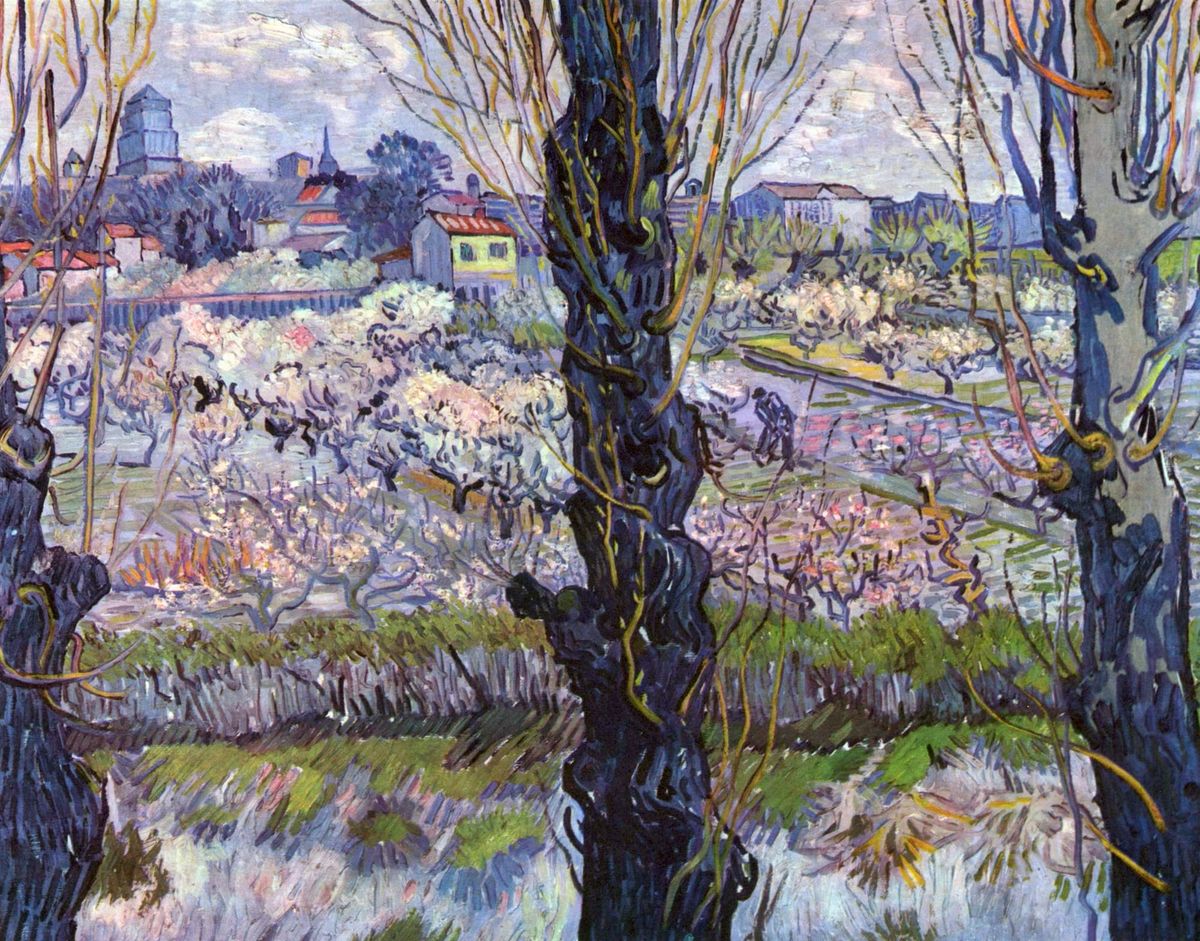
빈센트 반 고흐(Vincent van Gogh, 1853~1890)가 1889년 4월 남프랑스 아를에서 완성한 유화(Oil on canvas) 작품입니다. 작품의 규격은 약 72 x 92 cm 크기이며, 독일 뮌헨의 노이에 피나코테크(Neue Pinakothek)에 소장되어 있습니다. 이 작품은 아를 시가지의 건물들과 꽃이 만발한 과수원을 전면에 배치된 거친 포플러 나무 둥치 사이로 바라보는 독창적인 구도로 구성되었으며, 고흐 특유의 리드미컬하고 두터운 임파스토 붓질과 일본 우키요에 판화의 격자형 시선 분할 기법이 완벽한 조화를 이루는 걸작입니다.
1889년 봄, 고흐는 고갱과의 격렬한 다툼과 귀를 다친 비극적인 사건을 겪은 후 아를 병원에 입원과 퇴원을 반복하고 있었습니다. 온 동네 주민들이 그를 위험인물로 몰아 탄원서를 넣는 등 사방에서 따돌림을 당하던 비참한 처지였지만, 겨울이 지나고 남프랑스 대지에 매화와 살구꽃이 만개하자 고흐는 다시 어린아이처럼 가슴이 뛰기 시작했습니다. 그는 의사의 만류에도 불구하고 이젤을 챙겨 과수원으로 달려 나갔습니다. 동생 테오에게 보낸 편지에서 그는 꽃나무가 피어나는 이 찬란한 계절은 며칠만 지나도 금세 사라져 버린다며, 밥을 먹는 시간조차 아까워 하루에 캔버스 하나씩을 맹렬히 완성해내고 있다고 어린아이처럼 자랑했습니다.
야외에서 그림을 그릴 당시 고흐는 지나가는 마을 사람들의 따가운 시선과 남프랑스의 거센 봄바람을 온몸으로 견뎌내야 했습니다. 그는 캔버스를 나뭇가지와 이젤 다리에 끈으로 꽁꽁 묶어둔 채, 화면 한가운데 떡하니 버티고 선 포플러 나무의 뒤틀린 껍질과 그 너머로 아스라이 펼쳐진 아를 시내의 생트로핌 종탑을 뚫어지게 응시했습니다. 당시 일본 우키요에 판화에 푹 빠져 있던 고흐는 판화가 우타가와 히로시게의 매화나무 그림처럼 굵은 나무 둥치로 화면을 과감하게 가로막고 그 틈새로 아득한 풍경을 엿보는 파격적인 실험을 감행했습니다. 동네 농부들은 화면 한가운데에 시커먼 나무기둥을 대뜸 그려 넣는 고흐의 모습을 보고 이상한 그림이라며 혀를 찼지만, 고흐는 꽃잎 하나하나에 물감을 듬뿍 얹으며 자신이 발견한 봄의 기쁨에 흠뻑 취해 있었습니다.
후대 미술사학자들은 이 작품을 극심한 정신적 고립과 상처 속에서도 끝내 붓을 놓지 않았던 고흐의 강인한 회복 탄력성과 예술적 성숙을 보여주는 정점으로 평가합니다. 거칠고 어두운 나무 둥치는 화가가 처한 냉혹한 현실과 고독을 암시하는 반면, 그 너머로 환하게 피어난 분홍빛과 백색의 꽃구름, 그리고 푸른 봄 하늘은 삶에 대한 무한한 희망과 순수한 열정을 상징하며 미술사에서 가장 시적이고 입체적인 풍경화로 손꼽힙니다.
작품을 마주하는 관람객의 시선은 화면을 수직으로 묵직하게 가로지르는 짙은 포플러 나무 기둥에 먼저 머무릅니다. 이어 나뭇가지 사이의 열린 공간을 통해 만개한 과수원의 화사한 꽃잎 물결과 들판에서 일하는 작은 농부의 모습으로 시선이 자연스럽게 스며들며, 마침내 저 멀리 푸른 하늘 아래 자리 잡은 아를의 도시 실루엣으로 부드럽게 확장됩니다. 거친 전경을 뚫고 찬란한 빛의 세계로 나아가는 이러한 시선 이동은 감상자의 무의식 속에 억눌려 있던 불안과 답답함을 시원하게 틔워주며, 긴 겨울을 지나 마침내 마주하는 봄날의 따스한 재생과 깊은 정서적 해방감을 선사합니다.
View of Arles, Flowering Orchards
Painted in April 1889 by Vincent van Gogh (1853–1890), this radiant oil on canvas measures approximately 72 by 92 centimeters and is preserved in the prestigious collection of the Neue Pinakothek in Munich, Germany. Completed during the painter's turbulent final spring in Arles, this masterpiece captures the panoramic vista of the historic town through a veil of blossoming fruit trees and foreground poplar trunks, brilliantly synthesising Dutch realism with the bold framing techniques of Japanese Ukiyo-e woodblock prints.
In the spring of 1889, following his harrowing breakdown and the agonizing departure of Paul Gauguin, Vincent was enduring deep isolation amidst petition drives by fearful local townspeople. Yet, as the icy mistral subsided and the Provençal orchards erupted into a sea of delicate blossoms, Vincent felt an unstoppable resurgence of creative vitality. He hurried to the orchards daily with his paints, writing to his brother Theo that the ephemeral blossom season was far too brief to waste, often producing entire canvases in single, breathless sittings while skipping meals to capture the light.
Working outdoors required fierce physical endurance against the unpredictable spring winds. Vincent lashed his easel directly to tree stakes, intently studying the contrast between the dark, gnarled tree trunks right before him and the distant silhouette of the Saint-Trophime bell tower rising above the town. Inspired directly by Utagawa Hiroshige's prints, he deliberately placed massive vertical trunks directly across the visual field, creating an innovative visual screen. While passing locals mocked the eccentric red-haired artist for blocking his own view with dark trees, Vincent reveled in the intricate spatial depth and the pure, shimmering pastel hues of the orchard.
Modern art historians regard this work as an extraordinary testament to Vincent's resilience and emotional depth. The heavy, dark poplar trunks in the immediate foreground anchor the composition with a sense of earthly struggle and solitude, while the radiant pink, lavender, and white blossoms beyond symbolize renewal and spiritual rebirth. This harmonious dialogue between near and far, shadow and brilliant light, establishes the work as one of the most poignant landscapes in modern art history.
The viewer's gaze instinctively encounters the dark, textured rhythm of the foreground poplar trunks before slipping effortlessly through the branches into the sunlit ocean of blossoming trees and the small, diligently working laborer. The eye then travels toward the distant rooftops and Romanesque towers of Arles set against a luminous sky. This dynamic movement from obstacle into expansive beauty releases subconscious tension, instilling a profound sense of clarity, restorative optimism, and serene emotional warmth.
본 리뷰에서 작품을 제외한 컨텐츠의 저작권은 팔렛트제주에 있습니다.
"퍼블릭도메인 고전명화"를 제외한 모든 창작 콘텐츠는 저작권법 제4조 및 제10조에 의거하여 보호됩니다. 무단 도용시 저작권법 제136조(벌칙)에 의거, 당사의 사전 서면 승인 없는 저작권 침해 행위를 금지합니다.