꽃이 핀 화병 - Vase with Flowers
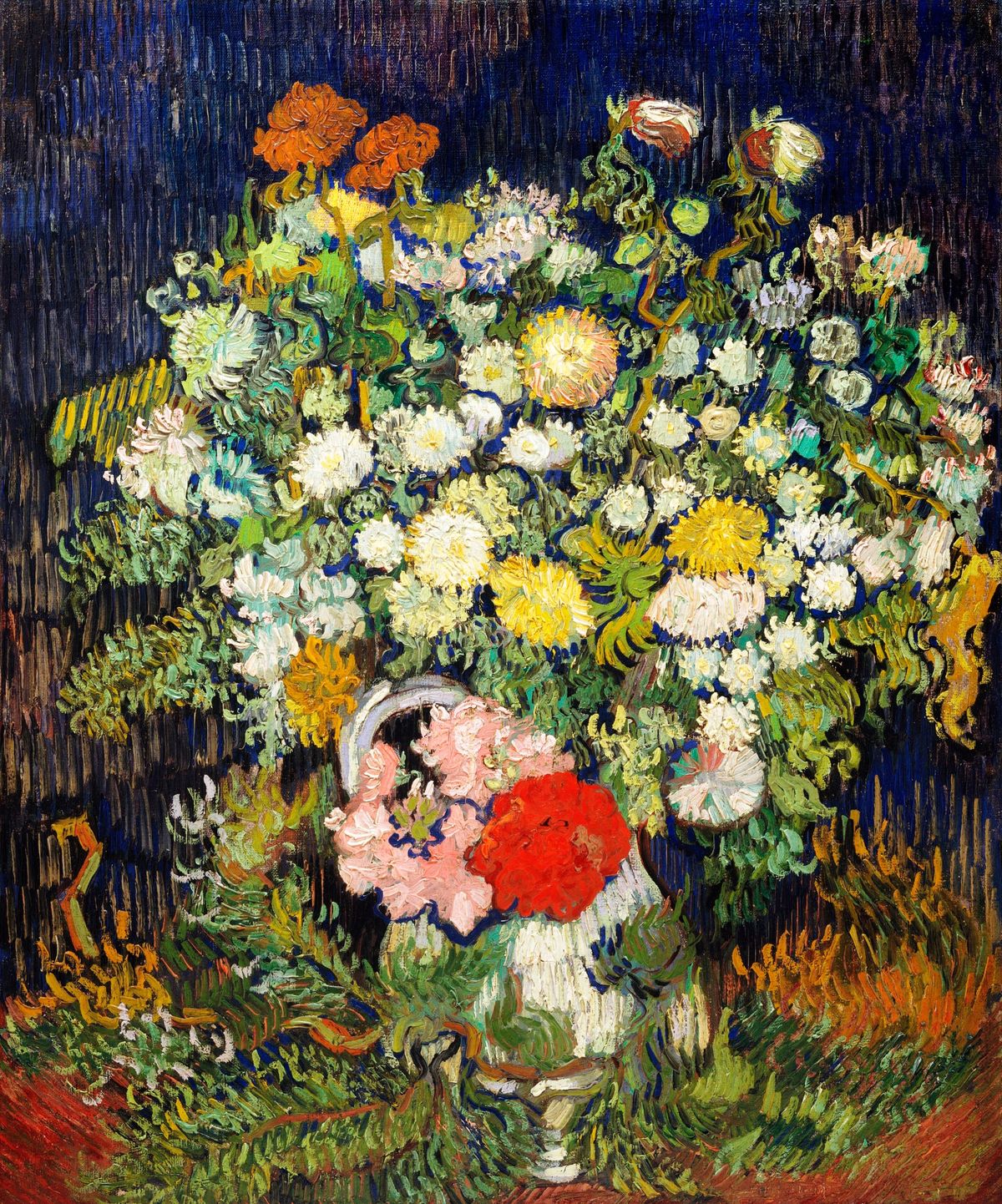
빈센트 반 고흐(Vincent van Gogh)가 프랑스 파리 체류 시절인 1886년 여름에서 가을 사이에 완성한 유화 작품입니다. 현재 미국 보스턴 미술관(Museum of Fine Arts, Boston) 등에 소장된 화병 연작과 함께 연구되는 대표적인 정물화로, 작품의 크기는 약 61.0 × 46.0 cm입니다. 캔버스 위에 유채로 제작된 이 작품은 짙푸른 밤하늘을 연상시키는 짙은 남색 배경과 화려하게 만개한 백색, 황색, 적색의 꽃송이들이 이루는 강렬한 보색 대비를 두터운 임파스토(Impasto) 기법으로 담아냈습니다.
고흐는 물감을 캔버스 위에 층층이 두껍게 쌓아 올려 꽃잎 하나하나의 형태와 질감을 조각하듯 생생하게 빚어냈습니다. 배경을 채운 짙은 인디고블루와 에메랄드그린의 수직 필선은 어두운 공간 속에서도 깊이 있는 울림을 형성하며, 그 앞에서 폭발하듯 뿜어져 나오는 백일홍과 과꽃의 꽃송이들을 더욱 눈부시게 부각시킵니다. 거칠면서도 정교한 붓자국의 리듬은 정적인 실내 정물화에 살아 움직이는 듯한 유기적인 에너지를 불어넣습니다.
네덜란드에서 파리로 갓 이주한 고흐는 인상주의와 신인상주의 화가들의 눈부신 색채 혁명에 커다란 충격을 받았습니다. 파리 체류 초기, 인물 모델을 구할 형편이 되지 않았던 그는 몽마르트르 화실에서 꽃 정물화를 집중적으로 그리며 색채의 상호작용을 집요하게 탐구했습니다. 그는 동생 테오에게 "오직 순수한 색채의 대비와 보색의 조화를 마스터하기 위해 수십 점의 꽃 그림을 그리고 있다"고 적으며 새로운 예술적 지평을 향한 뜨거운 열망을 드러냈습니다.
이 작품은 네덜란드 시절의 어둡고 무거운 흙빛에서 벗어나 화려하고 자유로운 색채의 세계로 도약하던 고흐의 예술적 전환기를 명확하게 증명합니다. 미술사에서는 전통적인 네덜란드 꽃 정물화의 엄숙한 구도를 계승하면서도, 인상파의 빛과 고흐 특유의 격정적인 붓질을 결합하여 이후 남프랑스 아를에서 탄생하게 될 불멸의 『해바라기』 연작을 예고한 결정적인 징검다리 명작으로 평가받고 있습니다.
관람객의 무의식적인 시선은 화병 앞쪽에 가장 도드라진 입체감과 선명한 색채로 자리 잡은 정열적인 다홍빛 꽃송이와 부드러운 분홍빛 꽃잎에서 자연스럽게 출발합니다. 두터운 물감의 무게감이 전하는 강렬한 시각적 온기에 사로잡힌 시선은, 화병 입구를 감싸고 있는 풍성한 잎사귀들의 싱그러운 초록빛을 지나 중심부의 거대한 꽃다발 군락으로 상승합니다.
이어 시선은 화면 가득 흩뿌려지듯 피어난 순백의 꽃잎들과 화사한 레몬빛, 황금빛 꽃송이들의 다채로운 굴곡을 따라 나선형을 그리며 화면 전체로 팽창합니다. 화려한 꽃무리 사이를 자유롭게 유영한 시선은 배경의 깊고 그윽한 짙푸른 어둠과 전경의 따스한 붉은 융단 바닥을 훑은 뒤, 꽃들을 단단하게 받쳐주고 있는 하얀 도자기 화병으로 부드럽게 내려앉습니다.
어둠 속에서 찬란하게 피어난 생명의 빛과 질감을 따라 순환한 시선이 편안히 안착할 때, 관람객의 내면에는 일상의 번뇌와 피로가 씻겨 나가고, 척박한 현실 속에서도 꺾이지 않고 피어나는 꽃들이 전하는 벅찬 생명력과 함께 흔들리지 않는 깊은 심리적 안도감과 따스한 평온함이 가득 차오르게 됩니다.
Vase with Flowers
Painted by Vincent van Gogh between the summer and autumn of 1886 during his transformative Paris period, this exceptional still life is preserved among his celebrated floral works, measuring approximately 61.0 × 46.0 cm in oil on canvas. The composition demonstrates Van Gogh's dynamic synthesis of dramatic chiaroscuro and vibrant chromatic contrast, utilizing rich, sculptural impasto to capture a dense bouquet bursting forth from a dark indigo ground.
Van Gogh applied heavy, directional brushstrokes directly onto the canvas, molding the petals and tangled leaves with intense physical presence. The deep midnight-blue and forest-green background, built up with rhythmic vertical strokes, provides a profound atmospheric depth that elevates the luminous whites, chrome yellows, and vivid vermilions of the blossoms into sharp, pulsating relief. This tactile execution transforms a conventional tabletop arrangement into an undulating anthem of organic vitality.
Upon arriving in Paris from the Netherlands, Van Gogh was profoundly impacted by the radiant palettes of the Impressionists and Neo-Impressionists. Unable to afford portrait models on a regular basis, he turned to floral still lifes as his primary experimental ground for studying pure color harmonies and complementary contrasts. In letters to his brother Theo, he passionately explained that his dozens of floral canvases were dedicated exercises aimed at unlocking the expressive potential of raw, unmixed pigments.
This painting marks a pivotal stylistic bridge in Van Gogh’s career, signifying his liberation from the somber earth tones of his Dutch period toward the dazzling chromatic freedom of his mature oeuvre. Art historians celebrate this composition for merging the structured gravity of traditional Netherlandish flower painting with the revolutionary light of the Parisian avant-garde, serving as a vital aesthetic precursor to his legendary Sunflowers series created later in Arles.
A viewer's subconscious gaze is intuitively anchored first by the intense scarlet blossom and delicate pink petals resting prominently at the neck of the white vase. Drawn into this vibrant focal point of thick, physical paint, the eye is guided upward through the lush green foliage and into the sprawling heart of the bouquet above.
The gaze then moves through the constellation of creamy white asters and radiant golden-yellow blooms, tracing the swirling, circular rhythms that animate the upper half of the composition. After absorbing the expansive vitality of the flowering canopy, the eye sweeps across the deep, velvety shadows of the dark background and the warm terracotta hues below, settling safely upon the solid, grounding form of the ceramic vessel.
Completing this visual and emotional circulation, the observer feels a profound psychological release. The accumulated tensions of the exterior world dissolve into the timeless radiance of the blossoms, leaving the viewer restored with a lasting sense of inner warmth, spiritual renewal, and enduring psychological calm.
본 리뷰에서 작품을 제외한 컨텐츠의 저작권은 팔렛트제주에 있습니다.
"퍼블릭도메인 고전명화"를 제외한 모든 창작 콘텐츠는 저작권법 제4조 및 제10조에 의거하여 보호됩니다. 무단 도용시 저작권법 제136조(벌칙)에 의거, 당사의 사전 서면 승인 없는 저작권 침해 행위를 금지합니다.