꽃이 핀 과수원 - Orchard in Blossom
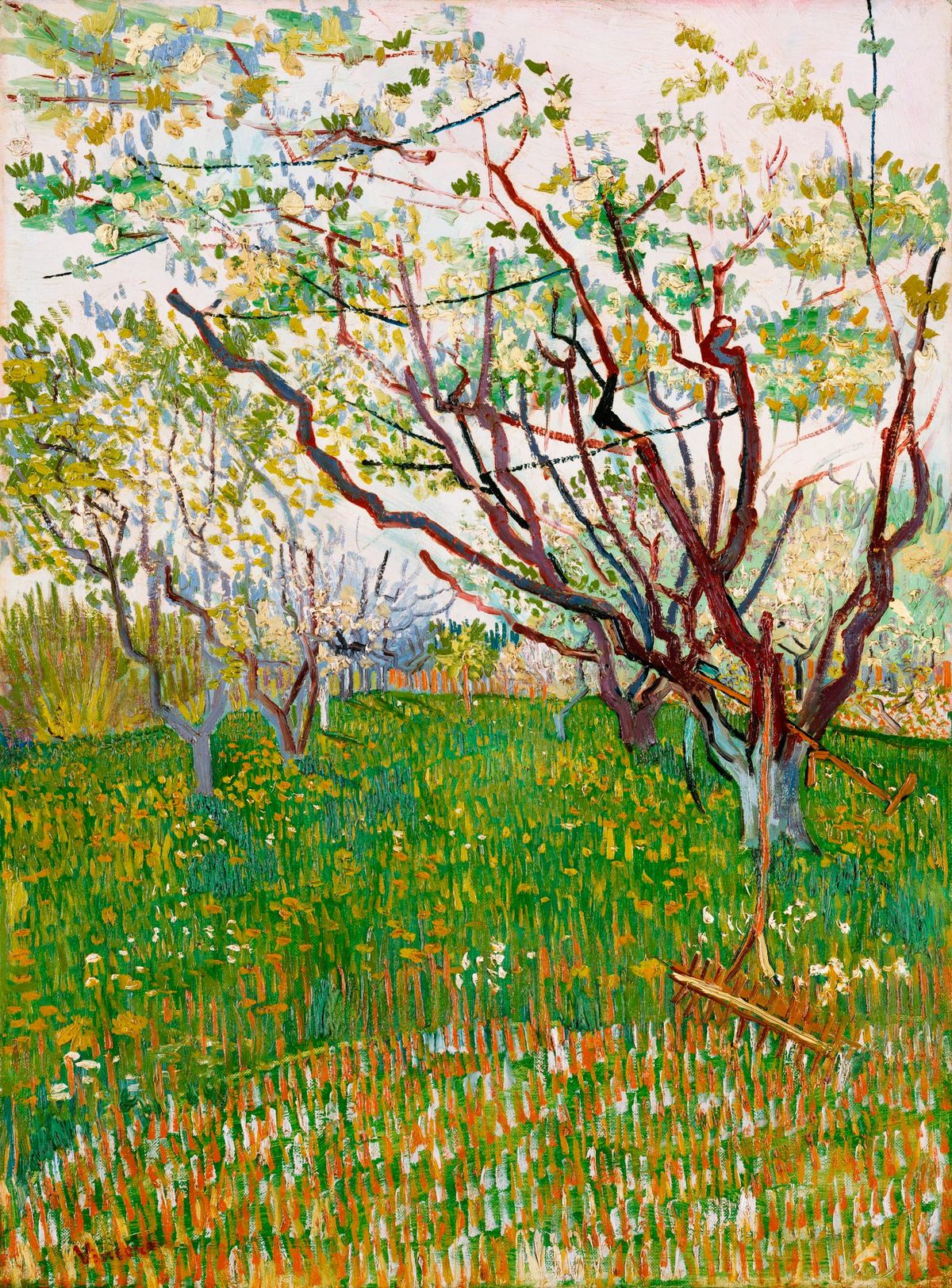
빈센트 반 고흐(Vincent van Gogh)가 남프랑스 아를(Arles)에 도착한 직후인 1888년 4월에 완성한 대표적인 유화 풍경화입니다. 현재 영국 에든버러의 스코틀랜드 국립미술관(Scottish National Gallery)에 소장되어 있으며, 작품의 실제 크기는 약 72.4 × 53.5 cm입니다. 캔버스 위에 유채로 제작된 이 작품은 봄날 만개한 자두나무와 과수원의 풀밭을 두텁고 경쾌한 임파스토(Impasto) 기법과 점묘적 분할 터치로 담아내어 강렬한 시각적·촉각적 질감을 선사합니다.
고흐는 캔버스 전면에 걸쳐 물감을 아끼지 않고 얹어내는 방식을 구사했습니다. 전경의 잔디밭은 수직으로 솟아오른 붓자국을 붉은색, 주황색, 노란색, 초록색으로 촘촘히 교차시켜 대지에서 뿜어져 나오는 생명력을 표현했습니다. 화면 상단을 가로지르는 나뭇가지들은 일본 우키요에 판화에서 영감을 얻은 과감한 대각선 구도와 굵은 윤곽선으로 처리되었으며, 그 위에 얹힌 순백과 연분홍의 꽃잎 덩어리들은 부드러운 파스텔톤 하늘과 어우러져 눈부신 봄의 환희를 전합니다.
1888년 2월 눈 덮인 아를에 첫발을 디딘 고흐는 몇 주 지나지 않아 남프랑스의 대지에 일제히 꽃을 피워낸 과수원의 장관을 마주하고 깊은 황홀경에 빠졌습니다. 그는 파리 시절의 극심한 육체적·정신적 피로를 뒤로하고, 자연의 위대한 부활을 상징하는 꽃 핀 과수원에 매료되어 거의 광기에 가까운 열정으로 연작 제작에 돌입했습니다. 그는 동생 테오에게 보낸 편지에서 "매일 아침 눈을 뜨면 새로운 꽃이 피어나고 있어 잠시도 붓을 놓을 수 없다"며 벅찬 감정을 쏟아냈습니다.
그는 꽃나무 가지에 기댄 채 밭을 일구는 갈퀴(쇠스랑) 하나를 소박하게 배치함으로써 자연의 아름다움 속에 깃든 인간의 정직한 노동을 잊지 않고 표현했습니다. 미술사에서는 고흐가 남프랑스의 강렬한 태양광 아래에서 색채의 자율성을 완벽하게 장악한 첫 번째 정점의 순간으로 평가하며, 인상주의의 빛을 넘어 작가의 내면적 환희와 생명에 대한 찬가를 승화시킨 후기 인상주의의 기념비적인 걸작으로 기록하고 있습니다.
관람객의 무의식적인 시선은 화면 하단 전면에 빼곡하게 직조된 풀밭의 경쾌한 수직 붓자국과 밝은 색채의 파동에서 자연스럽게 출발합니다. 봄 햇살을 받아 붉고 노랗게 빛나는 흙과 풀의 질감을 따라 올라간 시선은, 나무 둥치 곁에 조용히 기대어 있는 소박한 나무 갈퀴에 머물며 따스한 정적과 노동의 온기를 마주하게 됩니다.
이어 시선은 화면 우측에서 힘차게 뻗어나가는 붉은 갈색의 자두나무 둥치를 타고 역동적인 대각선 궤적을 그리며 캔버스 상단으로 시원하게 상승합니다. 맑고 은은한 하늘을 배경으로 사방으로 흩뿌려지듯 피어난 하얗고 화사한 꽃송이들의 무리를 감상하는 순간, 보는 이의 시야는 환한 빛으로 가득 차며 봄의 찬란한 해방감을 체감하게 됩니다.
이후 시선은 뒤편으로 아스라이 물러나 있는 은빛과 연둣빛의 과수원 나무들의 깊이감을 거쳐 다시금 생동감 넘치는 전경의 초록빛 잔디밭으로 부드럽게 내려앉습니다.
화면 전체를 감싸는 눈부신 봄의 색채와 생명의 약동을 따라 순환한 시선이 편안히 안착할 때, 관람객의 내면에는 묵은 피로와 무거운 번뇌가 씻겨 내려가고, 얼어붙은 마음을 녹이는 자연의 재생 에너지와 함께 벅찬 희망, 그리고 흔들리지 않는 깊은 심리적 안도감이 차오르게 됩니다.
Orchard in Blossom
Painted by Vincent van Gogh in April 1888, shortly after his pivotal arrival in Arles in the South of France, this radiant masterpiece resides in the permanent collection of the Scottish National Gallery in Edinburgh. Executed in oil on canvas measuring approximately 72.4 × 53.5 cm, the work captures a blooming plum orchard through a dynamic synthesis of dense impasto and rhythmic, pointillist brushwork that creates an intensely tactile surface.
Van Gogh applied paint with generous physical presence across the composition. The foreground lawn is structured through a dense weave of vertical dashes in vermilion, orange, ochre, and emerald, evoking the vibrant energy emerging from the warm earth. Influenced by Japanese woodblock prints, the branches of the plum tree sweep diagonally across the upper frame in bold contours, adorned with thick dollops of white and pale pink blossoms that vibrate against the soft, luminous sky.
Arriving in Arles during an uncharacteristically snowy February, Van Gogh was utterly intoxicated when the Mediterranean spring suddenly transformed the surrounding countryside into a sea of flowering fruit trees. Seeking emotional solace and physical renewal after his grueling years in Paris, he threw himself into painting the blossoming orchards with furious devotion. Writing to his brother Theo, he passionately expressed that the daily spectacle of newly opened blossoms left him in a state of continuous creative ecstasy.
By leaning a modest wooden rake against the central tree trunk, Van Gogh subtly grounded the idyllic pastoral beauty in the quiet reality of human labor and agriculture. Art historians celebrate this composition as one of the very first triumphs of his Arles period, demonstrating his liberated mastery over brilliant chromatic harmony and marking a monumental Post-Impressionist milestone where natural observation was transformed into a profound spiritual anthem of rebirth.
A viewer's subconscious gaze is intuitively anchored first by the densely woven tapestry of vertical strokes animating the grass in the foreground. Drawn upward through the warm earth tones and sunlit greens, the eye encounters the humble wooden rake resting quietly against the tree, introducing an immediate sense of domestic intimacy, stillness, and agricultural purpose.
The gaze then follows the powerful diagonal thrust of the main plum tree’s reddish-brown trunk, ascending into the sprawling canopy above. Exploring the clusters of creamy white and pastel blossoms set against the pale atmosphere, the observer experiences an uplifting visual release, filled with the buoyant luminosity of early spring.
The eye continues its journey across the softer, silver-green tones of the background orchard trees, taking in the gentle spatial recession before returning smoothly to the textured vibrancy of the lush lawn below.
Completing this visual and emotional circulation, the observer feels a profound psychological release. The accumulated tensions of everyday life dissolve into the rhythmic vitality of the blooming orchard, leaving the viewer restored with a lasting sense of optimism, spiritual renewal, and enduring inner peace.
본 리뷰에서 작품을 제외한 컨텐츠의 저작권은 팔렛트제주에 있습니다.
"퍼블릭도메인 고전명화"를 제외한 모든 창작 콘텐츠는 저작권법 제4조 및 제10조에 의거하여 보호됩니다. 무단 도용시 저작권법 제136조(벌칙)에 의거, 당사의 사전 서면 승인 없는 저작권 침해 행위를 금지합니다.