꽃이 핀 아까시나무 가지 - Blossom of a Chestnut Tree (Chestnut Trees in Blossom / Flowering Acacia)
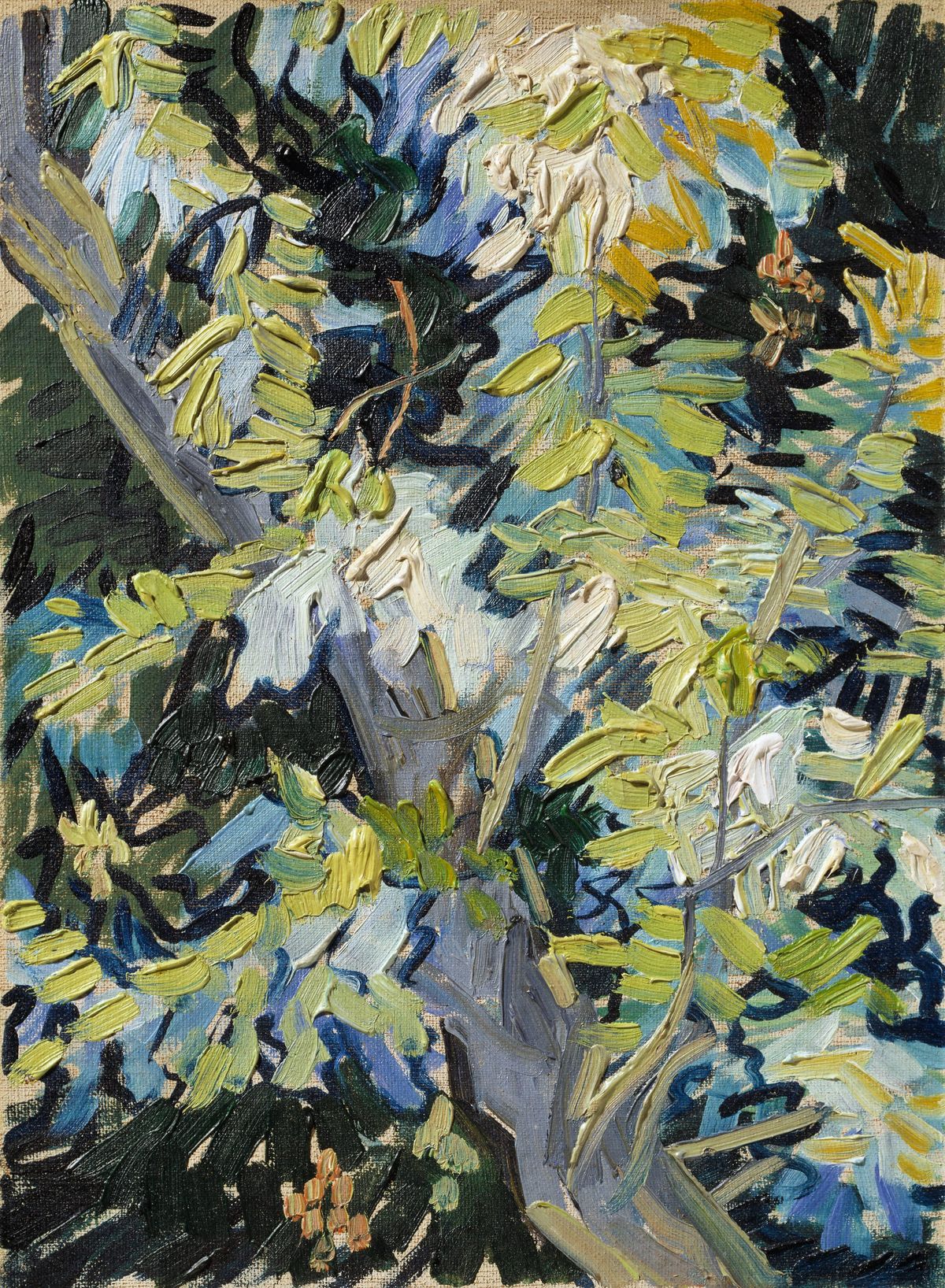
빈센트 반 고흐(Vincent van Gogh, 1853–1890)가 생애 마지막 해인 1890년 5월 프랑스 파리 근교 오베르 쉬르 우아즈(Auvers-sur-Oise)에 도착한 직후 완성한 '꽃이 핀 아까시나무 가지(Flowering Acacia)'는 캔버스에 유채(Oil on canvas)로 제작된 식물 풍경화입니다. 작품의 실제 규격은 세로 33.0cm, 가로 24.1cm의 아담하고 밀도 높은 수직 캔버스이며, 현재 스웨덴 스톡홀름 국립미술관(Nationalmuseum, Stockholm)에 영구 소장되어 있습니다.
고흐는 이 작품에서 화면을 대각선으로 시원하게 가로지르는 은회색 나뭇가지와 그 위를 덮은 싱그러운 연둣빛 잎사귀, 그리고 우윳빛 흰 꽃송이들의 유기적인 생명력을 극도의 클로즈업 구도로 포착했습니다. 캔버스의 삼베 바탕 질감이 그대로 드러날 만큼 즉흥적이면서도 두텁게 물감을 얹어 올린 임파스토(Impasto) 필치는 꽃잎과 잎사귀 하나하나에 조각 같은 볼륨감을 부여하며, 깊은 암녹색 배경과 틈새로 비치는 코발트 블루빛 하늘은 초여름 대기의 눈부신 역동성을 생생하게 살려냅니다.
이 그림에는 남프랑스 정신병원의 고통스러운 감금 생활을 끝내고 북부 시골 마을 오베르에 첫발을 디딘 반 고흐가 대자연의 싱그러운 생명력 앞에서 느꼈던 벅찬 환희와 따스한 인간적 에피소드가 깃들어 있습니다. 1890년 5월 20일, 파리를 거쳐 오베르 쉬르 우아즈의 라부 여관(Auberge Ravoux)에 짐을 푼 고흐는 창밖으로 펼쳐진 북프랑스의 찬란한 늦봄 풍경에 단숨에 매료되었습니다. 차가운 병실 벽에 갇혀 지내던 긴 겨울과 봄을 지나, 마침내 자유롭게 마주한 오베르의 들판과 정원에는 아까시나무와 밤나무 꽃들이 눈부시게 만개해 있었습니다.
고흐는 여관에 짐을 풀자마자 작은 캔버스와 붓을 챙겨 들고 마을 정원으로 뛰어나갔습니다. 거대한 풍경 전체를 조망하기보다, 바람에 춤추는 나뭇가지 하나에 얼굴을 바짝 들이댄 채 갓 피어난 꽃잎의 맑은 향기와 햇살의 떨림을 낚아채듯 맹렬하게 캔버스에 짓이겨 넣었습니다. 그는 동생 테오에게 보낸 편지에서 "오베르의 공기는 정말로 맑고 신선하다. 정원마다 피어난 꽃나무 가지들은 생명의 환희로 가득 차 있어 내 지친 영혼을 단숨에 씻어내 준다. 나는 지금 한순간도 붓을 놓을 수가 없다"며 새로운 창작의 기쁨에 벅차올랐습니다.
마을 정원을 지나던 오베르 주민들은 뙤약볕 아래 모자를 푹 눌러쓴 채 나뭇가지 앞에 바짝 붙어서서 온몸으로 땀을 흘리며 물감을 퍼붓듯 얹던 붉은 머리의 고흐를 신기하게 바라보았습니다. 평생 지독한 병마와 고독에 시달렸던 고흐에게, 햇살을 받아 눈부시게 피어난 이 한 줄기 꽃가지는 어둠을 뚫고 다시 일어선 화가 자신의 부활이자 새로운 생명을 향한 가장 순수하고 경쾌한 찬가였습니다.
후대의 미술사학자들과 평단은 이 스톡홀름 국립미술관 소장본을 반 고흐가 오베르 시기(1890년 5월~7월)에 도달한 자연 관찰의 극치이자 표현주의 식물 정물화의 숨은 보석으로 평가합니다. 대상의 전체 형태에 얽매이지 않고 클로즈업된 디테일 속에서 폭발하는 생명 에너지와 원색의 진동을 포착한 이 조형적 성취는, 20세기 현대 추상 및 표현주의 회화의 문을 연 위대한 유산으로 극찬받고 있습니다.
관람자의 시선은 가장 먼저 화면 우측 하단에서 대각선으로 힘차게 뻗어 올라가는 은회색 나뭇가지의 단단한 골격에 안착합니다. 이어 나뭇가지를 따라 사방으로 율동감 있게 돋아난 싱그러운 연둣빛 잎사귀들의 물결을 타고 올라가, 화면 상단과 중앙에서 두터운 크림빛 임파스토로 눈부시게 피어난 흰 꽃송이들의 화사한 볼륨감에 사로잡힙니다. 마지막으로 잎사귀 틈새로 언뜻언뜻 비치는 푸른 하늘의 청량한 터치와 짙은 어둠의 배경을 지나 화면 전체로 유려하게 순환하게 됩니다.
심리적으로 관람자는 싱그러운 초록빛 잎사귀와 순백의 꽃잎들이 뿜어내는 밝고 맑은 에너지 속에서 깊은 정서적 안정감과 시원한 해방감을 경험하게 됩니다. 척박한 고통의 터널을 지나 자연의 순수한 숨결 속에서 온전한 안식을 찾고자 했던 화가의 따뜻한 시선은 현대인의 마음에 쌓인 피로와 무기력함을 맑게 씻어내 주며, 지친 영혼에 새로운 희망과 일상의 작은 순간에서도 생명의 빛을 발견해 내는 회복의 힘을 풍성하게 채워줍니다.
Blossom of a Chestnut Tree (Chestnut Trees in Blossom / Flowering Acacia)
Painted by Vincent van Gogh (1853–1890) in late May 1890 shortly after his arrival in Auvers-sur-Oise, Flowering Acacia is an iconic oil on canvas botanical study measuring 33.0 cm in height and 24.1 cm in width. This celebrated late masterpiece is permanently preserved in the prestigious collection of the Nationalmuseum in Stockholm, Sweden.
Van Gogh constructed the composition around an intimate, close-up study of flowering branches cutting diagonally across the pictorial frame. Working with rapid, visceral impasto strokes that leave glimpses of the unprimed linen support visible, he sculpted the cascading clusters of creamy-white blossoms and vibrant yellow-green foliage. The deep forest greens and interspersed touches of cerulean sky create a pulsating chromatic contrast, infusing the botanical motif with the buoyant atmosphere of late spring.
The canvas holds an intimate history of profound creative rebirth following Van Gogh’s release from the asylum in Saint-Rémy. Arriving in the rural sanctuary of Auvers-sur-Oise on May 20, 1890, after a brief reunion with Theo in Paris, Van Gogh felt instantly rejuvenated by the blossoming gardens of the village. Free from hospital confinement, he immediately ventured into the lush outdoor greenery with his portable easel.
Rather than capturing an expansive panoramic vista, Van Gogh immersed himself directly within the dense boughs, capturing the tactile energy of nature at close range. Writing to his brother Theo, he expressed genuine relief at finding himself surrounded by fresh floral blooms, noting that the vibrant greenery acted as an immediate emotional balm for his frayed nerves. Local villagers watched with quiet curiosity as the intense Dutch painter stood intimately close to the flowering branches, applying pure pigment with rapid, sculptural strokes. For Van Gogh, this intimate flowering branch was a personal manifesto of liberation, renewal, and creative clarity.
Modern art historians celebrate this Stockholm masterpiece as a brilliant demonstration of Van Gogh’s expressive economy during his final months. By dissolving rigid botanical description into a rhythmic symphony of pure color, light, and tactile impasto, Van Gogh elevated a simple flowering bough into a radiant monument to organic vitality and modern Expressionism.
A viewer’s gaze instinctively locks onto the pale, sculptural trunk rising diagonally from the lower right. The eyes then follow the muscular progression of boughs into the dense cluster of creamy-white blossoms and rhythmic yellow-green leaflets radiating across the upper canvas. Finally, the gaze filters through the cool azure openings of sky and deep shadowy recesses, circulating effortlessly throughout the unified composition.
Psychologically, immersion in this verdant dialogue of crisp whites, sunny chartreuse, and deep woodland greens induces an immediate sensation of emotional refreshment, clarity, and grounded tranquility. The artist's joyful surrender to the burgeoning life of spring dissolves internal stress and mental fatigue, enveloping the observer in an enduring ambiance of natural optimism, creative vitality, and restorative peace.
본 리뷰에서 작품을 제외한 컨텐츠의 저작권은 팔렛트제주에 있습니다.
"퍼블릭도메인 고전명화"를 제외한 모든 창작 콘텐츠는 저작권법 제4조 및 제10조에 의거하여 보호됩니다. 무단 도용시 저작권법 제136조(벌칙)에 의거, 당사의 사전 서면 승인 없는 저작권 침해 행위를 금지합니다.